
German citizens benefited from Nazi policies by taking over jobs previously held by Jews, acquiring Jewish-owned businesses, and participating in furniture auctions held in the homes of Holocaust victims. Acknowledging the complicity of ordinary individuals in state-sponsored crimes is crucial, as it underscores the unsettling reality that no one is inherently immune to the allure of conformity or the pressures of authoritarian rule.
Definition of Complicity in the Context of German Citizens During the Holocaust:
In the context of the Holocaust, complicity refers to the participation in, support for, or passive acceptance of the Nazi regime’s persecution and extermination of Jews and other targeted groups by German citizens. This can include a wide range of actions or inactions, from direct involvement in atrocities (e.g., as members of the SS, Gestapo, or camp personnel), to indirect support (e.g., bureaucrats, businesspeople, or neighbors who benefited from or facilitated Aryanization policies), to silent acquiescence (e.g., ordinary citizens who chose not to oppose or question the regime despite knowledge of its crimes).
Key elements of complicity in this context include:
- Active Participation: Individuals who directly took part in the planning or execution of the Holocaust—such as camp guards, Einsatzgruppen members, or administrators who helped implement deportations and killings.
- Institutional Support: Civil servants, railway workers, and other professionals who kept the machinery of the Holocaust running, even if they did not kill anyone directly.
- Economic Gain: Citizens and businesses that profited from the dispossession of Jews (e.g., acquiring homes, businesses, or valuables through forced sales or state seizure).
- Ideological Support: Those who endorsed Nazi ideology, joined Nazi organizations, or helped spread antisemitic propaganda.
- Passive Compliance: Ordinary Germans who, while not actively participating, chose not to resist, protest, or assist victims—even when they had some awareness of what was happening.
Historians debate the extent and forms of complicity, but a general consensus holds that widespread societal complicity enabled the Holocaust to occur on the scale that it did. Not all Germans were perpetrators, but many were complicit through varying degrees of action, silence, or indifference.
In the aftermath of World War II, German citizens were confronted with the harrowing consequences of war crimes committed in their name. As Allied forces liberated concentration camps and exposed the full scale of Nazi atrocities, ordinary Germans were forced to reckon with the horrors of the Holocaust and the regime’s brutality.
The Allies confronted the German population with the atrocities committed in their name during the Nazi regime. In the West German town of Burgsteinfurt, the British Army compelled the town’s 4,000 residents to watch Atrocities: The Evidence—a documentary featuring harrowing footage from the Buchenwald and Bergen-Belsen concentration camps, filmed shortly after their liberation.
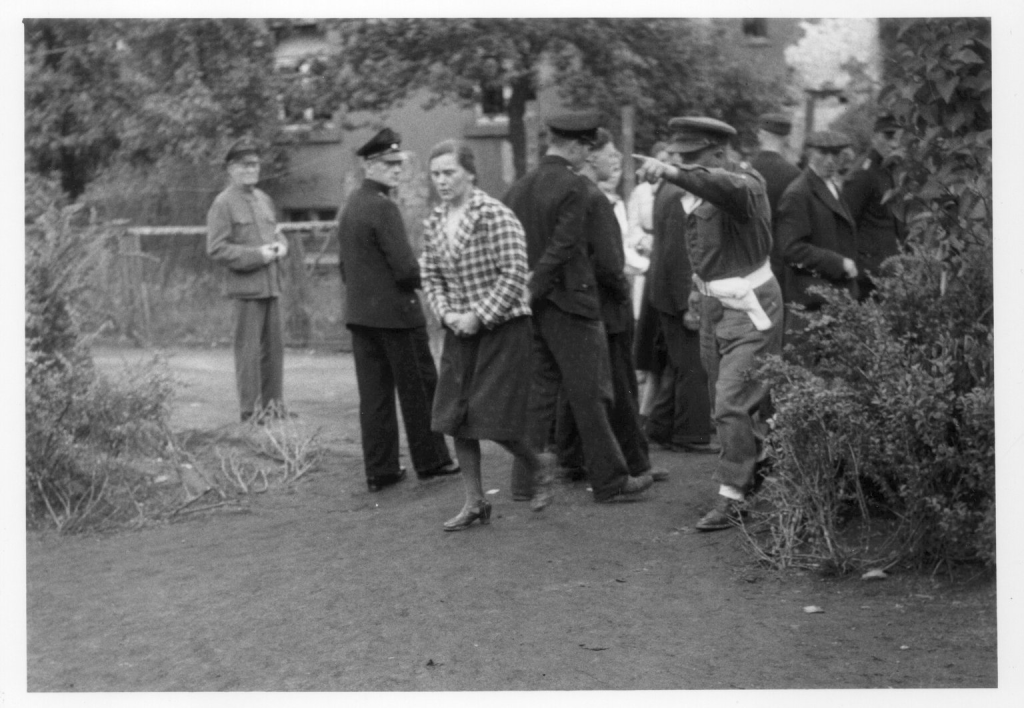
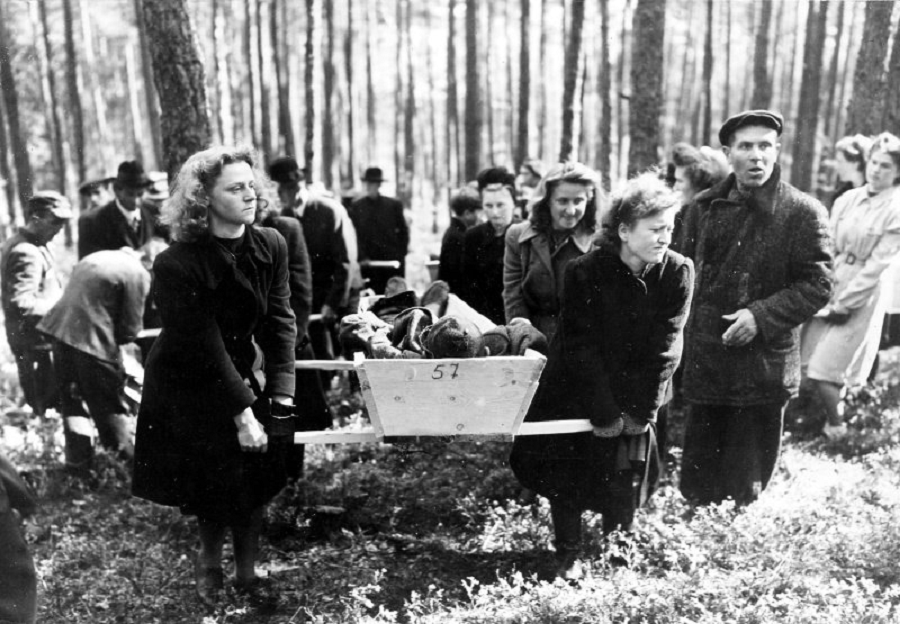
Similar screenings took place in other towns across Germany. Driven by outrage over the horrors uncovered in the concentration camps, Allied forces also forced local populations to take part in the reburial of camp victims and execution victims. In many instances, civilians were made to walk past rows of corpses—thousands of dead prisoners—to confront the grim reality of what the Nazi regime had perpetrated.
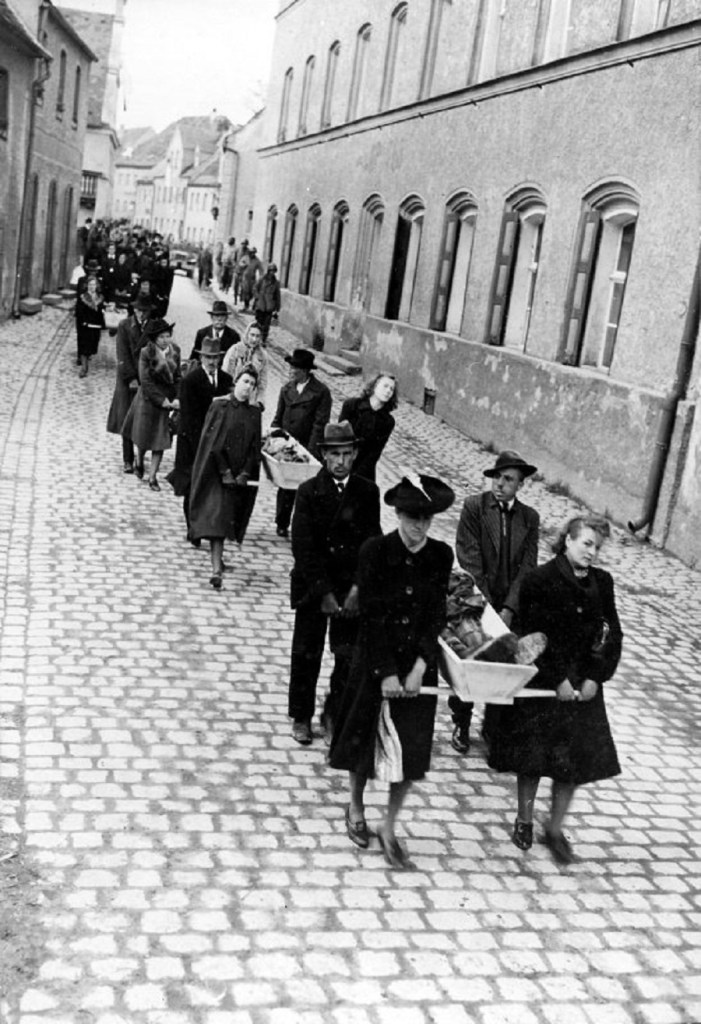
Women and men of Neunburg bear bodies of 120 S. S. shooting victims to burial in the city cemetery after removal of bodies from woodland shooting site outside town. Chaplains of U. S. Third Army conducted services for victims.
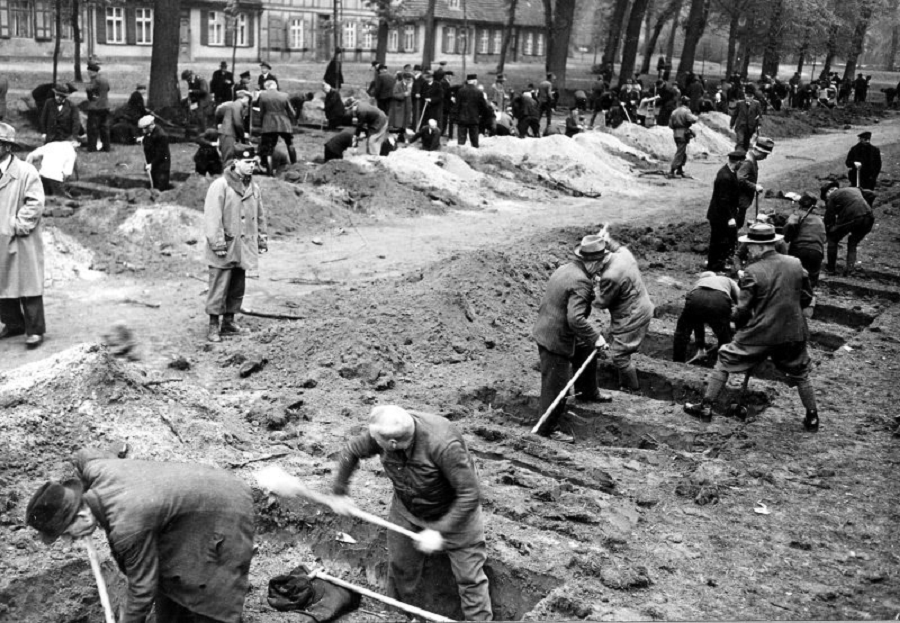
Former German police of Ludwigslust, Germany, under order of 82nd Airborne Division, dig graves in the town square for German atrocity victims found in nearby concentration camp.
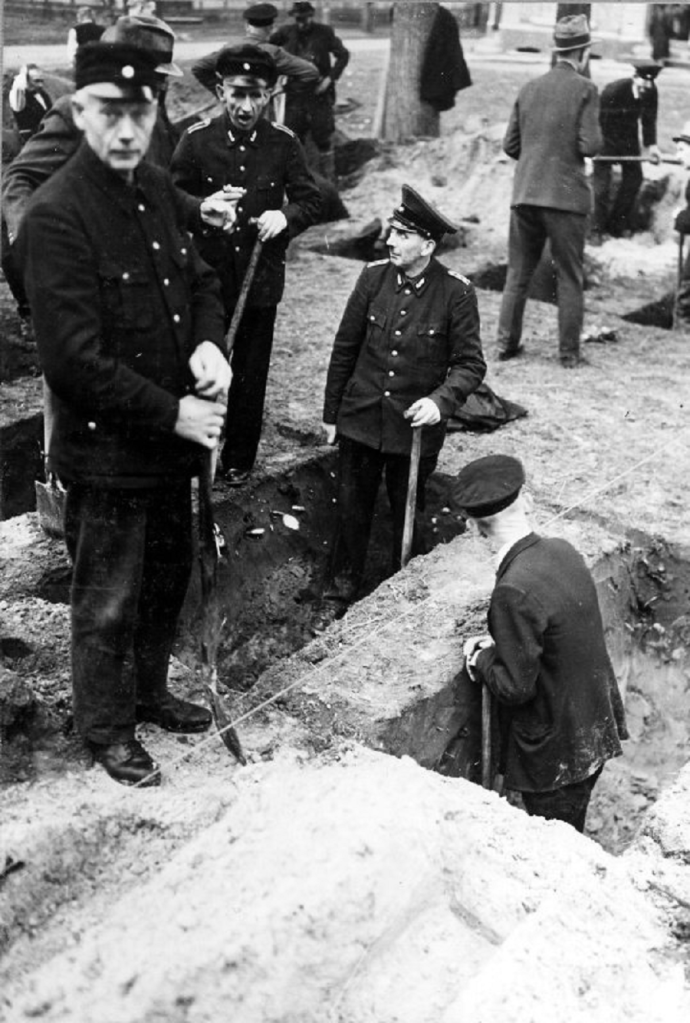
Citizens of Ludwigslust, Germany, under order of 82nd Airborne Division troops dig graves in the town square for victims found unburied in nearby Wobbelin concentration camp.
German civilians of Neunberg pick up bodies of concentration camp victims outside Neunberg, and remove them to the city cemetery for burial under orders of the XII corps officers. Victims were Russian and Polish Jews and were shot by S. S. Troops

Neunberg, Germany. Civilians carry empty boxes up a hill to get bodies of 120 victims killed by S. S. troops in a wooded area. Townspeople were forced to carry them to the cemetery for proper burial. They spent two days building the boxes. Chaplains of 3rd U. S. Army held short services for Protestant, Catholic, and Jewish victims
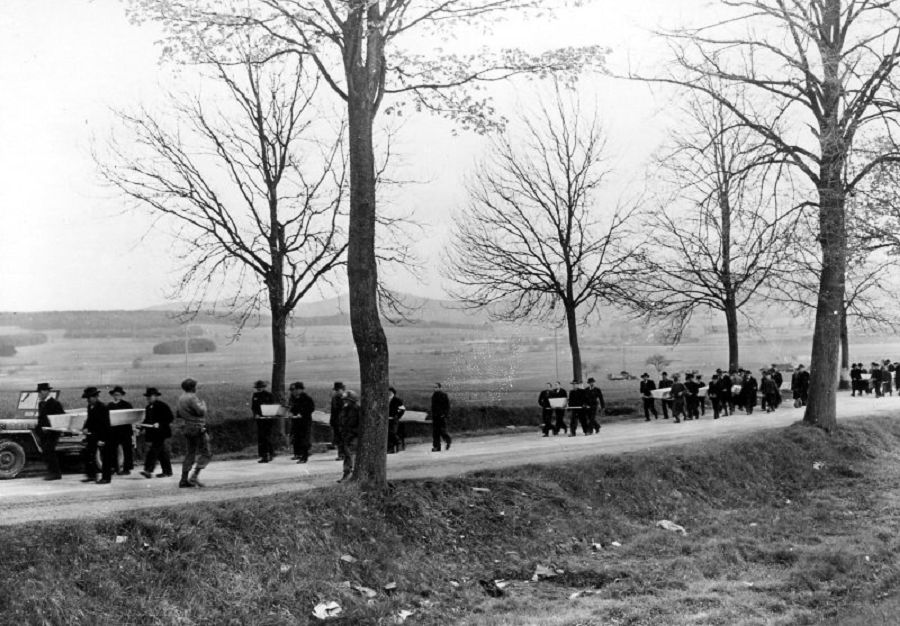
German civilians of Gardelegen prepare to march with wooden crosses from military government office to the concentration camp a mile distant where they were ordered to inter the bodies of the camp’s victims.

German civilians place victim of Gardelegen camp on litter for burial under supervision of military government.

Citizens of Neunburg and surrounding towns bear 120 victims of S. S. trooper killings to burial ground after bodies were picked up in woods where they fell to Nazi bullets. Chaplains of U. S. Third Army held short services for Protestant, Catholic, and Jewish victims
Although this blog focuses primarily on the role of Germans, it is important to acknowledge that the Nazis also relied heavily on the cooperation of countries, groups, and individuals beyond Germany’s borders to carry out the persecution and mass murder of Jews, as well as other targeted groups such as Roma, Poles, Slavs, and others.
This collaboration took many forms. In some countries, entire governments actively aligned themselves with the Nazi regime, providing political and logistical support. In others, individuals or groups offered assistance independently—motivated by ideology, personal gain, or a mix of both. On a more local level, collaboration often occurred through seemingly small yet devastating actions, such as denouncing Jewish neighbors. These betrayals were sometimes rooted in antisemitism, but just as often stemmed from a desire to acquire the victims’ homes, jobs, or possessions following their arrest or deportation.
sources
https://www.nationalww2museum.org/war/articles/justice-in-post-nazi-western-germany
https://www.jstor.org/stable/2770938
Please support us so we can continue our important work.
Donation
Your readership is what makes my site a success, and I am truly passionate about providing you with valuable content. I have been doing this at no cost and will continue to do so. Your voluntary donation of $2 or more, if you are able, would be a significant contribution to the continuation of my work. However, I fully understand if you’re not in a position to do so. Your support, in any form, is greatly appreciated. Thank you. To donate, click on the credit/debit card icon of the card you will use. If you want to donate more than $2, just add a higher number in the box left from the PayPal link. Your generosity is greatly appreciated. Many thanks.
$2.00

 History of Sorts
Leave a comment