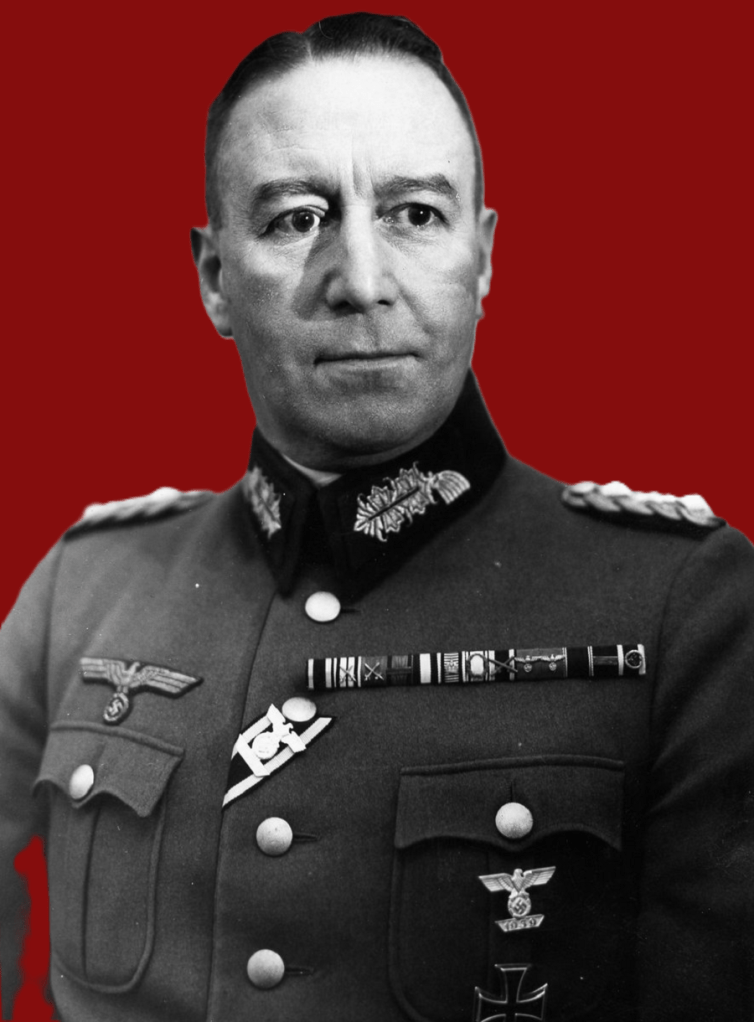
The Nazi regime in Germany (1933–1945) is infamous for its industrial-scale atrocities, including genocide, war crimes, and systemic abuses of human rights. Among those complicit in these crimes were not only military officers and politicians but also scientists and physicians who abandoned medical ethics in favor of ideology and power. One such figure was Dr. Siegfried Handloser, a high-ranking medical officer in the German Wehrmacht (armed forces) who was directly involved in some of the most heinous medical crimes of the Nazi era.
Who Was Siegfried Handloser?
Siegfried Adolf Handloser was born on March 25, 1885, in Konstanz, Germany. He pursued a career in medicine and joined the German military medical corps during World War I. Over the decades, Handloser rose through the ranks and by World War II had achieved the rank of Generaloberstabsarzt (equivalent to a general in the medical corps).
He served as the Chief Medical Officer of the Wehrmacht and held significant influence over the medical policies and practices of Nazi Germany’s military and, in some cases, its concentration camp system.
Role in Nazi Medical Crimes
1. Medical Experiments on Humans
As Chief Medical Officer, Handloser had oversight over military medical research, which included the authorization and support of human experimentation on prisoners in concentration camps. These experiments, often conducted without consent, were brutal, inhumane, and scientifically invalid. Examples include:
- Typhus experiments at Buchenwald concentration camp, which led to the death of many inmates.
- Sulfanilamide experiments aimed at treating war wounds with new antibiotics, often carried out on women at Ravensbrück.
- Malaria, high-altitude, and freezing experiments at Dachau.
While Handloser was not personally conducting these experiments, he played a facilitating and administrative role, ensuring that the military provided resources, coordination, and legitimacy for such atrocities.
2. Involvement with the SS and Concentration Camps
Handloser was not part of the SS, but he worked closely with SS doctors, including Karl Brandt and Josef Mengele, and coordinated Wehrmacht medical efforts with those of the SS. He also participated in meetings that discussed the use of concentration camp prisoners for research.

In one documented case, he attended a conference where the mass sterilization of populations in occupied territories was discussed, highlighting his role in broader policies of racial hygiene and eugenics — central tenets of Nazi ideology.
Post-War Prosecution
After the fall of Nazi Germany, Handloser was arrested and tried in the Doctors’ Trial at Nuremberg (1946–47), one of the Subsequent Nuremberg Trials conducted by the U.S. military tribunal.
He was charged with war crimes and crimes against humanity, including:
- Authorizing and enabling non-consensual experiments.
- Supporting policies of forced sterilization and euthanasia.
- Aiding and abetting the murder of prisoners through medical means.
Verdict and Sentence
Handloser was found guilty and sentenced to life imprisonment in 1947. However, in a controversial turn, his sentence was reduced to 20 years in 1951, and he was released in 1954 due to illness. He died on July 3, 1954, shortly after his release.
Legacy and Ethical Lessons
Siegfried Handloser’s name remains associated with the betrayal of medical ethics under totalitarian regimes. His story, and that of other Nazi doctors, has had lasting effects on global medical ethics:
- It led to the development of the Nuremberg Code, a foundational document in bioethics that outlines principles for ethical human experimentation.
- It influenced the creation of Institutional Review Boards (IRBs) and informed consent requirements in research.
- It serves as a warning about the dangers of politicizing medicine and compromising ethical standards for nationalistic or ideological purposes.
Handloser’s Role in the Nazi Medical Apparatus
Handloser cooperated with Ernst-Robert Grawitz, the Reichsarzt SS und Polizei (Reich Physician SS and Police), although he was not Grawitz’s superior. However, he held a higher authority in other respects: Handloser was “superior to all medical personnel of the war army in medical service matters and to troops in all medical units of the armed forces during the war,” including those in the Waffen-SS. While the position of Chef des Wehrmachtsanitätswesens (Chief W San) lacked institutional strength, it effectively placed Handloser in a position of overarching responsibility for medical crimes committed within both the Wehrmacht and Waffen-SS.
Despite this, Handloser failed to exercise his formal “duty of supervision” over medical officers who were involved in criminal activities, particularly those operating within concentration camps, as noted by medical historian Wolfgang U. Eckart.
Throughout the war, Handloser faced growing criticism due to severe deficiencies in medical supplies, culminating in a near-total collapse of the military medical system. Although he was replaced as Army Medical Inspector and Army Physician by Lieutenant General Paul Walter in the fall of 1944, Handloser retained his title as Chief W San, thereby remaining the Wehrmacht’s highest-ranking medical officer with formal authority to issue orders.
In parallel with his military career, Handloser pursued academic ambitions. He was appointed honorary professor at the University of Vienna in 1939 and at the University of Berlin in 1943.
Co-Responsibility for Human Experiments at Buchenwald

On December 29, 1941, Handloser participated in a meeting at which the decision was made to conduct human experiments on typhus vaccines at the Buchenwald concentration camp. These experiments led to the deaths of approximately 100 individuals. Other attendees included Reichsgesundheitsführer (Reich Health Leader) Leonardo Conti; Joachim Mrugowsky, head of the Waffen-SS Hygiene Institute; Hans Reiter, president of the Reich Health Office; and Eugen Gildemeister, director of the Robert Koch Institute.
Facilitator of Forced Prostitution
As chief of the Wehrmacht Medical Service from February 1941, Handloser also played a central role in organizing forced prostitution in the territories occupied by Nazi Germany. The program aimed to control the spread of venereal diseases and to prevent sexual relations between German soldiers and Jewish women. Regulated prostitution was also viewed as a countermeasure against potential espionage through unsanctioned interactions with local women.
Following Hitler’s 1942 decision to deny parole to soldiers convicted of homosexual acts, Handloser turned his attention to addressing what was termed a “sexual emergency” among troops. In this context, the expansion of Wehrmacht-run brothels was proposed as a solution.
sources
https://www.dgim-history.de/en/biography/Handloser;Siegfried;1126
https://en.wikipedia.org/wiki/Siegfried_Handloser
https://www.mp.pl/auschwitz/journal/english/302573,typhus-experiments-on-humans-at-buchenwald
https://www.buchenwald.de/en/geschichte/historischer-ort/konzentrationslager/hygiene-institut
Please support us so we can continue our important work.
Donation
Your readership is what makes my site a success, and I am truly passionate about providing you with valuable content. I have been doing this at no cost and will continue to do so. Your voluntary donation of $2 or more, if you are able, would be a significant contribution to the continuation of my work. However, I fully understand if you’re not in a position to do so. Your support, in any form, is greatly appreciated. Thank you. To donate, click on the credit/debit card icon of the card you will use. If you want to donate more than $2, just add a higher number in the box left from the PayPal link. Your generosity is greatly appreciated. Many thanks.
$2.00

 History of Sorts
Leave a comment