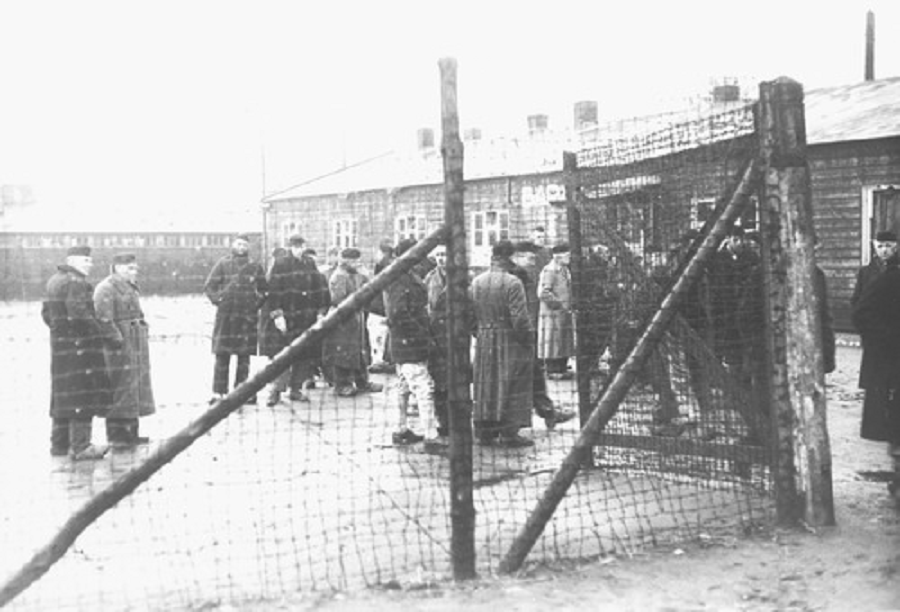
Kamp Amersfoort, officially known as Polizeiliches Durchgangslager Amersfoort, was one of the main Nazi transit and penal camps in the Netherlands during the Second World War. Situated near the city of Amersfoort, it operated between 1941 and 1945 and held more than 35,000 prisoners. Although not as large or infamous as Westerbork or Vught, Kamp Amersfoort became notorious for its brutal conditions, the cruelty of its guards, and its role in the Nazi system of oppression. Today, it stands as both a reminder of the atrocities committed and a place of remembrance for the victims.
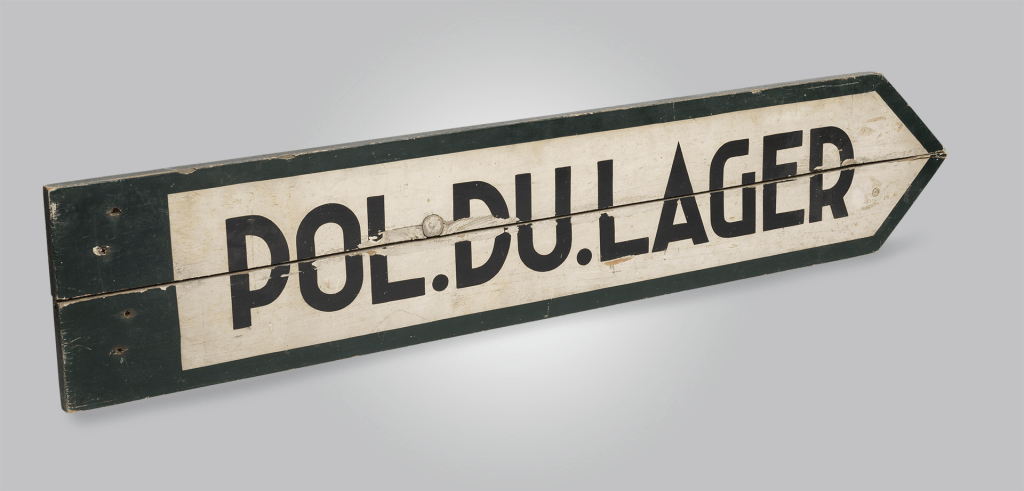
In 1939, Kamp Amersfoort was still a cluster of barracks used to support army artillery exercises on the nearby Leusderheide. From 1941 onwards, however, it became far more than a transit camp, as its name suggests. The terms “penal camp” or “labor camp” would be more appropriate. Throughout its existence, the Germans forced countless prisoners into harsh labor details. The total number of registered individuals in Amersfoort was approximately 37,000.
To reach the camp, the Germans made the prisoners walk from the railway sidings, through the town, and across residential neighborhoods. From behind lace curtains, the windows of many homes revealed motionless silhouettes—often those of children—watching silently. At times, a timid hand would rise in a faint, furtive wave, only to be pulled back quickly. For the prisoners, these fleeting gestures were the last farewell from the world of the living, a final glimpse of humanity before they entered the shadowed realm of the camp.

Establishment and Purpose
The concentration camp was established on 18 August 1941, initially as a transit camp for political prisoners, resistance fighters, Jews, Roma, Jehovah’s Witnesses, and other groups deemed undesirable by the Nazi regime. It also housed forced laborers, Soviet prisoners of war, and ordinary civilians who had run afoul of German occupation authorities. Unlike Westerbork, which mainly functioned as a deportation hub for Jews to extermination camps in the East, Amersfoort combined the functions of a transit camp, prison, and forced labor camp.
Conditions and Daily Life
Life in Kamp Amersfoort was characterized by inhumane treatment. Prisoners faced extreme overcrowding, malnutrition, forced labor, and constant abuse. The camp guards, many of whom were Dutch collaborators working under German command, became infamous for their sadism. Torture and executions were routine. Prisoners were humiliated, subjected to arbitrary violence, and often forced to stand for hours during roll calls.

Following the German invasion of the Soviet Union in June 1941, Kamp Amersfoort began holding Soviet prisoners of war. Among them were 101 Uzbek soldiers, brought to the Netherlands as propaganda to demonstrate the supposed “inferiority” of the Soviet peoples. None survived: all either perished during the harsh winter of 1941 or were executed in the woods near the camp in April 1942. Today, 865 Soviet prisoners are buried at the nearby Rusthof cemetery.
Amersfoort also functioned as a transit camp, from which the Germans transported their prisoners to concentration camps such as Buchenwald, Mauthausen, and Neuengamme. On 15 July 1942, the Germans began the systematic deportation of Dutch Jews from Amersfoort, Vught, and Westerbork to concentration and extermination camps, including Auschwitz, Sobibor, and Theresienstadt.
Resistance and Deportations
While Kamp Amersfoort primarily functioned as a holding site, thousands of its prisoners were eventually deported to concentration and extermination camps such as Buchenwald, Sachsenhausen, and Mauthausen. Others were executed on site or in nearby forests. Despite the harsh conditions, acts of resistance and solidarity existed: prisoners secretly exchanged information, smuggled letters, and occasionally managed escapes. The surrounding Dutch population also sometimes provided aid, although this was extremely dangerous.
Liberation and Legacy
By May 1945, when the Allies liberated the Netherlands, Kamp Amersfoort had witnessed the passage of over 35,000 men, women, and children through its gates. Thousands died there or after deportation. Following liberation, Dutch authorities used the site as an internment camp for suspected collaborators, marking a dramatic reversal of its function.
The Germans imprisoned many minors at Kamp Amersfoort. Their number can only be estimated due to the unknown dates of arrival for their prisoners, making it impossible to determine whether they were still underage at the time. Moreover, during the Second World War, by law, a person became an adult at the age of 21. It is also important to note that out of the approximately 47,000 prisoners, the historians have learned the full names of 36,305 prisoners. Keeping in mind these disclaimers, we can estimate that 4,300 imprisoned people were under the age of 21, with about 600 under the age of 18.
Jewish children
Catholic Jews
Of the imprisoned, the youngest children were almost all part of Jewish families and were in one of two groups. On 2 August 1942, the Germans locked up more than 200 Catholic Jews in Camp Amersfoort. It was a reprisal for the reading, on 26 July, of a protest letter against the persecution of the Jews from the pulpits of ten of the eleven Dutch Christian denominations. Some mothers had several children with them, such as Helena Grünsfeld-Berkelouw (prisoner no. 3165), who had three children, Piroska Schupper-Hirsch, who had three children — two of them babies — and Eva Hamburger-Kalker, who had four. In the photograph (Collection Gé Vaartjes, Boskoop) below, Eva Hamburger-Kalker can be seen before the war with six of her children.

Transport from Westerbork
On 17 May 1943, 573 Jews arrived from Camp Westerbork, of whom two died (including one child, Bertha de Paauw), and one was born in Camp Amersfoort. These Jews had been placed in two separate barracks in Camp Westerbork and had to make temporary room for a large transport from Amsterdam. They were all Jews whose second nationality was still under investigation. Seven of them were only six years old, four were five years old, fourteen were four years old, four were three years old, five were two years old, and seven were one year old or younger. Among the very youngest, Philip Millikowski and Carry Verdoner were murdered in Auschwitz, and Robert Cohen and Judith van Heeks in Sobibor.
American children
In addition, from 20 September 1942 (probably 282) hostages were imprisoned in Camp Amersfoort because the guards suspected that they were of American nationality. Among them were also some children, such as the sisters Maryline and Jacqueline Johnson (aged 16 and 15), the brothers Lodewijk and Max de Beer (10 and 9), and the youngest, Betty Ziff (3), as well as the sisters Toni and Annie Schrut (2 and 1).
Resistance
Several young people were prisoners at Kamp Amersfoort because of their resistance activities, including the then sixteen-year-old Hans Gerritsen. On 19 April 2024, he gave a moving speech at the commemoration of the transfer of Kamp Amersfoort to the Red Cross.

Hans Gerritsen
“I was let in by the guard and ordered to enter a long cage of barbed wire, the so-called Rose Garden. In shock, I looked out over the parade ground where hundreds of prisoners marched around, amid shouting and men swinging clubs. A few emaciated prisoners with shaved heads and wild eyes came to the cage and asked me for food. Seconds later a club-wielder rushed in, and after a few hard blows the problem was solved. With fear and dread I thought of what awaited me.” — Hans Gerritsen, 19 April 2024
Schoolchildren
A peculiar group of young people consisted of 52 schoolchildren who were sent to Dessau on 3 and 10 October 1942 to the Junkers Aircraft and Engine Works. Through the Dutch Labor Front (NAF) and the National Youth Storm (NJS), the Germans recruited young people, often for training in Germany. In this case, it was a two-year study/work program in engineering. Because these were almost certainly children from NSB (Dutch Nazi Party) families, it is unclear why they were registered and transported under the authority of Camp Amersfoort: it is impossible that they, without suspicion of a crime, would have been imprisoned among ideological enemies of National Socialism. A role for Camp Amersfoort as a collection or overnight point also does not seem logical.
Forced laborers
The largest group of people under 21 was the forced laborers for the Arbeitseinsatz. There were many hundreds of them, and some older fellow prisoners expressed their concern in letters home for their children.
Young victims
On 21 May 1943, the youngest prisoner of Camp Amersfoort ever died in the St. Elisabeth Hospital, namely the Jewish infant Bertha de Paauw, of malnutrition and pneumonia, not even eight months old. On the same day and in the same place, the youngest prisoner ever born at Kamp Amersfoort was born: Raymond Kesnig. After ten days, his mother, Esther Kesnig-van Loggem, had to return to Camp Amersfoort with her newborn son.
In Kamp Amersfoort, 45 people under the age of 21 died during their imprisonment due to disease, bombings, deprivation, or mistreatment. Among them were the 17-year-old farm worker Cornelis Heslinga, the 18-year-old shoemaker Cornelis Warmerdam, and apprentice gardener Paulus Jansen.
There were also minors (by the legal standards of the time) who the Germans executed: at age 18, the carpenter Hendrik van Dijk, student Ferdinand Rombout, and civil servant Franciscus Rijper; at age 19, the car mechanic Cornelis Haije, student Nicolaas Waalewijn, and student Folkert Elsinga; and at age 20, the office clerk Gerardus Elzinga, clerk Harm Teisman, postman Andries de Vries, and the unemployed Arien Gorter.
One of the most notorious SS officers at PDA Amersfoort was Joseph Kotälla, who was appointed in September 1942 by Karl Peter Berg.
Joseph Kotälla
Kotälla became infamous for his so-called “Kotälla kick,” a brutal strike to the testicles delivered with his army boot. He participated in numerous executions and showed a particular, fanatical cruelty toward Jewish prisoners and priests, whom he frequently and violently abused.
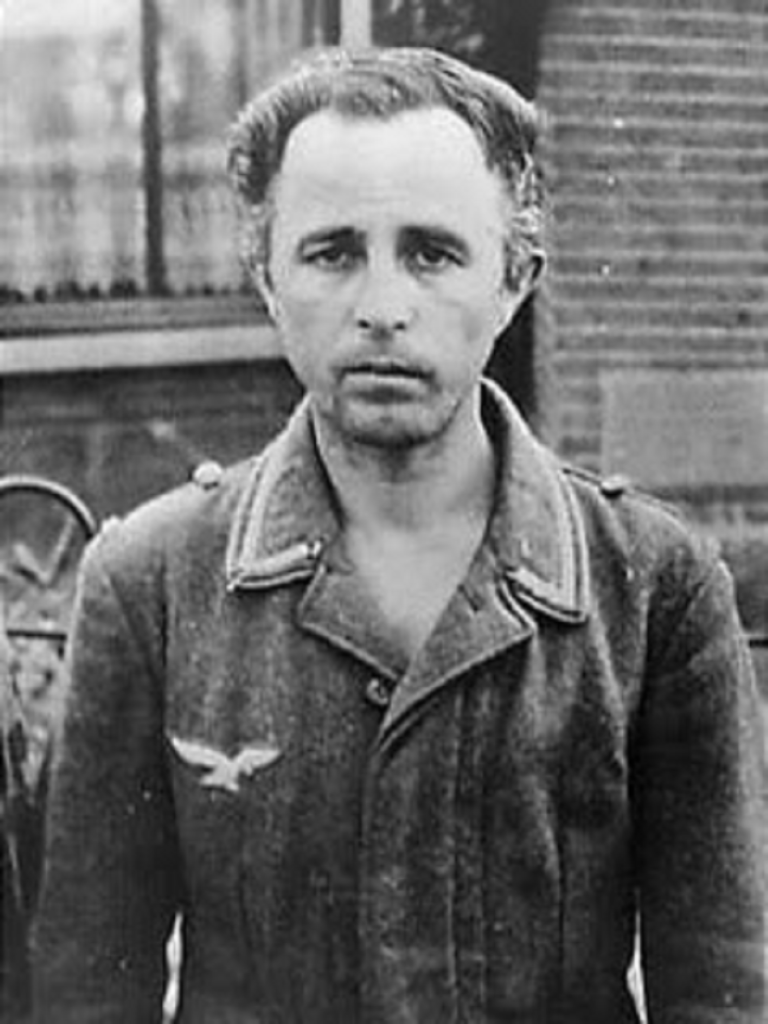
In 1948, the camp commandant and guards of Amersfoort were tried and convicted for their crimes. Karl Peter Berg was sentenced to death and executed in 1949.
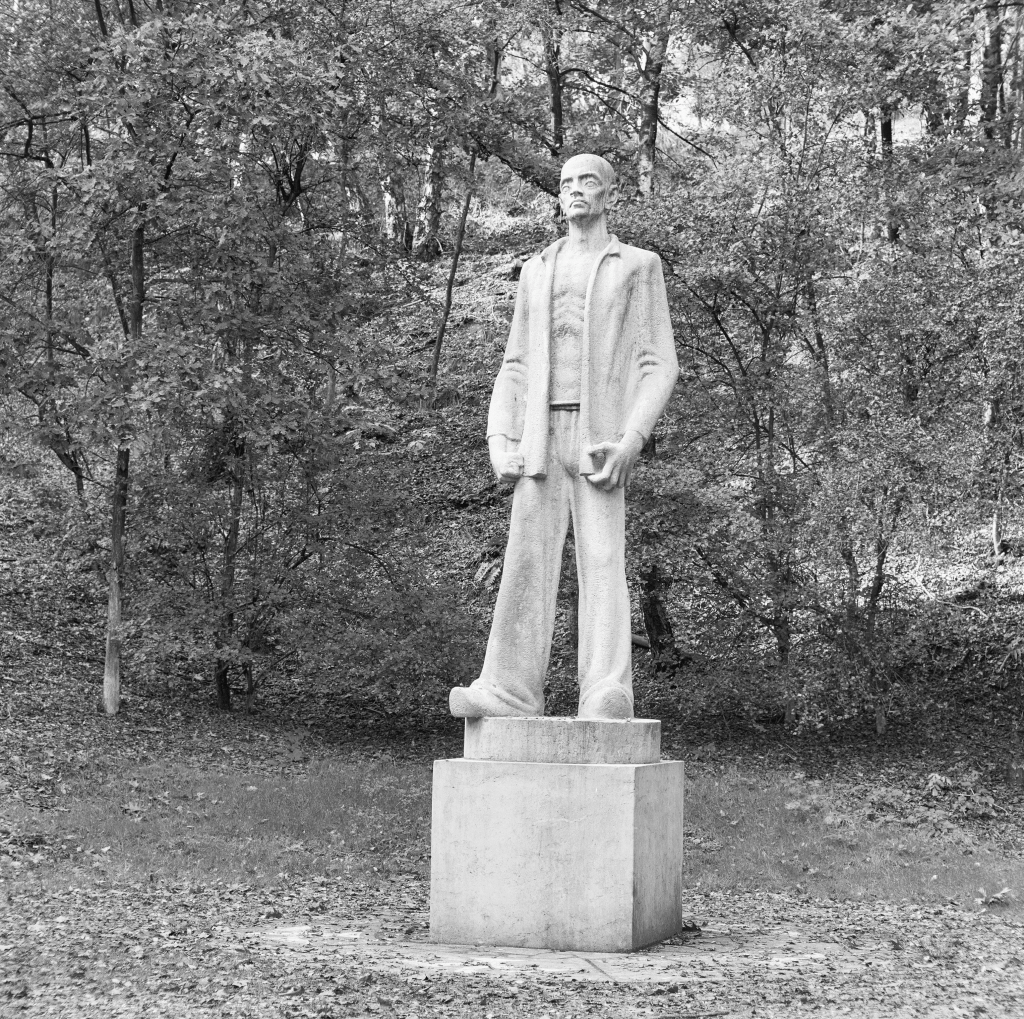
Today, Kamp Amersfoort is a national memorial. The site features a museum and commemorative monuments, including a large statue known as “De Stenen Man” (“The Stone Man”), which symbolizes suffering and endurance. Educational programs ensure that new generations learn about the atrocities committed there, keeping alive the memory of those who suffered and died.
Kamp Amersfoort was a place of profound human suffering, where cruelty and injustice reigned. Its history illustrates the devastating impact of Nazi occupation on Dutch society and the broader machinery of oppression in Europe. Remembering Kamp Amersfoort is not only about honoring the victims but also about reflecting on the dangers of intolerance, collaboration, and unchecked power. As with other sites of Holocaust remembrance, it serves as a moral warning for the present and future: never again.
Sources
https://kampamersfoort.nl/blog-archief/minderjarigen-in-kamp-amersfoort
https://en.wikipedia.org/wiki/Kamp_Amersfoort
https://www.jewishgen.org/forgottencamps/camps/amerseng.html
https://encyclopedia.ushmm.org/content/en/article/herzogenbusch-subcamps
https://collections.arolsen-archives.org/en/archive/1-1-1-2_01010102-oS
Please support us so we can continue our important work.
Donation
Your readership is what makes my site a success, and I am truly passionate about providing you with valuable content. I have been doing this at no cost and will continue to do so. Your voluntary donation of $2 or more, if you are able, would be a significant contribution to the continuation of my work. However, I fully understand if you’re not in a position to do so. Your support, in any form, is greatly appreciated. Thank you. To donate, click on the credit/debit card icon of the card you will use. If you want to donate more than $2, just add a higher number in the box left from the PayPal link. Your generosity is greatly appreciated. Many thanks.
$2.00


 History of Sorts
Leave a reply to tzipporahbatami Cancel reply