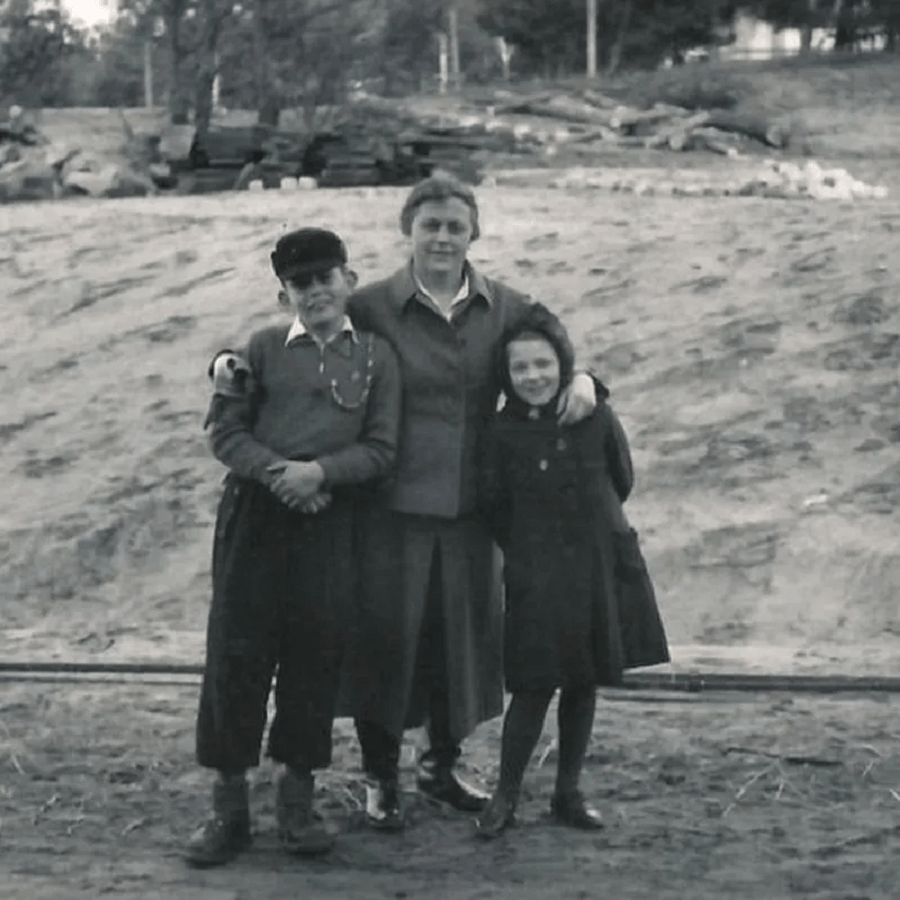
Johanna Langefeld (née May, 5 March 1900 – 26 January 1974) remains one of the most intriguing and morally complex figures among the female staff of Nazi concentration camps. Rising from a modest background as a domestic-economy instructor to become an Oberaufseherin (senior female overseer), she served at Lichtenburg, Ravensbrück, and the women’s section of Auschwitz-Birkenau. After the war, she was arrested and held in Poland to stand trial for war crimes, but in December 1946, she escaped custody in mysterious circumstances. Even more remarkable, some of her former prisoners later helped her evade capture, allowing her to disappear from public view for decades before resurfacing quietly in West Germany, where she lived until her death in 1974.
Early Life and Path to the SS
Johanna Langefeld was born into a working-class Lutheran family in Kupferdreh, now part of Essen. Her early life reflected traditional gender norms of early 20th-century Germany — she trained as a domestic-economy teacher and worked in household management and social welfare roles. The economic instability of the interwar years and the growing influence of National Socialism shaped her worldview.
In 1937, she joined the National Socialist German Workers’ Party (NSDAP). Soon after, she entered the Nazi system of detention institutions for women — first at Lichtenburg, then at Ravensbrück, the newly established all-female concentration camp. Her organizational skills and loyalty to Nazi ideology earned her promotion to senior overseer positions within the SS women’s guard hierarchy.
Work at Ravensbrück and Auschwitz
At Ravensbrück, Langefeld oversaw the training and discipline of female guards, as well as the management of female prisoner labor. Her leadership style was described by survivors as strict and authoritarian. She enforced harsh discipline and was implicated in selections for punishment and forced labor that resulted in suffering and death.
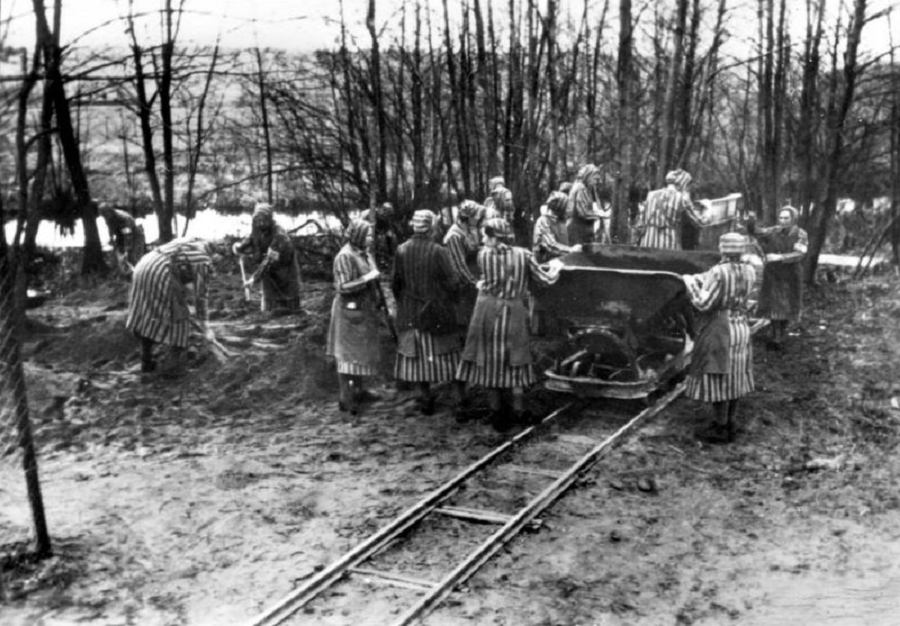
However, testimonies from some survivors portray her as a more complex character than many of her peers. Some Polish prisoners later recalled that she could show moments of restraint or unexpected sympathy, especially toward religious prisoners. She was known to have had conflicts with male SS officers over methods of punishment and the management of female prisoners. These accounts do not absolve her of complicity — she remained an integral part of a system built on brutality and terror — but they reveal the contradictions in how she was perceived: both feared and, in rare cases, respected.
In 1942, Langefeld was transferred to the women’s camp at Auschwitz-Birkenau. There she faced increasing tension with her superiors and was eventually dismissed from the SS due to alleged “emotional instability” and conflicts over camp administration. She returned to civilian life in Munich shortly before the war’s end.
Arrest, Trial, and Escape
After the war, Allied forces arrested Langefeld, and she was handed over to Polish authorities to stand trial for her role in Auschwitz and Ravensbrück. She was held in Kraków’s Montelupich prison, awaiting prosecution.
On 23 December 1946, she escaped from custody under mysterious circumstances. The escape itself remains one of the more extraordinary episodes in postwar judicial history. Unlike many other war criminals who fled through organized Nazi networks, Langefeld was reportedly aided by a group of Polish civilians — including former prisoners of Ravensbrück — who had developed a complicated sense of pity or moral debt toward her.
The motives for their assistance were varied and deeply personal. Some former prisoners claimed she had occasionally protected them from harsher punishments or showed small acts of mercy. Others were moved by religious forgiveness or compassion for her deteriorating mental health. These actions highlight one of the most paradoxical human stories of the postwar era: victims helping their former oppressor.
Life in Hiding and Return to Germany
Following her escape, Langefeld spent several years hidden by Polish families and in religious institutions. She lived under assumed names, working as a housekeeper and relying on the secrecy and silence of those who sheltered her.
By the early 1950s, she managed to return to West Germany, reportedly with the help of sympathizers and possibly some of her former acquaintances from before the war. In Germany, she lived a quiet, isolated life in Augsburg, avoiding public attention. She died there in 1974 at the age of seventy-three, having never faced trial for her actions during the war.
The Mystery and Moral Complexity of Her Disappearance
Langefeld’s disappearance raises profound questions about justice, memory, and human behavior under extreme conditions.
Limits of Postwar Justice
Her escape illustrates the weaknesses of early postwar justice systems, which struggled to prosecute the enormous number of Nazi perpetrators. Political turmoil, administrative disorganization, and shifting international priorities all contributed to her successful evasion.
Human Bonds Between Victims and Perpetrators
The fact that some of her former prisoners helped her escape challenges simplistic distinctions between victims and perpetrators. It reveals the strange moral and emotional entanglements that can arise in situations of extreme oppression, where personal relationships may transcend ideology, guilt, or hatred.
Silence and Memory
For decades, Langefeld’s story remained largely unknown. Those who had helped her feared social condemnation, while postwar societies in both Germany and Poland preferred to focus on clearer narratives of guilt and innocence. Only in the late 20th and early 21st centuries did researchers and filmmakers uncover her story through archival work and survivor interviews.
Historiography and Rediscovery
Recent scholarship and documentaries have revisited Langefeld’s life to explore themes of complicity, gender, and moral ambiguity. Her case serves as a lens for understanding the participation of women in Nazi crimes — showing how female administrators could wield considerable power within a patriarchal system and contribute to mass violence.
Documentary films and studies, such as The Case of Johanna Langefeld, have retraced her escape, interviewing witnesses and descendants of those who helped her. These works reveal not only the facts of her disappearance but also the emotional and ethical legacies it left behind in both Germany and Poland.
Ethical Reflections
The rediscovery of Johanna Langefeld’s story compels historians and the public to reflect on the blurred lines between guilt and redemption. Her participation in a system of organized cruelty cannot be negated by occasional acts of leniency or later remorse. Yet, the fact that some survivors chose to protect her challenges us to reconsider the capacity for forgiveness, the moral agency of individuals under totalitarian regimes, and the lasting psychological consequences of trauma.
Johanna Langefeld’s life and disappearance encapsulate the contradictions of postwar history: the tension between justice and mercy, the limits of retribution, and the complexity of human behavior under extreme moral strain. She was both a participant in one of history’s greatest crimes and the beneficiary of compassion from those she once oppressed.
Her story stands as a haunting reminder that history is rarely clear-cut — that even within systems of absolute evil, the actions and decisions of individuals can defy simple moral categories. The mystery of her escape and disappearance continues to fascinate scholars not only as an unsolved historical episode but as a profound case study in the ambiguities of guilt, forgiveness, and human conscience.
sources
https://www.bbc.com/news/world-europe-55661782
https://en.wikipedia.org/wiki/Johanna_Langefeld
https://blogs.timesofisrael.com/the-case-of-johanna-langefeld/
Please support us so we can continue our important work.
Donation
Your readership is what makes my site a success, and I am truly passionate about providing you with valuable content. I have been doing this at no cost and will continue to do so. Your voluntary donation of $2 or more, if you are able, would be a significant contribution to the continuation of my work. However, I fully understand if you’re not in a position to do so. Your support, in any form, is greatly appreciated. Thank you. To donate, click on the credit/debit card icon of the card you will use. If you want to donate more than $2, just add a higher number in the box left from the PayPal link. Your generosity is greatly appreciated. Many thanks.
$2.00
 History of Sorts
Leave a comment