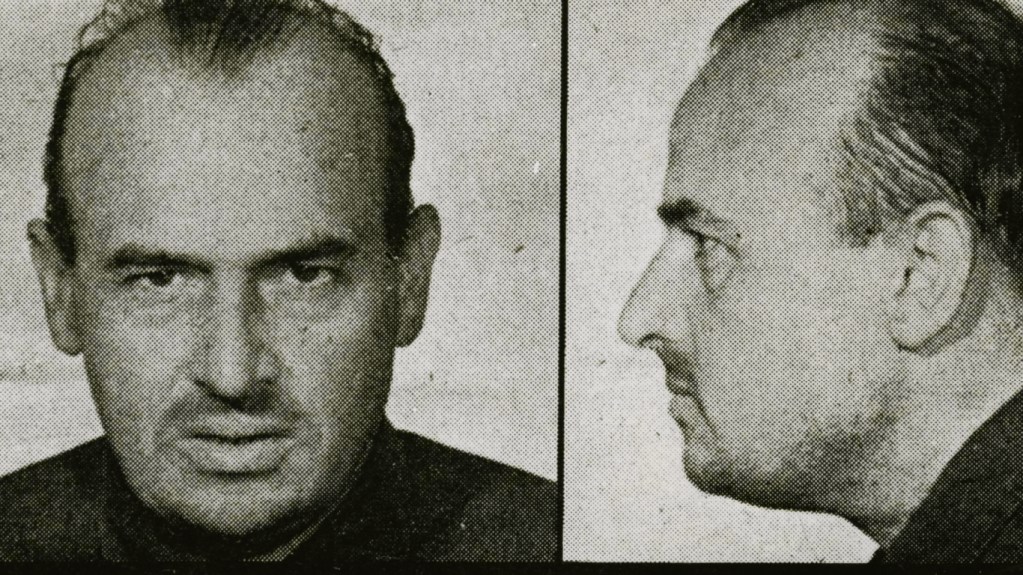
Hans Frank was a prominent figure in Nazi Germany, serving as Adolf Hitler’s personal legal advisor and later as the Governor-General of occupied Poland. Born on May 23, 1900, in Karlsruhe, Germany, Frank was initially trained as a lawyer, joining the Nazi Party in 1923. He quickly rose through the ranks by aligning himself closely with Hitler, leveraging his legal knowledge to help the Nazi Party navigate Germany’s political and legal challenges in the Weimar Republic. His expertise in law gave the Nazi regime a veneer of legitimacy in its early days, and he played a significant role in drafting policies that facilitated the Party’s consolidation of power.
After Hitler appointed him as the Governor-General of Poland in 1939, Frank’s role became particularly sinister. In this position, he oversaw a brutal occupation that involved the systematic oppression, exploitation, and extermination of the Polish population and Jewish communities within the territory. Frank’s administration enforced severe measures that resulted in millions of deaths. He directed policies that confiscated Polish property, organized forced labor, and orchestrated the establishment of ghettos where Polish Jews were crowded in abysmal conditions before being sent to extermination camps. Frank’s actions in Poland earned him the nickname “Butcher of Poland,” a title that reflected the ruthless policies he implemented.
Frank’s legal background played a paradoxical role during his governance. While he initially tried to uphold some semblance of legal structure in Poland, he ultimately found himself inextricably involved in the Nazi regime’s genocidal practices, despite personal conflicts he claimed to have regarding specific methods. By the end of the war, his adherence to Nazi ideology left him deeply implicated in the Holocaust. At the Nuremberg Trials, Frank attempted to distance himself from his actions in Poland, claiming he had opposed certain aspects of the Nazi regime. However, the overwhelming evidence of his involvement in the atrocities led to his conviction for war crimes and crimes against humanity. He was sentenced to death and was executed on October 16, 1946.
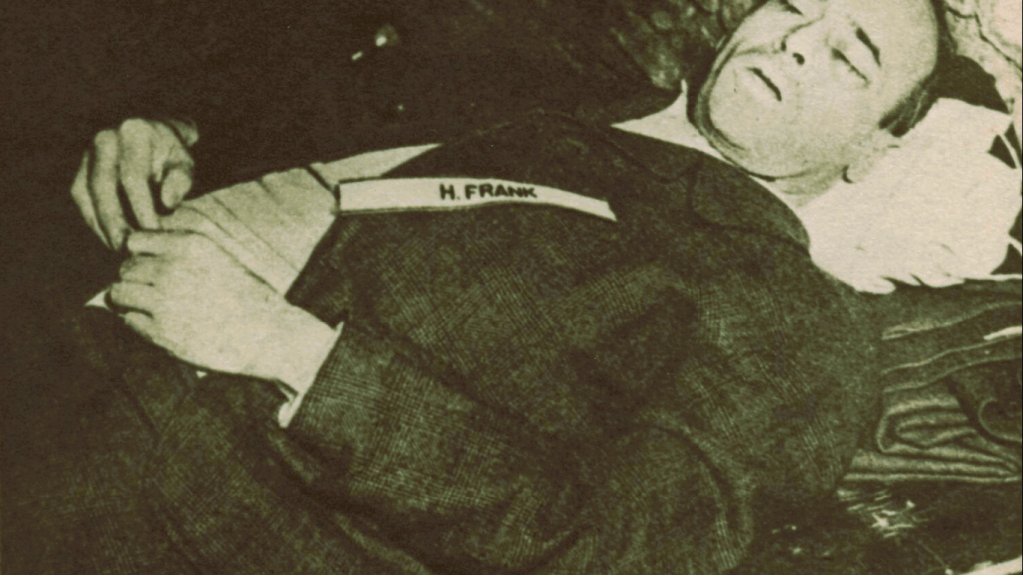
The following are excerpts from his work diary. The businesslike language is unsettling, revealing his role as a captain of industry in the machinery of evil.
December 16, 1941
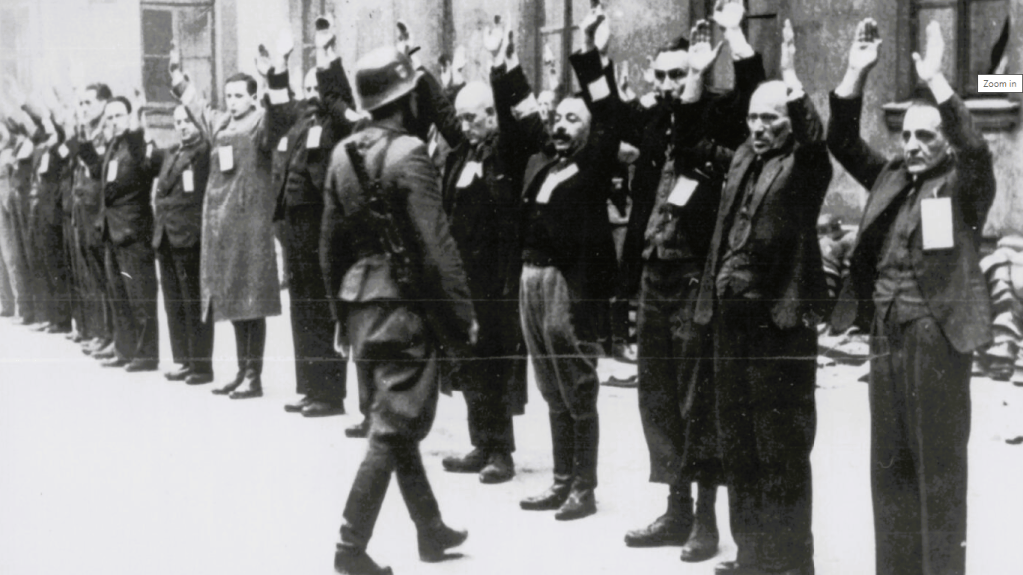
“But what should be done with the Jews? Do you believe they will be housed in settlement villages in the East? We were told in Berlin: why are we causing so much trouble? We can’t do anything with them in the East or in the Reich Commissariat, so handle it yourselves—liquidate them! Gentlemen, I must ask you to harden yourselves against any inclinations of pity. We must exterminate the Jews wherever we find them and whenever possible in order to maintain the stability of the Reich here. This will, of course, be carried out using methods different from those described by the Head of Department, Dr. Hummel. The judges of the special courts cannot be held accountable, as this falls outside the scope of traditional legal proceedings. Previous perspectives cannot be applied to such monumental, unprecedented tasks. In any case, we must find a way to achieve our objective, and I am actively considering this.
The Jews are also particularly harmful predators for us. We have an estimated 2.5 million Jews in the General Government—perhaps 3.5 million when including their extended families and all that accompanies them. We cannot simply shoot these 3.5 million Jews, nor can we poison them, but we can take measures that will ultimately lead to a successful extermination in coordination with the broader initiatives to be discussed by the Reich. The General Government must be made free of Jews, just as the Reich is. The exact methods and locations will be determined by the authorities we establish, and I will keep you informed on their effectiveness in due course…”
August 24, 1942
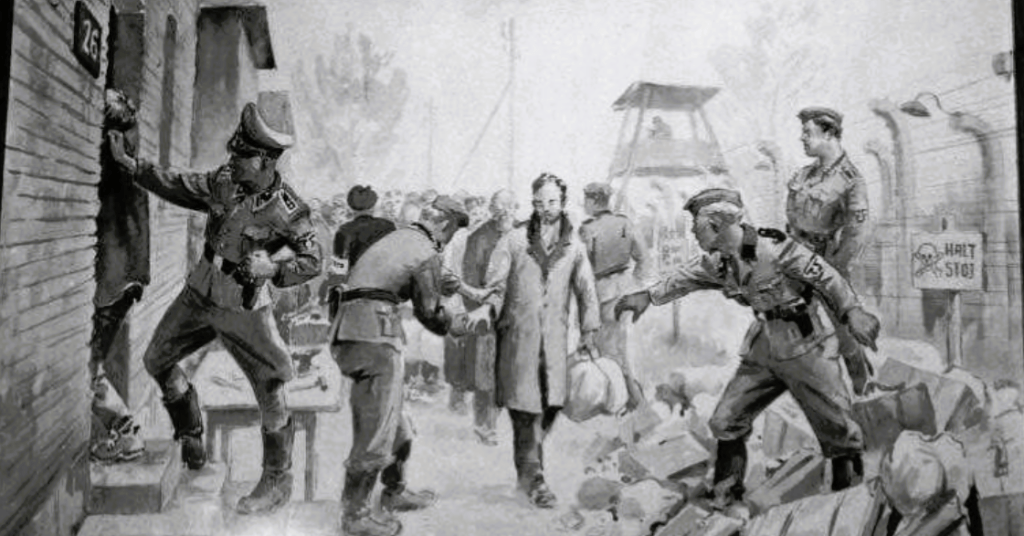
“The supply to the population previously estimated at 1.5 million Jews will be discontinued, except for an estimated 300,000 Jews who still serve German interests as craftsmen or in other roles. For these individuals, Jewish ration rates will be maintained, along with specific special allowances deemed necessary to sustain the workforce. The remaining 1.2 million Jews will no longer receive food provisions.
From January 1, 1943, to March 1, 1943, non-German ordinary consumers will receive 2.8 kg of bread per month instead of the previous 4.2 kg; from March 1, 1943, to July 30, 1943, the entire bread ration for these non-German ordinary consumers will be eliminated.
The people eligible for benefits are as follows: Approximately 3 million people, including armament workers, A and B cardholders, and their families, are entitled to benefits, while just over 3 million non-German ordinary consumers who do not work directly or indirectly for German interests are not. Armament workers, A and B cardholders, and their family members—totaling about 3 million—will continue to receive benefits at the current rates until the 1943 harvest.
[President Naumann announces further restrictive measures on grain, potato, and meat supplies. Any requests for increased rations for armament workers or A and B cardholders must be rejected, and new “needy persons” will not be admitted. Naumann also requests the postponement of resettlement projects and demands police protection for food warehouses. He insists that these new measures be kept “secret under all circumstances” for now. Frank summarizes:]
Gentlemen, you have heard President Naumann’s very serious statements. You must conclude that any discussion about the figures or measures he announced would be entirely unnecessary and, in fact, irrelevant. Such debate would imply that an alternative approach might be possible.
I must emphasize that some sectors of the administration will feel this impact significantly. The police will face it most directly, as they will need to anticipate increased smuggling and deterioration in food habits, if I may phrase it so. I am prepared to grant the police extraordinary powers to manage these challenges.
The economy will also be affected: a decline in productivity will be noticeable across all sectors, branches, and areas. I expect that our transportation sector will experience similar difficulties, with railway workers and others facing severe hardships, as the current food allowances were already inadequate due to deteriorating family living conditions. Monopolies will experience reduced revenue as the quantity of potatoes available for vodka production will decrease.
Germans in this region should not feel the impact. Even with this new plan, we intend to maintain quotas for the German population. The Wehrmacht and other barracked units in the area should also be unaffected, as we aim to keep their full quotas intact. [People traveling from the General Government to the Reich carrying food should not be checked for doing so.]
From this, you can appreciate the seriousness of the situation. Remember, however, that the food situation in the Reich is even less favorable. Despite all the difficulties you encounter here—whether through worker illness, cooperative collapse, or other setbacks—it is preferable for a Pole to fall than for a German to face defeat. Our condemnation of 1.2 million Jews to starvation is a mere remark. If the Jews do not starve, it will likely accelerate anti-Jewish measures.”
March 4,1944
“Above and behind all of this, of course, stands the Jew. It is his game, his strength, his energy. Imagine the current situation in the General Government if we still had one and a half to two million Jews in the country, as we did in 1939. Recall the incredibly difficult task we undertook to resolve the “Jewish problem” in the General Government. If, today, a complainer here or there mourns the Jews with tears in their eyes and says, “Isn’t it terrible what was done to the Jews?” we must ask this person whether they would still think the same today.
If we still had these two million Jews actively at work here, with only a small number of German men in the country, we would no longer be in control of the situation. We would have sabotage across the land, making it impossible to save ourselves. This is also a success of National Socialism, for no one else could have managed such a task in their lifetime. Only because we began anti-Semitism in 1919 did we find the strength to put it into practice twenty years later. We knew from the outset that Jews around the world would not accept this, but that means nothing to us. Jews are a race that must be eradicated; wherever we encounter one, it is the end.”
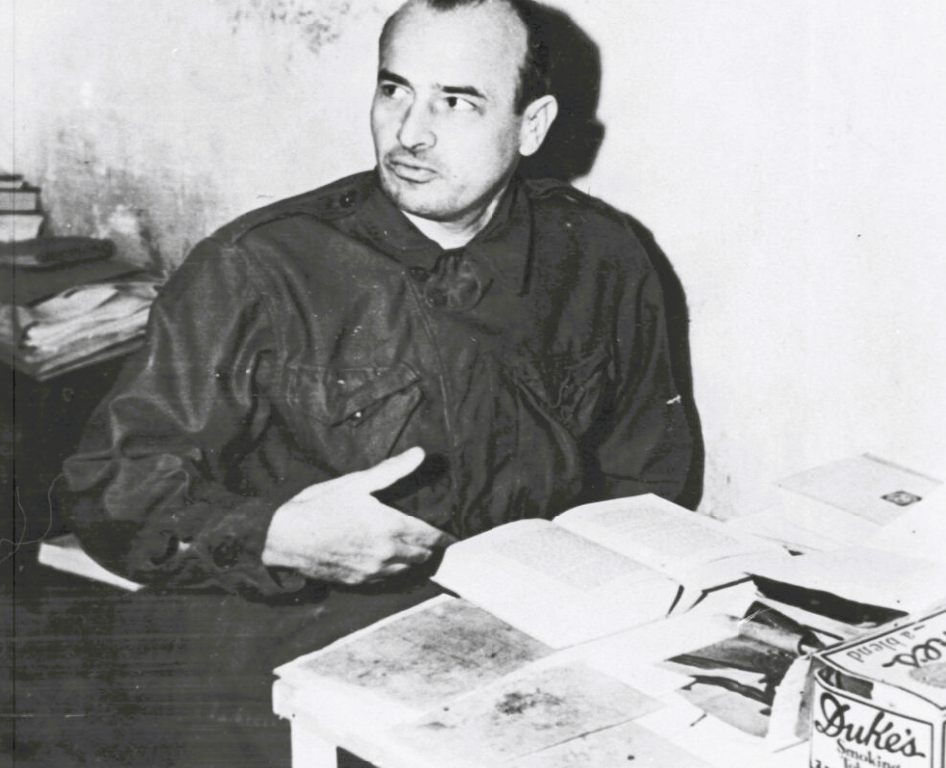
Hans Frank was captured by U.S. Army troops on May 4, 1945. He was indicted for trial before the International Military Tribunal at Nürnberg. He was found guilty of war crimes and crimes against humanity and, on October 1, 1946, was sentenced to hang.
Sources
https://www.britannica.com/biography/Hans-Frank
Donation
Your readership is what makes my site a success, and I am truly passionate about providing you with valuable content. I have been doing this at no cost and will continue to do so. Your voluntary donation of $2 or more, if you are able, would be a significant contribution to the continuation of my work. However, I fully understand if you’re not in a position to do so. Your support, in any form, is greatly appreciated. Thank you. To donate, click on the credit/debit card icon of the card you will use. If you want to donate more than $2, just add a higher number in the box left from the PayPal link. Your generosity is greatly appreciated. Many thanks.
$2.00
 History of Sorts
Leave a comment