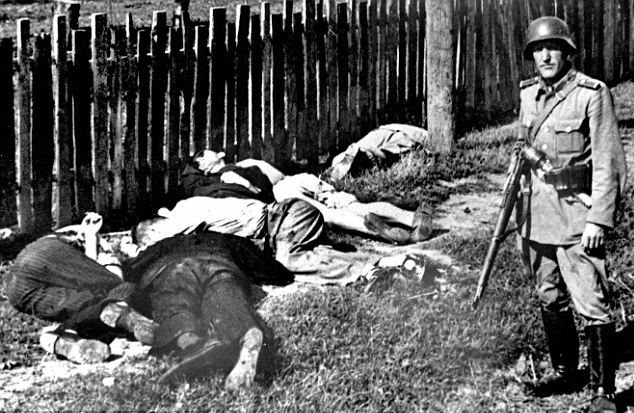
Many still believe that Nazi atrocities were carried out solely by the SS, SS-Totenkopfverbände, Einsatzgruppen, and Waffen-SS, and not by regular Wehrmacht or Luftwaffe personnel. However, in recent years, evidence has shown that members of das Heer were also responsible for war crimes—sometimes committing acts even more brutal than those of the SS.
Below are eyewitness accounts from Wehrmacht and Luftwaffe soldiers collected in interviews, some of which were later included in the book Soldaten.
Eyewitness account of Willy Peter Reese, a young Wehrmacht soldier:
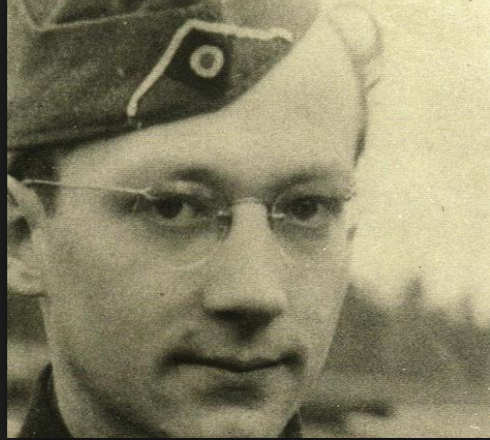
Willy Peter Reese, an infantryman who fought on the Russian front and died in 1944 at the age of 23, kept a diary documenting the brutal actions of German soldiers. His entries reveal how they killed prisoners of war, committed rape, forcibly evicted pregnant women and children from their homes, and stole food.
Reese wrote:
“We were without feeling for the suffering of others. We bragged about what we had conquered and about the effect a pistol could have on a defenseless woman.”
He also described acts of humiliation and violence:
“We danced in the railway carriages and fired into the air, made a captured Russian woman dance naked for us, and smeared her breasts with boot polish. We made her as drunk as we were.”
Luftwaffe accounts
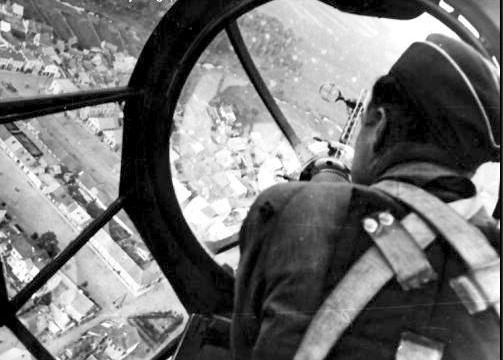
Fighter pilot Budde and Corporal Bartels were captured by the British in early 1943. Their conversation revealed the casual brutality of some Luftwaffe operations:
Bartels: “But not destructive attacks with a specific target, like what we did?”
Budde: “No, just spoiling attacks. We flew two of them, which basically meant shelling buildings. We encountered some of the nicest targets, like mansions on a mountain. When you flew at them from below and fired into them, you could see the windows rattling and then the roof going up in the air. There was the time we hit Ashford—there was an event on the market square, crowds of people, speeches being given. We really sprayed them! That was fun!”
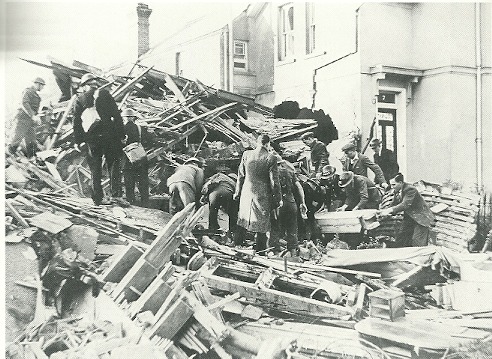
Two other pilots, Bäumer and Greim, recounted some of their “amusing” experiences in a conversation with fellow soldiers:
Bäumer:
“We had a 2-centimeter gun installed on the front of the aircraft. Then we flew low over the streets, and when we saw cars coming from the other direction, we turned on our headlights so they would think another car was approaching. Then we shot at them with the gun. We had a lot of successes that way. It was great, and it was a lot of fun. We attacked trains and other targets the same way.”
Greim:
“We once flew a low-altitude attack near Eastbourne. When we got there, we saw a big castle where apparently a ball or some event was being held. There were lots of women in nice clothes and a band playing. We flew past the first time, but then we attacked and really stuck it to them. Now that, my dear friend, was a lot of fun.”
Wehrmacht account: Major General Walter Bruns
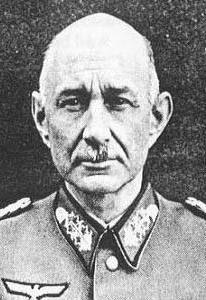
In April 1945, Major General Walter Bruns described what he witnessed during a typical “Jew operation”:
“The trenches were 24 meters long and about 3 meters wide. People had to lie down like sardines in a can, with their heads toward the middle. At the top, six marksmen with submachine guns shot them in the back of the neck. When I arrived, the trench was already full, so those still alive had to lie on top of the others and were then shot. They had to be arranged in neat layers so that it wouldn’t take up too much space. Before this, they had to turn in their valuables at another station.”
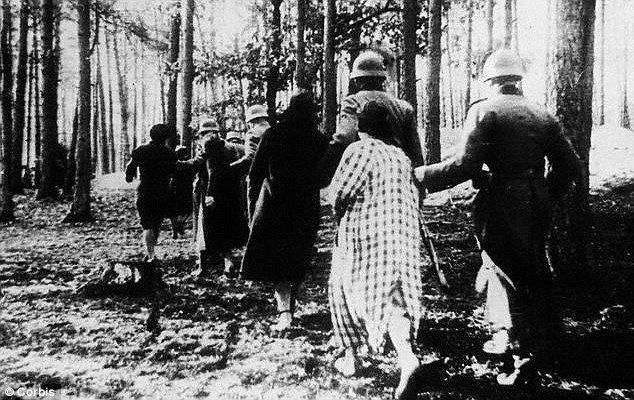
“The edge of the forest was here, and within it were the three trenches that Sunday. There was a line stretching for one-and-a-half kilometers, moving very slowly—they were standing in line to be killed. As they got closer, they could see what was happening inside. Roughly at this spot, they had to hand over their jewelry and suitcases. A little farther along, they had to remove their clothes, leaving only their shirts and underpants. It was just women and little children, some as young as two years old.”
The Vinkt massacre
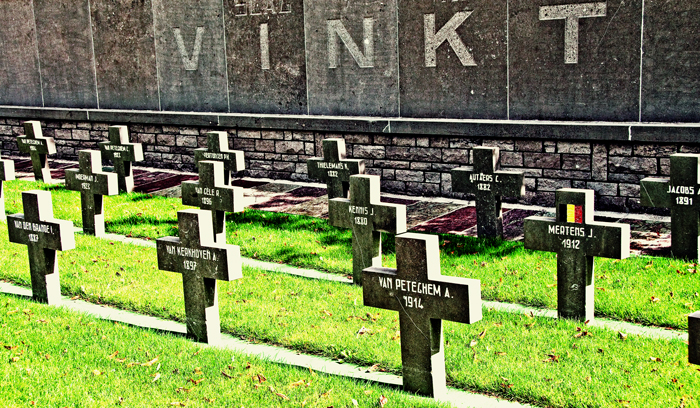
The Vinkt Massacre was a war crime that occurred in the Belgian villages of Vinkt and Meigem, near Ghent, between 26 and 28 May 1940, during the Battle of the Lys. During the massacre, between 86 and 140 civilians were deliberately killed by German Wehrmacht troops from the 337th Infantry Regiment, apparently in retaliation for the Belgian army’s resistance in the village.
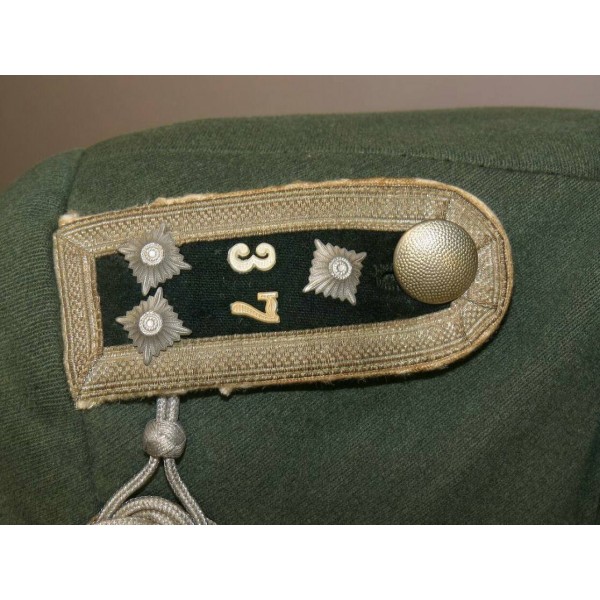
Arriving near the bridge on 25 May, the German 225th Division—composed mostly of poorly trained soldiers from Itzehoe, north of Hamburg—found it impossible to cross. They then took 140 civilians hostage and used them as human shields.
Boasting and terror tactics
Lance Corporal Sommer recounted a story about a lieutenant he served under on the Italian front, illustrating how common it was to terrorize the civilian population after the collapse of the Mussolini government:
Sommer:
“Even in Italy, whenever we arrived in a new place, he would always say: ‘Let’s kill a couple of people first!’ I could speak Italian, so I always got special tasks. He would say: ‘Okay, let’s kill 20 men so we can have some peace and quiet here. We don’t want them getting any ideas!’” (laughter)
“Then we staged a little attack with the motto: ‘Anyone gives us the slightest trouble and we’ll kill another 50.’”
Bender:
“What criteria did he use to select them? Did he just pull them out at random?”
Sommer:
“Yeah, 20 men, just like that. ‘Come here,’ he’d say. Then he’d line them up on the market square, pick up three MGs—rat-a-tat-tat—and there they were, dead. That was how it happened.”ened. Then he would say: ‘Great! Pigs!’ He hated the Italians so much, you wouldn’t believe it.”
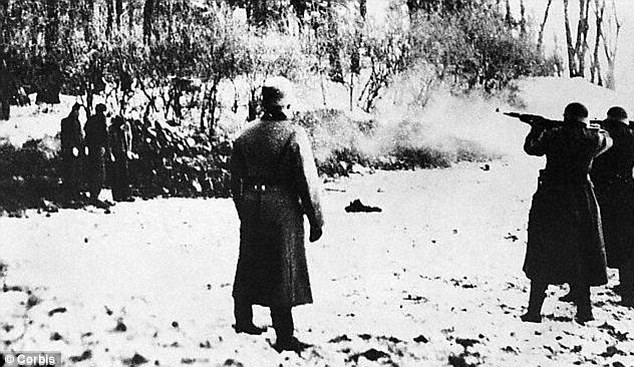
In another case, a senior German army officer expressed disgust at a junior lieutenant’s gleeful account of atrocities in Russia. The lieutenant described how he and his men raped a woman suspected of being a spy and then threw hand grenades near her. “She didn’t half scream when they exploded,” the lieutenant jeered.
Involvement of the German Navy
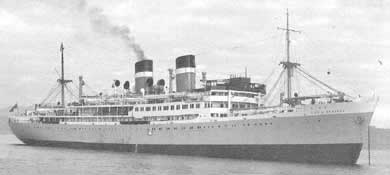
Even the German navy participated in atrocities. In March 1943, Solm, a seaman on a submarine, told a cellmate how he had “knocked off a children’s transport,” resulting in the deaths of more than 50 children. The transport he referred to was most likely the British passenger ship City of Benares, which was sunk in the North Atlantic on 17 September 1940.
““Did they all drown?”
“Yes, they’re all dead.”
“How big was it?”
“6,000 tons.”
“How did you know that?”
“Via the radio.”
sources
https://www.h-net.org/reviews/showpdf.php?id=2647
https://en.wikipedia.org/wiki/War_crimes_of_the_Wehrmacht
Donation
Your readership is what makes my site a success, and I am truly passionate about providing you with valuable content. I have been doing this at no cost and will continue to do so. Your voluntary donation of $2 or more, if you are able, would be a significant contribution to the continuation of my work. However, I fully understand if you’re not in a position to do so. Your support, in any form, is greatly appreciated. Thank you. To donate, click on the credit/debit card icon of the card you will use. If you want to donate more than $2, just add a higher number in the box left from the PayPal link. Your generosity is greatly appreciated. Many thanks.
$2.00
 History of Sorts
Leave a comment