The Liberation of Ohrdruf Concentration Camp: A Turning Point in the Final Days of World War II

The liberation of the Ohrdruf concentration camp on April 4, 1945, marked a significant moment in the final months of World War II. Located near the German town of Gotha, Ohrdruf was a subcamp of the larger Buchenwald concentration camp. The camp’s discovery by the advancing United States Army not only revealed the atrocities committed by the Nazi regime but also played a crucial role in shaping global awareness of the Holocaust. The event had a profound impact on both the liberating soldiers and the broader international community.

Historical Background and Conditions at Ohrdruf

Ohrdruf was established in November 1944 and primarily served as a forced labor camp. Prisoners, composed of Jews, Soviet POWs, and political dissidents, were subjected to grueling labor, working under inhumane conditions to construct military infrastructure such as railway lines and underground tunnels for Nazi operations. Malnutrition, disease, physical abuse, and execution were rampant, making survival exceedingly difficult for those imprisoned.

As the Allies advanced into Germany in early 1945, the Nazi regime sought to dismantle evidence of their crimes. In March and early April, many prisoners from Ohrdruf were force-marched to other camps, leading to mass deaths due to exhaustion and starvation. Those too weak to march were executed, and some buildings containing prisoner corpses were set on fire in an effort to erase traces of the atrocities.

The Liberation by the U.S. Army

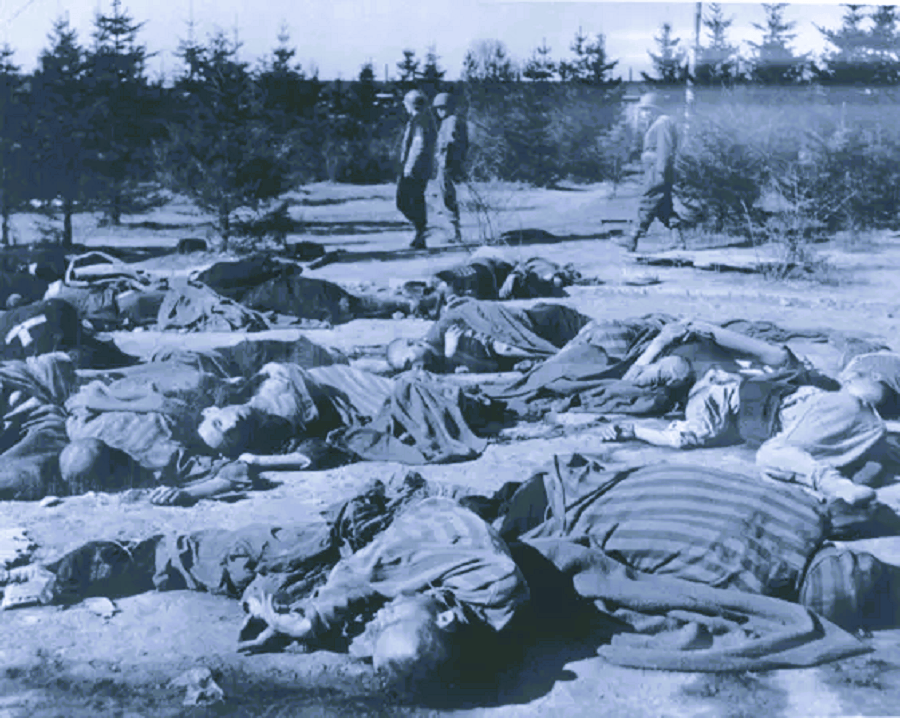
On April 4, 1945, units of the U.S. 4th Armored Division and the 89th Infantry Division entered Ohrdruf, becoming the first American forces to liberate a concentration camp. What they encountered was beyond comprehension. The soldiers found piles of corpses, emaciated prisoners, and evidence of mass executions. Some of the prisoners who had survived were in a dire state, barely able to move or communicate due to severe malnutrition and trauma.

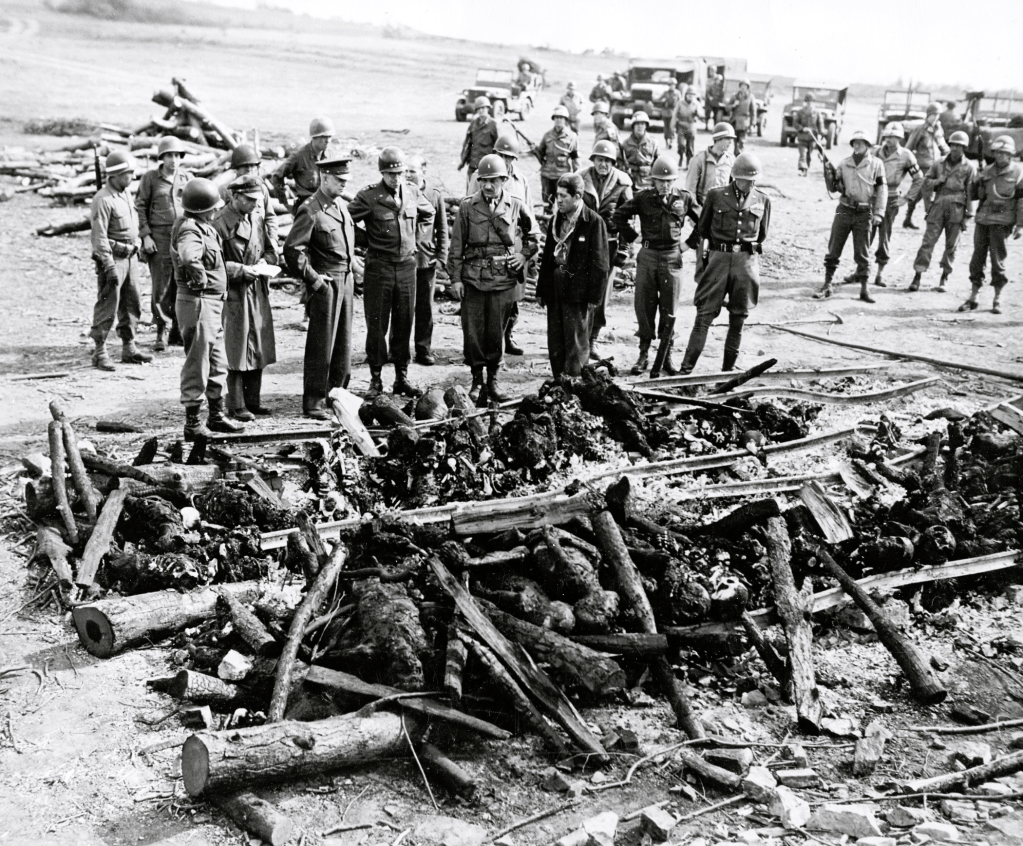
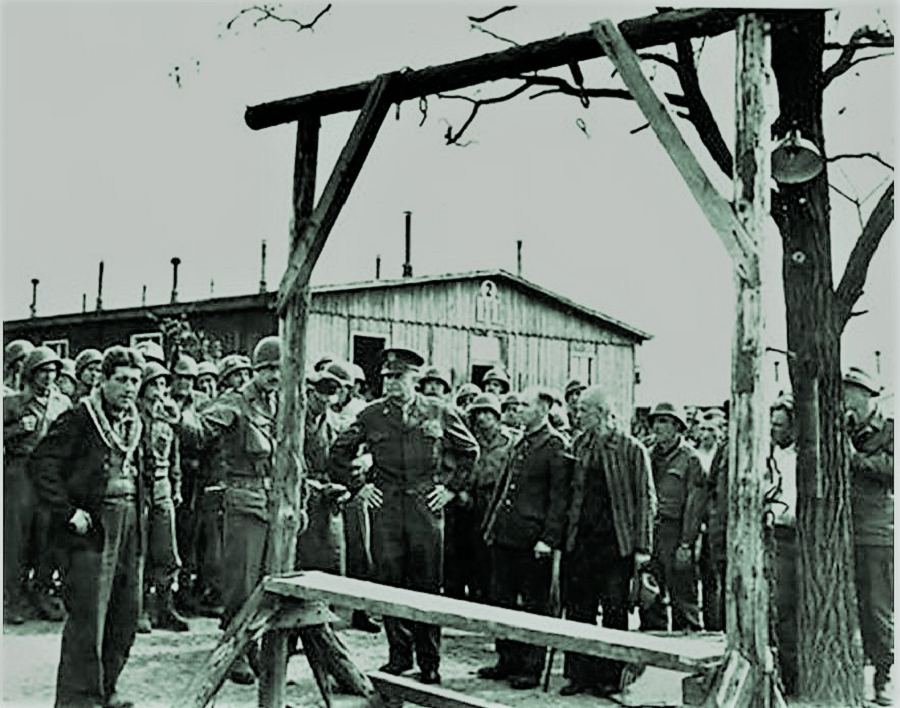
General Dwight D. Eisenhower, along with Generals George S. Patton and Omar Bradley, visited the camp shortly after its liberation. Eisenhower ordered extensive documentation of the conditions, anticipating future denial of these crimes. Photographs and testimonies were collected, and local German officials were forced to witness the horrors firsthand to acknowledge the extent of the Nazi regime’s brutality.
Impact and Aftermath

The liberation of Ohrdruf had an immediate and lasting impact. It was the first direct encounter many American soldiers and leaders had with Nazi concentration camps, reinforcing their commitment to exposing and prosecuting war crimes. The documentation of the site became critical evidence in subsequent trials, including the Nuremberg Trials, where Nazi leaders were held accountable for crimes against humanity.

The public release of images and reports from Ohrdruf shocked the world. Journalists, military personnel, and political leaders who saw the evidence began to understand the scale of the Holocaust, leading to greater international support for bringing the perpetrators to justice. Additionally, the horrors of Ohrdruf influenced future efforts to establish memorials, education programs, and historical studies on genocide prevention.

The liberation of Ohrdruf was a pivotal moment in the final stages of World War II. It exposed the unimaginable suffering inflicted by the Nazi regime and helped shape the world’s understanding of the Holocaust. The testimonies and documentation from the camp’s liberation ensured that the memory of the victims would not be forgotten. It stands as a stark reminder of the consequences of hatred and tyranny, reinforcing the necessity of vigilance against such atrocities in the modern world.

The Ohrdruf concentration camp was liberated on April 4, 1945, by the U.S. Army’s 4th Armored Division, led by Brigadier General Joseph F. H. Cutrona, alongside the 89th Infantry Division. It was the first Nazi concentration camp discovered and freed by American forces. A scene in Band of Brothers depicts the liberation of a concentration camp—though the name isn’t mentioned, it is widely believed to represent Ohrdruf.

One of the soldiers from the 4th Armored Division, David Cohen, recalled the horrors they encountered:

“We walked into a shed, and the bodies were piled up like wood. There are no words to describe it. The smell was overpowering and unforgettable.”

The sheer brutality of what the 4th Armored Division uncovered prompted General Dwight D. Eisenhower, Supreme Commander of the Allied Forces in Europe, to visit the camp on April 12, accompanied by Generals George S. Patton and Omar Bradley. Following his visit, Eisenhower cabled General George C. Marshall, the head of the Joint Chiefs of Staff in Washington, with a chilling description of what he had witnessed:

“The most interesting—although horrible—a sight that I encountered during the trip was a visit to a German internment camp near Gotha. The things I saw beggar description. While I was touring the camp, I encountered three men who had been inmates and had escaped by one ruse or another. I interviewed them through an interpreter. The visual evidence and the verbal testimony of starvation, cruelty, and bestiality were so overpowering as to leave me a bit sick.

In one room, where bodies were piled up—twenty or thirty naked men, killed by starvation—George Patton would not even enter. He said he would get sick if he did so. I made the visit deliberately, in order to be in a position to give first-hand evidence of these things if ever, in the future, there develops a tendency to charge these allegations merely to propaganda.”

The gruesome discoveries at Ohrdruf deeply affected even battle-hardened soldiers. General Patton later wrote in his diary:

“In a shed … was a pile of about 40 completely naked human bodies in the last stages of emaciation. These bodies were lightly sprinkled with lime, not for the purpose of destroying them, but for the purpose of removing the stench.

When the shed was full—I presume its capacity to be about 200—the bodies were taken to a pit a mile from the camp where they were buried. The inmates claimed that 3,000 men, who had either been shot in the head or had died of starvation, had been buried there since January 1.

When we began to approach the camp, the Germans attempted to remove the evidence of their crimes. They forced some of the prisoners to exhume the bodies and place them on a massive griddle made of railway tracks laid on brick foundations. The bodies were then covered in pitch, set on fire, and burned with pinewood and coal. However, their efforts were not entirely successful—there was still a pile of human bones, skulls, and charred remains that must have accounted for hundreds.”

Other soldiers documented their experiences at Ohrdruf as well. John W. Becket, who entered the camp on April 17, wrote:

“As we came along our way, we saw a sign pointing to ‘OHRDRUF,’ 15 kilometers from here. That is where the Germans had a concentration camp. What we saw was enough—and at that, it had already been pretty well cleaned up.”

He also recounted witnessing an interrogation:

“An MP captain was questioning one of the liberated prisoners. He was Polish, spoke German, and as he related his story, it was translated to us by the captain. The prisoner showed us places where people were beaten, tortured, and executed. As he spoke, tears seemed to come to his eyes, but he fought them down.

All such atrocities, reminiscent of the worst of savage and Roman times, exist here in 1945. How is it possible? How can one man treat another like this? Perhaps the question cannot be answered. I pray that those responsible will receive their just rewards, both in this life and the next. Practically the whole battery went to see the camp—Patton insisted that as many of his men as possible witness it, to understand that it was real and not propaganda. It’s real. All too grotesquely real.”
Decades later, Bruce Nickols, another soldier who had entered Ohrdruf, reflected on the experience in a 1998 report:

“Fifty years have passed since that day, but I still recall my first impression of the camp called Ohrdruf. I later learned that it was administratively linked to Buchenwald. Ohrdruf was named after the nearby town, which was locally known for being a place where Johann Sebastian Bach composed some of his works.”

Sources

https://encyclopedia.ushmm.org/content/en/timeline-event/holocaust/1942-1945/liberation-of-ohrdruf

https://www.nationalww2museum.org/war/articles/ohrdruf-concentration-camp

https://encyclopedia.ushmm.org/content/en/article/ohrdruf

https://en.wikipedia.org/wiki/Ohrdruf_concentration_camp

Please support us so we can continue our important work.

Donation

Your readership is what makes my site a success, and I am truly passionate about providing you with valuable content. I have been doing this at no cost and will continue to do so. Your voluntary donation of $2 or more, if you are able, would be a significant contribution to the continuation of my work. However, I fully understand if you’re not in a position to do so. Your support, in any form, is greatly appreciated. Thank you. To donate, click on the credit/debit card icon of the card you will use. If you want to donate more than $2, just add a higher number in the box left from the PayPal link. Your generosity is greatly appreciated. Many thanks.

$2.00

One response to “The Liberation of Ohrdruf Concentration Camp: A Turning Point in the Final Days of World War II”

  1. I NEVER HEARD OF THIS CAMP TIL NOW. I DO REMEMBER AS A CHILD OF SURVIVORS, ALWAYS BEING AFRAID TO USE THE WORD CAMP LEST IT BRING BAD MEMORIES TO MY PARENTS. I THANK YOU FOR YOUR TEACHINGS

    On Sun, Apr 5, 2026 at 12:41 PM History of Sorts < comment-reply@wordpress.com> wrote:

    The liberation of the Ohrdruf concentration camp on April 4, 1945, marked > a significant moment in the final months of World War II. Located near the > German town of Gotha,… > > [image: History of Sorts site icon] History of Sorts > http://dirkdeklein.net Read on blog > https://public-api.wordpress.com/bar/?stat=groovemails-events&bin=wpcom_email_click&redirect_to=http%3A%2F%2Fdirkdeklein.net%2F2026%2F04%2F05%2Fthe-liberation-of-ohrdruf-concentration-camp-a-turning-point-in-the-final-days-of-world-war-ii%2F&sr=0&signature=b88cc222d6abc34770756a2e90052366&blog_id=104209555&user=256744417&_e=eyJlcnJvciI6bnVsbCwiYmxvZ19pZCI6MTA0MjA5NTU1LCJibG9nX2xhbmciOiJlbiIsInNpdGVfaWRfbGFiZWwiOiJ3cGNvbSIsImVtYWlsX25hbWUiOiJuZXctcG9zdCIsIl91aSI6MjU2NzQ0NDE3LCJlbWFpbF9pZCI6IjNkNWM1ZmVkZmE0MzMwYmYyMjY3ODY0ZDYzMTViMWJmIiwiZGF0ZV9zZW50IjoiMjAyNi0wNC0wNSIsImxvY2FsZSI6ImVuIiwiY3VycmVuY3kiOiJVU0QiLCJjb3VudHJ5X2NvZGVfc2lnbnVwIjoiVVMiLCJ1c2VyX2lkIjoyNTY3NDQ0MTcsInVzZXJfZW1haWwiOiJ0emlwcG9yYWhiYXRhbWlAZ21haWwuY29tIiwiZW1haWxfZG9tYWluIjoiZ21haWwuY29tIiwiZG9tYWluIjoiZGlya2Rla2xlaW4ud29yZHByZXNzLmNvbSIsImZyZXF1ZW5jeSI6IjAiLCJkaWdlc3QiOiIwIiwiaGFzX2h0bWwiOiIxIiwic3Vic2NyaWJlcl9pZCI6IjIzMjYyMjc5MSIsInRlbXBsYXRlIjoibmV3LXBvc3QiLCJzY2hlZHVsZWRfZnJvbSI6InN1YnNjcmlwdGlvbnMiLCJoYXNfZmVhdHVyZWRfaW1hZ2UiOiIwIiwicG9zdF9pZCI6MzM3MDg5LCJsaW5rX2Rlc2MiOiJwb3N0LXVybCIsInN1YnNjcmlwdGlvbl9pZCI6IjIzMjYyMjc5MSIsIl9kciI6bnVsbCwiX2RsIjoiXC93cFwvdjJcL3NpdGVzXC8xMDQyMDk1NTVcL3Bvc3RzXC8zMzcwODk/X2VudmVsb3BlPTEmX2d1dGVuYmVyZ19ub25jZT04MTdlMjdhYThlJl9sb2NhbGU9dXNlciIsIl91dCI6IndwY29tOnVzZXJfaWQiLCJfdWwiOiJ0emlwcG9yYWhiYXRhbWkiLCJfZW4iOiJ3cGNvbV9lbWFpbF9jbGljayIsIl90cyI6MTc3NTQwNzI2NzUzNywiYnJvd3Nlcl90eXBlIjoicGhwLWFnZW50IiwiX2F1YSI6IndwY29tLXRyYWNrcy1jbGllbnQtdjAuMyIsImJsb2dfdHoiOiIwIiwidXNlcl9sYW5nIjoiZW4ifQ=&_z=z > or Reader > https://public-api.wordpress.com/bar/?stat=groovemails-events&bin=wpcom_email_click&redirect_to=https%3A%2F%2Fwww.wordpress.com%2Freader%2Fblogs%2F104209555%2Fposts%2F337089&sr=0&signature=86daaf88f4a1abfae17c72b6e302ec52&blog_id=104209555&user=256744417&_e=eyJlcnJvciI6bnVsbCwiYmxvZ19pZCI6MTA0MjA5NTU1LCJibG9nX2xhbmciOiJlbiIsInNpdGVfaWRfbGFiZWwiOiJ3cGNvbSIsImVtYWlsX25hbWUiOiJuZXctcG9zdCIsIl91aSI6MjU2NzQ0NDE3LCJlbWFpbF9pZCI6IjNkNWM1ZmVkZmE0MzMwYmYyMjY3ODY0ZDYzMTViMWJmIiwiZGF0ZV9zZW50IjoiMjAyNi0wNC0wNSIsImxvY2FsZSI6ImVuIiwiY3VycmVuY3kiOiJVU0QiLCJjb3VudHJ5X2NvZGVfc2lnbnVwIjoiVVMiLCJ1c2VyX2lkIjoyNTY3NDQ0MTcsInVzZXJfZW1haWwiOiJ0emlwcG9yYWhiYXRhbWlAZ21haWwuY29tIiwiZW1haWxfZG9tYWluIjoiZ21haWwuY29tIiwiZG9tYWluIjoiZGlya2Rla2xlaW4ud29yZHByZXNzLmNvbSIsImZyZXF1ZW5jeSI6IjAiLCJkaWdlc3QiOiIwIiwiaGFzX2h0bWwiOiIxIiwic3Vic2NyaWJlcl9pZCI6IjIzMjYyMjc5MSIsInRlbXBsYXRlIjoibmV3LXBvc3QiLCJzY2hlZHVsZWRfZnJvbSI6InN1YnNjcmlwdGlvbnMiLCJoYXNfZmVhdHVyZWRfaW1hZ2UiOiIwIiwicG9zdF9pZCI6MzM3MDg5LCJsaW5rX2Rlc2MiOiJyZWFkZXItdXJsIiwic3Vic2NyaXB0aW9uX2lkIjoiMjMyNjIyNzkxIiwiX2RyIjpudWxsLCJfZGwiOiJcL3dwXC92Mlwvc2l0ZXNcLzEwNDIwOTU1NVwvcG9zdHNcLzMzNzA4OT9fZW52ZWxvcGU9MSZfZ3V0ZW5iZXJnX25vbmNlPTgxN2UyN2FhOGUmX2xvY2FsZT11c2VyIiwiX3V0Ijoid3Bjb206dXNlcl9pZCIsIl91bCI6InR6aXBwb3JhaGJhdGFtaSIsIl9lbiI6IndwY29tX2VtYWlsX2NsaWNrIiwiX3RzIjoxNzc1NDA3MjY3NTM3LCJicm93c2VyX3R5cGUiOiJwaHAtYWdlbnQiLCJfYXVhIjoid3Bjb20tdHJhY2tzLWNsaWVudC12MC4zIiwiYmxvZ190eiI6IjAiLCJ1c2VyX2xhbmciOiJlbiJ9&_z=z > The Liberation of Ohrdruf Concentration Camp: A Turning Point in the Final > Days of World War II > https://dirkdeklein.net/2026/04/05/the-liberation-of-ohrdruf-concentration-camp-a-turning-point-in-the-final-days-of-world-war-ii/ > [image: dirkdeklein Avatar] > > By dirkdeklein on April 5, 2026 > > The liberation of the Ohrdruf concentration camp on April 4, 1945, marked > a significant moment in the final months of World War II. Located near the > German town of Gotha, Ohrdruf was a subcamp of the larger Buchenwald > concentration camp. The camp’s discovery by the advancing United States > Army not only revealed the atrocities committed by the Nazi regime but also > played a crucial role in shaping global awareness of the Holocaust. The > event had a profound impact on both the liberating soldiers and the broader > international community. > > Historical Background and Conditions at Ohrdruf > > Ohrdruf was established in November 1944 and primarily served as a forced > labor camp. Prisoners, composed of Jews, Soviet POWs, and political > dissidents, were subjected to grueling labor, working under inhumane > conditions to construct military infrastructure such as railway lines and > underground tunnels for Nazi operations. Malnutrition, disease, physical > abuse, and execution were rampant, making survival exceedingly difficult > for those imprisoned. > > As the Allies advanced into Germany in early 1945, the Nazi regime sought > to dismantle evidence of their crimes. In March and early April, many > prisoners from Ohrdruf were force-marched to other camps, leading to mass > deaths due to exhaustion and starvation. Those too weak to march were > executed, and some buildings containing prisoner corpses were set on fire > in an effort to erase traces of the atrocities. > > The Liberation by the U.S. Army > > On April 4, 1945, units of the U.S. 4th Armored Division and the 89th > Infantry Division entered Ohrdruf, becoming the first American forces to > liberate a concentration camp. What they encountered was beyond > comprehension. The soldiers found piles of corpses, emaciated prisoners, > and evidence of mass executions. Some of the prisoners who had survived > were in a dire state, barely able to move or communicate due to severe > malnutrition and trauma. > > General Dwight D. Eisenhower, along with Generals George S. Patton and > Omar Bradley, visited the camp shortly after its liberation. Eisenhower > ordered extensive documentation of the conditions, anticipating future > denial of these crimes. Photographs and testimonies were collected, and > local German officials were forced to witness the horrors firsthand to > acknowledge the extent of the Nazi regime’s brutality. > > Impact and Aftermath > > The liberation of Ohrdruf had an immediate and lasting impact. It was the > first direct encounter many American soldiers and leaders had with Nazi > concentration camps, reinforcing their commitment to exposing and > prosecuting war crimes. The documentation of the site became critical > evidence in subsequent trials, including the Nuremberg Trials, where Nazi > leaders were held accountable for crimes against humanity. > > The public release of images and reports from Ohrdruf shocked the world. > Journalists, military personnel, and political leaders who saw the evidence > began to understand the scale of the Holocaust, leading to greater > international support for bringing the perpetrators to justice. > Additionally, the horrors of Ohrdruf influenced future efforts to establish > memorials, education programs, and historical studies on genocide > prevention. > > The liberation of Ohrdruf was a pivotal moment in the final stages of > World War II. It exposed the unimaginable suffering inflicted by the Nazi > regime and helped shape the world’s understanding of the Holocaust. The > testimonies and documentation from the camp’s liberation ensured that the > memory of the victims would not be forgotten. It stands as a stark reminder > of the consequences of hatred and tyranny, reinforcing the necessity of > vigilance against such atrocities in the modern world. > > The Ohrdruf concentration camp was liberated on April 4, 1945, by the U.S. > Army’s 4th Armored Division, led by Brigadier General Joseph F. H. Cutrona, > alongside the 89th Infantry Division. It was the first Nazi concentration > camp discovered and freed by American forces. A scene in Band of > Brothers depicts the liberation of a concentration camp—though the name > isn’t mentioned, it is widely believed to represent Ohrdruf. > > One of the soldiers from the 4th Armored Division, David Cohen, recalled > the horrors they encountered: > > “We walked into a shed, and the bodies were piled up like wood. There are > no words to describe it. The smell was overpowering and unforgettable.” > > The sheer brutality of what the 4th Armored Division uncovered prompted > General Dwight D. Eisenhower, Supreme Commander of the Allied Forces in > Europe, to visit the camp on April 12, accompanied by Generals George S. > Patton and Omar Bradley. Following his visit, Eisenhower cabled General > George C. Marshall, the head of the Joint Chiefs of Staff in Washington, > with a chilling description of what he had witnessed: > > “The most interesting—although horrible—a sight that I encountered during > the trip was a visit to a German internment camp near Gotha. The things I > saw beggar description. While I was touring the camp, I encountered three > men who had been inmates and had escaped by one ruse or another. I > interviewed them through an interpreter. The visual evidence and the verbal > testimony of starvation, cruelty, and bestiality were so overpowering as to > leave me a bit sick. > > The gruesome discoveries at Ohrdruf deeply affected even battle-hardened > soldiers. General Patton later wrote in his diary: > > “In a shed … was a pile of about 40 completely naked human bodies in the > last stages of emaciation. These bodies were lightly sprinkled with lime, > not for the purpose of destroying them, but for the purpose of removing the > stench. > > Other soldiers documented their experiences at Ohrdruf as well. John W. > Becket, who entered the camp

    Like

Leave a comment

This site uses Akismet to reduce spam. Learn how your comment data is processed.