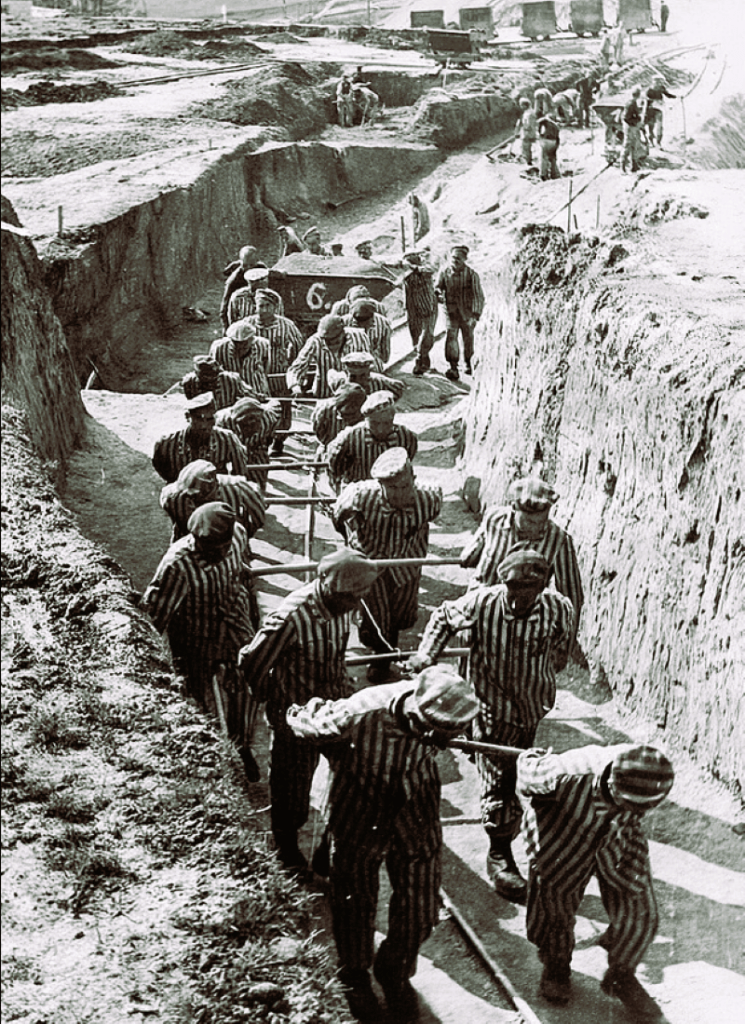
On 5 May 1945, Mauthausen Concentration Camp was liberated by the US Army.
Just a simple poem to commemorate that day.
In Mauthausen’s shadow, where darkness did dwell,
In the heart of despair, where horrors did swell,
There came a day of courage, a day of light,
When the chains of oppression were shattered in flight.
From the depths of anguish, where freedom seemed lost,
Rose the spirit of resistance, no matter the cost.
In the eyes of the weary, defiance did gleam,
As they dared to dream of a world redeemed.
Through the barbed wire fences, they saw hope’s distant gleam,
A beacon of liberation, like a radiant stream.
With each step towards freedom, they reclaimed their might,
Breaking the shackles of tyranny, banishing the night.
In the echoes of Mauthausen, the voices of the brave,
Sing of resilience, of the souls they saved.
Though the scars may linger, and memories remain,
Their triumph stands eternal, a testament to pain.
So let us remember, the courage of that day,
When the walls of oppression crumbled away.
In the liberation of Mauthausen, let freedom resound,
A triumph of humanity, on hallowed ground.
The Liberation of Mauthausen Concentration Camp: A Turning Point in the History of Human Suffering and Hope
Introduction
The liberation of Mauthausen concentration camp in early May 1945 marked one of the final and most powerful moments in the Allied campaign to dismantle the machinery of the Nazi Holocaust. Located near the town of Mauthausen in Austria, this camp and its subcamps became synonymous with the brutal forced labor, systematic murder, and dehumanization that characterized Adolf Hitler’s genocidal regime. While not as well-known as Auschwitz or Dachau, Mauthausen was among the most notorious camps in terms of severity, classified by the Nazis as “Grade III,” reserved for the harshest treatment. The camp’s liberation by American forces not only saved thousands of lives but also revealed a new dimension of Nazi crimes to the world. This essay explores the historical context, the conditions at Mauthausen, the events of its liberation, and the long-term impact of this moment on global memory and justice.
Historical Context and Establishment of Mauthausen
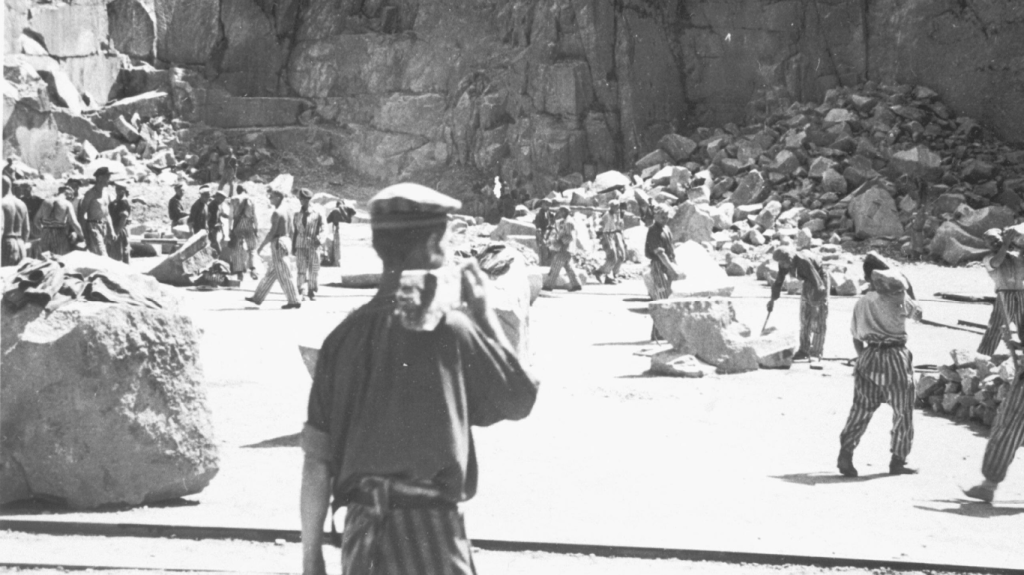
Mauthausen was established in August 1938, shortly after the Anschluss—the annexation of Austria by Nazi Germany. Originally intended as a site for political prisoners, particularly Austrian and German dissidents, it quickly evolved into a labor camp under the direct administration of the SS. Located near granite quarries, Mauthausen exploited inmate labor for the construction of monumental Nazi architecture and military infrastructure. Over time, the prisoner population expanded to include Jews, Soviet POWs, Poles, Spanish Republicans, Roma, homosexuals, Jehovah’s Witnesses, and others the regime deemed “undesirable.”
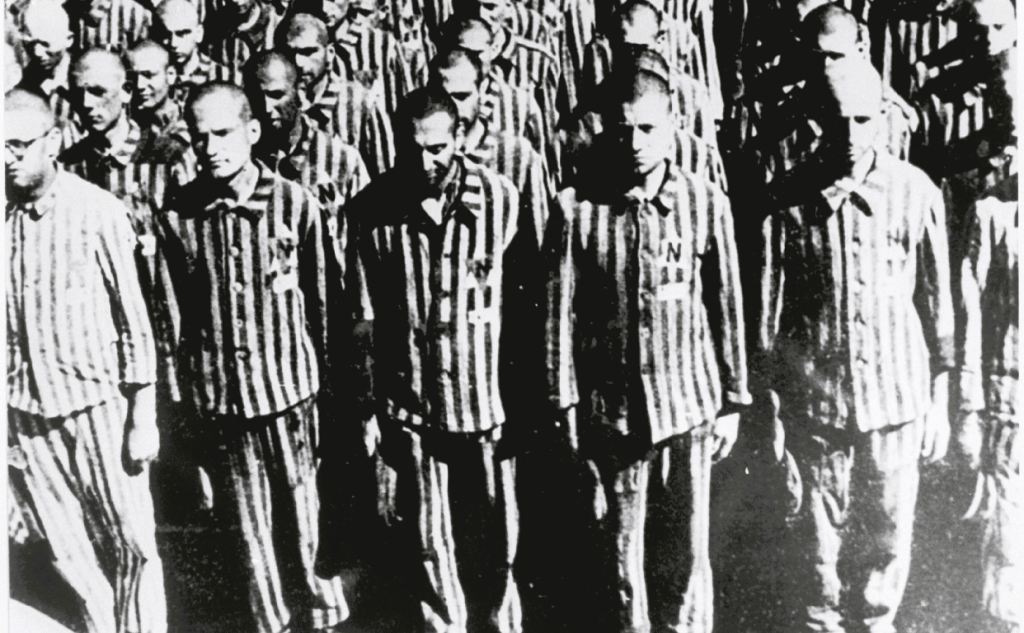
The Mauthausen-Gusen complex, which eventually included nearly 50 subcamps, became a hub for inhumane labor practices and systematic extermination through work, a policy the Nazis termed “Vernichtung durch Arbeit” (extermination through labor). Prisoners were forced to carry massive granite blocks up 186 treacherous steps—known as the “Stairs of Death”—while being beaten or shot. Malnutrition, disease, overwork, and brutal treatment contributed to the camp’s death toll, estimated at between 120,000 to 150,000 out of approximately 190,000 prisoners held there during its operation.
Conditions Before Liberation
By late 1944 and early 1945, the Nazi regime was collapsing under the pressure of Allied forces on both the Eastern and Western fronts. As Soviet and American troops liberated other camps, the Nazis began evacuating prisoners from camps closer to the frontlines and sending them to Mauthausen. These “death marches” brought thousands of weakened and starving inmates to the already overcrowded camp, significantly worsening conditions.
Eyewitness accounts describe Mauthausen as descending into chaos. Food and medical supplies were nearly nonexistent. Bodies piled up unburied as the crematoria could not keep up. The guards became more erratic, and morale among the SS wavered. Some fled in anticipation of Allied arrival, leaving prisoners to fend for themselves. Despite the chaos, acts of resistance and solidarity among prisoners endured. The internal resistance managed to establish rudimentary order and protect some inmates in the final days.
Liberation by U.S. Forces
On May 5, 1945, troops from the 41st Reconnaissance Squadron of the U.S. 11th Armored Division arrived at the gates of Mauthausen. The soldiers found a horrific scene: tens of thousands of emaciated, disease-ridden prisoners; unburied corpses strewn across the grounds; and the faint traces of Nazi atrocities still in evidence. Many prisoners were barely alive. The arrival of American forces was met with disbelief, joy, and overwhelming relief.
Survivor testimonies recount the moment of liberation as surreal and deeply emotional. For many, it was the first encounter with freedom after years of captivity. U.S. soldiers, themselves shaken by what they saw, provided immediate aid, including food, clothing, and medical care. Improvised field hospitals were established, though tragically, many inmates died in the days following liberation due to the effects of starvation and disease.
Notably, one of the groups liberated included Spanish Republicans who had fought against Franco’s fascists in Spain and were later detained by the Nazis. These prisoners famously painted the word “Los Españoles antifascistas saludan a las fuerzas liberadoras” (“The anti-fascist Spaniards salute the liberating forces”) on a banner, signaling their gratitude and defiance.
Aftermath and Justice
In the months and years following the war, the Allied powers conducted extensive investigations into the crimes committed at Mauthausen. The Mauthausen-Gusen camp system became the subject of several war crimes trials. The most prominent was the Mauthausen Trial at Dachau in 1946, in which 61 defendants, including SS officers and kapos (prisoner functionaries), were prosecuted. Of these, 58 were convicted and 49 sentenced to death.
The camp itself was preserved as a memorial site, with Austria taking steps in later decades to more openly acknowledge its role in the Holocaust and confront its own complicity. Memorials at Mauthausen now include national monuments for the various groups imprisoned there, serving as a solemn space of reflection, education, and commemoration.
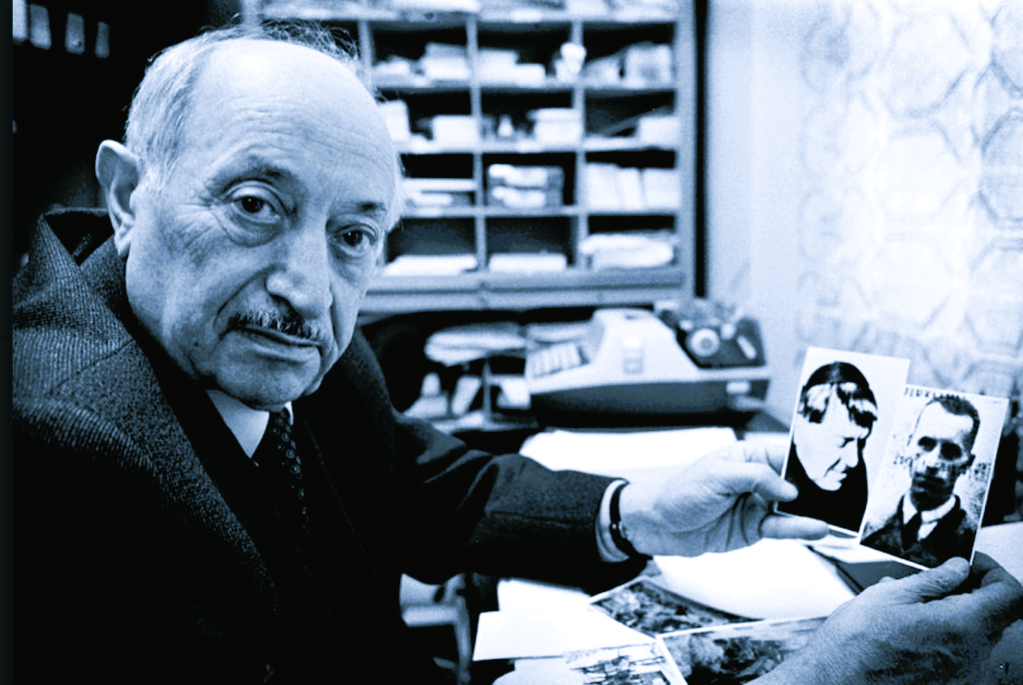
Simon Wiesenthal
Wiesenthal was liberated from Mauthausen. He later dedicated his life to tracking down Nazi war criminals. “Mauthausen was my grave,” he said. “But I refused to die.”
Legacy and Historical Significance
The liberation of Mauthausen remains a powerful symbol of the triumph of humanity over barbarism. It reinforced the moral imperative behind the Nuremberg Trials and helped galvanize international efforts to define and punish crimes against humanity. The camp’s liberation was also a catalyst for the development of international human rights institutions, including the Universal Declaration of Human Rights in 1948.
Mauthausen’s story complicates simplistic narratives of victimhood and resistance, revealing the complexities of survival, collaboration, and resilience under extreme oppression. Its liberation teaches future generations about the dangers of authoritarianism, racism, and unchecked power.
The liberation of Mauthausen concentration camp in May 1945 stands as a defining moment in 20th-century history. It exposed the depths of Nazi brutality and underscored the human capacity for survival amid unimaginable suffering. While liberation did not undo the horrors endured by the inmates, it marked a turning point where the truth of these crimes began to reach the wider world. Today, Mauthausen serves not only as a historical site but as a beacon for justice, memory, and the enduring struggle for human dignity.
sources
https://www.vwi.ac.at/index.php/en/institute/simon-wiesenthal-en/the-life-of-simon-wiesenthal
https://www.mauthausen-memorial.org/en/History/The-Mauthausen-Concentration-Camp-19381945/Liberation
https://hmd.org.uk/resource/5-may-1945-liberation-of-mauthausen-concentration-camp
https://en.wikipedia.org/wiki/Mauthausen_concentration_camp
Please support us so we can continue our important work.
Donation
Your readership is what makes my site a success, and I am truly passionate about providing you with valuable content. I have been doing this at no cost and will continue to do so. Your voluntary donation of $2 or more, if you are able, would be a significant contribution to the continuation of my work. However, I fully understand if you’re not in a position to do so. Your support, in any form, is greatly appreciated. Thank you. To donate, click on the credit/debit card icon of the card you will use. If you want to donate more than $2, just add a higher number in the box left from the PayPal link. Your generosity is greatly appreciated. Many thanks.
$2.00


Leave a Reply