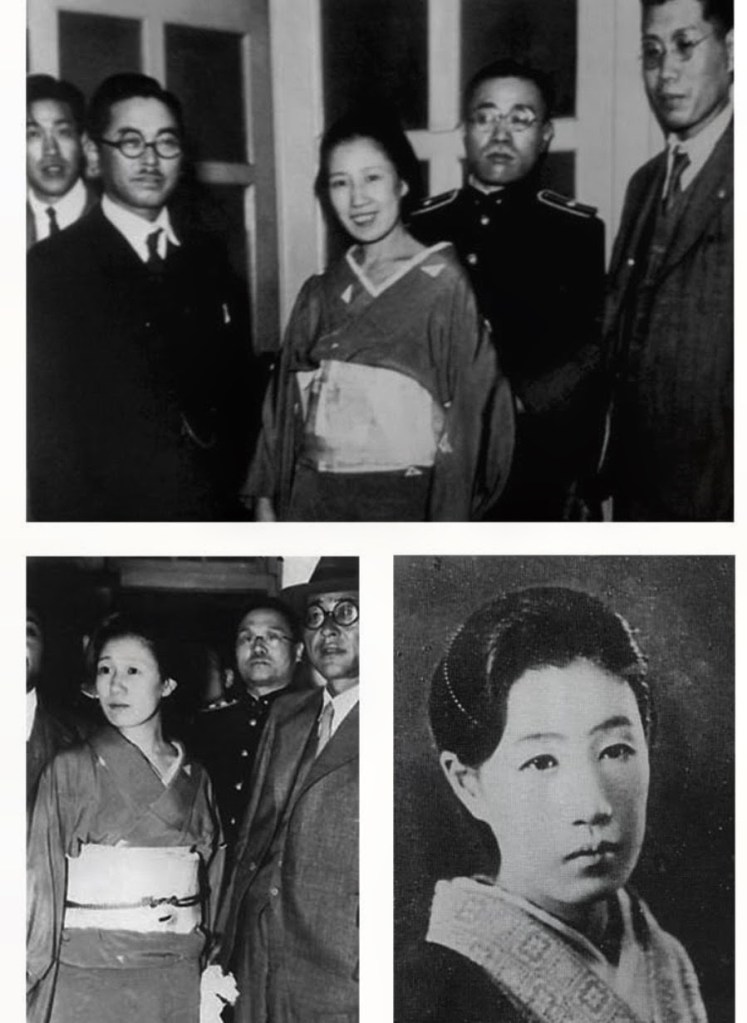
Few criminal cases in twentieth-century Japan have generated as much fascination, discomfort, artistic interpretation, and cultural analysis as the story of Sada Abe. Even today, nearly a century after the murder that made her infamous, her name continues to provoke intense reactions. To some, she is remembered as a sensational criminal whose obsession culminated in one of the most notorious murders in Japanese history. To others, she has become a symbol of female desire refusing social containment. Still others see her as a tragic figure shaped by trauma, poverty, exploitation, and the contradictions of prewar Japanese society.
The reason the Sada Abe case endures is not merely because of the gruesome details of the crime. Japan has seen many murders more brutal and more mysterious. What transformed the case into legend was the way it collided with larger anxieties surrounding sexuality, modernity, gender roles, morality, and the boundaries between love and possession. In many respects, the Sada Abe incident became a national mirror. People projected onto her whatever they feared, desired, or rejected.
This is the story of a woman who became simultaneously a murderer, celebrity, folk demon, erotic icon, feminist subject, and cultural myth.
The Early Life of Sada Abe
Sada Abe was born in Tokyo in 1905 into a relatively comfortable family involved in the tatami business. Her family occupied an uneasy social position: financially stable enough to enjoy middle-class respectability, yet vulnerable to scandal and decline. By many accounts, Abe was indulged as a child and received artistic training rather than a rigorous education. Her early years already reflected contradictions that would later define her public image — refinement alongside instability, emotional intensity alongside social marginalization.
Much of Abe’s later life appears to have been shaped by sexual trauma and familial disruption. Historical accounts frequently reference her rape as a teenager by an acquaintance or university student. Whether interpreted through modern psychological frameworks or through the lens of contemporary Japanese social norms, the assault appears to have profoundly altered her trajectory. Following the incident, her relationship with her family deteriorated, and she eventually entered the world of prostitution.
At the time, prostitution in Japan existed within a complicated legal and economic framework. Licensed brothels operated openly in designated districts, while unlicensed sex work existed alongside them in more precarious conditions. Women entering the trade often did so through debt, coercion, family pressure, or limited economic alternatives. Abe moved through this world during the late 1920s and early 1930s, working at brothels in Osaka and Tokyo.
Accounts from the period describe her as volatile, emotional, and difficult to manage. She reportedly stole from clients, attempted to escape brothels, and repeatedly shifted between legal and illegal forms of sex work. These details were later emphasized by journalists eager to construct a sensational psychological portrait. Yet they also point toward the harsh realities of survival for women trapped within systems that commodified intimacy while simultaneously condemning those who participated in it.
By the mid-1930s, Abe had drifted through various occupations — prostitute, mistress, waitress, and geisha-associated entertainer — without ever fully escaping social precarity.
Meeting Kichizo Ishida
In 1936, Abe began working at the Yoshidaya restaurant in Tokyo. The owner, Kichizo Ishida, was older, married, and known for his womanizing behavior. Their affair quickly escalated into an intense and consuming sexual relationship.
The relationship between Abe and Ishida has been endlessly mythologized. Contemporary newspapers sensationalized their sexual appetite. Later filmmakers transformed their affair into near-operatic obsession. Scholars, meanwhile, have attempted to separate fact from projection.
What seems reasonably clear is that the two entered a mutually consuming erotic dynamic marked by possessiveness, role-playing, jealousy, dependency, and erotic asphyxiation. They reportedly spent days isolated in inns and teahouses, drinking heavily and engaging in prolonged sexual encounters. The affair increasingly detached both participants from ordinary social life.
To modern readers, the relationship can appear psychologically catastrophic from the outset. Yet part of what shocked 1930s Japan was not simply the violence that followed, but the unapologetic intensity of the couple’s sexuality. Imperial Japan publicly emphasized discipline, hierarchy, social duty, and national unity. Against that backdrop, the Abe-Ishida affair appeared radically self-indulgent and destabilizing.
Their relationship unfolded during a period when Japan was becoming increasingly militarized and authoritarian. Public discourse emphasized sacrifice for the nation rather than private pleasure. The spectacle of two lovers disappearing into days of obsessive sex therefore carried symbolic weight beyond mere scandal.
The Murder That Shocked Japan
On May 18, 1936, the affair culminated in one of the most infamous killings in Japanese history.
During a stay at an inn in Tokyo, Abe strangled Ishida while he slept or drifted in and out of consciousness following erotic asphyxiation. She later stated that she believed he enjoyed being strangled during sex and claimed that the boundary between erotic play and murder had gradually blurred.
After killing him, she severed his penis and testicles with a knife. She wrapped them and carried them with her while wandering Tokyo for several days before her arrest.
The detail of the mutilation became central to the case’s mythology. Newspapers sensationalized it relentlessly. Public imagination fixated on the symbolism of possession. Abe herself reportedly described the act as an attempt to keep Ishida entirely for herself — to preserve the part of him most associated with desire and intimacy.
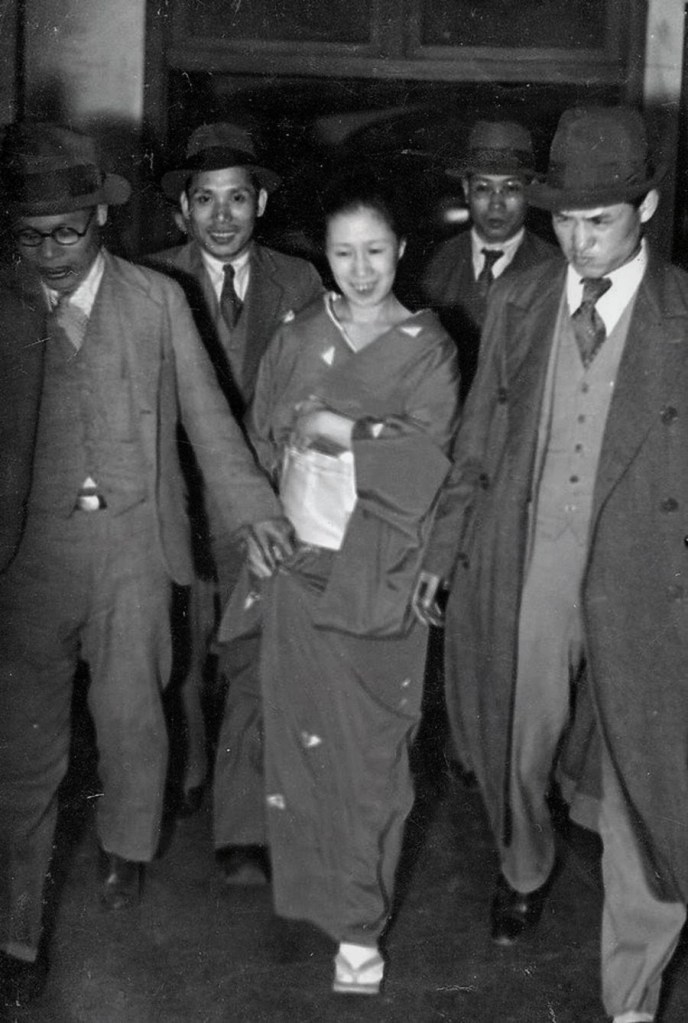
The case triggered what became known as the “Abe Sada panic.” Newspapers published extensive coverage. Rumors spread rapidly. Crowds gathered. False sightings created confusion and public frenzy. The nation became collectively obsessed.
Part of this obsession emerged from the contradiction embodied by Abe herself. She was neither a conventional femme fatale nor a coldly calculating serial killer. She appeared emotional, articulate, vulnerable, erotic, unstable, and strangely sincere. Many members of the public were horrified by her actions while simultaneously captivated by her refusal to conform to expected female behavior.
Media Sensation and Public Fascination
The media transformed Sada Abe into a national spectacle almost immediately.
Japanese tabloids and newspapers in the 1930s were already deeply invested in stories involving so-called “poison women,” female criminals whose sexuality and violence could be framed as morally transgressive entertainment. Abe fit the archetype perfectly, yet she also exceeded it.
Unlike many criminal defendants, she did not appear emotionally detached from her crime. She openly discussed her passion for Ishida. She did not deny the killing. She reportedly described her feelings with startling emotional directness.
This complicated public reaction. Many observers condemned her as monstrous, but others interpreted the murder as the product of overwhelming love rather than simple malice. In a culture where female sexuality was often expected to remain passive or controlled, Abe’s unapologetic desire unsettled conventional assumptions.
The trial itself became a media event. Crowds gathered to attend proceedings. Reporters documented the testimony obsessively. Even legal officials reportedly acknowledged the unusual emotional atmosphere surrounding the case.
It is important to recognize how much of the public narrative was constructed through journalism. Newspapers selectively emphasized erotic details while often ignoring broader social realities such as economic exploitation, gender inequality, or trauma. The case became less about a real woman and more about what society needed her to represent.
Sexuality, Gender, and Power
The Sada Abe case remains culturally significant largely because it intersects with enduring questions about sexuality and gender.
In many traditional narratives about violent relationships, men occupy the role of possessive aggressor while women become victims. The Abe case inverted that structure in a way that deeply unsettled observers. Abe became the active sexual subject — desiring, initiating, consuming, and ultimately destroying.
Some later feminist scholars interpreted public fascination with Abe as evidence of cultural anxiety surrounding female agency. Abe’s sexuality was portrayed as dangerous precisely because it escaped male control. Rather than existing as an object of desire, she became a desiring subject herself.
At the same time, romanticizing her would be simplistic and irresponsible. Ishida was murdered. The case involved coercion, violence, mutilation, and psychological instability. Attempts to transform Abe into a purely liberatory figure often overlook the reality of lethal violence.
The enduring complexity of the case lies in its resistance to clean ideological interpretation. Abe can simultaneously be understood as:
A murderer.
A victim of social exploitation.
A woman shaped by trauma.
A symbol of destructive obsession.
A figure challenging gender norms.
A media construction amplified beyond reality.
The coexistence of these interpretations explains why scholars from fields ranging from criminology to gender studies continue to revisit the case.
Prison, Release, and Reinvention
Abe was convicted of murder and mutilation of a corpse and sentenced to prison. Surprisingly to many outside observers, she did not receive the death penalty. Her sentence was relatively short by modern standards and was later commuted.
Following her release, Abe entered another strange phase of public life. Rather than disappearing entirely into obscurity, she became a semi-public figure. She gave interviews, appeared in stage productions, and published memoirs.
This transformation from criminal defendant to celebrity-like figure reflects the peculiar relationship between notoriety and mass culture. Japan’s entertainment industry and publishing world recognized the commercial value of her story almost immediately.
Writers, journalists, and intellectuals interpreted her through competing lenses. Some portrayed her as psychologically damaged. Others viewed her as a symbol of emotional authenticity in an increasingly rigid society. The writer Ango Sakaguchi, known for exploring moral collapse and postwar disillusionment, famously treated her with unusual sympathy.
By the 1950s and 1960s, Abe had largely retreated from public visibility, reportedly working quietly in Tokyo bars and restaurants. Eventually, she disappeared almost entirely from public life. The precise details of her final years remain uncertain.
That ambiguity only deepened the mythology.
Sada Abe in Film and Literature
The cultural afterlife of Sada Abe may be even more influential than the original crime itself.
Her story has inspired novels, essays, plays, exploitation cinema, art films, documentaries, manga, academic studies, and philosophical analysis. The most internationally famous adaptation remains Nagisa Oshima’s 1976 film In the Realm of the Senses.
The film presented the Abe-Ishida relationship with explicit sexuality unprecedented for mainstream cinema at the time. Oshima treated the story not merely as sensational crime but as political and existential allegory. The lovers’ obsessive retreat into erotic intensity became, in his interpretation, a rejection of social conformity and state control.
The film generated enormous controversy due to its explicit content, censorship battles, and political themes. Yet it also elevated the Sada Abe story into global cultural consciousness.
Importantly, different artistic interpretations often reveal more about the era in which they were created than about Abe herself. During some periods she appeared as a cautionary tale about uncontrolled desire. During others she became an icon of erotic rebellion. In still other contexts she symbolized psychological breakdown under oppressive social conditions.
Few criminal figures have undergone so many ideological reinterpretations.
Why the Story Endures
The persistence of fascination with Sada Abe reflects several overlapping factors.
First, the story combines eros and death in a way that humans have historically found both horrifying and compelling. The relationship between desire and destruction has occupied mythology, literature, and psychology for centuries.
Second, the case emerged during a moment of rapid social transformation in Japan. Urbanization, modernization, mass media, changing gender roles, and militarization all formed the backdrop. Abe became a vessel through which broader cultural tensions could be expressed.
Third, the ambiguity of her motives keeps the case psychologically open-ended. Was the murder primarily sexual? Emotional? Possessive? Symbolic? Psychotic? Performative? Different interpretations continue to coexist because no single explanation fully resolves the contradictions.
Finally, the story survives because it forces confrontation with uncomfortable truths about obsession and intimacy. Many crimes are emotionally distant from ordinary experience. The Abe case is disturbing precisely because its emotional origins — jealousy, fear of abandonment, erotic dependency, possessiveness — are recognizable human emotions pushed to catastrophic extremes.
Beyond Sensationalism
Modern discussions of Sada Abe often risk falling into two traps.
One approach reduces the story to lurid trivia and grotesque spectacle. The other romanticizes the relationship as transcendent passion. Both flatten the historical complexity of the case.
A more serious examination recognizes that the Abe incident existed at the intersection of multiple social forces:
The commodification of female sexuality.
Media sensationalism.
Gendered double standards.
Psychological trauma.
Economic instability.
National anxieties in prewar Japan.
The blurred line between intimacy and possession.
The enduring interest in Sada Abe says as much about society as it does about the woman herself. Every generation reinvents her according to its own concerns.
For conservative commentators, she becomes proof of moral collapse. For psychoanalytic thinkers, she represents the fusion of eros and annihilation. For feminist scholars, she reveals cultural panic surrounding female desire. For filmmakers and novelists, she remains an almost archetypal figure of obsessive love.
Yet beneath all the symbolism was a real person whose life unfolded within structures of violence, exploitation, and emotional instability.
Sada Abe remains one of the most unsettling and culturally significant figures in modern Japanese history not simply because of what she did, but because of what people continue to see in her.
Her story sits at the intersection of crime, sexuality, gender politics, media culture, and mythology. It challenges simplistic narratives about victimhood and agency. It exposes how societies transform individuals into symbols. And it demonstrates the extraordinary power of sensational stories to outlive the historical realities from which they emerge.
Nearly a century later, the name Sada Abe still evokes fascination because the questions surrounding her have never fully disappeared. How do desire and possession become entangled? Why does society eroticize certain forms of violence while condemning others? What happens when private obsession collides with public morality?
The answers remain elusive. That uncertainty is precisely why the story endures.
sources
https://link.springer.com/chapter/10.1057/9781403977120_6


Leave a comment