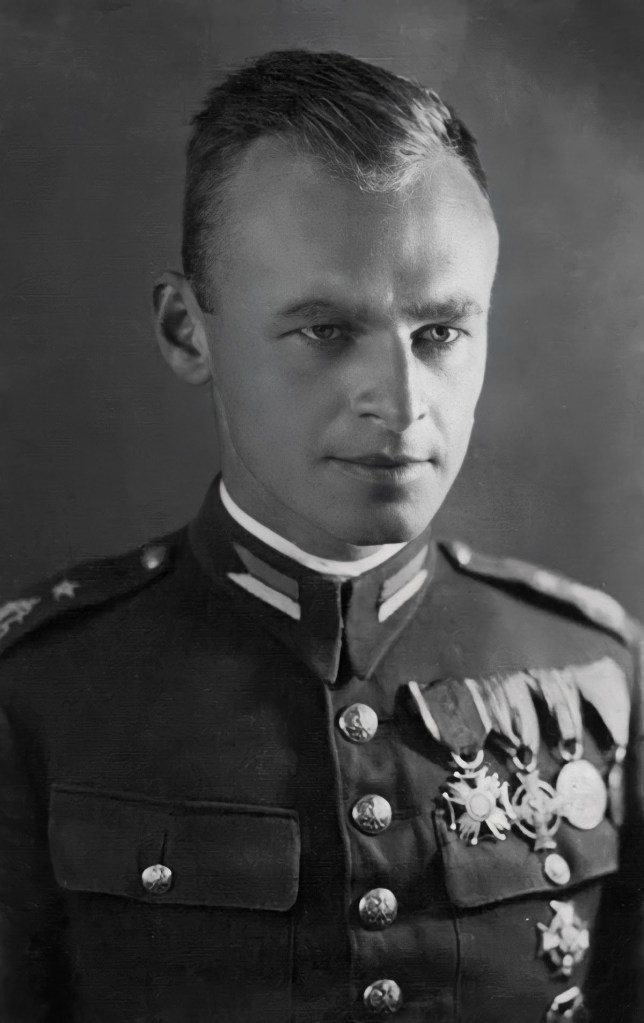
History rarely writes scripts as pure or as devastating as the life and death of Captain Witold Pilecki. In the grand, tragic theater of twentieth-century Europe, his name stands as a solitary monument to human courage—and an indictment of totalitarian cruelty. Pilecki is famously remembered as the Polish cavalry officer who intentionally got himself captured by the SS to infiltrate Auschwitz. Yet, the final act of his life did not take place behind the barbed wire of a German death camp, but inside a stark communist courtroom in Warsaw, where his own countrymen, acting as puppets for Soviet tyranny, sentenced him to death.
On May 25, 1948, Pilecki was led to a secluded room in the infamous Mokotów Prison. A single bullet to the back of the head ended his life. His execution by the Polish communist secret police (UB) was the grotesque culmination of a heavily orchestrated show trial. The regime did not merely seek to kill Pilecki; they sought to annihilate his memory, burying his body in an unmarked grave and striking his exploits from official histories for over forty years. To understand why a man who survived the worst horrors of Nazi Germany was deemed an existential threat by the Soviet-backed regime, one must look closely at both his unparalleled martyrdom at Auschwitz and the chilling mechanism of the communist show trial.
Infiltrating the Abyss: The Auschwitz Synopsis
To understand the depths of Pilecki’s fortitude, one must revisit September 1940. At that time, Auschwitz was not yet the global symbol of industrial murder; it was a newly established concentration camp primarily holding Polish political prisoners, shrouded in secrecy. Recognizing the need for intelligence from within, Pilecki proposed a plan to his superiors in the Polish resistance (the Secret Polish Army) that bordered on suicide: he would deliberately walk into a German street roundup (łapanka) in Warsaw to be captured and sent there.
“I bade farewell to everything I had known on this earth so far and entered something that was no longer of this earth.” > — Witold Pilecki, on his arrival at Auschwitz.
Under the false identity of Tomasz Serafiński, Pilecki spent nearly two and a half years inside Auschwitz, enduring typhus, brutal physical labor, and the ever-present threat of summary execution. His mission was twofold: to gather intelligence on German atrocities and to build an underground resistance network. Against impossible odds, he established the Związek Organizacji Wojskowej (ZOW), an internal union that boosted prisoner morale, smuggled out intelligence reports, and prepared for a potential armed uprising.
Pilecki’s reports, meticulously compiled and smuggled to the Polish government-in-exile in London via courier networks, provided some of the earliest and most detailed accounts of the Holocaust, including the construction of the gas chambers and the mass murder of Jewish families. By 1943, realizing that an Allied liberation of the camp was not forthcoming, Pilecki executed a daring escape during a night shift at the camp bakery, evading German gunfire and carrying the definitive truth of Auschwitz to the outside world.
The Post-War Trap and the Warsaw Show Trial
After fighting valiantly in the Warsaw Uprising of 1944 and surviving a German prisoner-of-war camp, Pilecki returned to a Poland that was radically altered. The Nazi occupiers had been driven out, only to be replaced by a Soviet-backed communist regime determined to crush any elements of independent Polish nationalism. True to his oath, Pilecki began gathering intelligence on Soviet atrocities, the deportation of Polish resistance fighters to Siberia, and the brutal enforcement of communist rule.
In May 1947, his luck ran out. The communist secret police arrested him. What followed was a brutal year-long interrogation period characterized by torture so severe that Pilecki later whispered to his wife during a brief court appearance that, compared to the UB, “Auschwitz was just a game.”
In March 1948, the regime staged a public show trial in Warsaw. This was a classic piece of Stalinist political theater. The charges levied against Pilecki—espionage for Western powers, plotting assassinations, and illegal weapon possession—were entirely fabricated or distorted. The prosecution painted this legendary anti-Nazi resistance hero as a traitor, a fascist collaborator, and an enemy of the working class. Pilecki stood in the courtroom, visibly broken physically by months of torture but remaining completely dignified, refusing to implicate his comrades and taking sole responsibility for his actions.
The Execution and Erasure
The verdict of the show trial was a foregone conclusion. On May 15, 1948, the military tribunal sentenced Pilecki to death. Appeals for clemency to Józef Cyrankiewicz, the communist Prime Minister of Poland—who had himself been a prisoner at Auschwitz and whose survival had been aided by Pilecki’s underground network—were calculatedly ignored. Cyrankiewicz actively chose to participate in erasing a man whose real heroism cast a long, embarrassing shadow over the regime’s revisionist historical narratives.
The sentence was carried out swiftly ten days later. The executioner, Piotr Śmietański, known as the “Butcher of Mokotów Prison,” delivered the fatal shot to the back of the head.
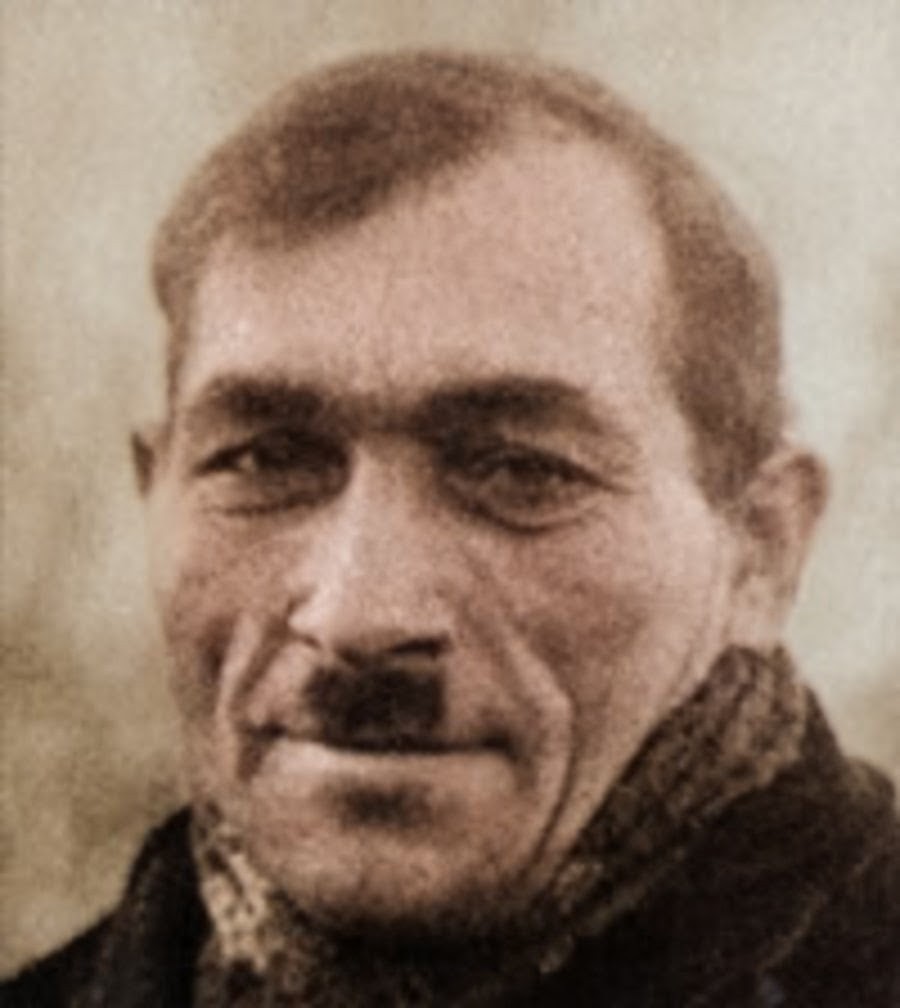
To maximize the indignity, Pilecki’s remains were dumped secretly, likely into a garbage heap at Warsaw’s Powązki Cemetery, so that no grave could ever become a shrine for Polish patriots.
For decades, the communist regime strictly censored any mention of Witold Pilecki’s name. His records were locked away, and an entire generation grew up completely unaware of the man who had willingly entered Auschwitz to save others. It was not until the fall of the Iron Curtain in 1989 that the truth could finally be uncovered. Pilecki was posthumously rehabilitated, his military rank restored, and he was awarded Poland’s highest honors.
Conclusion: The Triumph of Memory
The execution of Witold Pilecki remains an agonizing chapter in the history of Central Europe, illustrating how totalitarian systems demand the absolute destruction of individual moral clarity. The Nazi regime sought to destroy his body in Auschwitz; the Communist regime succeeded in executing him in Warsaw. Yet, the story of Captain Pilecki ultimately concludes with the triumph of human memory over institutionalized lies.
By executing him, his prosecutors thought they had closed a case file; instead, they authored a martyrdom. Today, while the names of his torturers and judges are preserved only in the footnotes of historical infamy, Pilecki’s legacy shines brightly as a testament to an unyielding truth: that even in the darkest epochs of human history, a single individual possesses the power to bear witness, resist, and ultimately outlast their oppressors.
sources


Leave a Reply