An often underappreciated phenomenon of the Second World War is the so-called medical resistance (artsenverzet): a rare and remarkably successful example of organized, effective, non-violent, and sustained resistance against Nazi occupation carried out by nearly an entire professional group. Within the broader context of the predominantly non-violent Dutch resistance movement, Medisch Contact (Medical Contact) emerged in mid-1941 as the clandestine resistance organization of the Dutch medical profession. Recent historical research — particularly Part 2 of the series History of a Place by the National Monument Camp Amersfoort — has shed new light on the approximately 300 doctors who were imprisoned in Camp Amersfoort during 1942 and 1943.
Growing Dissatisfaction
The origins of the doctors’ resistance lay in increasing dissatisfaction with the ideological foundations of National Socialism, which fundamentally conflicted with established medical ethics. Additional frustration stemmed from the conciliatory attitude adopted by the leadership of the Royal Dutch Medical Association (Nederlandsche Maatschappij tot Bevordering der Geneeskunst, or NMG) toward the demands of the German occupiers, as well as the gradual erosion of professional and medical independence.
The occupiers’ true intentions became unmistakably clear early in the war. On May 1, 1941, Jewish doctors were prohibited from treating non-Jewish patients. Only weeks later, on May 26, 1941, Dutch physicians were formally ordered to cooperate with the German authorities. These measures triggered a growing determination among doctors to organize collectively in opposition.
On August 4, 1941, a protest meeting held in the station restaurant in Zutphen laid the foundation for a resistance network that would become known as Medisch Contact. This was followed by its official founding meeting on September 14, 1941, in Utrecht. Through this organization, large numbers of Dutch physicians united against the occupier in an effort to resist the planned National Socialist Artsenkamer (Chamber of Physicians), which aimed to bring the entire medical profession under Nazi control.
1942: The Conflict Escalates
In an effort to fully dominate the Dutch medical profession, the German authorities abruptly announced the creation of the National Socialist Artsenkamer on December 19, 1941. Membership was declared mandatory for all doctors, while the NMG was simultaneously dissolved on the very same day.
The response from Dutch physicians was immediate and unprecedented. Organized by Medisch Contact, 4,261 of the 6,621 registered Dutch doctors signed a collective protest letter addressed to Reichskommissar Arthur Seyss-Inquart objecting to compulsory membership in the Artsenkamer. In retaliation, eleven doctors were arrested between late 1941 and February 1942 and subsequently imprisoned in Camp Amersfoort for periods ranging from three to eight months. Among those arrested were three founders of Medisch Contact itself.
This first group of imprisoned doctors experienced relatively favorable treatment compared to later detainees. They were generally exempt from labor details, protected from systematic physical abuse, and often excused from standing during roll calls.
One of these physicians was Jean Brutel de la Rivière (1895–1972; prisoner number 232). A former surgeon in the Dutch East Indies and holder of a doctorate in allergic skin reactions, he later worked as a school doctor in Deventer. De la Rivière viewed Nazi ideology as profoundly dangerous to the independence and ethical foundations of medicine. As one of the principal founders — and possibly the most influential figure — within Medisch Contact, he traveled extensively by bicycle throughout the Netherlands, including journeys to Groningen and Leeuwarden, persuading fellow doctors to join the resistance movement. Along the way he visited surgeon Jean Eeftinck Schattenkerk (1908–1997) in Zwolle and stayed overnight with ophthalmologist Dubois in Apeldoorn while traveling toward Amsterdam. Following his imprisonment, De la Rivière later became chairman of the Great Advisory Committee of the Illegal Resistance (Grote Adviescommissie der Illegaliteit).
Another founder was Haarlem general practitioner Jan Roorda (1893–1947; prisoner number 284), who intended to write a comprehensive history of Medisch Contact after the war but died unexpectedly before completing the project. Utrecht general practitioner Hendrik ten Cate (1905–1991; prisoner number 26) hosted the first official meeting of Medisch Contact at his home.
1943: Mass Arrests and Escalating Repression
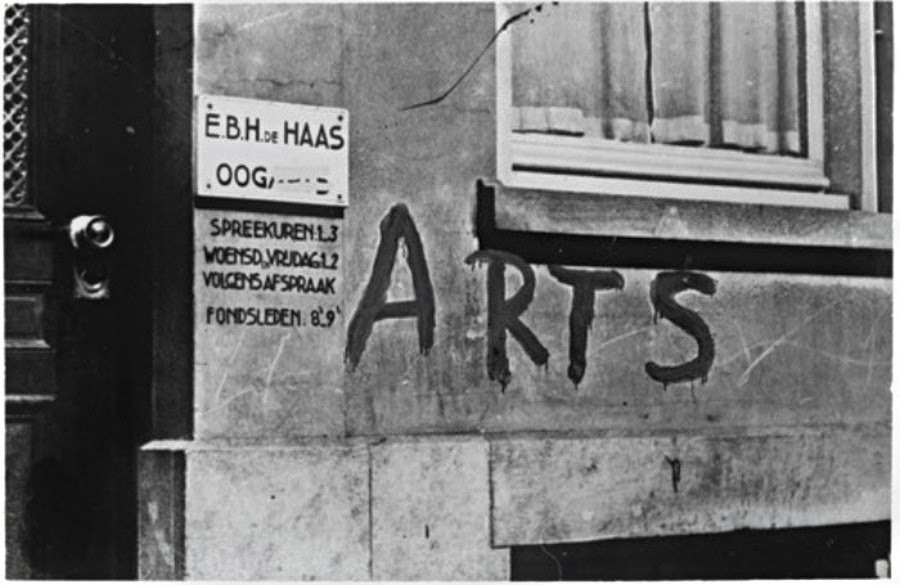
As pressure from the Artsenkamer intensified, Dutch doctors responded with increasingly visible acts of defiance. On March 24, 1943, physicians collectively renounced their professional titles by taping over practice signs and crossing out the word “doctor” on prescription forms and official stationery.
Three months later, on June 23, 1943, another protest letter was sent to Reichskommissar Seyss-Inquart concerning the compulsory membership requirement of the Artsenkamer. The response from the occupiers was immediate and severe. Seyss-Inquart ordered the arrest of all 1,700 signatories.
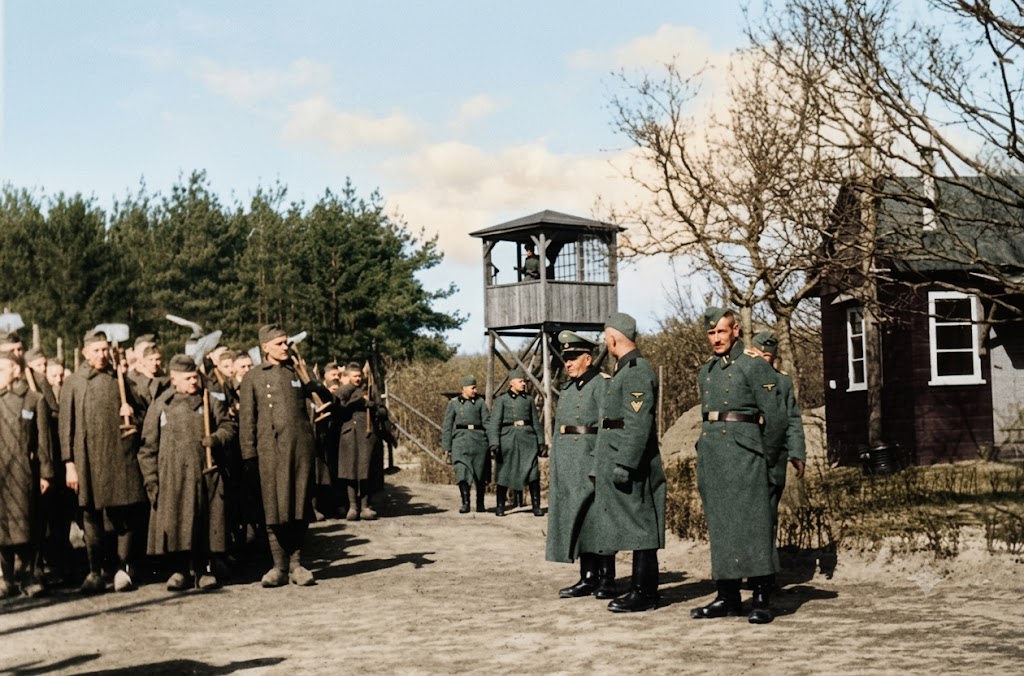
Many doctors immediately went into hiding, while members of the Dutch Nazi movement (NSB) painted the word “doctor” on houses and clinics to facilitate arrests. Ultimately, approximately 360 physicians were apprehended. The two largest groups arrived at Camp Amersfoort on June 26 and August 13, 1943.
Unlike the relatively privileged group imprisoned in 1942, the 1943 detainees were fully subjected to the brutal camp regime. They were forced to perform hard labor and endured the harsh disciplinary conditions imposed on ordinary prisoners. Release became possible only after signing a so-called apology declaration and paying a fine of fifty Dutch guilders (Hfl.).
The consequences of the medical resistance extended beyond physicians themselves. Several non-doctors were also imprisoned due to their involvement, including four police officers from Leiden who refused to participate in the arrest of doctors.
Other Doctors in Camp Amersfoort
Camp Amersfoort imprisoned approximately 2,500 Jewish detainees, among whom were twelve doctors. One of them was Herman de la Parra (1909–1942; prisoner number unknown), an enthusiastic saxophonist who was betrayed by a neighbor and deported to the camp.
The camp also held founders and contributors of the underground newspaper Het Parool, including Herman Wiardi Beckman (1904–1945; prisoner number 2006) and Frans Goedhart (1904–1990; prisoner number 785), who wrote under the pseudonym Pieter ’t Hoen. When Goedhart became seriously ill in the camp infirmary, De la Parra reportedly saved his life by administering opium stolen from the SS medical supply.
De la Parra was later transported to Mauthausen concentration camp, where he was murdered. Wiardi Beckman died on March 15, 1945, in Dachau. Goedhart survived the war and later became a member of parliament for the Labour Party (PvdA).
Another Jewish doctor imprisoned in Camp Amersfoort was Elie Cohen (1909–1993), who would later gain international recognition for his harrowing memoirs and writings as a Holocaust survivor.
A further prominent figure associated with Medisch Contact was professor of internal medicine Geer Borst (1902–1975; prisoner number 950). Borst was imprisoned as a hostage as part of a group of eighty-five prominent Amsterdam citizens arrested in retaliation for an attack on an NSB student residence. Earlier, in June 1941, Borst had circulated a letter urging Dutch doctors to resign from the NMG in protest against Nazi interference.
While imprisoned in Camp Amersfoort, Borst repeatedly pressured SS camp doctor Nicolaas van Nieuwenhuysen (1879–1968) to improve food supplies and sanitary conditions within the camp. He also advocated for disinfection measures, isolation procedures, and proper medical treatment, although the latter requests were largely ignored. The somewhat improved food distribution that eventually resulted became known among prisoners as “Borst-voeding,” a pun combining Borst’s surname with the Dutch word borstvoeding (“breastfeeding”).
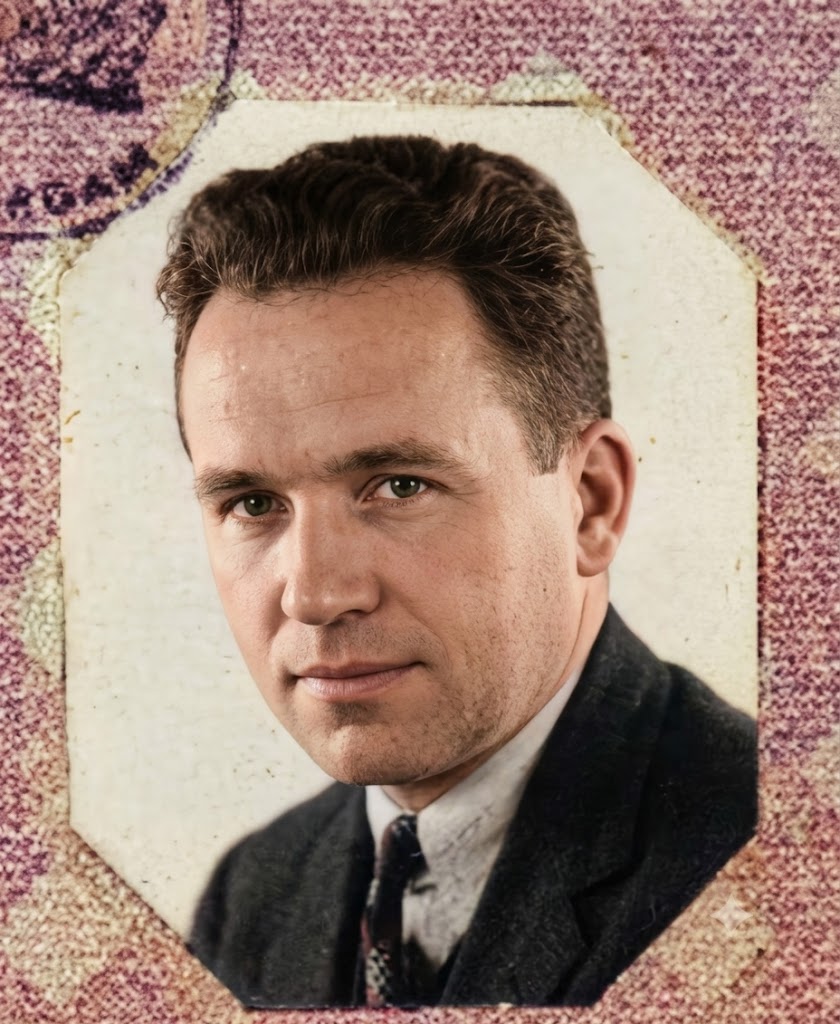
After his release on April 20, 1942, Borst remained active on the board of Medisch Contact throughout the remainder of the occupation. His son Jan Borst later married Els Veder-Smit, who would go on to become a professor, Minister of Health, and Minister of State.
Organization and Methods of Resistance
The leadership of Medisch Contact — often referred to internally as “the Center” — consisted of approximately eleven to fifteen doctors, with membership changing somewhat throughout the occupation years. Following secret meetings of the leadership, information was distributed through so-called “relay messages” (estafetteberichten), which passed from district representatives to local group leaders and ultimately to ordinary members.
These relay messages contained instructions, strategic decisions, warnings, and political guidance for doctors across the Netherlands. They consistently opposed anti-Jewish discrimination, the forced deployment of Dutch doctors to Germany, and violations of medical confidentiality. The messages strengthened solidarity within the profession and helped maintain a unified spirit of resistance throughout the occupation.
Medisch Contact was remarkable not only for its organizational sophistication but also for the collegial and relatively informal atmosphere within the movement. Despite operating underground, the network managed to maintain nationwide coordination for several consecutive years.
Visible forms of resistance included repeated refusals to comply with German directives, protest letters sent to Nazi authorities, and symbolic public renunciations of professional titles. Beyond the formal structure of Medisch Contact, many doctors individually assisted resistance groups and persecuted civilians.
Doctors were particularly well positioned to engage in clandestine activities because they possessed nighttime travel permits during curfew hours and often had access to motorized transportation. Many continued secretly treating Jewish patients, deliberately misdiagnosed illnesses to exploit German fears of contagious diseases such as diphtheria, manipulated X-rays, and issued false medical certificates to shield patients from deportation for forced labor (Arbeitseinsatz).
A small number of doctors also participated directly in armed resistance and espionage activities, including Gerrit Kastein and Gilles Duuring.
New Publications and Historical Discoveries
Recent research into the medical resistance and the role of Camp Amersfoort has produced important new findings. Before this study, historians knew of only thirty-seven surviving relay messages, since the documents were officially supposed to be destroyed after reading. The new research uncovered five additional messages.
One newly discovered message from March 19, 1942, warned doctors about the imminent arrest of 450 physicians — approximately ten percent of the signatories of the protest letter — and instructed doctors to go on strike by suspending consultations except in life-threatening emergencies if arrests took place.
Another message from February 1943 concerned fee structures for physicians refusing participation in the Nazi-controlled health insurance system (ziekenfonds).
Two further relay messages dated June 27, 1943, addressed the arrest of between 300 and 500 doctors and explicitly instructed physicians not to strike. One version was concise, while the second offered detailed explanations.
A final newly discovered message from July 1943 reported that fifty-five doctors had secured release before entering Camp Amersfoort by retracting their signatures from the June 23 protest letter. Within resistance circles, this act was officially condemned as “treason.”
This final discovery significantly revises earlier assumptions. Of the traditionally cited 360 arrested doctors, fifty-five appear to have been released at or near the gates of Camp Amersfoort after signing declarations of recantation. As a result, historians now estimate that a maximum of approximately 305 doctors were actually imprisoned in the camp itself. It is also probable that additional doctors — perhaps as many as twenty-five — were detained in Haaren, Sint-Michielsgestel, the Oranjehotel, and possibly Camp Vught.
The contrast between the treatment of the 1942 and 1943 prisoner groups remains striking. Whereas the earlier detainees retained certain privileges, the later group was exposed fully to the harsh realities of concentration camp discipline. While many Dutch medical students were forced into the Arbeitseinsatz to serve as medics in German camps, qualified physicians imprisoned in Camp Amersfoort were generally employed as Sanitäter (medical orderlies or nurses).
Ultimately, the recent research has succeeded in identifying the names of 211 imprisoned doctors.
Conclusion
During the Second World War, the Nazi regime understood all too clearly how dependent modern society remained upon medical professionals. Dutch doctors skillfully exploited this dependence. Through the clandestine network of Medisch Contact, they created one of the most successful examples of organized, sustained, non-violent professional resistance anywhere in occupied Europe.
The united and highly self-aware medical community refused to accept Nazi interference in their profession. Their resistance contributed directly to the failure of both the National Socialist Artsenkamer and the implementation of the 1941 Health Insurance Decree. Comparable attempts at large-scale resistance by other professional groups proved less successful. Nevertheless, institutions such as the churches faced fundamentally different circumstances, as they were regarded by Nazi ideology as natural enemies from the outset, limiting their opportunities for strategic negotiation or partial accommodation.
The medical resistance therefore remains a uniquely significant example of how professional solidarity, ethical conviction, and organized civil disobedience could successfully obstruct authoritarian control even under conditions of military occupation and political terror.
sources
https://historiek.net/het-artsenverzet-opgesloten-in-kamp-amersfoort-in-1942-en-1943/148255
https://www.oorlogsbronnen.nl/thema/Artsenverzet
https://www.oorlogsbronnen.nl/thema/Artsenverzet
Please support us so we can continue our important work.
Donation
Your readership is what makes my site a success, and I am truly passionate about providing you with valuable content. I have been doing this at no cost and will continue to do so. Your voluntary donation of $2 or more, if you are able, would be a significant contribution to the continuation of my work. However, I fully understand if you’re not in a position to do so. Your support, in any form, is greatly appreciated. Thank you. To donate, click on the credit/debit card icon of the card you will use. If you want to donate more than $2, just add a higher number in the box left from the PayPal link. Your generosity is greatly appreciated. Many thanks.
$2.00


Leave a Reply