The Birth of Quarantine: A 14th-Century Innovation That Changed Public Health
When we think of quarantine, we often picture modern hospital isolation wards or the stay-at-home orders of the COVID-19 pandemic. Yet the practice of systematically isolating travelers to prevent the spread of disease did not emerge from a modern laboratory. Its origins lie along the bustling trade routes of the 14th-century Mediterranean.
The story begins in 1377 in the maritime Republic of Ragusa—modern-day Dubrovnik, Croatia.
The Birth of the Trentino
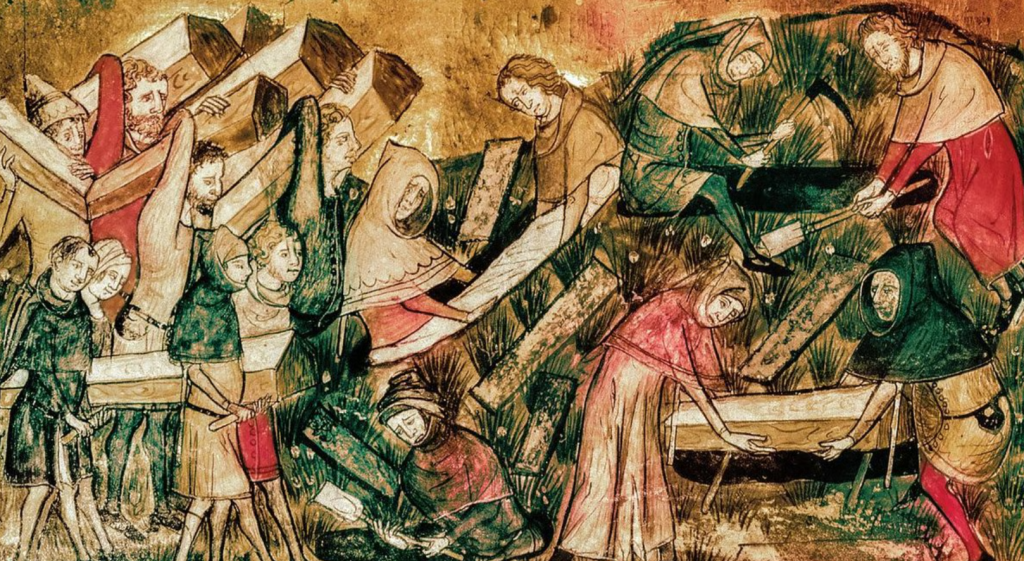
In the mid-14th century, the Black Death devastated Europe, claiming an estimated 30% to 60% of the continent’s population. Faced with a catastrophic pandemic, cities searched for ways to protect their citizens without bringing international trade—the economic lifeblood of major ports—to a halt.
On 27 July 1377, the Great Council of Ragusa enacted a groundbreaking public health law. Rather than banning foreign merchants outright or allowing unrestricted entry, the city required all merchants, sailors, and travelers arriving from plague-affected regions to spend 30 days in isolation on nearby offshore islands before entering the city.
This mandatory waiting period became known as the trentino, derived from the Italian word trenta, meaning “thirty.”
What made Ragusa’s approach revolutionary was its balance between public health and commerce. Instead of relying solely on ad hoc isolation measures or religious responses, the city established a formal, legally enforced system administered by civic authorities—one of the earliest examples of evidence-based public health policy.
From Thirty Days to Forty: The Origin of “Quarantine”
In the decades that followed, officials concluded that 30 days was not always sufficient to prevent infected individuals from entering the city. The isolation period was therefore extended to 40 days, a period known in Italian as quarantina, from quaranta (“forty”). This is the direct linguistic origin of the English word quarantine.
Historians believe the choice of forty days reflected a combination of practical observation, medical theory, and cultural tradition:
- Observed disease patterns: Forty days broadly matched the perceived incubation and transmission cycle of plague outbreaks, including secondary pneumonic transmission.
- Classical medical theory: Greek and Hippocratic medicine held that many acute illnesses completed their course within forty days.
- Religious symbolism: In medieval Europe, the number forty carried profound significance, recalling the forty days of Lent, Noah’s forty days of rain, and Jesus’ forty days of fasting in the wilderness.
The First Quarantine Islands
As the practice spread throughout the Mediterranean, major trading ports established dedicated facilities to isolate travelers and manage potential outbreaks.
In 1423, the Republic of Venice founded Lazzaretto Vecchio, an island in the Venetian Lagoon devoted exclusively to quarantine. Ships arriving from plague-affected ports anchored offshore while passengers and crew remained in isolation. Cargoes—including valuable goods such as wool and silk—were unloaded, aired, cleaned, and held until they were considered safe to enter the city.
A Lasting Legacy
What began as an emergency ordinance in Ragusa gradually evolved into a standard feature of public health across Europe. By the 15th century, quarantine had become an established disease-control strategy adopted by many Mediterranean ports.
More than six centuries later, the principle remains remarkably familiar: limiting the movement of potentially infected individuals to protect the wider community. Although medicine has advanced dramatically since 1377, the basic concept pioneered in Ragusa continues to underpin modern responses to infectious disease outbreaks around the world.
sources
https://www.onthisday.com/photos/black-death
https://en.wikipedia.org/wiki/Quarantine
https://origins.osu.edu/connecting-history/quarantine-plague-covid-social-distancing


Leave a Reply