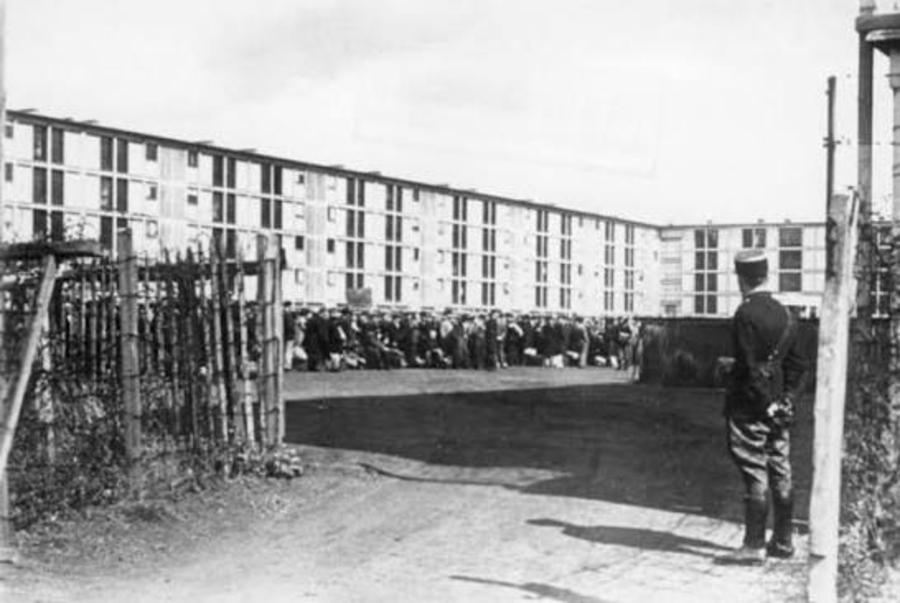
On July 29, 1942, Transport #12 (designated by French records as Convoi 12) departed from the Le Bourget-Drancy railway hub just outside Paris. Bound for the extermination network of Auschwitz-Birkenau in occupied Poland, the sealed train carried 1,001 Jewish men, women, and children.
When World War II came to an end in 1945, only five individuals from Transport #12 were left alive.
The near-total destruction of Transport #12 was neither an accident nor an isolated atrocity; it was the direct outcome of a bureaucratic machine executed jointly by Nazi authorities and the collaborationist French Vichy regime. The trajectory of this convoy—from the makeshift barracks of the Drancy transit camp to the gas chambers of Birkenau—illustrates how state institutions, infrastructure, and systemic indifference were weaponized to carry out the “Final Solution” (Endlösung).
- The Assembly Point: Cité de la Muette
To understand the fate of Transport #12, one must look at its point of departure: Drancy. Originally designed during the 1930s as a modern public housing complex called the Cité de la Muette, the U-shaped, four-story concrete structure remained unfinished at the outbreak of war. In 1941, Nazi forces and Vichy authorities confiscated the complex, transforming it into the central internment and transit camp for Jews seized across France.
Internment at Drancy was designed to degrade and disorient. Guarded by French gendarmes under SS oversight, thousands of people were packed into incomplete apartments without adequate sanitation, bedding, or food.
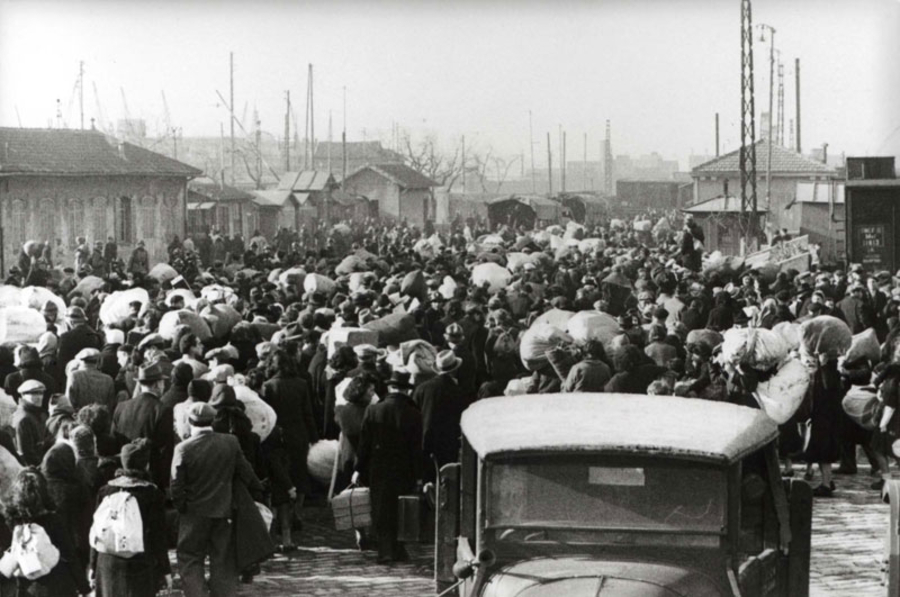
By mid-July 1942, conditions reached a critical breaking point following the Vélodrome d’Hiver (Vel’ d’Hiv) Roundup of July 16–17. Over 12,000 foreign and stateless Jews were arrested in Paris by French police. As thousands were funneled into transit camps, SS-Hauptsturmführer Theodor Dannecker and his successor Heinz Röthke accelerated the departure schedule of deportation trains to empty the overflowing barracks.
- Departure of Transport #12: July 29, 1942
In the early morning hours of July 29, 1942, 1,001 deportees were forced out of Drancy. Escorted by French police and Nazi Feldgendarmerie, they were taken to the freight loading area (quai aux moutons) at the nearby Le Bourget-Drancy station.
Manifest of Transport #12
Total Deportees: 1,001
Demographics: 514 women, 487 men (including children and the elderly)
Legal Status: Predominantly foreign-born or naturalized Jews stripped of their rights by Vichy anti-Semitic decrees, along with French-born Jewish citizens.
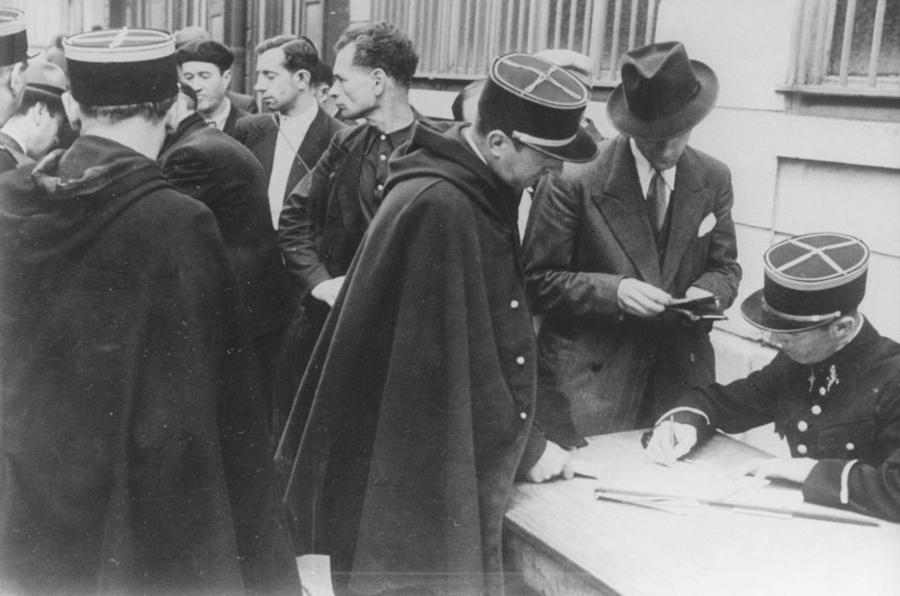
The deportees were forced into unventilated, overcrowded cattle cars. Each car contained a single bucket for waste and a minimal allotment of water. Sealed from the outside, Train 901-7 pulled away from the platform at approximately 8:55 AM, heading eastward through Noisy-le-Sec, Épernay, and onward across Germany into occupied Poland.
The journey lasted three days and three nights under suffocating conditions. Dehydration, heat exhaustion, and panic claimed lives before the train even reached its destination.
- Arrival and Selection at Auschwitz-Birkenau
On the night of July 31 or the early hours of August 1, 1942, Transport #12 ground to a halt on the Alte Judenrampe (the old railway ramp) located between the Auschwitz main camp and Birkenau.
Upon the opening of the doors, SS guards enforced immediate, chaotic disembarkation. The arrivals were subjected to the Selektion process carried out by SS doctors:
Immediate Execution: Those deemed unfit for heavy labor—including the elderly, mothers with young children, infants, and the infirm—were directed onto trucks or forced to march straight to the gas chambers of Birkenau (Bunkers 1 and 2). Their bodies were incinerated within hours, and no prisoner numbers were assigned to them.
Registration for Forced Labor: A fraction of the convoy was selected to enter the camp labor system. On this transport, 270 men and a small group of women were tattoo-registered into the Auschwitz record books.
or those selected for labor, survival meant enduring systematic starvation rations, backbreaking labor in construction or industrial commandos, brutal winter conditions, and pervasive exposure to typhus.
- The Path to Five Survivors
The overwhelming mortality rate of Transport #12 reflects the broader statistical reality of early 1942 deportations from France. Out of 1,001 people on Transport #12, only five individuals were confirmed alive in 1945.
The high mortality of this specific transport was driven by several compounding factors:
Timing of Deportation: Arriving in mid-1942 coincided with a period when Birkenau was undergoing expansion, featuring exceptionally brutal living conditions, minimal infrastructure, and frequent internal selections within the camp infirmaries.
The Winter of 1942–1943: Most deportees who survived the initial selection succumbed during their first winter due to hypothermia, exhaustion, and epidemic typhus.
Death Marches (1945): As the Soviet Army advanced in early 1945, the SS evacuated Auschwitz, forcing remaining prisoners on foot toward camps deeper inside the Reich (such as Buchenwald, Dachau, and Mauthausen). Thousands who had survived years in Auschwitz died on these forced marches.
The five survivors of Transport #12 endured almost three years of continuous internment across multiple camp networks before Allied liberation.
Historical Significance and Legacy
The record of Transport #12 remains an important case study in Holocaust scholarship and historical memory:
Vichy Collaboration: Transport #12 stands as concrete evidence of the French state’s active participation in the Holocaust. The arrests, transit management at Drancy, and initial rail logistics were executed by French administrative personnel under German directives.
Archival Precision: Unlike many deportations from Eastern Europe where identity records were destroyed, the deportation manifests for convoys leaving France were systematically maintained. Organizations such as the Mémorial de la Shoah and the Convoi 77 project have used these records to identify the individual names, birthplaces, and life stories of those aboard.
Memorialization: The site of the Drancy transit camp—the Cité de la Muette—serves today as a national memorial site. It stands as a reminder of how ordinary urban infrastructure was adapted to serve mass destruction.
Transport #12 illustrates the stark math of the Shoah in France: 1,001 human beings boarded Train 901-7 at Le Bourget-Drancy; three days later, the vast majority were dead; and by the war’s conclusion, only five remained to bear witness.
sources
https://shs.cairn.info/magazine-l-humanite-2025-1-page-40?lang=fr
https://victims.auschwitz.org/transports/154
https://www.theguardian.com/world/2009/feb/17/france-admits-deporting-jews
Donation
Your readership is what makes my site a success, and I am truly passionate about providing you with valuable content. I have been doing this at no cost and will continue to do so. Your voluntary donation of $2 or more, if you are able, would be a significant contribution to the continuation of my work. However, I fully understand if you’re not in a position to do so. Your support, in any form, is greatly appreciated. Thank you. To donate, click on the credit/debit card icon of the card you will use. If you want to donate more than $2, just add a higher number in the box left from the PayPal link. Your generosity is greatly appreciated. Many thanks.
$2.00


Leave a Reply