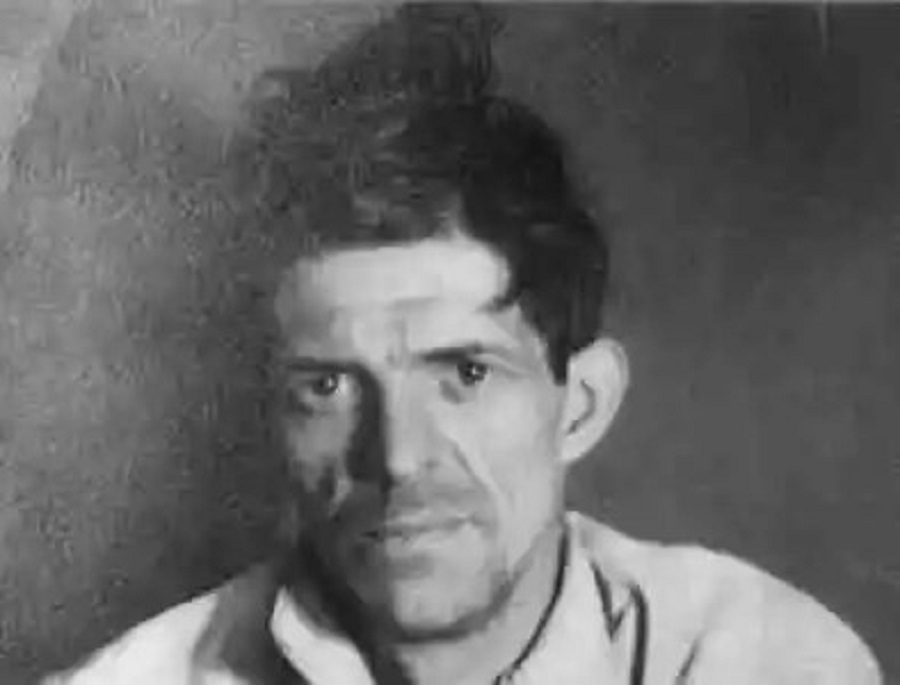
Josef Jakobs (30 June 1898 – 15 August 1941) was a German spy and the last person to be executed at the Tower of London. Captured shortly after parachuting into Britain during the Second World War, he was convicted of espionage under the Treachery Act 1940 and sentenced to death. Because he had broken his ankle during his parachute landing and was unable to stand, he was executed by a military firing squad while seated rather than being hanged.
Jakobs was an untrained and poorly equipped German agent who was parachuted into Britain in February 1941, apparently tasked with reporting weather conditions around London back to Germany. His mission, however, went disastrously wrong almost immediately. During the jump, he landed heavily and broke his ankle, leaving him stranded and in considerable pain at his drop point in Huntingdonshire.
The following morning, Jakobs attracted the attention of two local farmers, Charles Baldock and Harry Coulson, by firing his pistol into the air. The farmers alerted members of the local Home Guard, who quickly arrived and apprehended him.
When captured, Jakobs was found writhing in agony. He was carrying nearly £500 in counterfeit currency, an empty ration book, forged identity papers and a German sausage. His equipment and condition suggested that he was ill-prepared for the mission he had been sent to undertake.
Jakobs was initially taken to Ramsey Police Station before being transferred to Cannon Row Police Station in London. There, he made a voluntary statement to Major T. A. Robertson of MI5. Because of the serious condition of his ankle, he was transferred to the infirmary at Brixton Prison for the night. The following day, he was briefly interrogated by Lieutenant Colonel Robin Stephens of MI5 at Camp 020, the secret British interrogation centre for enemy agents.
Jakobs was subsequently transferred to Dulwich Hospital, where he remained for approximately two months while receiving treatment for his injuries. By then, his brief career as a German agent was effectively over.
Jakobs had been born in Luxembourg in 1898 and was a German citizen. During the First World War, he served in the German Army and rose to the rank of lieutenant in the 4th Foot Guards. In June 1940, shortly after the outbreak of the Second World War, he was drafted into the Wehrmacht as a first lieutenant.
His military career was short-lived. When German authorities discovered that he had previously been imprisoned in Switzerland from 1934 to 1937 for selling counterfeit gold, he was forced to resign his commission. He was subsequently demoted to non-commissioned officer and assigned to the Meteorologischen Dienst, the German Army’s meteorological service. It was around this time that he also began working for the Abwehr, the intelligence service of the German armed forces.
Jakobs’s court martial took place on 4–5 August 1941 at Duke of York’s Headquarters in Chelsea, London. The proceedings were held in camera because of the highly sensitive circumstances surrounding his capture. British intelligence had known that Jakobs was coming because information about his planned arrival had been passed to MI5 by Arthur Owens, a Welsh nationalist who had become an Abwehr agent and subsequently worked as a British double agent.
After a two-day trial, during which eight witnesses gave evidence, Jakobs was found guilty of espionage and sentenced to death.
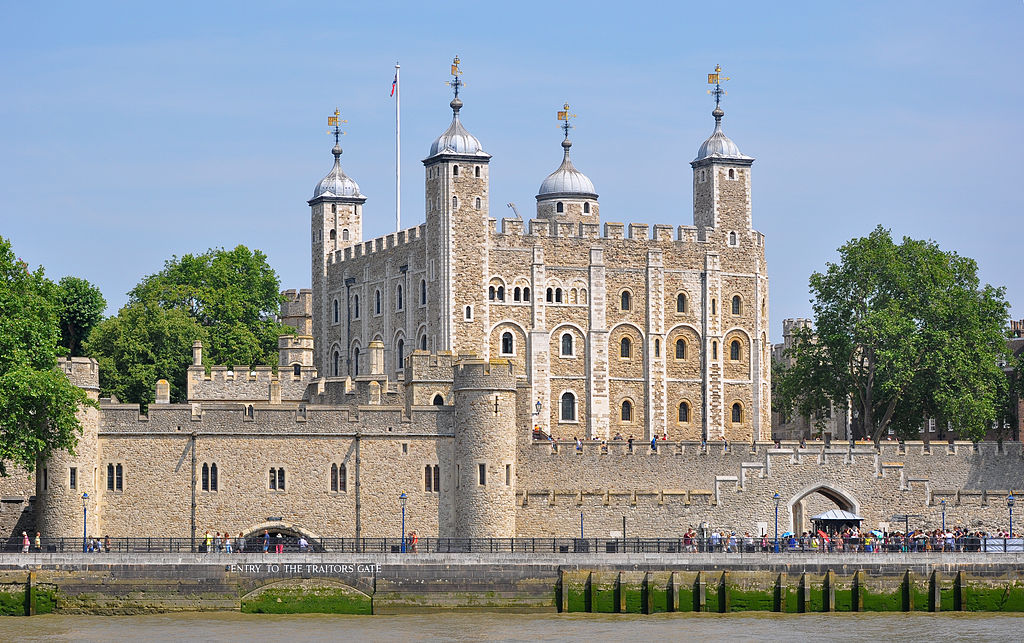
On the morning of 15 August 1941, Jakobs was taken to the miniature rifle range in the grounds of the Tower of London. Because his broken ankle prevented him from standing, he was seated in a brown Windsor chair. He was blindfolded, and a white cotton target, approximately the size of a matchbook, was placed over his heart.
Eight soldiers from the Holding Battalion of the Scots Guards formed the firing squad. Armed with .303 Lee-Enfield rifles, they took aim at the marked target. At precisely 7:12 a.m., they fired simultaneously following a silent signal from Lieutenant Colonel C. R. Gerard, Deputy Provost Marshal for the London District.
Jakobs died almost instantly. A subsequent post-mortem examination revealed that one bullet had struck him in the head, while the other seven had struck the target area or its immediate vicinity.
His execution made him the last person to be executed at the Tower of London. Unlike the other German spies sentenced to death in Britain during the Second World War, who were generally hanged at Wandsworth or Pentonville prisons, Jakobs was executed by firing squad because of his military status and the circumstances of his conviction.
Following his execution, Jakobs’s body was buried in an unmarked grave at St Mary’s Roman Catholic Cemetery in Kensal Green, London. The area in which his grave was located has since been reused, making the exact location of his original burial place difficult to identify.
Josef Jakobs’s story is an unusual footnote in the history of wartime espionage. His mission lasted barely a day before a broken ankle, a pistol shot into the air and the vigilance of two local farmers brought it to an abrupt end. Within six months of parachuting into Britain, he had been interrogated, tried and executed—becoming the final person to face a firing squad at the Tower of London.
Sources
https://en.wikipedia.org/wiki/Josef_Jakobs
https://thehistorypress.co.uk/article/uncovering-josef-jakobs
https://allthatsinteresting.com/josef-jakobs
Please support us so we can continue our important work.
Donation
Your readership is what makes my site a success, and I am truly passionate about providing you with valuable content. I have been doing this at no cost and will continue to do so. Your voluntary donation of $2 or more, if you are able, would be a significant contribution to the continuation of my work. However, I fully understand if you’re not in a position to do so. Your support, in any form, is greatly appreciated. Thank you. To donate, click on the credit/debit card icon of the card you will use. If you want to donate more than $2, just add a higher number in the box left from the PayPal link. Your generosity is greatly appreciated. Many thanks.
$2.00


Leave a Reply