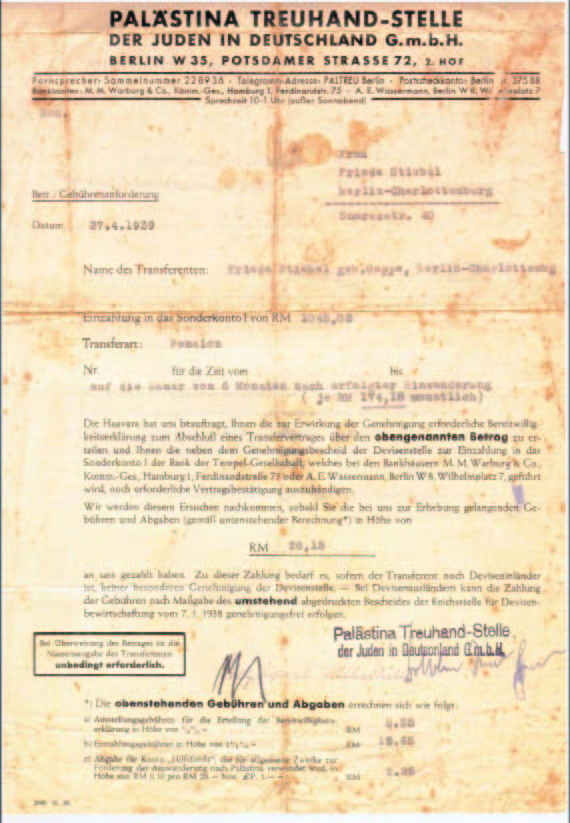
The Haavara Agreement, also known as the Transfer Agreement, was a controversial arrangement concluded on 25 August 1933 between Nazi Germany and representatives of German Zionism. Its purpose was to facilitate the emigration of German Jews to Mandatory Palestine while allowing some of their assets to be transferred out of Germany in the form of German export goods. The agreement emerged during one of the darkest periods in modern Jewish history, when Adolf Hitler had recently come to power and the persecution of German Jews was rapidly intensifying.
The agreement remains controversial because it brought together parties with profoundly different objectives. The Nazi regime sought to encourage Jewish emigration while weakening the international boycott of German goods. Zionist representatives sought to rescue Jews from an increasingly hostile Germany and help establish a viable Jewish community in Palestine. Although the agreement saved lives and helped thousands of Jews leave Germany, it also involved economic cooperation with a regime whose ultimate policies would lead to the Holocaust.
Germany After Hitler’s Rise to Power
When Adolf Hitler and the Nazi Party came to power in January 1933, German Jews were initially confronted with discrimination, intimidation, and economic persecution rather than the systematic extermination that would come later. The Nazi regime quickly introduced measures designed to exclude Jews from German public life.
The April 1933 boycott of Jewish businesses, the dismissal of Jewish civil servants, restrictions on Jewish professionals, and the increasingly aggressive propaganda of the Nazi regime made it clear that the position of Jews in Germany was becoming increasingly precarious.
For many German Jews, emigration appeared to be the safest option. Yet leaving Germany was extraordinarily difficult. Potential emigrants needed money to establish themselves elsewhere, but German authorities imposed increasingly severe restrictions on the export of Jewish capital. At the same time, many countries were unwilling to accept large numbers of Jewish refugees.
This created a devastating dilemma: Jews who wanted to escape could possess assets in Germany but be unable to take those assets with them.
The Origins of the Agreement
The Haavara Agreement emerged from negotiations between German Zionist organizations and representatives of the Nazi authorities. A central figure on the Zionist side was Chaim Arlosoroff, a leading figure in the Jewish Agency and the Yishuv’s political establishment.
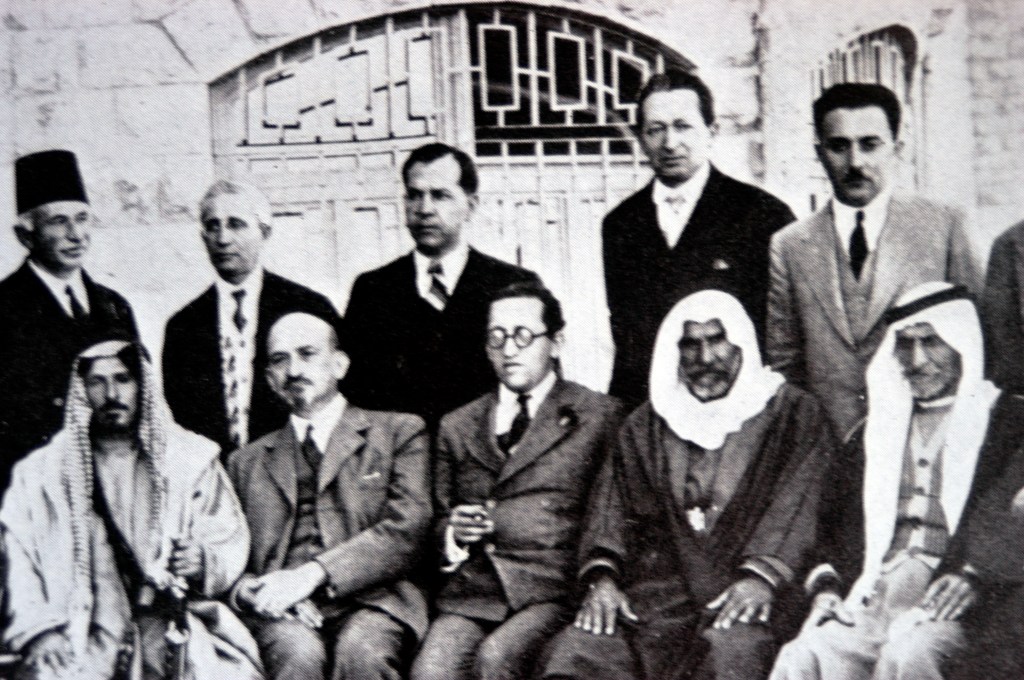
The agreement was formally associated with the Zionist Federation of Germany, the Anglo-Palestine Bank, and German authorities.
Under the arrangement, a Jewish emigrant could deposit money in a special account in Germany. That money would be used to purchase German-made goods. The goods were then exported to Palestine, where they could be sold. The emigrant would subsequently receive part of the proceeds in Palestine.
In simple terms, the arrangement allowed some German Jews to convert frozen assets into property and goods that could ultimately provide them with financial resources in Palestine.
The system did not allow emigrants to recover all their wealth. Taxes, fees, exchange restrictions, and other losses meant that emigrants generally received only a portion of the value of their original assets. Nevertheless, in a situation in which leaving Germany with substantial capital was otherwise extremely difficult, the agreement provided an important route of escape.
A Controversial Partnership
The Haavara Agreement was controversial almost immediately.
The international Jewish community was divided over how to respond to Hitler’s regime. Many Jewish organizations supported an economic boycott of Germany in an effort to pressure the Nazi government and demonstrate international opposition to its persecution of Jews.
The Haavara Agreement, however, facilitated the export of German goods to Palestine. Critics therefore argued that it undermined the boycott by helping Germany maintain commercial relationships abroad.
Some Zionists defended the agreement on humanitarian grounds. Their argument was straightforward: regardless of broader political considerations, the immediate priority should be getting Jews out of Germany. A boycott might damage the German economy, but it could not rescue an individual Jewish family that had no means of escape.
The disagreement reflected a fundamental conflict between two strategies. One emphasized collective economic resistance to Nazism; the other emphasized the immediate rescue and relocation of endangered Jews.
For Zionist leaders involved in the negotiations, the opportunity to bring German Jews and their capital to Palestine was particularly important. They believed that Jewish immigration was essential to building the Jewish national home.
Why the Nazis Accepted It
It is important not to misunderstand the agreement as evidence of sympathy or cooperation between Nazism and Zionism in any ideological sense. The two movements were fundamentally opposed in their goals and worldview.
The Nazi regime accepted the arrangement because it served German interests.
First, the agreement encouraged Jewish emigration. Nazi policy in the 1930s increasingly sought to make Germany Judenrein—free of Jews—through forced emigration. The regime therefore had an interest in arrangements that made emigration possible.
Second, the agreement helped German exporters. German goods were sold in Palestine, providing Germany with foreign markets and helping the regime circumvent some of the effects of the international boycott.
Third, the agreement allowed the Nazi government to seize control over the process of Jewish emigration and the movement of Jewish property.
Thus, while the agreement could save Jewish lives, it also operated within the increasingly coercive economic system imposed upon German Jews.
The Impact on German Jews
Despite its limitations and controversies, the Haavara Agreement played an important role in helping German Jews reach Palestine.
Between 1933 and 1939, tens of thousands of German Jews emigrated to Palestine through arrangements connected with Haavara. The exact number depends on how the agreement’s beneficiaries are counted, but it facilitated the transfer of substantial numbers of people and significant amounts of capital.
The immigrants contributed skills, education, professional experience, and financial resources to the developing Jewish community in Palestine. German Jewish immigrants helped strengthen sectors including medicine, science, architecture, commerce, industry, and agriculture.
For those who escaped, however, the agreement was not simply an economic mechanism. It could represent the difference between remaining trapped in an increasingly dangerous Germany and beginning a new life elsewhere.
The Human Tragedy Behind the Numbers
The importance of Haavara becomes clearer when viewed against the rapidly deteriorating situation in Germany.
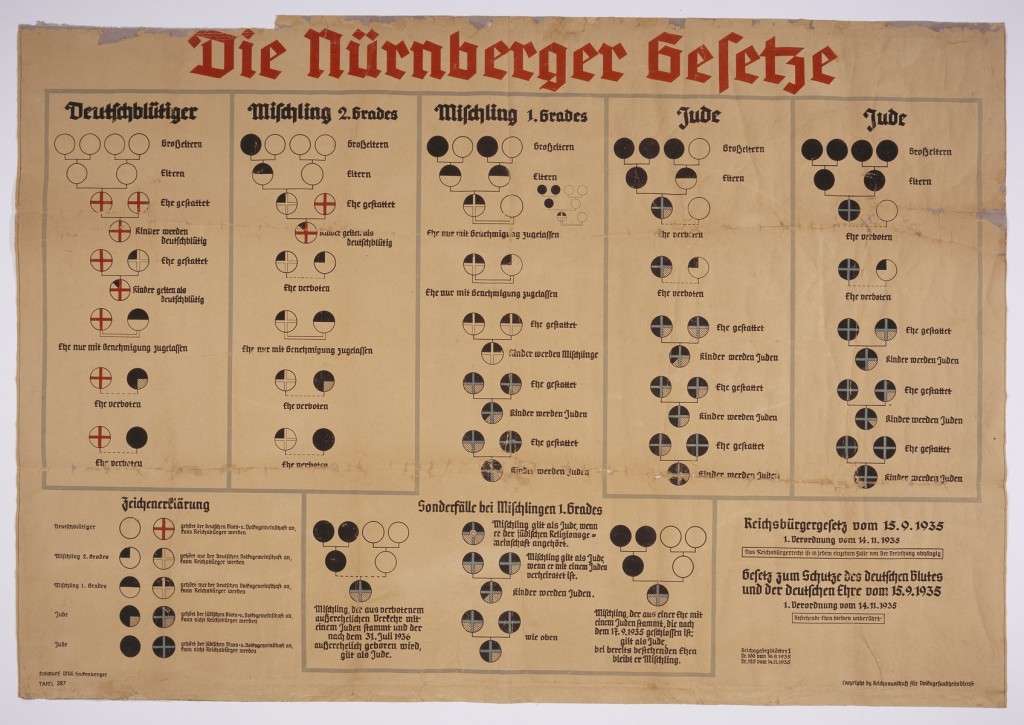
In 1935, the Nuremberg Laws stripped German Jews of citizenship and formally institutionalized racial discrimination.
In November 1938, Kristallnacht brought a dramatic escalation of violence. Jewish synagogues were destroyed, businesses were attacked, thousands of Jewish men were arrested and sent to concentration camps, and Jewish communities were subjected to systematic terror.
By then, emigration had become an increasingly desperate race against time.
Yet emigration remained extraordinarily difficult. Countries imposed immigration restrictions, while Nazi authorities increasingly confiscated Jewish property and made it harder for Jews to leave with financial resources.
The Haavara system therefore existed within a cruel paradox: Nazi Germany was persecuting Jews and simultaneously permitting some of them to leave because their departure served German economic and ideological interests.
Haavara and the Holocaust
The agreement must also be understood within the broader chronology of Nazi persecution.
When Haavara was established in 1933, the Holocaust in its later form had not yet begun. The Nazi regime had not yet developed the extermination system that would ultimately murder approximately six million Jews.
This distinction is historically important. The agreement was created during the period of Nazi persecution, forced emigration, and dispossession that preceded the Holocaust. After the outbreak of the Second World War in 1939, the possibilities for Jewish emigration rapidly collapsed.
The Nazi regime eventually moved from persecution and forced emigration toward systematic mass murder. The Holocaust demonstrated with terrible clarity how narrow the window for escape had been during the 1930s.
For many German Jews who managed to reach Palestine through Haavara, emigration ultimately meant survival. For those who remained behind because they could not escape, the consequences were often catastrophic.
A Difficult Historical Legacy
The Haavara Agreement does not fit easily into a simple narrative of heroes and villains.
Its defenders point to the thousands of Jews who were able to escape Nazi Germany and establish new lives in Palestine. From this perspective, the agreement was an imperfect but practical rescue mechanism operating under extraordinarily difficult circumstances.
Its critics emphasize the agreement’s economic relationship with Nazi Germany and its effect on the international boycott. They also point to the painful fact that the Nazis benefited economically from an arrangement that simultaneously facilitated Jewish emigration.
Both aspects are part of the historical reality.
The agreement should therefore not be portrayed as cooperation based on shared ideology. Nor should it be presented as an uncomplicated humanitarian success. It was a pragmatic arrangement created under the extraordinary conditions of Nazi persecution, in which Jewish representatives attempted to save lives while dealing with a regime that sought to dispossess and expel Germany’s Jewish population.
Conclusion
The Haavara Agreement stands as one of the most unusual and morally complicated episodes in the history of the years preceding the Holocaust. Born out of desperation, it brought together German authorities and Jewish representatives whose political objectives were fundamentally incompatible.
For the Nazis, it encouraged Jewish emigration and supported German exports. For Zionist organizations, it offered a means of helping German Jews escape persecution and establishing themselves in Palestine. For the Jews who were able to benefit from it, however, its significance was ultimately much more personal: it provided a route to safety at a time when the doors of many other countries were closing.
Its history reminds us of the terrible choices confronting European Jews during the 1930s. There were no easy solutions. Those attempting to escape Nazi Germany had to navigate immigration quotas, financial restrictions, confiscation, international indifference, and the increasingly violent policies of the Nazi state.
The Haavara Agreement was therefore neither a simple act of collaboration nor an uncomplicated rescue operation. It was a product of an age in which Jewish survival increasingly depended upon making impossible choices. Above all, its history illustrates the desperate urgency of Jewish emigration before the Holocaust—and the tragedy that so many who could not escape were ultimately murdered.
Sources:
https://en.wikipedia.org/wiki/Haavara_Agreement
https://en.wikipedia.org/wiki/Haim_Arlosoroff
https://encyclopedia.ushmm.org/content/en/article/the-nuremberg-race-laws
https://en.wikipedia.org/wiki/Zionist_Federation_of_Germany
https://www.yadvashem.org/articles/academic/the-transfer-agreement.html


Leave a Reply