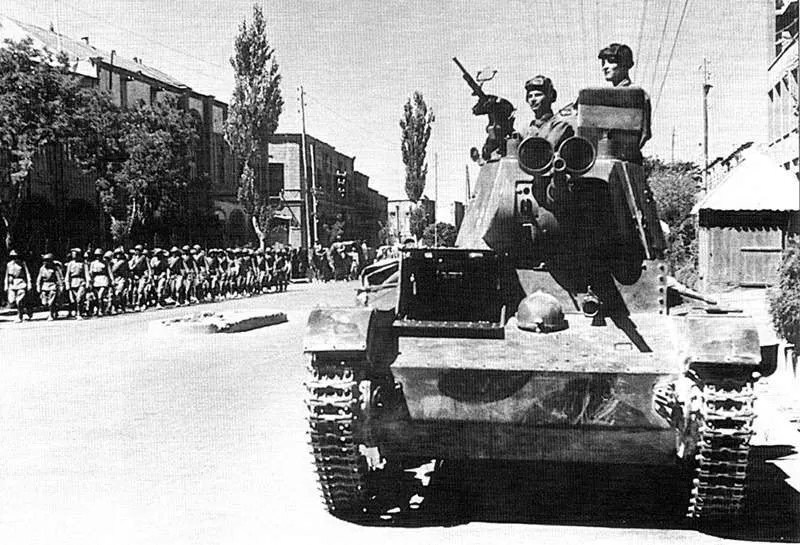
The Anglo-Soviet invasion of Iran in August 1941, codenamed Operation Countenance, was a decisive military intervention that fundamentally altered the geopolitical landscape of the Middle East and secured a vital logistical lifeline for the Allied war effort. Following Nazi Germany’s invasion of the Soviet Union in June 1941, Britain and the Soviet Union became uneasy allies with a shared strategic imperative: preventing the collapse of the USSR and securing reliable routes for supplying the Red Army.
On 25 August 1941, British and Soviet forces launched a coordinated invasion of neutral Iran. The campaign rapidly overwhelmed the Iranian armed forces, despite the substantial modernization undertaken under Reza Shah Pahlavi. Within days, Iran was forced to accept Allied occupation, and Reza Shah was subsequently compelled to abdicate in favour of his young son, Mohammad Reza Pahlavi.
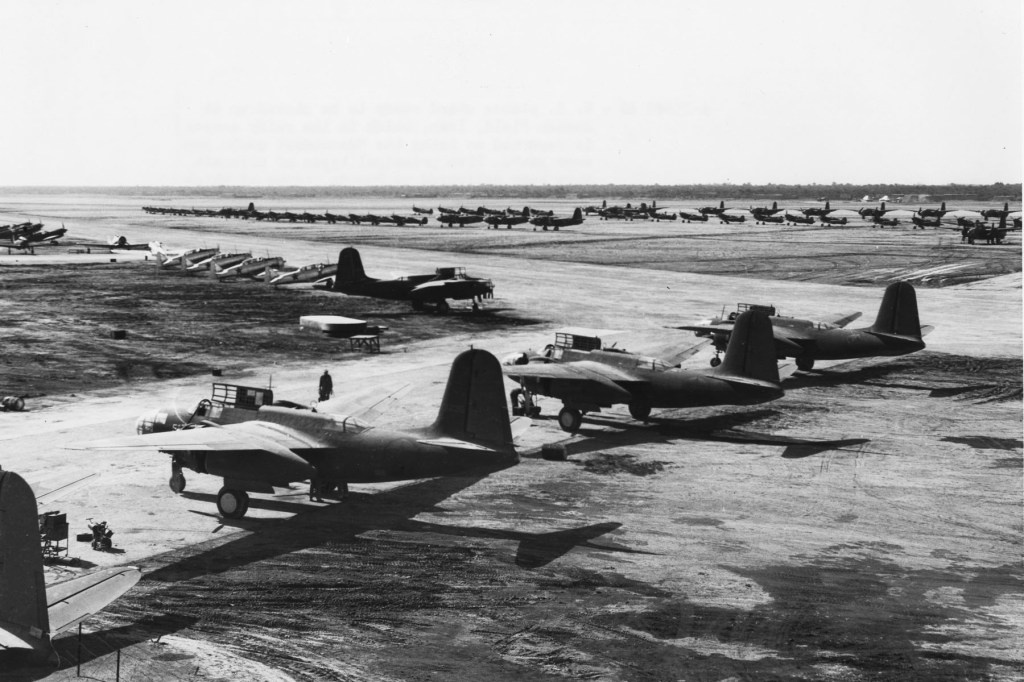
The occupation transformed Iran into the centre of the Persian Corridor, one of the most important Allied supply routes of the Second World War. Through Iranian ports, railways and roads, millions of tons of American and British matériel were transported to the Soviet Union. The invasion therefore served a vital military purpose, but it came at a profound cost to Iranian sovereignty and contributed to political, economic and social upheaval that would shape the country’s history for decades.
1. The Geopolitical Crisis of 1941
The origins of the invasion lay in the rapidly changing strategic situation of the summer of 1941. On 22 June 1941, Nazi Germany launched Operation Barbarossa, invading the Soviet Union on an enormous scale. The German attack transformed the strategic calculations of Britain almost overnight. The Soviet Union, previously bound to Germany by the Molotov-Ribbentrop Pact, had suddenly become Britain’s most important potential military partner against Hitler.
The survival of the Soviet Union became a paramount Allied concern. Britain was already fighting Germany in North Africa and the Mediterranean, while the Arctic supply route to the Soviet Union was extremely hazardous. The Allies therefore urgently needed additional routes through which weapons, vehicles, fuel and other matériel could reach Soviet territory.
Iran appeared to offer an ideal solution.
Under Reza Shah, Iran had undergone an ambitious programme of centralization, industrialization and modernization. The Shah had strengthened the armed forces, expanded the state bureaucracy and constructed the Trans-Iranian Railway, linking the Persian Gulf with the Iranian interior and, ultimately, the northern regions of the country.
At the same time, Iran had developed close economic relations with Germany. German engineers, technicians and commercial representatives played important roles in several sectors of the Iranian economy. By 1941, several thousand German nationals were living in Iran.
British and Soviet leaders increasingly regarded this German presence as a potential security threat. Their fears were reinforced by the pro-Axis coup in Iraq in April–May 1941, which demonstrated how rapidly political instability could threaten British strategic interests in the region.
Britain also had another crucial concern: Iranian oil.
The enormous refinery at Abadan, operated by the Anglo-Iranian Oil Company, was one of the largest oil-refining facilities in the world. Iranian petroleum was indispensable to the British war effort, particularly for the Royal Navy and Britain’s wider military machine.
For the Soviet Union, Iran presented a different but equally important strategic problem. The country’s northern provinces bordered Soviet territory, making Iran a potential route for German espionage, subversion or eventually military operations. Moscow also wanted to secure its vulnerable southern frontier.
Britain and the Soviet Union therefore shared a common strategic objective: Iran could not be permitted to become a German sphere of influence.
2. Diplomacy Fails
The Allies initially attempted to resolve the crisis through diplomatic pressure rather than military force.
Throughout July and August 1941, Britain and the Soviet Union repeatedly demanded that the Iranian government restrict or expel German nationals whom they considered a security threat. Reza Shah resisted these demands, arguing that Iran was a neutral country and had the sovereign right to determine which foreign nationals could remain within its borders.
The Shah’s position was understandable from an Iranian perspective. Iran had not declared war on either Germany or the Allies, and Reza Shah was determined to protect the independence he had spent two decades consolidating.
Nevertheless, his government underestimated the extent to which British and Soviet strategic interests had converged.
When Tehran failed to satisfy their demands, London and Moscow decided that military intervention was necessary.
3. Operation Countenance
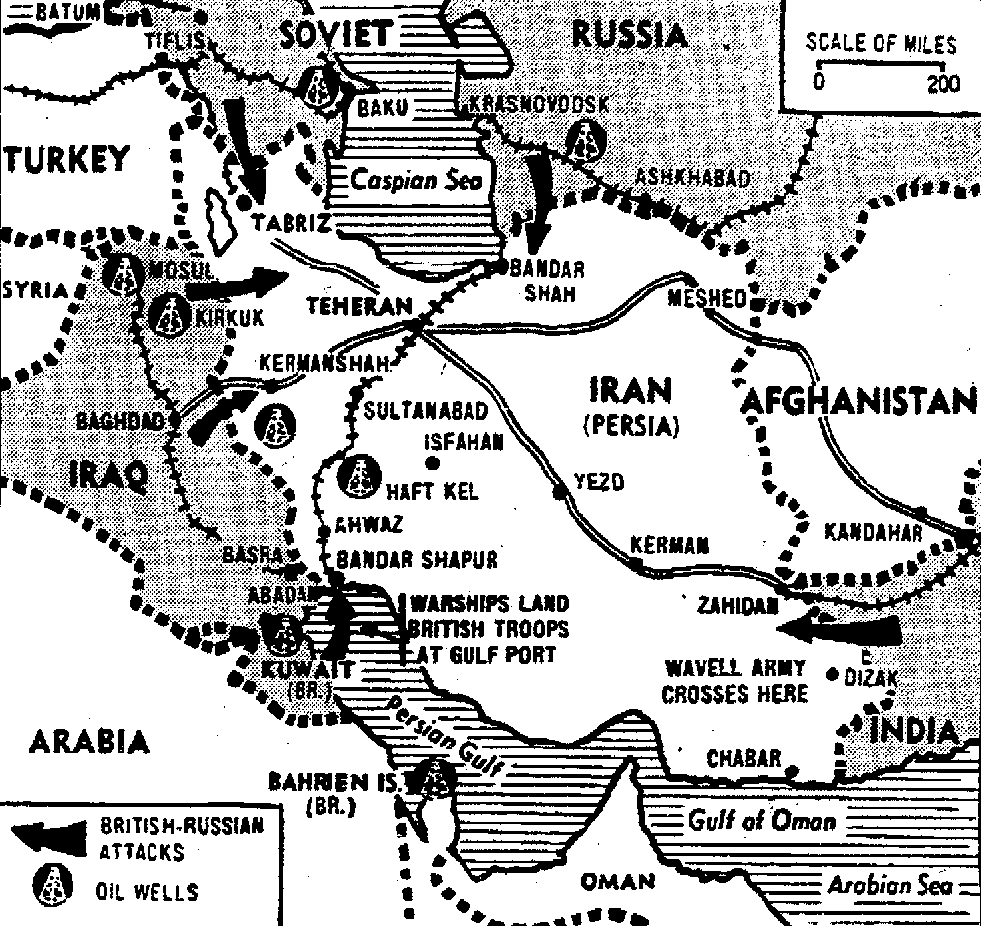
At dawn on 25 August 1941, British, Indian and Soviet forces invaded Iran from the south, west and north. The operation was carefully coordinated and caught the Iranian military at a severe disadvantage.
The British Advance
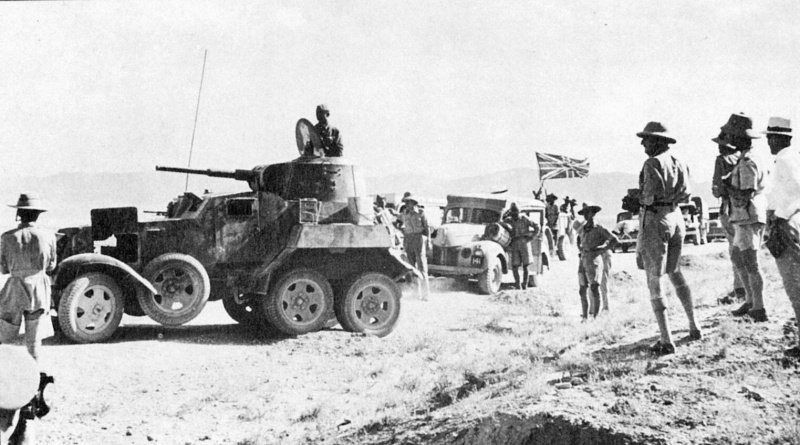
British and Indian forces attacked from Iraq and the Persian Gulf, focusing primarily on the strategically vital oil-producing region of Khuzestan.
One of the first major objectives was Abadan, home to the enormous Anglo-Iranian Oil Company refinery. British naval forces attacked Iranian positions while troops landed on the island and nearby mainland. The Iranian navy attempted to resist, but its small fleet was rapidly overwhelmed.
The Iranian naval commander, Rear Admiral Gholam-Ali Bayandor, was killed during the fighting.
British forces subsequently advanced toward Ahvaz, Khorramshahr and other strategically important locations. Further west, British troops pushed through the Paitak Pass, opening the road toward the Iranian interior.
The Soviet Advance
At the same time, Soviet forces invaded from the north.
The Soviet Transcaucasian Front advanced into northwestern Iran from Soviet Azerbaijan, rapidly occupying important cities including Tabriz. Soviet troops also entered northern Iran from the direction of the Caspian Sea.
In the northeast, Soviet forces crossed the frontier from Soviet Central Asia and advanced toward Mashhad and the province of Khorasan.
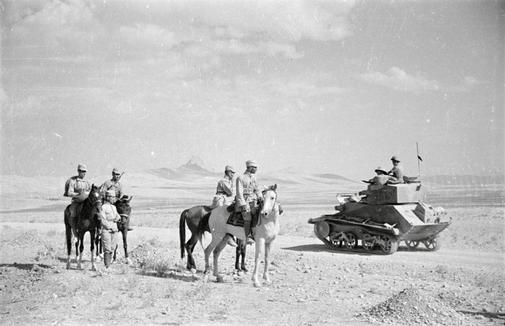
The Iranian army attempted to resist, but its position was hopeless. The country was being attacked simultaneously from several directions by two of the world’s most powerful military powers.
4. The Collapse of Iranian Resistance
Reza Shah had spent years building and modernizing the Iranian armed forces. By 1941, the army was substantially larger and better organized than it had been when he came to power.
Yet modernization had not transformed Iran into a military power capable of confronting Britain and the Soviet Union.
The Iranian armed forces lacked sufficient modern aircraft, armour, artillery, anti-aircraft weapons and logistical capacity. The country also had limited combat experience. Against the overwhelming air, naval and mechanized superiority of the Allies, Iranian resistance rapidly collapsed.
The Iranian government ordered a ceasefire on 29 August.
The military campaign had lasted only a few days.
The defeat was not simply a military disaster. It was a profound humiliation for Reza Shah, whose political legitimacy had been built partly upon his ability to restore Iranian independence and national strength.
Now foreign armies occupied large parts of the country.
5. The Fall of Reza Shah
The Allies quickly concluded that Reza Shah could no longer be trusted to govern Iran in wartime.
His nationalist policies, his resistance to Allied demands and his earlier relationship with Germany had convinced British officials that he represented a potential obstacle to their strategic objectives.
On 16 September 1941, Reza Shah abdicated.
He was succeeded by his 21-year-old son, Mohammad Reza Pahlavi, who became Shah of Iran.
Reza Shah was subsequently forced into exile. He initially travelled to Mauritius and later settled in South Africa, where he died in 1944.
The transfer of power marked the end of one of the most consequential political chapters in modern Iranian history.
Reza Shah had attempted to transform Iran into a centralized, modern nation-state. His reign had produced major reforms, including the expansion of education, infrastructure and the armed forces, but it had also been highly authoritarian.
His forced abdication demonstrated the limits of Iranian sovereignty in the face of great-power rivalry.
6. The Tripartite Treaty and the Allied Occupation
The political situation was formalized by the Tripartite Treaty of Alliance, signed in Tehran on 29 January 1942.
Under the agreement, Iran permitted Britain and the Soviet Union to use its transportation and communications infrastructure for military purposes. In return, the Allies formally recognized Iran’s sovereignty and territorial integrity and promised to withdraw their forces after the war, subject to the treaty’s provisions.
The agreement transformed Iran into a crucial logistical bridge between the Allied powers.
This bridge became known as the Persian Corridor.
7. The Persian Corridor: The Allied Lifeline
The Persian Corridor became one of the most important routes for supplying the Soviet Union.
Cargo arrived by ship at Iranian ports on the Persian Gulf. From there, it was transported northward by railway, road and truck convoys until it reached Soviet territory in the Caucasus.
The route was strategically important because it provided the Allies with an alternative to the dangerous Arctic convoys and the more geographically complicated Pacific route.
The logistics operation was enormous.
American personnel subsequently became heavily involved in operating and expanding the supply system. The U.S. Army’s Persian Gulf Service Command, later reorganized as the Persian Gulf Command, played a major role in transporting matériel through Iran.
The Allies expanded Iranian port facilities, improved roads and upgraded the Trans-Iranian Railway. American engineers and logisticians also established vehicle assembly and maintenance facilities.
Thousands of trucks were assembled in Iran from imported components and then driven north toward the Soviet Union.
The result was a remarkable logistical achievement.
By the end of the war, millions of tons of Allied supplies had passed through the Persian Corridor, including trucks, aircraft, fuel, food, ammunition, clothing and industrial materials.
The corridor never replaced the Arctic or Pacific routes completely, but it became an indispensable component of the Allied supply system and helped sustain the Soviet war effort during some of the most critical years of the conflict.
8. The Human Cost of Occupation
For the Allied planners, the occupation of Iran was a strategic success. For many Iranians, however, it was a catastrophe.
The arrival of large numbers of foreign troops placed enormous pressure on Iran’s already fragile economy. Allied forces requisitioned food, fuel, vehicles and other resources, while wartime disruption severely affected transportation and trade.
Inflation soared.
Food became increasingly scarce, particularly in urban areas. Shortages of bread and other basic commodities contributed to widespread hardship, while disease and malnutrition intensified the suffering of the civilian population.
The crisis became particularly severe during 1942–43, when famine conditions affected parts of the country.
The occupation also weakened the authority of the central government. British and Soviet forces effectively divided Iran into spheres of influence, with the Soviet Union occupying much of the north and Britain dominating the south.
This division had profound political consequences.
Soviet authorities encouraged the development of left-wing political organizations in their zone, while Iranian nationalists increasingly resented foreign interference. Kurdish and Azerbaijani political movements also gained strength during the occupation.
The seeds of Iran’s post-war political conflicts were being planted.
9. The Tehran Conference
Iran’s strategic importance was dramatically demonstrated in November–December 1943, when Tehran hosted the first major meeting of the Allied “Big Three.”
Winston Churchill, Franklin D. Roosevelt and Joseph Stalin met in Tehran to coordinate Allied strategy against Nazi Germany and discuss the shape of the post-war world.
The leaders also issued the Declaration Regarding Iran, reaffirming their commitment to Iran’s sovereignty, independence and territorial integrity.
The irony was striking.
The Allied powers had invaded and occupied Iran two years earlier in violation of its neutrality, yet they now publicly promised to respect its independence.
For Iran, however, the most important question was what would happen when the war ended.
10. The Iran Crisis of 1946
That question became urgent after the defeat of Germany in 1945.
Britain and the United States began withdrawing their forces from Iran, but the Soviet Union delayed its withdrawal from the northern provinces.
Instead, Moscow supported separatist political movements that established two autonomous administrations in northern Iran:
- the Azerbaijan People’s Government, centred in Tabriz;
- the Republic of Mahabad, a Kurdish republic in northwestern Iran.
The crisis became one of the first major confrontations of the emerging Cold War.
Iran appealed to the newly established United Nations, making the dispute one of the first international crises to reach the UN Security Council.
Under growing diplomatic pressure, particularly from the United States, Soviet forces eventually withdrew in May 1946. Iranian government forces subsequently reasserted control over the northern provinces, and the separatist administrations collapsed.
The episode demonstrated that the wartime alliance between Britain, the Soviet Union and the United States had already begun to fracture.
The Iran Crisis of 1946 is therefore often regarded as one of the earliest confrontations of the Cold War.
11. A Turning Point in Modern Iranian History
The Anglo-Soviet invasion of 1941 was far more than a brief military campaign.
It transformed Iran’s political trajectory.
The removal of Reza Shah brought his son Mohammad Reza Pahlavi to the throne, beginning a reign that would last until the Iranian Revolution of 1979. The occupation also exposed the vulnerability of Iran to foreign intervention and reinforced a powerful current of Iranian nationalism centred on political independence and control over the country’s natural resources.
The Persian Corridor simultaneously made Iran indispensable to the Allied war effort. Without Iranian territory, the Allies would have faced greater difficulties in transporting supplies to the Soviet Union.
Yet the strategic success came at a considerable human and political cost.
Iran had declared neutrality. Nevertheless, its sovereignty was subordinated to the strategic requirements of two great powers. The occupation contributed to economic hardship, political instability and the growth of competing foreign influences.
It also created conditions that would shape the country’s post-war relationship with Britain, the United States and the Soviet Union.
Conclusion
The Anglo-Soviet invasion of Iran in August 1941 was one of the lesser-known but strategically significant operations of the Second World War. In military terms, it was swift and overwhelmingly successful. Britain secured the Iranian oil industry and the Persian Gulf, while the Soviet Union protected its southern frontier. Most importantly, the Allies gained control of a vital supply route that would become the Persian Corridor.
But victory for the Allies came at the expense of Iranian sovereignty.
Reza Shah was removed from power, foreign armies occupied the country, the Iranian economy suffered severe disruption, and the political vacuum created by the occupation encouraged competing nationalist, socialist, Kurdish and Azerbaijani movements.
The consequences extended well beyond 1945. The Soviet refusal to withdraw from northern Iran helped produce the Iran Crisis of 1946, one of the earliest confrontations of the emerging Cold War.
In this sense, Operation Countenance was both a wartime logistical triumph and a pivotal moment in the modern history of Iran. The invasion helped defeat Nazi Germany, but it also demonstrated how the strategic calculations of global powers could override the sovereignty of smaller nations. Its legacy would remain deeply embedded in Iranian political consciousness for decades, influencing the country’s increasingly complex relationship with Britain, the Soviet Union and, eventually, the United States.
Sources:
https://en.wikipedia.org/wiki/Anglo-Soviet_invasion_of_Iran
https://www.bbc.co.uk/history/ww2peopleswar/timeline/factfiles/nonflash/a1130121.shtml
https://www.tandfonline.com/doi/full/10.1080/00210862.2019.1628638
https://soviet-union.com/coldwar/iran
Please support us so we can continue our important work.
Donation
Your readership is what makes my site a success, and I am truly passionate about providing you with valuable content. I have been doing this at no cost and will continue to do so. Your voluntary donation of $2 or more, if you are able, would be a significant contribution to the continuation of my work. However, I fully understand if you’re not in a position to do so. Your support, in any form, is greatly appreciated. Thank you. To donate, click on the credit/debit card icon of the card you will use. If you want to donate more than $2, just add a higher number in the box left from the PayPal link. Your generosity is greatly appreciated. Many thanks.
$2.00


Leave a Reply