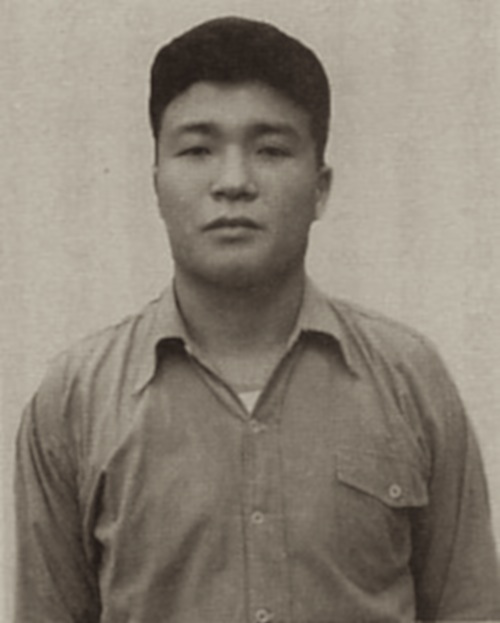
Serial killers are not exclusively a Western phenomenon. Throughout history, individuals who committed multiple murders have appeared in countries across the globe, leaving behind crimes that continue to disturb and fascinate long after the perpetrators are gone. Among the most unsettling cases is that of Seisaku Nakamura, whose story is particularly disturbing because he began killing at an extraordinarily young age.
Seisaku Nakamura ,born September 10, 1923, sometimes referred to as the Hamamatsu Deaf Killer, was a Japanese murderer believed to have fatally stabbed eleven people in Shizuoka Prefecture. What makes his case especially chilling is that his first known victims were killed when Nakamura was only fourteen years old.
His crimes unfolded against the backdrop of prewar Japan, and the details of his life and murders remain relatively obscure compared with those of notorious serial killers in Europe and North America. Nevertheless, the sheer number of alleged victims, combined with the fact that Nakamura was still a child when he began killing, places his case among the more disturbing episodes in the history of Japanese crime.

Serial killers are often imagined as products of some distant, unfamiliar world—figures whose crimes seem almost impossible to comprehend. But the history of serial murder is not confined to any one country, culture, or era. In wartime Japan, one of the most disturbing cases involved Seisaku Nakamura, a deaf young man whose violence began while he was still a teenager and eventually consumed strangers and members of his own family.
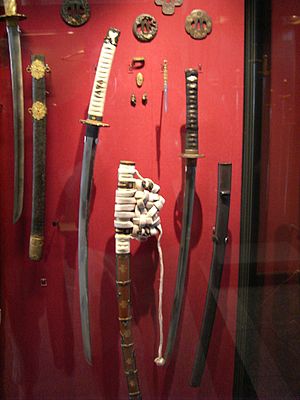
Nakamura was born deaf and was reportedly an intelligent child who performed well at school. Behind that ability, however, lay a deeply troubled home life. He was said to have been poorly treated by his family and struggled to find acceptance in wider society. He became increasingly isolated, and accounts of his life describe an unsettling fascination with films depicting men using Japanese swords to assassinate their victims.
Whatever influence those films may have had on him, they cannot explain what followed. On August 22, 1938, Nakamura attacked two women and attempted to rape them. When they resisted, the attack became murder. He killed both women.
He was only fourteen.
The killings did not immediately lead to his capture, and Nakamura disappeared back into the anonymity of everyday life. Three years later, the violence began again. On August 18, 1941, he murdered a woman and injured another. Two days later, on August 20, three more people were killed.
The pattern was becoming unmistakable. Yet Nakamura remained free.
The most chilling development came when the boundary between stranger and family disappeared. On September 27, 1941, Nakamura murdered his own brother. He also attacked other members of the household, injuring his father, his sister, his brother’s wife, and his brother’s child.
Still, there was no immediate end to the killing.
On August 30, 1942, Nakamura entered another home and murdered a couple, their daughter, and their son. He then attempted to rape another daughter. For reasons that remain unclear, he abandoned the attempt.
By then, the number of victims had become impossible to ignore.
Yet the public knew remarkably little.
Japan was in the midst of war, and information about Nakamura’s crimes was reportedly restricted. Authorities and others feared that publicizing a series of seemingly random murders would create further anxiety in an already tense society. His family, meanwhile, reportedly knew that Nakamura was responsible for the deaths but remained silent, afraid that coming forward would bring retaliation against them.
That silence allowed the nightmare to continue.
Nakamura was finally arrested on October 12, 1942. He was charged in connection with nine murders. The two women he had killed in 1938 were reportedly excluded from the trial because Nakamura had been a minor when those crimes were committed.
Then another tragedy struck the family.
On November 11, Nakamura’s father, Fumisada Nakamura, took his own life.
Nakamura was tried as an adult under Japan’s wartime legal system. Medical experts reportedly concluded that he was insane and therefore should not be held criminally responsible for his actions. But the proceedings moved rapidly. There was little of the prolonged legal process that might be expected today in a case involving multiple murders and questions of mental responsibility.
Nakamura was executed on July 24, 1944, by hanging.
His story is disturbing not simply because of the number of people he killed, but because of the age at which his violence began. Fourteen years old when he committed his first known murders, he was still little more than a child himself. Over the following years, the violence escalated from attacks on strangers to the destruction of his own family.
The case also illustrates how murder can disappear into silence. Wartime censorship, fear, family loyalty, and the threat of retaliation created a world in which people who knew something remained quiet. While a killer moved through the community, those around him were afraid to speak.
Today, Seisaku Nakamura is remembered in some accounts as the “Hamamatsu Deaf Killer.” The label is stark, but it tells us very little about the person behind it. His deafness, social isolation, troubled childhood, and fascination with violent films may form part of the story, but none provides a simple explanation for what he ultimately did.
The most unsettling aspect of the case is perhaps the simplest: Nakamura began killing when he was fourteen, and for years afterward, the people around him lived with knowledge of what he was capable of.
Sources:
https://murderpedia.org/male.N/n/nakamura-seisaku.htm
https://en.wikipedia.org/wiki/Seisaku_Nakamura
https://www.findagrave.com/memorial/112631711/seisaku-nakamura


Leave a Reply