Reporting the news accurately is crucial at all times. Reporting it accurately during wartime when tensions are high is vital; if you fail to do so, it can create false expectations and potentially cost lives.
On Tuesday, September 5th, 1944, the Dutch Prime Minister Gerbrandy announced via Radio Oranje that the Allied army had crossed the border and Breda had been liberated. In fact, he had initially announced it twice: once on September 4th at 23:45 and then again in the morning of September 5th. The BBC had also picked up the announcement.
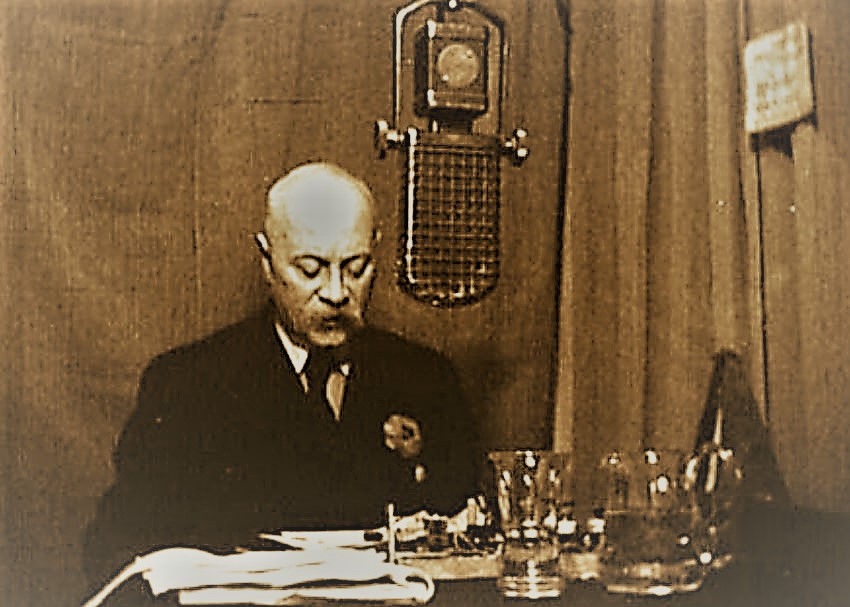
The information was entirely inaccurate, but the Dutch expected the Allied army to arrive in Rotterdam on the same day. The Germans panicked, and their army fled North and East in the Netherlands.

The news spread fast, with underground newspapers preparing headlines announcing the “fall of Breda.”
The Nazi leadership, Arthur Seyss-Inquart and Hanns Albin Rauter, SS and police leader, added to the speculation by announcing a “State of Siege” for the Netherlands to the 300,000 cable radio listeners.
“The population must maintain order … it is strictly forbidden to flee areas that are threatened by the enemy. All orders from military commanders must be strictly adhered to, without question. Any resistance to the occupation forces will be suppressed with the force of weaponry. Any attempt to fraternize with the enemy or to hinder the German Reich and its allies in any form will be dealt with harshly; perpetrators will be shot.”
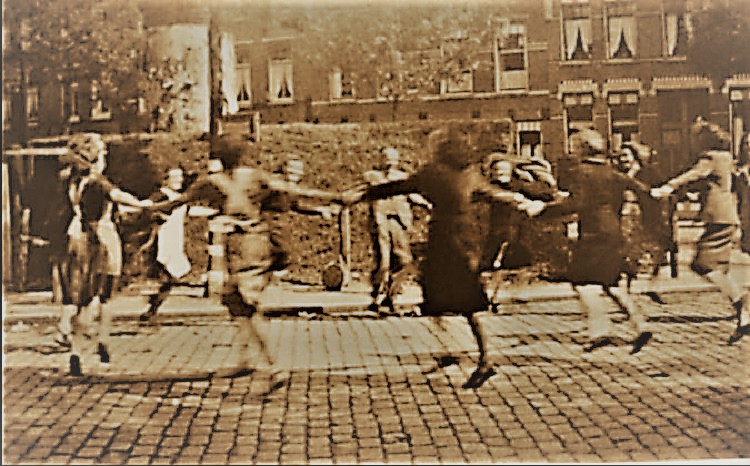
The Dutch did not heed the warning and went out to celebrate on the streets while preparing to welcome and cheer on the Allied liberators. Dutch and Orange flags and pennants were prepared, and many workers left their place of employment to wait for the Allies to arrive.

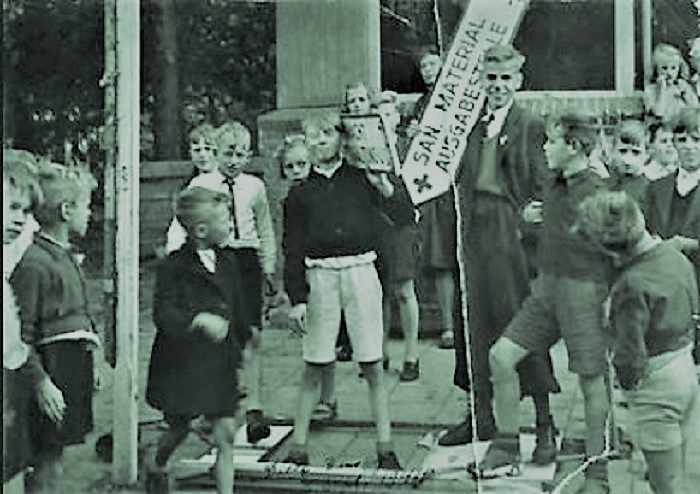
Some kids even took down German road signs.
German occupation forces and NSB members got into a panic. Documents were destroyed, and many fled the Netherlands for Germany.
Many of the NSB members fled temporarily to the Lüneburger Heide in Germany. While the NSB leader, Mussert, moved more eastward to Almelo. The illegal newspaper “Het Parool” reported on the 11th of September on how these NSB”Heroes” fled the country.

Luckily, there were no fatal casualties as a result of this, among the general Dutch population, although a few celebrants were shot and others were arrested.
The day after however, on September 6 a train carrying wives and children of members of the NSB headed for Germany. The train was attacked by Allied planes, and about 30 passengers were killed. I do feel sorry for the wives and especially the children, for they were innocent bystanders; however, I also believe this was karma. The irony is not lost on me, for the NSB had helped to put so many Jews and others on trains to their final destinations.
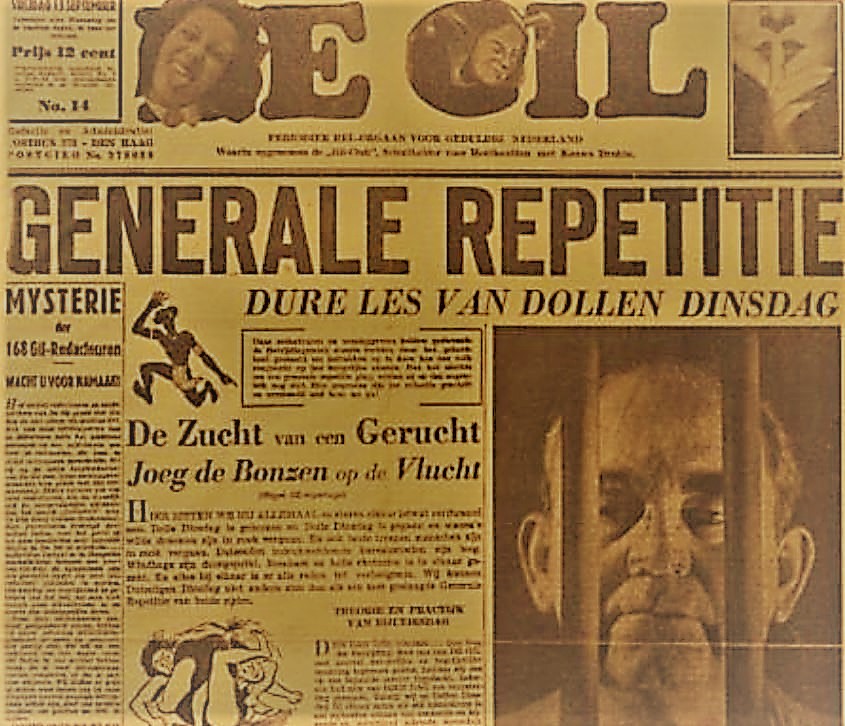
The name ‘Dolle Dinsdag’ was coined by Willem van den Hout, alias Willem W. Waterman, who first used it in the Dutch Nazi propaganda newspaper ‘de Gil,’ which was funded by the German propaganda department.
The whole confusion of ‘Dolle Dinsdag’ had come about because of one word. Before the radio broadcast, Prime Minister Gerbrandy had changed the text from ‘the allies approached the border’ to ‘crossed the border’
It would take another 9 days before Maasticht would be liberated, which was the first major Dutch city to be liberated by Allied troops.

Donation
Your readership is what makes my site a success, and I am truly passionate about providing you with valuable content. I have been doing this at no cost and will continue to do so. Your voluntary donation of $2 or more, if you are able, would be a significant contribution to the continuation of my work. However, I fully understand if you’re not in a position to do so. Your support, in any form, is greatly appreciated. Thank you. To donate, click on the credit/debit card icon of the card you will use. If you want to donate more than $2, just add a higher number in the box left from the PayPal link. Your generosity is greatly appreciated. Many thanks.
$2.00


 History of Sorts
Leave a comment