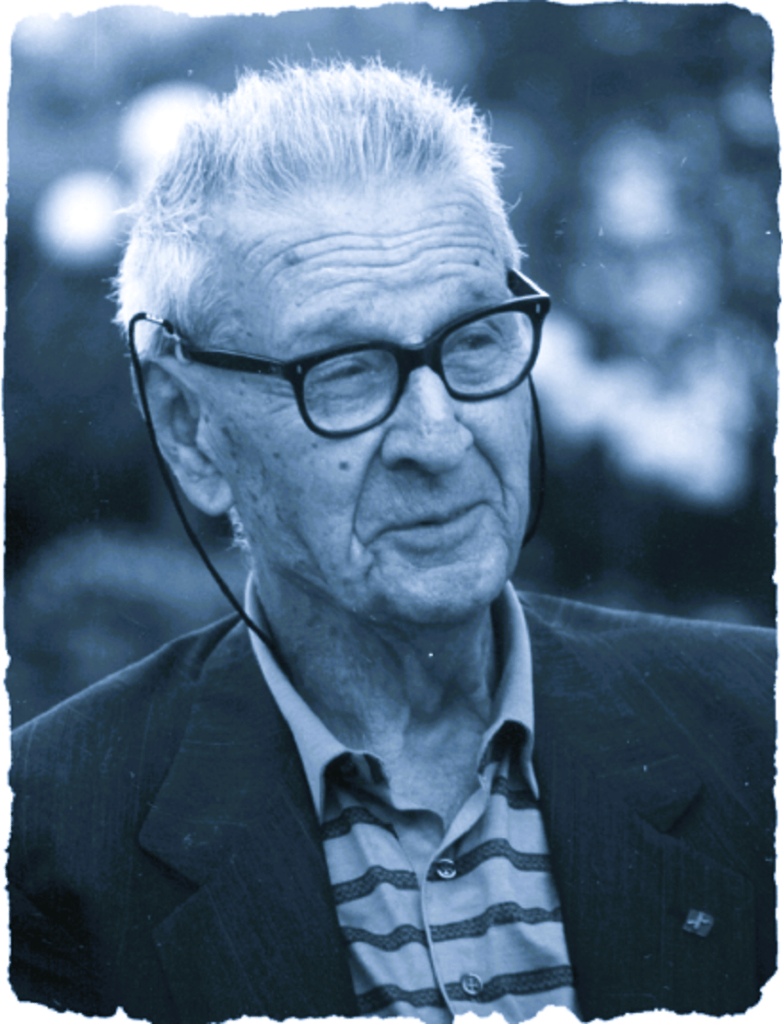
Giorgio Perlasca (January 31, 1910 – August 15, 1992) was an Italian businessman who became one of the great, unsung heroes of World War II for his remarkable efforts to save thousands of Jews from the Holocaust in Hungary. Despite his early association with fascism, Perlasca’s story is one of a profound moral transformation, culminating in an extraordinary act of courage and humanity that remained largely unknown until late in his life.
Early Life and Fascist Sympathies
Giorgio Perlasca was born in Como, Italy, in 1910 and grew up in the northern Italian town of Maserà. In his youth, he was an ardent supporter of Benito Mussolini’s fascist regime, particularly impressed by its early nationalistic rhetoric. Perlasca fought for Italy as a volunteer in the Second Italo-Ethiopian War (1935-1936) and later participated in the Spanish Civil War (1936-1939), fighting on the side of Francisco Franco’s Nationalist forces as part of an Italian contingent sent by Mussolini to support the Francoists against the Spanish Republicans.
During these years, Perlasca developed a strong sense of anti-communism, which motivated much of his support for Franco and Mussolini. However, his experiences in Spain, combined with the radical turn that Mussolini’s government took toward racial laws and alliance with Nazi Germany, began to erode his loyalty to fascism. Perlasca was particularly disturbed by the anti-Semitic racial laws enacted in Italy in 1938 and the increasing collaboration between Mussolini and Adolf Hitler. His disillusionment with fascism set the stage for the dramatic transformation that would define his later life.
World War II and Perlasca’s Moral Transformation
When World War II broke out, Perlasca initially continued to work as a civil servant in Italy. By 1942, however, he was sent to Eastern Europe as a procurement officer tasked with securing supplies for the Italian army. His work eventually took him to Hungary, which, under Regent Miklós Horthy, had become a reluctant ally of Nazi Germany.
As the war dragged on and Italy’s fortunes deteriorated, Mussolini’s regime fell in 1943. After the Armistice of Cassibile in September 1943, which resulted in Italy’s surrender to the Allies, Perlasca was interned by the Germans in a Hungarian prison camp because he refused to join the Italian Social Republic, the fascist puppet state established by Mussolini in northern Italy under Nazi control. Claiming ill health, Perlasca was released from the camp and granted a travel permit. Instead of returning to Italy, where the situation was increasingly dangerous, he decided to stay in Budapest, Hungary, where he would soon play a pivotal role in saving thousands of Jewish lives.
The Situation in Hungary
By 1944, Hungary was one of the last remaining havens for Jews in Nazi-occupied Europe. However, this situation changed dramatically when Germany invaded Hungary in March 1944 after Horthy attempted to negotiate a separate peace with the Allies. Following the invasion, Adolf Eichmann was sent to Hungary to oversee the deportation of Hungarian Jews to the Auschwitz concentration camp. For just a few months, hundreds of thousands of Hungarian Jews were rounded up and deported to their deaths.
In Budapest, foreign diplomats and humanitarian workers tried desperately to protect as many Jews as possible. Among them were representatives from neutral countries such as Sweden, Switzerland, Spain, and Portugal, who issued protective documents and housed Jews in safe houses under the protection of their embassies. One of the most famous of these diplomats was Raoul Wallenberg, a Swedish envoy who saved thousands of Jews by issuing protective passports and sheltering them in buildings designated as Swedish territory.
It was in this environment of chaos and terror that Giorgio Perlasca would take extraordinary action.
Perlasca’s Heroic Actions in Budapest
Although Perlasca had no official position, he found himself drawn into the efforts to protect Hungary’s Jews. Initially, he sought refuge at the Spanish Embassy in Budapest, as he had fought for Franco during the Spanish Civil War and was technically entitled to Spanish protection. This decision would prove to be life-saving, not only for Perlasca but for thousands of others as well.
The Spanish government, led by Franco, had declared itself neutral during World War II but maintained diplomatic relations with Hungary. The Spanish ambassador, Ángel Sanz-Briz, was actively involved in rescuing Jews by issuing them Spanish protection documents, falsely claiming that these individuals were Sephardic Jews (descendants of Jews expelled from Spain in 1492) and thus entitled to Spanish protection. This diplomatic maneuver allowed many Jews to evade deportation and death.
However, in November 1944, with the war nearing its end and the situation in Hungary deteriorating rapidly, Sanz-Briz was ordered by the Spanish government to leave Budapest. Before departing, Sanz-Briz entrusted the Spanish diplomatic mission to Perlasca, who, despite having no formal diplomatic credentials, took over the rescue operation.
Perlasca posed as the Spanish consul-general in Budapest and continued the work of issuing Spanish protective documents to Jews. Using his assumed authority, he established several “safe houses” around Budapest, which were designated as Spanish territory and thereby protected from raids by Hungarian fascists and the Nazis. These safe houses became a vital refuge for thousands of Jews who otherwise would have been sent to concentration camps.
Perlasca’s courage was extraordinary. Not only did he risk his own life by assuming a false identity, but he also confronted Hungarian and Nazi officials directly. On several occasions, he successfully negotiated with or intimidated Hungarian officials to prevent them from deporting Jews. He even intervened in forced death marches, pulling Jews out of the lines and placing them under Spanish protection.
Throughout the winter of 1944-1945, as the Soviet Red Army closed in on Budapest, Perlasca continued his efforts to protect Jews from both the Nazis and the Hungarian Arrow Cross Party. Throughout the winter of 1944-1945, as the Soviet Red Army closed in on Budapest, Perlasca continued his efforts to protect Jews from both the Nazis and the Hungarian Arrow Cross Party.

After the War
Despite his remarkable actions, Giorgio Perlasca returned to Italy after the war and lived in relative obscurity for decades. He never sought recognition for what he had done, and his story remained largely unknown outside of the small circle of survivors who owed their lives to him.
It wasn’t until the 1980s that Perlasca’s story began to emerge. Some of the Jews he had saved tracked him down in Italy and began to spread the word of his heroism. Slowly, Perlasca began to receive recognition for his actions. In 1989, Israel’s Yad Vashem honored him as one of the “Righteous Among the Nations,” a title given to non-Jews who risked their lives to save Jews during the Holocaust.
Perlasca also received numerous awards and honors from governments around the world, including Spain, Italy, and Hungary. Despite this late recognition, Perlasca remained humble about his actions, insisting that he had simply done what any decent person would have done in his situation.
Legacy
Giorgio Perlasca’s story is a powerful testament to the capacity for moral transformation and the courage of individuals who stand up against evil. A man who once sympathized with fascism became one of its most effective opponents, risking everything to save the lives of thousands of Jews during one of the darkest periods of human history.
Perlasca’s actions, like those of Raoul Wallenberg and other diplomats and ordinary citizens who risked their lives to save Jews during the Holocaust, are a reminder that even in the face of overwhelming cruelty and injustice, individuals can make a difference. His legacy lives on in the thousands of lives he saved, in the testimonies of survivors, and in the recognition that came, albeit belatedly, for his extraordinary courage.
Today, Giorgio Perlasca is remembered as one of the great humanitarians of World War II. His story has been the subject of books, documentaries, and films, ensuring that future generations will learn of his heroism and be inspired by his example.
Sources
https://collections.ushmm.org/search/catalog/irn504674
https://www.timesofisrael.com/israeli-orchestra-honors-italian-who-saved-5000-jews-from-nazis/
https://www.jewishvirtuallibrary.org/giorgio-perlasca
Donation
Your readership is what makes my site a success, and I am truly passionate about providing you with valuable content. I have been doing this at no cost and will continue to do so. Your voluntary donation of $2 or more, if you are able, would be a significant contribution to the continuation of my work. However, I fully understand if you’re not in a position to do so. Your support, in any form, is greatly appreciated. Thank you. To donate, click on the credit/debit card icon of the card you will use. If you want to donate more than $2, just add a higher number in the box left from the PayPal link. Your generosity is greatly appreciated. Many thanks.
$2.00
 History of Sorts
Leave a comment