
The Nazi concentration camp system evolved into a machine of mass murder, and Auschwitz became its deadliest cog. Located in Poland, Auschwitz initially served as a concentration and forced labor camp for Polish political prisoners. However, in 1941, it became the epicenter of Nazi extermination efforts. Among the most horrifying aspects of Auschwitz’s legacy was its role as a testing ground for industrialized mass murder through gas. In September 1941, the Nazis conducted the first gas murder experiments in Auschwitz I, marking a critical shift towards the mass extermination that would define the Holocaust. These experiments were a precursor to the large-scale genocide that would later be carried out at Auschwitz-Birkenau and other camps.
Background
The origins of Auschwitz can be traced back to May 1940, when it was established as a concentration camp for Polish political prisoners. However, its function quickly expanded, and it became a central element in the Nazi regime’s plans for the subjugation and eventual annihilation of various groups, particularly European Jews.
By 1941, the Nazis were grappling with the challenge of killing vast numbers of people in a “humane” and efficient way, as they termed it. Mass shootings conducted by the Einsatzgruppen in Eastern Europe were considered psychologically damaging to the executioners and logistically cumbersome. The Nazi leadership sought more “efficient” methods of mass killing, which led to the exploration of poison gas.
The use of gas for extermination was not a new concept for the Nazis. In the Action T4 program, beginning in 1939, gas chambers were used to kill mentally and physically disabled Germans, viewed as “life unworthy of life” by the Nazi regime. The technology and know-how from these killings were later adapted to the concentration camps, leading to the experimentation with gas on a large scale.
Auschwitz: From Concentration Camp to Extermination Center
In September 1941, the first gas murder experiments occurred at Auschwitz I, the main camp of the Auschwitz complex. At that time, Rudolf Höss was the camp commandant, and SS-Hauptsturmführer Karl Fritzsch was the camp’s deputy commandant, both leading the search for an efficient method of mass murder. Prior to this, the camp had been used primarily as a labor camp and for the internment of Polish political prisoners.
Auschwitz’s geographical location and its growing infrastructure were ideal for the Nazi regime’s genocidal plans. With railway access from all over Europe and its secluded location, Auschwitz was chosen as a major center for extermination, ultimately leading to the construction of Auschwitz II-Birkenau in 1941 as a dedicated death camp.
The First Gas Murder Experiments: September 1941
The first gas experiment took place in Block 11, a notorious cell block within Auschwitz I, sometimes referred to as the “Death Block” due to its use as a punishment facility. In September 1941, approximately 600 Soviet prisoners of war and 250 Polish inmates were selected for this experiment.
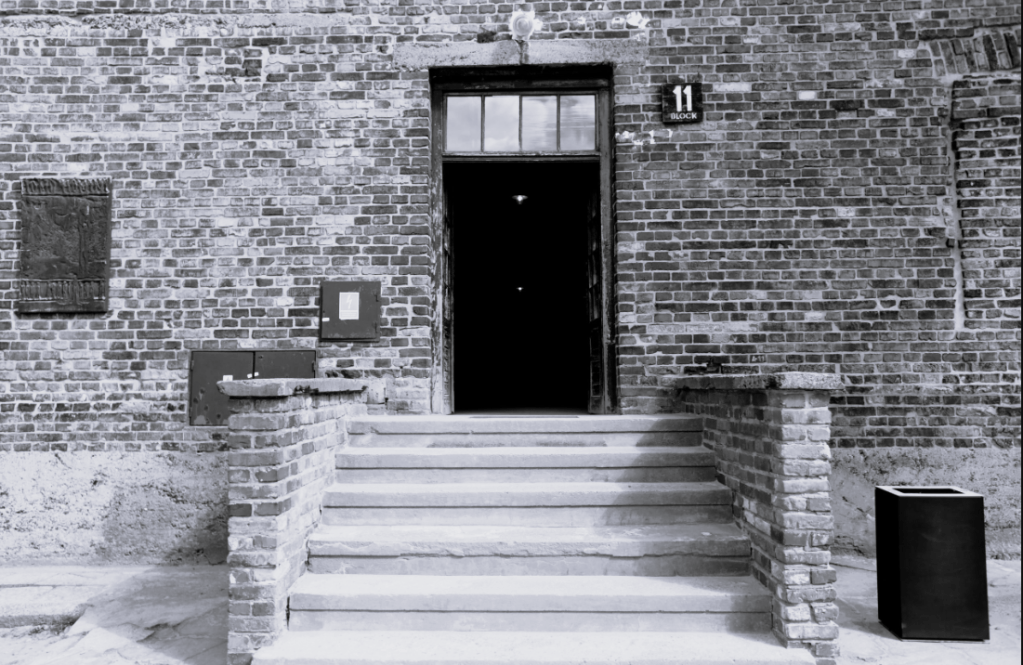
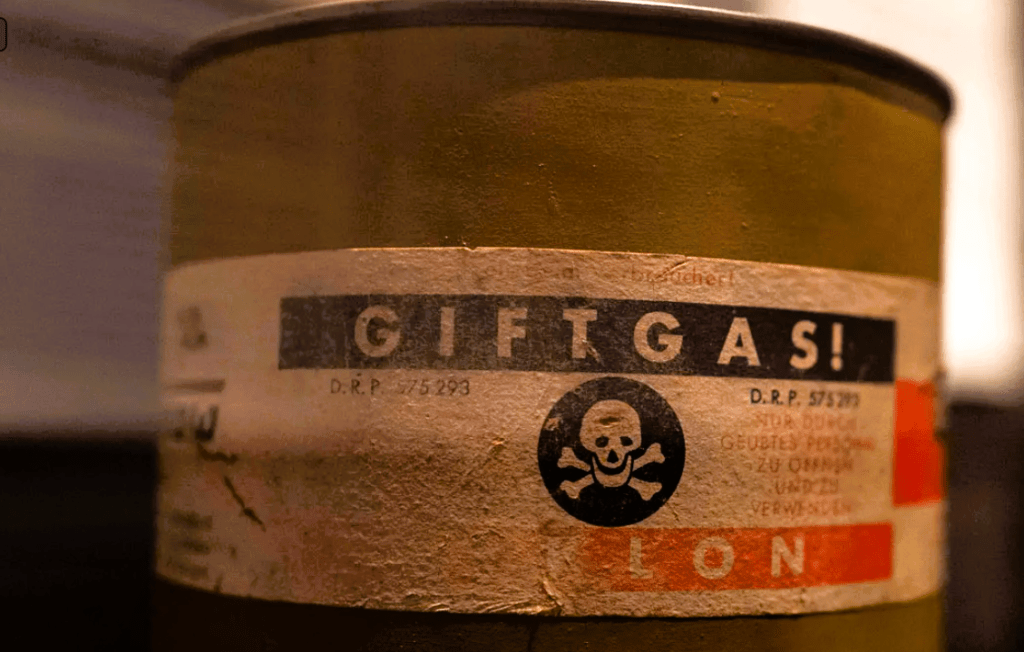
The Nazis chose Zyklon B, a cyanide-based pesticide, as the agent of death. Zyklon B had previously been used to delouse clothing and barracks to prevent typhus. Still, its toxic properties made it suitable for large-scale killing. The victims were herded into the basement cells of Block 11, where the SS men threw Zyklon B pellets into the sealed chambers. Upon exposure to air, the pellets released deadly hydrogen cyanide gas, killing those inside within minutes.
The experiment was considered a “success” by the Nazi leadership, as it demonstrated the potential of Zyklon B for mass murder. According to survivor testimonies and Nazi documentation, SS officers and medical personnel observed the process, monitoring how long it took for the prisoners to die and evaluating how effective Zyklon B was for extermination purposes.
The first experiment marked a turning point, as it confirmed the Nazis’ belief that gas could be used on a much larger scale to exterminate people rapidly and efficiently. The relative speed of the gas and the reduced emotional and psychological burden on the executioners (compared to mass shootings) meant that gas chambers could be constructed to kill thousands of people daily with minimal SS manpower.
Expansion of Gas Chambers at Auschwitz-Birkenau
Following the success of the experiments in Block 11, Auschwitz was rapidly expanded to facilitate mass murder. A new camp, Auschwitz II-Birkenau, was built nearby, which became the primary site of mass extermination. Unlike Auschwitz I, which was primarily a labor and concentration camp, Birkenau was designed with industrialized killing in mind.
By early 1942, several gas chambers and crematoria had been constructed at Birkenau, capable of processing large numbers of victims. Zyklon B was adopted as the primary killing agent in these gas chambers. The extermination process was highly organized: victims, primarily Jews, but also Roma, Soviet POWs, and other groups, were transported to Auschwitz-Birkenau by train. Upon arrival, SS doctors would conduct a selection process, determining who would be sent to labor and who would be sent to the gas chambers.
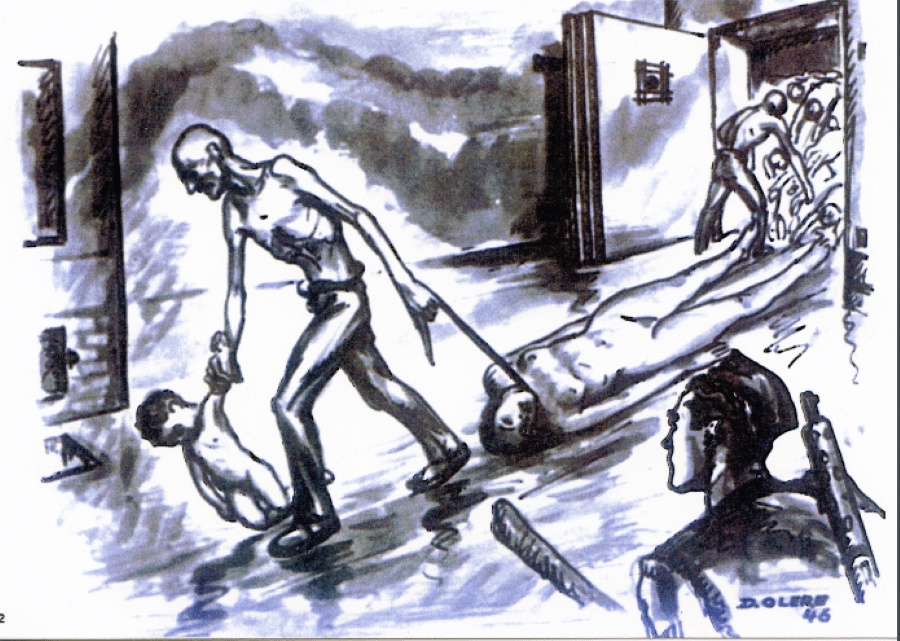
Those selected for extermination were told they were going to take a shower for disinfection. They were led to underground gas chambers disguised as shower rooms, where they were locked inside. SS guards would then drop Zyklon B pellets through vents in the ceiling. Within 10 to 20 minutes, everyone in the chamber would be dead. Their bodies were then removed by Sonderkommando units (prisoners forced to assist with the operation) and burned in nearby crematoria to hide the evidence of the mass murder.
Role of Zyklon B and the Mechanization of Death
Zyklon B played a crucial role in the Nazis’ transition from the decentralized killings of the Einsatzgruppen to the industrialized mass murder of the death camps. Originally manufactured as a pesticide, Zyklon B’s deadly potential was recognized by Nazi scientists and SS officers as ideal for their genocidal plans.
Zyklon B had several advantages from the Nazis’ perspective. First, it was widely available and could be produced in large quantities. Second, it was highly effective in killing large groups of people in a confined space. The gas chambers at Auschwitz-Birkenau could hold up to 2,000 people at once, and Zyklon B ensured that this number could be killed quickly and with minimal effort on the part of the SS. This industrialized method of murder allowed the Nazis to kill on an unprecedented scale.
By the time Auschwitz was liberated in January 1945, it is estimated that more than 1.1 million people were murdered at the camp, including nearly 1 million Jews, along with Roma, Soviet POWs, and Polish political prisoners. Zyklon B became the primary tool of genocide, representing the cold, bureaucratic efficiency that characterized the Holocaust.
Legacy and the Role of Auschwitz in the Holocaust
The first gas murder experiments at Auschwitz were a chilling precursor to the Holocaust’s industrial scale. The success of these early tests solidified Auschwitz’s role as a central killing site in the Final Solution, the Nazi plan for the systematic extermination of European Jews. The gas chambers at Auschwitz-Birkenau became the site of mass murder for hundreds of thousands of innocent men, women, and children.
These events, starting with the gas experiments in September 1941, represent a crucial moment in the development of the Nazi genocide. The experiments at Auschwitz not only tested the effectiveness of Zyklon B but also helped shape the operational framework for the mass extermination process that would be replicated across other Nazi death camps, such as Treblinka, Sobibor, and Belzec.
The first gas murder experiments at Auschwitz in September 1941 marked a sinister turning point in the history of the Holocaust. This moment demonstrated the Nazis’ transition from haphazard and localized methods of mass murder to the industrialized, systematic extermination of entire populations. Auschwitz, with its gas chambers and crematoria, became the most infamous symbol of this mass genocide. In this place horrors of the Holocaust reached their most extreme manifestation.
The first use of Zyklon B in Auschwitz set the stage for the mechanization of death, which would claim the lives of over a million people at that camp alone. This event remains a crucial reminder of the dangers of state-sponsored hate, the dehumanization of entire groups of people, and the devastating consequences when such ideologies are put into action. Auschwitz stands as a solemn monument to the millions of lives lost during the Holocaust, and the gas murder experiments serve as a warning of humanity’s capacity for cruelty when moral restraint is abandoned.
Sources
https://encyclopedia.ushmm.org/content/en/article/sonderkommandos
https://digital.kenyon.edu/bulmash/1149/
https://www.auschwitz.org/en/history/auschwitz-and-shoah/gas-chambers/
https://encyclopedia.ushmm.org/content/en/article/gassing-operations
https://www.pbs.org/auschwitz/40-45/killing/
https://www.britannica.com/science/Zyklon-B
https://www.jewishvirtuallibrary.org/block-no-11
Donation
Your readership is what makes my site a success, and I am truly passionate about providing you with valuable content. I have been doing this at no cost and will continue to do so. Your voluntary donation of $2 or more, if you are able, would be a significant contribution to the continuation of my work. However, I fully understand if you’re not in a position to do so. Your support, in any form, is greatly appreciated. Thank you. To donate, click on the credit/debit card icon of the card you will use. If you want to donate more than $2, just add a higher number in the box left from the PayPal link. Your generosity is greatly appreciated. Many thanks.
$2.00


 History of Sorts
Leave a reply to dirkdeklein Cancel reply