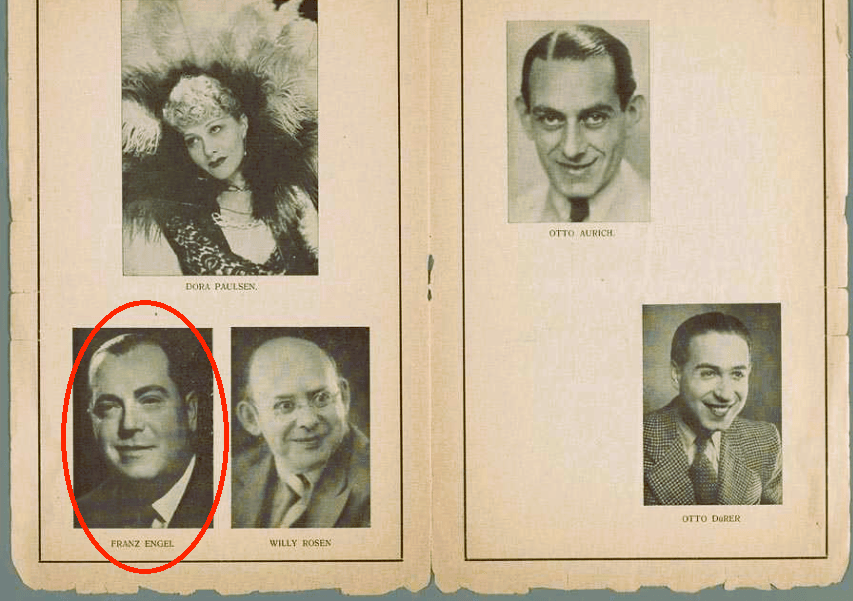
Franz Josef Engel (1898–1944) was an Austrian actor and comedian whose career and life became emblematic of the vibrant Jewish artistic culture that flourished in Europe in the early 20th century and was later decimated by the Holocaust. His story is one of creativity, survival, and profound loss—a narrative shared by many Jewish artists who faced persecution under Nazi rule.
Early Life and Career
Born in Vienna in 1898, Engel was part of a dynamic Jewish community that significantly influenced the cultural landscape of Austria. Vienna was a hub for cabaret, a form of theatrical entertainment that combined music, comedy, and satire. This art form thrived particularly within Jewish circles in the early 20th century, and Engel, with his sharp wit and stage presence, was naturally drawn to it.
Engel gained popularity in the Viennese cabaret scene, where he showcased his talents as a comedian and actor. His performances were marked by humor that resonated deeply with audiences, offering a mix of light-hearted entertainment and incisive social commentary. Cabaret, particularly in cities like Vienna and Berlin, was a means of not only entertaining but also subtly critiquing societal issues, politics, and the growing threat of fascism in Europe.
Move to The Hague and the Height of His Career
In 1938, Engel moved to The Hague in the Netherlands, where he continued to work as a performer. He collaborated with other prominent Jewish artists of the time, including composer and lyricist Rudolf Nelson, to create the “Franz Engel Revue,” performed at the La Gaîté Theatre. His performances there, including those at Willy Rosen’s Theater der Prominenten (Theater of Celebrities), further solidified his reputation as a leading figure in European theater.

The revue format, in which Engel excelled, was a key part of the cabaret tradition. It involved a variety of acts—comedy, music, and dance—that offered audiences a light and humorous escape from the tumult of the world around them. In this environment, Engel’s skill in blending humor with sharp cultural critique made him particularly popular. His ability to spark laughter and insight through his comedic timing and delivery ensured his place as a beloved figure in this close-knit, creative community.
Engel’s collaboration with other prominent exiled Jewish artists, such as Willy Rosen and Max Ehrlich, reflected the solidarity among performers who had fled Nazi Germany and Austria. These artists continued to perform abroad, often in defiance of growing restrictions against Jewish artists across Europe.
The Impact of World War II: Persecution and Deportation
World War II brought catastrophic changes to Engel’s life. As the Nazi regime expanded across Europe, Jewish artists like Engel faced increasing persecution. Following the German occupation of the Netherlands in 1940, Jewish performers were banned from public theaters, limiting their ability to work in mainstream venues. Engel, alongside other Jewish performers, continued to create art in more marginalized spaces.
In 1943, Engel was deported to Westerbork, a transit camp in the Netherlands used by the Nazis to process Jewish prisoners before sending them to extermination camps. Even in the bleak confines of Westerbork, Engel, along with other artists, formed a cabaret troupe, continuing to perform for fellow prisoners. These performances served as a temporary distraction from the horrors surrounding them, reflecting the resilience of the human spirit under extreme duress.
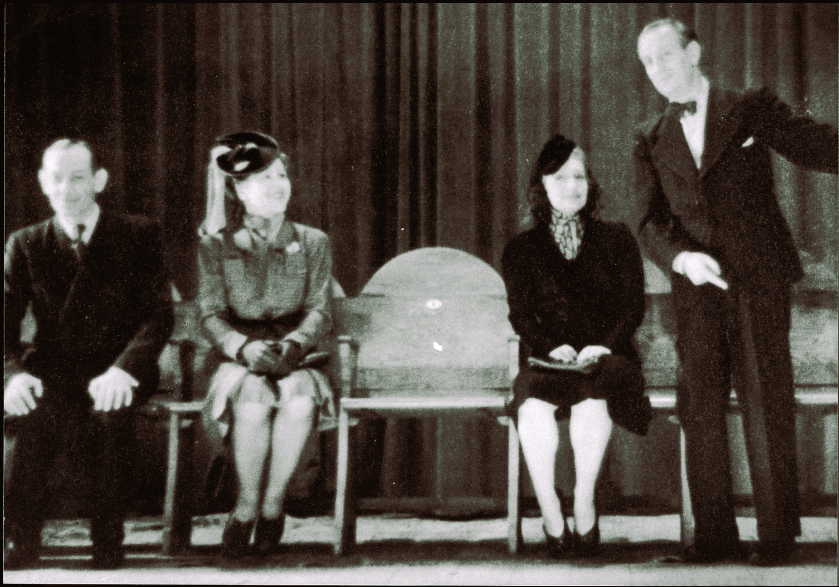
In September 1944, the Nazis deported Engel to Theresienstadt, a ghetto and concentration camp in Czechoslovakia, which the Nazis used as a “model” camp to deceive international observers about the real conditions of the Holocaust. However, the ghetto was just a way station on the road to Auschwitz. On October 17, 1944, the SS murdered Franz Josef Engel at Auschwitz. He was 46 years old.
Legacy and Influence
Franz Josef Engel’s life and career, though tragically cut short, have left a lasting impact on the history of Jewish and European theater. His ability to create humor and joy in times of unimaginable difficulty is a testament to his talent and resilience. The cabaret performances he helped organize in the transit camps became a symbol of resistance and an assertion of humanity in the face of dehumanization.
Today, Engel’s work is remembered through recordings, such as those featured in the compilation Popülaire Jüdische Künstler, which contains music and entertainment recordings from Jewish performers in Vienna from 1903 to 1936. These recordings, housed in collections like the Jewish Historical Museum in Amsterdam, keep alive the memory of a thriving artistic tradition that was nearly extinguished by the Holocaust.
Franz Josef Engel’s story is not just about an individual artist but also about the larger Jewish cultural world that was decimated by the Holocaust. The rich tradition of Jewish cabaret, theater, and music to which he contributed remains an important part of European cultural history. By remembering figures like Engel, we honor not only their artistic achievements but also the lives lost in one of history’s darkest periods.
Franz Josef Engel’s life is a poignant reminder of the power of art in resisting oppression. As a comedian and actor, Engel brought laughter and light to countless audiences, even during some of the darkest times in European history. His story is one of immense talent, resilience, and, ultimately, profound tragedy. The legacy of his work, and the cabaret culture he helped sustain, continues to inspire and remind us of the irreplaceable contributions of Jewish artists to European culture, even in the face of extermination.
Sources
https://www.deutsche-biographie.de/1057808725.html?language=en
https://www.joodsmonument.nl/en/page/507768/about-franz-josef-engel
https://www.filmportal.de/person/franz-engel_5640d89a57484d92b908e8f522317cfe
https://www.oorlogsbronnen.nl/tijdlijn/Franz-Josef-Engel/02/39994
https://www.joodsmonument.nl/nl/page/26449/franz-josef-engel
https://www.imdb.com/name/nm0257071/
Donation
Your readership is what makes my site a success, and I am truly passionate about providing you with valuable content. I have been doing this at no cost and will continue to do so. Your voluntary donation of $2 or more, if you are able, would be a significant contribution to the continuation of my work. However, I fully understand if you’re not in a position to do so. Your support, in any form, is greatly appreciated. Thank you. To donate, click on the credit/debit card icon of the card you will use. If you want to donate more than $2, just add a higher number in the box left from the PayPal link. Your generosity is greatly appreciated. Many thanks.
$2.00

 History of Sorts
Leave a comment