
Anne and Margot Frank’s final days were marked by extreme suffering, starvation, and disease in the Bergen-Belsen concentration camp during the winter of 1944–1945. Their exact date of death is unknown; however, there is a wide belief that both sisters perished in February or March 1945, just weeks before British forces liberated the camp on April 15, 1945.
Arrest and Deportation
Anne and Margot Frank, along with their parents Otto and Edith Frank, were arrested on August 4, 1944, after being betrayed and discovered in their secret annex in Amsterdam. They were transported to the Westerbork transit camp in the Netherlands before being deported to Auschwitz-Birkenau in Poland on September 3, 1944—the last transport from Westerbork to Auschwitz.
At Auschwitz, the Frank family was separated: Otto was sent to the men’s barracks, while Anne, Margot, and Edith were placed in the women’s section. The sisters endured forced labor, malnutrition, and the constant threat of death. However, because they were still young and in relatively good health at the time of arrival, they were not immediately sent to the gas chambers.
Transfer to Bergen-Belsen
In late October or early November 1944, Anne and Margot were transferred from Auschwitz to Bergen-Belsen, in northern Germany, while their mother, Edith, remained in Auschwitz, where she died of exhaustion and starvation in early January 1945.
Bergen-Belsen was overcrowded, unsanitary, and lacked sufficient food or medical care. By early 1945, typhus and other diseases were rampant, and thousands of prisoners were dying each week. Anne and Margot were among the many victims of this appalling neglect.

The Final Days at Bergen-Belsen
Survivors of Bergen-Belsen, including their friend Hanneli Goslar (who briefly spoke to Anne through a fence), later recalled that Anne and Margot were in increasingly poor condition in the last months of their lives.
- Malnutrition & Weakness: Starvation was extreme in Bergen-Belsen. Anne and Margot, already weakened from their time in Auschwitz, grew more frail. They had little to no food, and their bodies were unable to fight off infections.
- Cold & Exposure: The winter of 1944-45 was bitterly cold, and prisoners had inadequate clothing. They were forced to sleep in overcrowded, filthy barracks, increasing their vulnerability to illness.
- Typhus Outbreak: In early 1945, a typhus epidemic spread through Bergen-Belsen, killing thousands. Margot fell ill first and became extremely weak. According to eyewitness accounts, at one point, she was so weak that she fell from her bunk and was unable to get back up. Soon after, she died.
- Anne’s Last Moments: After Margot’s death, Anne—who had also contracted typhus—was alone and completely devastated. Witnesses said she had given up hope and did not want to go on living. In a matter of days, she succumbed to the disease as well.
The Aftermath
The exact date of their deaths remains unknown, but it is generally believed that both Margot and Anne Frank died in February or March 1945, just weeks before the British liberated Bergen-Belsen on April 15. When the camp was freed, the British troops found thousands of unburied bodies and skeletal survivors barely clinging to life. Anne and Margot were buried in a mass grave, their final resting place unknown.
Otto Frank was the only member of the family to survive the Holocaust. After the war, he learned of his daughters’ deaths and later published Anne’s diary, ensuring her voice would live on.
The tragedy of Anne and Margot Frank’s last days highlights the unimaginable horrors endured by countless victims of the Holocaust. Their story remains one of the most poignant accounts of the atrocities of World War II.
Irma Sonnenberg Menkel was present at Bergen-Belsen during that time. Below is a recollection of her experiences there, where she also witnessed the death of Anne Frank.
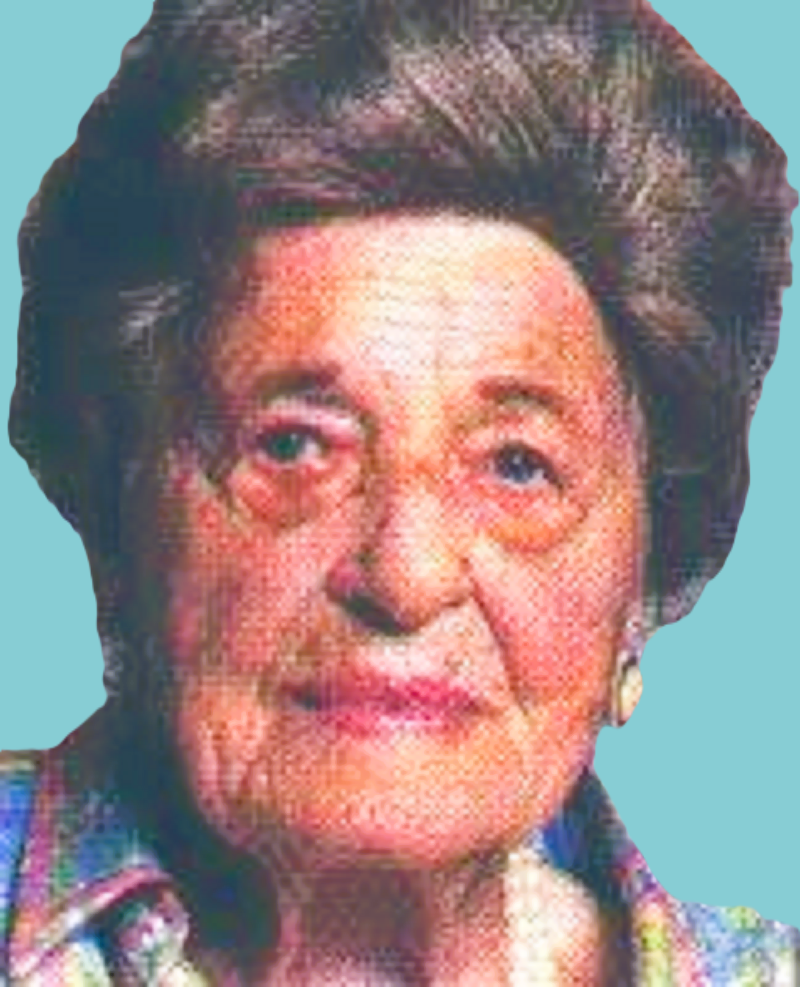
“After I arrived at the Bergen-Belsen barracks, I was told I was to be the barracks leader. I said, “I’m not strong enough to be barracks leader.” They said that would be disobeying a command. I was terrified of this order but had no choice. It turned out that the Nazi commandant of the camp was from my hometown in Germany and had studied with my uncle in Strasbourg. This coincidence probably helped save my life. He asked to talk to me privately and wanted to know what I had heard of my uncle. I said I wanted to leave Bergen-Belsen and maybe go to Israel. The commandant said, “If I could help you, I would, but I would lose my head.” About once every three weeks, he would ask to see me. I was always afraid. It was very dangerous. Jews were often shot over nothing. After the war, I heard he had committed suicide.
There were about 500 women and girls in my barracks. Conditions were extremely crowded and unsanitary. No heat at all. Every morning, I had to get up at 5 a.m. and wake the rest. At 6 a.m., we went to roll call. Often, we had to wait there for hours, no matter the weather. Most of the day, we worked as slave labor in the factory, making bullets for German soldiers. When we left Holland, I had taken only two changes of clothes, one toothbrush, no books or other possessions. Later I had a few more clothes, including a warm jacket, which came from someone who died. Men and women lined up for hours to wash their clothes in the few sinks. There were no showers in our barracks. And no bedding. The day was spent working and waiting. At 10 p.m., lights out. At midnight, the inspection came, it was three or four soldiers. I had to say everything was in good condition when, in fact, the conditions were beyond miserable. Then up again at 5 a.m.
One of the children in my barracks toward the end of the war was Anne Frank, whose diary became famous after her death. I didn’t know her family beforehand, and I don’t recall much about her, but I do remember her as a quiet child. When I heard later that she was 15 when she was in the camps, I was surprised. She seemed younger to me. Pen and paper were hard to find, but I have a memory of her writing a bit. Typhus was a terrible problem, especially for the children. Of 500 in my barracks, maybe 100 got it, and most of them died. Many others starved to death. When Anne Frank got sick with typhus, I remember telling her she could stay in the barracks – she didn’t have to go to roll call.
There was so little to eat. In my early days there, we were each given one roll of bread for eight days, and we tore it up, piece by piece. One cup of black coffee a day and one cup of soup. And water. That was all. Later, there was even less. When I asked the commandant for a little bit of gruel for the children’s diet, he would sometimes give me some extra cereal. Anne Frank was among those who asked for cereal, but how could I find cereal for her? It was only for the little children and only a little bit. The children died anyway. A couple of trained nurses were among the inmates, and they reported to me. In the evening, we tried to help the sickest. In the morning, it was part of my job to tell the soldiers how many had died the night before. Then, they would throw the bodies on the fire.
I have a dim memory of Anne Frank speaking of her father. She was a nice, fine person. She would say to me, “Irma, I am very sick.” I said, “No, you are not so sick.” She wanted to be reassured that she wasn’t. When she slipped into a coma, I took her in my arms. She didn’t know that she was dying. She didn’t know that she was so sick. You never know. At Bergen-Belsen, you did not have feelings anymore. You became paralyzed. In all the years since I almost never talked about Bergen-Belsen. I couldn’t. It was too much.”
Sources
https://content.time.com/time/subscriber/article/0,33009,862914-2,00.html
https://www.annefrank.org/en/about-us/news-and-press/news/2015/3/31/anne-franks-last-months/
Please support us so we can continue our important work.
Donation
Your readership is what makes my site a success, and I am truly passionate about providing you with valuable content. I have been doing this at no cost and will continue to do so. Your voluntary donation of $2 or more, if you are able, would be a significant contribution to the continuation of my work. However, I fully understand if you’re not in a position to do so. Your support, in any form, is greatly appreciated. Thank you. To donate, click on the credit/debit card icon of the card you will use. If you want to donate more than $2, just add a higher number in the box left from the PayPal link. Your generosity is greatly appreciated. Many thanks.
$2.00
 History of Sorts
Leave a comment