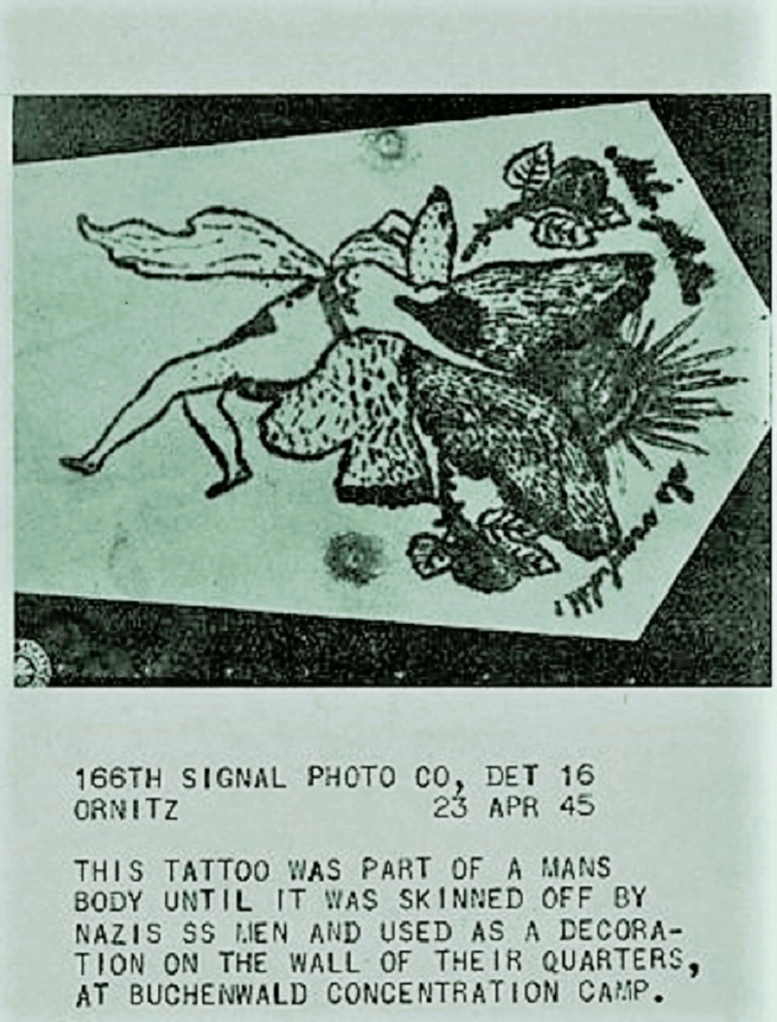
The following are firsthand testimonies from individuals who lived through the horrors of the Holocaust—victims, perpetrators, and liberators. Their words speak for themselves, reflecting the unimaginable suffering, moral depravity, and moments of salvation experienced during this dark chapter in history. While I do not specify who is who, the context and language of each testimony make it clear.
Hans Friedrich:
“The order said—they are to be shot. And for me, that was binding.”
Gertrude Deak:
“We had to stand and watch while the two girls dug their own graves, then were shot, and we had to bury them.”
Gina Rappaport:
“After two years, they [the SS] told us to pack our things and go to the station. They put us on a train headed for an unknown destination. We spent seven days traveling slowly before we were liberated by the American army on April 13th. It was the luckiest day of my life.
At that moment, I was bathing in the river when I saw the first American soldier from afar. What a joy. I couldn’t believe my eyes. I was sure it was a dream, but it was true. A few minutes before their arrival, we had been told that we would have to cross the Elbe River on foot, which would have meant certain death. The American army saved us, and I will never forget that.
But my joy was also mixed with sadness. I remembered how many people—dear friends, family—had perished and could not see the liberation. They would never witness the fall of the barbarian, Hitler. I will always remember what I owe to the American army. After five years of suffering, I finally understood the true value of freedom.”
Rudolf Höss:
“True opponents of the state had to be securely locked up. Only the SS were capable of protecting the National Socialist State from all internal danger. All other organizations lacked the necessary toughness.”
Jerzy Bielecki:
“I saw an SS officer walking around the gravel pit, a pistol in his hand. He was a sadist. ‘You dogs! You damned communists! You pieces of shit!’ he shouted. And from time to time, he would lower his pistol and fire—pow… pow pow.”
Sergeant Leon Bass:
“We were with the intelligence reconnaissance section of our unit, and we arrived at Buchenwald. That was the day I truly understood what had been happening in Europe under the Nazis.
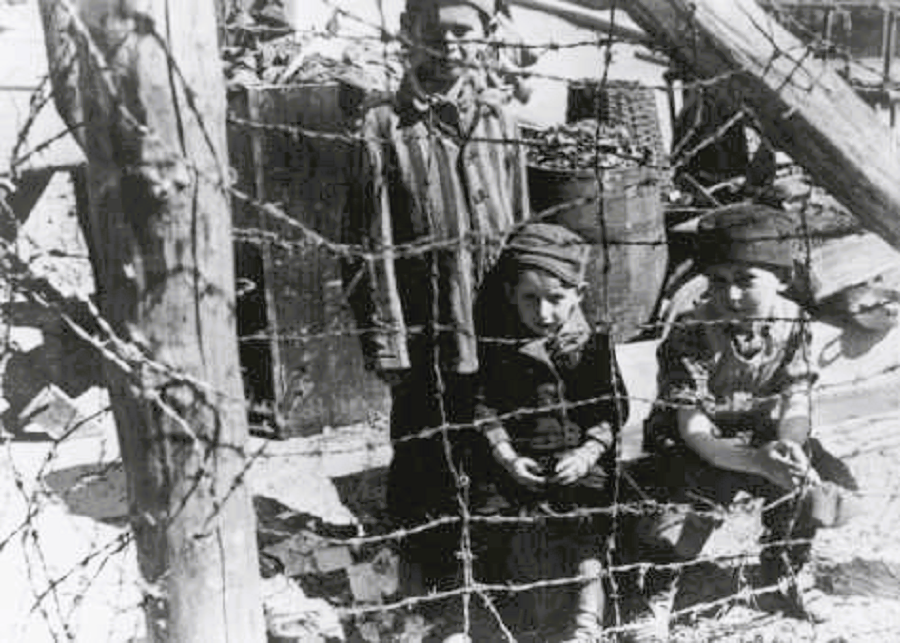
Walking through the gates, I saw what could only be described as the walking dead. Emaciated figures, skin and bone, dressed in pajama-like uniforms. Their heads were shaven, their bodies covered in sores from malnutrition. I stood there in shock. My God, who were these people? What was their crime?
I was only 20. I had no frame of reference for this level of inhumanity. Even if someone had told me what to expect, I could never have imagined anything as horrible as what I saw that day.”
Heinz Mayer:
“As the Americans approached, the SS assumed they were under fire. They fled in panic, leaving behind their weapons. The prisoners seized this chance. We armed ourselves, occupied the watchtowers, and blocked the roads to intercept any SS attempting to return.”
Hans Friedrich:
“Because my hatred for the Jews is too great. And I admit my thinking on this point is unjust. I admit this. But from my earliest youth, when I lived on a farm, I saw what the Jews were doing to us. That will never change. That is my unshakable conviction.”
Lieutenant Marie Knowles Ellifritz:
“The emotional trauma of our medical participation in the liberation of the concentration camps was beyond belief. As Americans and as women, we had never before witnessed such inhumanity.
Taking in 1,500 patients into a 400-bed hospital was madness, but we had to do it. It became our madness. We sorted the dead from the living, deciding who had a chance of surviving beyond three days. We provided what little we could—shelter, warmth, dignity, and hope.
It took some prisoners days to believe they were truly free. Some, upon realizing this truth, simply closed their eyes and passed away in peace. Others immediately began to dream of the future. The moment the camp gates opened, life force returned to those who had survived.”
Józef Paczynski:
“I was terrified of walking past Block 11. Even though it was sealed off, just passing by filled me with dread. Block 11 meant death.”
Kazimierz Smolen:
“During an evening roll call, we were told that all the sick among us could leave for treatment. We were told they would be cured. Some believed it…”
Lucjan Salzman:
“I ran toward the commotion and saw prisoners yelling, screaming, and dancing. Among them stood seven or eight young American soldiers, bewildered by the sight of us—wild, unkempt, filthy, and desperate.
They had cut the wire and entered the camp. Overcome with emotion, we embraced them, kissed them. I was 17. I was free. But I didn’t know what freedom meant. It felt surreal, something I had never dared hope for.”
Vasyl Valdeman:
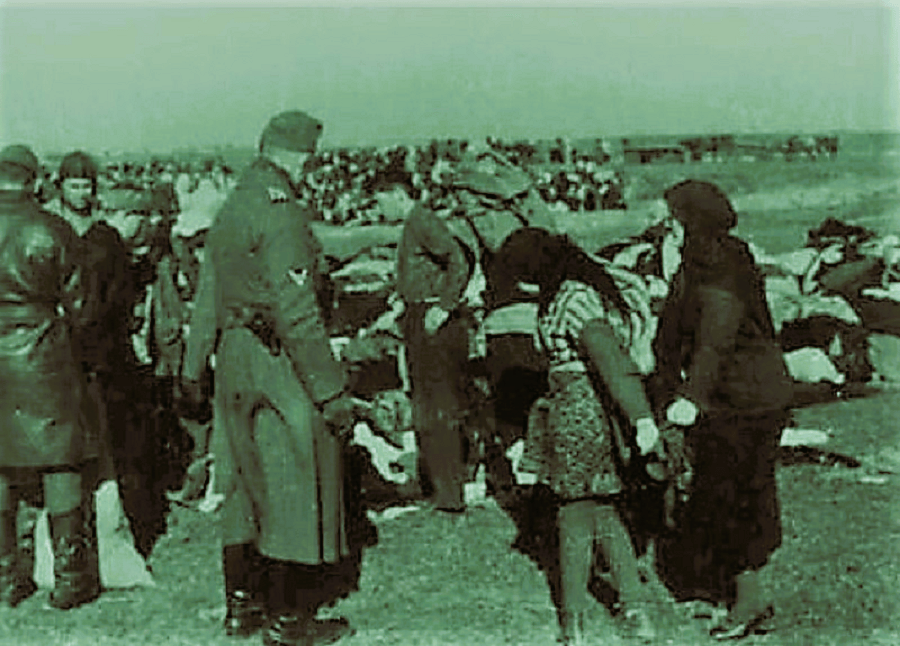
“That first execution was the most horrifying. It wasn’t the last. There were three more large executions—2,000 to 3,000 people shot each time. Smaller executions followed. This was how the Jewish community of Ostrog was annihilated.”
A New Method of Mass Murder
By the summer of 1941, the Nazis and their collaborators were slaughtering women and children across the Soviet Union. Himmler recognized that a more “efficient” method was needed—not for the victims, but for the murderers.
SS Lieutenant Dr. Albert Widmann, a scientist from the Technical Institute of the Criminal Police, had previously helped develop the use of bottled carbon monoxide to kill the disabled. But transporting canisters to remote killing fields was impractical. A new solution was required.
Widmann arrived in Minsk with 450 kg of explosives. He reported to Artur Nebe, commander of an Einsatzgruppen unit. An experiment was conducted: prisoners were locked inside a bunker, which was then blown apart.
A Nazi eyewitness described the scene:
“The bunker had totally collapsed. There was total silence. Body parts were scattered on the ground and hanging in the trees. The next day, we collected what we could and threw them back into the bunker. Those too high in the trees were simply left there.”
After witnessing this horror, Widmann turned to another method, inspired by Nebe’s near-death experience from carbon monoxide poisoning. Thus, the gas vans were born—mobile death chambers that would claim the lives of tens of thousands.
These testimonies serve as a stark reminder of the horrors of the Holocaust—of the depths of human cruelty, but also of resilience, liberation, and the enduring spirit of those who survived.
sources
chrome-extension://efaidnbmnnnibpcajpcglclefindmkaj/https://www.ushmm.org/m/pdfs/USHMM-American-Witnesses-Audio-Transcripts.pdf
https://www.pbs.org/auschwitz/about/transcripts.html
https://www.eisenhowerlibrary.gov/research/photographs/world-war-ii-holocaust-images
https://www.smithsonianmag.com/smart-news/testimonies-holocaust-survivors-now-online-180976883/
Please support us so we can continue our important work.
Donation
Your readership is what makes my site a success, and I am truly passionate about providing you with valuable content. I have been doing this at no cost and will continue to do so. Your voluntary donation of $2 or more, if you are able, would be a significant contribution to the continuation of my work. However, I fully understand if you’re not in a position to do so. Your support, in any form, is greatly appreciated. Thank you. To donate, click on the credit/debit card icon of the card you will use. If you want to donate more than $2, just add a higher number in the box left from the PayPal link. Your generosity is greatly appreciated. Many thanks.
$2.00


Leave a Reply