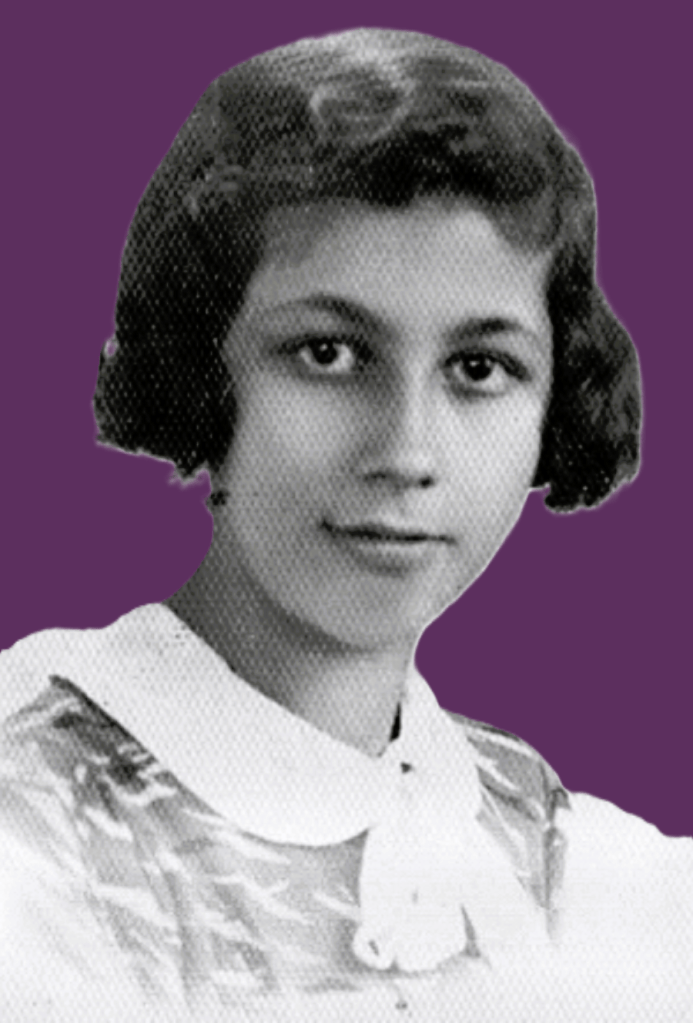
Rutka Laskier’s Teenage Account of the Holocaust
Rutka Laskier was just 14 years old when she was murdered in the gas chambers at Auschwitz. In the months leading up to her death, much like Anne Frank in Amsterdam, Rutka kept a diary documenting her deepest thoughts, fears, and the horrors she witnessed. When the Nazis forced her family—her younger brother Henius, mother Dorka, and father Yaakov—into a closed ghetto in their hometown of Będzin, Poland, Rutka feared she would not survive. She hid her notebook under a floorboard, confiding only in her friend Stanisława Sapińska about its existence.
From January 19 to April 24, 1943, Rutka secretly recorded her experiences in an ordinary school notebook, writing in both ink and pencil. She wrote sporadically, detailing Nazi atrocities, the harsh realities of life in the ghetto, and even her innocent teenage thoughts on love. Her diary also reveals that news of the gas chambers had already reached those still confined within the ghettos.

Excerpts from Rutka’s Diary
January 19, 1943
“I cannot grasp that it is already 1943, four years since this hell began.”
January 27, 1943
“I had my photo taken. Although I usually don’t look pretty in photographs, in reality, I am very beautiful. I’m tall, thin, with nice legs, a thin waist, elongated hands but ugly fingernails. I have big black eyes, thick brown eyebrows, and long eyelashes. Black hair, trimmed short and combed back, a pug nose, nicely outlined lips, snow-white teeth. I want to pour out all the turmoil I feel inside, but I can’t. Sometimes I’m so depressed that when I open my mouth, it’s only to sting someone.”
February 5, 1943
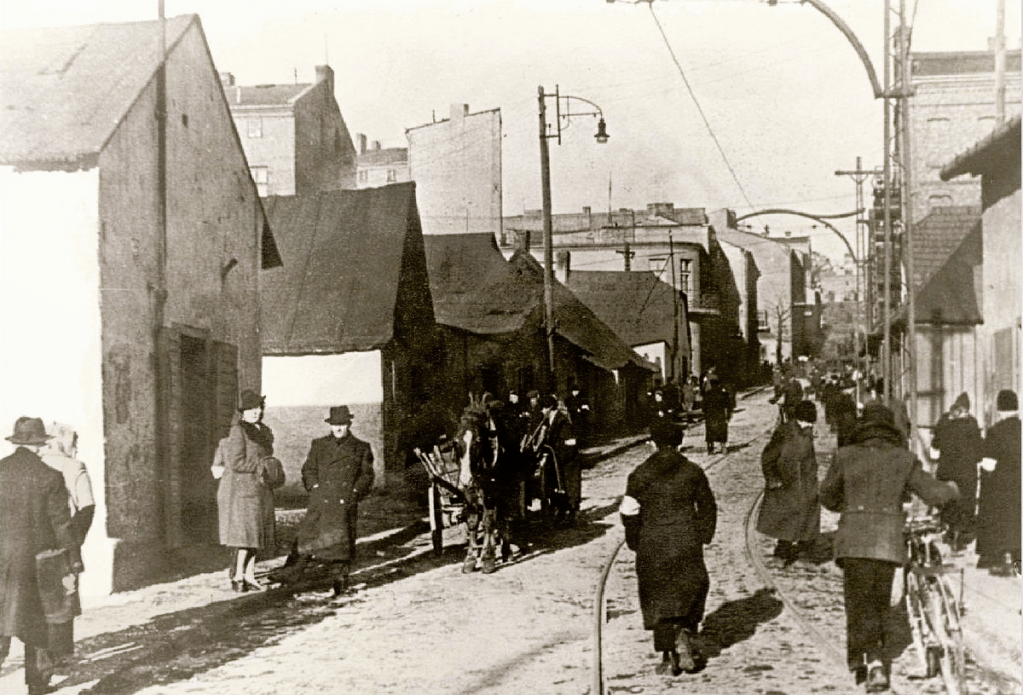
“The rope around us is getting tighter. Next month, there should be a real ghetto, surrounded by walls. In the summer, it will be unbearable—to sit in a gray locked cage, unable to see fields and flowers. I can’t believe that one day I’ll be able to leave the house without the yellow star.”
February 6, 1943
“The little faith I had has been shattered. If God existed, He would not have permitted human beings to be thrown alive into furnaces, nor allowed soldiers to smash the heads of toddlers against walls or shove them into sacks to be gassed. Those who haven’t seen this would never believe it. But it’s the truth.”
Rutka vividly recalled the mass round-up of Będzin’s Jews for deportation on August 12, 1942:
“We got up at 4 a.m. Thousands of people filled the road. Beyond the fence, soldiers with machine guns aimed at the square in case someone tried to escape. People fainted, children cried. It was Judgment Day. The heat was unbearable, then suddenly it poured rain. At 3 p.m., the selection began. 1 meant returning home, 1a meant labor, 2 meant further inspection, and 3 meant deportation—death. My parents and brother were sent to group 1. I was sent to 1a. I was stunned.”
She later described a horrific moment:
“I saw a soldier tear a baby, only a few months old, from its mother’s arms and bash its head against an electric pylon. The baby’s brain splattered onto the wood. The mother went crazy. I’m 14, and I haven’t seen much in my life, yet I’m already so indifferent.”
February 20, 1943
“I have a feeling that I’m writing for the last time. There is an ‘Aktion’—the resettlement of Jews. This is hell. I try to escape my thoughts of tomorrow, but they haunt me like nagging flies.”

March 8, 1943
“I must pull myself together and not wet my pillow with tears. I am sick and tired of the constant fear seen in everyone’s faces. It clutches onto us and won’t let go.”
April 24, 1943
“The sun is shining so brightly. Outside the windows, apple trees and lilacs are blooming, yet I must sit in this suffocating, stinking room. All day, I pace around with nothing to do.”
Rutka’s Fate and the Discovery of Her Diary
Rutka and her family were deported from the ghetto to Auschwitz in August 1943. It is believed that she, along with her mother and brother, perished in the gas chambers upon arrival, though some accounts suggest she may have died later.
During her time in the ghetto, Rutka shared her diary with Stanisława Sapińska, a 21-year-old Catholic woman whose family’s home had been confiscated by the Nazis and included in the ghetto. As Rutka became increasingly aware that she would not survive, she entrusted Sapińska with hiding the diary. Sapińska concealed it beneath the double flooring of a staircase in her home.
After the ghetto was liquidated, Sapińska returned to retrieve the diary. She kept it hidden for 63 years, sharing it only with her immediate family. In 2005, Adam Szydłowski, chairman of the Center of Jewish Culture of the Zagłębie Region in Poland, learned of the diary’s existence through one of Sapińska’s nieces. With the help of Sapińska’s nephew, Szydłowski obtained a photocopy and played a key role in its publication.
The diary’s Polish-language edition was published by Yad Vashem in 2007, commemorated with a ceremony in Jerusalem attended by Holocaust survivors, including Zahava Scherz. At this event, Sapińska donated the original diary to Yad Vashem, despite Polish laws prohibiting such actions.
A Testament to History
Rutka’s diary has been authenticated by Holocaust scholars and compared to Anne Frank’s diary. Both girls were similar in age—Rutka was 14, Anne wrote between ages 13 and 15—and in both cases, their fathers were the sole family survivors. Rutka’s words provide a harrowing yet deeply personal account of the Holocaust, ensuring that her voice, and the voices of countless others, will never be forgotten.
sources
https://en.wikipedia.org/wiki/Rutka_Laskier
https://www.yadvashem.org/press-release/03-june-2007-11-28.html
https://forward.com/culture/11394/the-sister-she-never-knew-00310/
Please support us so we can continue our important work.
Donation
Your readership is what makes my site a success, and I am truly passionate about providing you with valuable content. I have been doing this at no cost and will continue to do so. Your voluntary donation of $2 or more, if you are able, would be a significant contribution to the continuation of my work. However, I fully understand if you’re not in a position to do so. Your support, in any form, is greatly appreciated. Thank you. To donate, click on the credit/debit card icon of the card you will use. If you want to donate more than $2, just add a higher number in the box left from the PayPal link. Your generosity is greatly appreciated. Many thanks.
$2.00
 History of Sorts
Leave a comment