Anne Boleyn, the second of Henry VIII’s six wives, is arguably the most famous. In 1523, she was betrothed to Henry Percy, the son of the Earl of Northumberland, but the engagement was abruptly called off. At the time, Anne was serving as a maid of honor to Catherine of Aragon, Henry VIII’s first wife. By early 1526, the king had begun to pursue Anne romantically.
Henry’s infatuation with Anne marked a pivotal moment in English history. When the Catholic Church refused to annul his marriage to Catherine and recognize his new union with Anne—whom he married on January 25, 1533—Henry severed ties with the Pope and established the Church of England, forever altering the religious and political landscape of the nation.
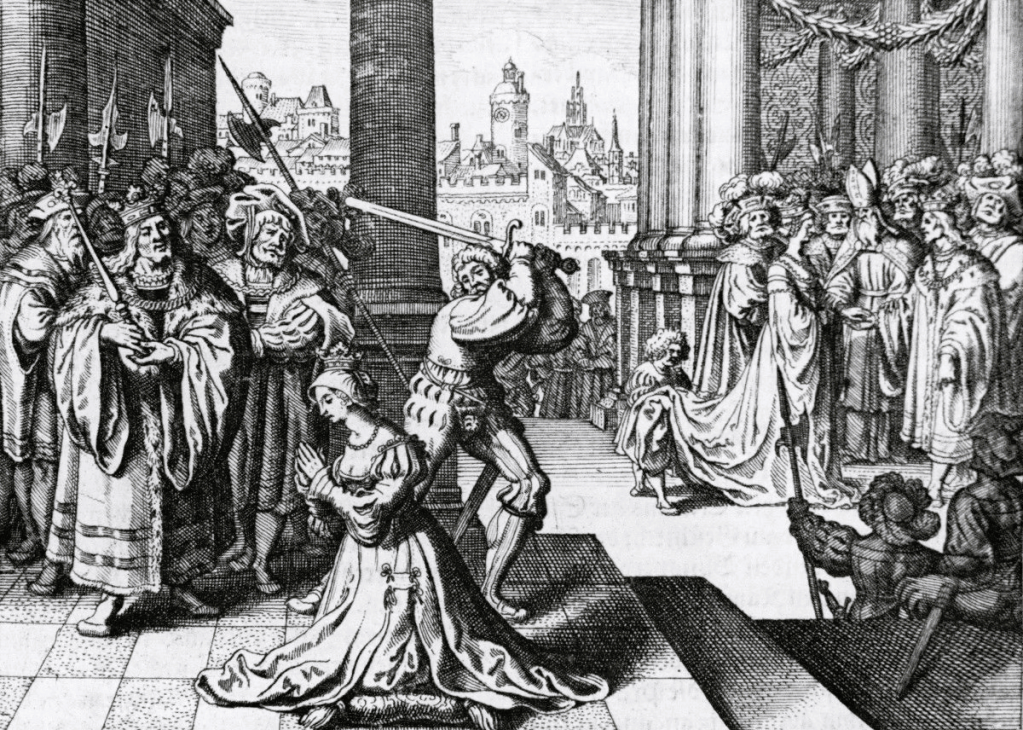
The execution of Anne Boleyn on May 19, 1536, marked one of the most dramatic and controversial episodes in English history. As the second wife of King Henry VIII and the mother of the future Queen Elizabeth I, Anne’s rise and fall were not only deeply personal tragedies but also pivotal moments that reshaped the English monarchy and religion. Her execution on charges of adultery, incest, and treason was the culmination of a brief and tumultuous reign that reflected the volatility of court politics and the perils of royal favor.
Anne’s Rise to Power
Anne Boleyn’s ascent to the throne was unprecedented. Unlike most queens of the period, she was not of royal blood, though her family was of respectable nobility. Educated in the Netherlands and France, Anne was intelligent, cultured, and politically astute. She caught the eye of Henry VIII around 1525, when he was still married to Catherine of Aragon. Anne’s refusal to become Henry’s mistress and her insistence on marriage fueled the king’s desire and eventually led to England’s break from the Roman Catholic Church.
After years of political and religious maneuvering, Henry’s marriage to Catherine was annulled, and he wed Anne in 1533. She was crowned queen and soon gave birth to Elizabeth. However, Anne’s failure to produce a male heir, along with her strong opinions and political enemies, began to erode her position at court.
The Fall from Grace
Anne’s enemies at court, including Thomas Cromwell, Henry’s chief minister, saw her as a liability. Her outspoken support for religious reform and her influence over the king made her a threat to established power structures. In 1536, following the death of Catherine of Aragon and a miscarriage that may have involved a male child, Henry began to distance himself from Anne.
Cromwell, possibly with Henry’s encouragement, orchestrated a plot to remove her. In May 1536, Anne was arrested and charged with adultery with multiple men, including her own brother, George Boleyn, Lord Rochford. The charges were almost certainly fabricated, supported by coerced confessions and questionable testimony. Nonetheless, Anne and the accused men were tried and found guilty.
Execution and Legacy
Anne was executed on May 19, 1536, within the Tower of London. She was granted the use of a skilled French swordsman, rather than the traditional axe, as a final act of mercy. Anne met her death with dignity, giving a short speech praising the king and accepting her fate without protest. Her death shocked many and signaled a brutal new phase in Henry VIII’s reign.
In the years following her execution, Anne’s reputation evolved. Her daughter, Elizabeth I, would become one of England’s greatest monarchs, and Anne’s role in the English Reformation and the creation of the Church of England was increasingly recognized. Historians now view Anne as a victim of political machinations and a powerful woman who challenged the patriarchal norms of her time.
The execution of Anne Boleyn was not merely a personal tragedy but a significant political act that altered the course of English history. Her death revealed the dangerous interplay of power, gender, and politics in Tudor England and left a legacy that continues to captivate historians and the public alike. Despite the cruelty of her end, Anne’s influence endures through the achievements of her daughter and the profound religious and political changes she helped set in motion.
sources#The execution of Anne Boleyn on May 19, 1536, marked one of the most dramatic and controversial episodes in English history. As the second wife of King Henry VIII and the mother of the future Queen Elizabeth I, Anne’s rise and fall were not only deeply personal tragedies but also pivotal moments that reshaped the English monarchy and religion. Her execution on charges of adultery, incest, and treason was the culmination of a brief and tumultuous reign that reflected the volatility of court politics and the perils of royal favor.
Anne’s Rise to Power
Anne Boleyn’s ascent to the throne was unprecedented. Unlike most queens of the period, she was not of royal blood, though her family was of respectable nobility. Educated in the Netherlands and France, Anne was intelligent, cultured, and politically astute. She caught the eye of Henry VIII around 1525, when he was still married to Catherine of Aragon. Anne’s refusal to become Henry’s mistress and her insistence on marriage fueled the king’s desire and eventually led to England’s break from the Roman Catholic Church.
After years of political and religious maneuvering, Henry’s marriage to Catherine was annulled, and he wed Anne in 1533. She was crowned queen and soon gave birth to Elizabeth. However, Anne’s failure to produce a male heir, along with her strong opinions and political enemies, began to erode her position at court.
The Fall from Grace
Anne’s enemies at court, including Thomas Cromwell, Henry’s chief minister, saw her as a liability. Her outspoken support for religious reform and her influence over the king made her a threat to established power structures. In 1536, following the death of Catherine of Aragon and a miscarriage that may have involved a male child, Henry began to distance himself from Anne.
Cromwell, possibly with Henry’s encouragement, orchestrated a plot to remove her. In May 1536, Anne was arrested and charged with adultery with multiple men, including her own brother, George Boleyn, Lord Rochford. The charges were almost certainly fabricated, supported by coerced confessions and questionable testimony. Nonetheless, Anne and the accused men were tried and found guilty.
Execution and Legacy
Anne was executed on May 19, 1536, within the Tower of London. She was granted the use of a skilled French swordsman, rather than the traditional axe, as a final act of mercy. Anne met her death with dignity, giving a short speech praising the king and accepting her fate without protest. Her death shocked many and signaled a brutal new phase in Henry VIII’s reign.
In the years following her execution, Anne’s reputation evolved. Her daughter, Elizabeth I, would become one of England’s greatest monarchs, and Anne’s role in the English Reformation and the creation of the Church of England was increasingly recognized. Historians now view Anne as a victim of political machinations and a powerful woman who challenged the patriarchal norms of her time.
Conclusion
The execution of Anne Boleyn was not merely a personal tragedy but a significant political act that altered the course of English history. Her death revealed the dangerous interplay of power, gender, and politics in Tudor England and left a legacy that continues to captivate historians and the public alike. Despite the cruelty of her end, Anne’s influence endures through the achievements of her daughter and the profound religious and political changes she helped set in motion.
sources
https://www.onthisday.com/photos/execution-of-anne-boleyn
https://www.historyextra.com/period/tudor/why-did-anne-boleyn-have-to-die/
https://www.hrp.org.uk/tower-of-london/history-and-stories/anne-boleyn/#gs.ltaj99
Donation
Your readership is what makes my site a success, and I am truly passionate about providing you with valuable content. I have been doing this at no cost and will continue to do so. Your voluntary donation of $2 or more, if you are able, would be a significant contribution to the continuation of my work. However, I fully understand if you’re not in a position to do so. Your support, in any form, is greatly appreciated. Thank you. To donate, click on the credit/debit card icon of the card you will use. If you want to donate more than $2, just add a higher number in the box left from the PayPal link. Your generosity is greatly appreciated. Many thanks.
$2.00

 History of Sorts
Leave a reply to silverapplequeen Cancel reply