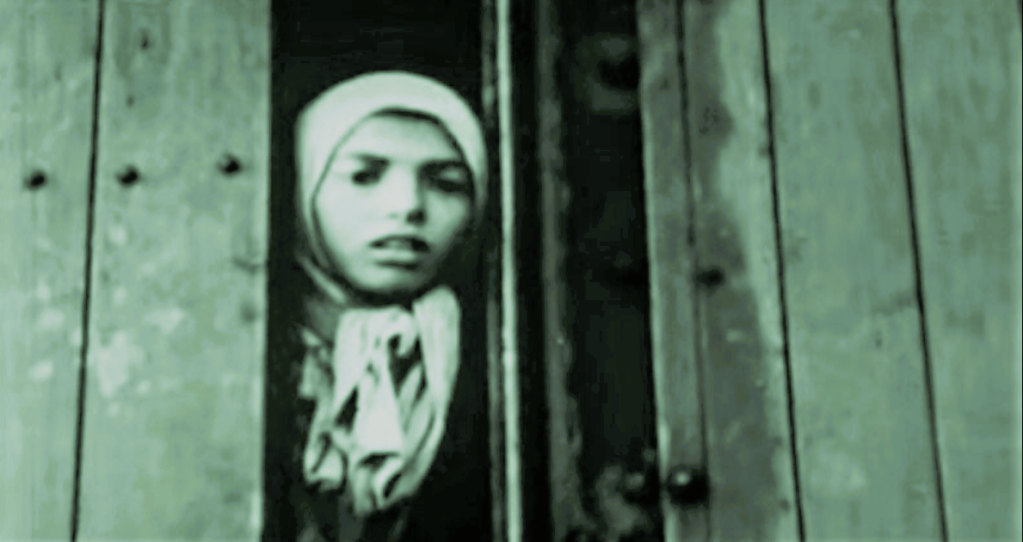
The Roma Holocaust, also known as the Porajmos (meaning “the Devouring” in Romani) or the Samudaripen (“Mass Killing”), refers to the systematic persecution and extermination of Roma people by Nazi Germany and its allies during World War II. This genocide, part of the broader Holocaust, resulted in the deaths of hundreds of thousands of Roma people.
On the night of 2/3 August 1944, the SS liquidated the Roma and Sinti camp at Auschwitz-Birkenau. Thousands of men, women, and children of Roma or Sinti origin were murdered in the gas chambers by Nazi officers, who then had their bodies burned in pits.
August 2 is the Roma Genocide Remembrance Day. I want to remember all of them through one 9-year-old girl, Setella Steinbach.
Setella Steinbach: A Symbol of Innocence and Tragedy in the Roma Holocaust
The Holocaust, a time of unspeakable atrocities and systematic genocide, claimed the lives of millions, including Jews, Roma, Sinti, and other marginalized groups. Among these victims was a young Sinti girl named Setella Steinbach, whose poignant image captured during her deportation has since become an enduring symbol of the Roma Holocaust. Her story, though brief, encapsulates the innocence lost and the brutal realities faced by the Roma people during this dark chapter in history.
Setella Steinbach was born on December 23, 1934, in the Netherlands, into a family of traveling musicians and traders. The Sinti, a subgroup of the Roma people, had long faced discrimination and marginalization in Europe. Despite these challenges, Setella’s early years were characterized by the cultural richness and close-knit community typical of Sinti families.
The Nazi occupation of the Netherlands brought intensified persecution of Roma and Sinti people. In 1944, Setella and her family were arrested and taken to the Westerbork Transit Camp. This site served as a waystation for Jews, Roma, and other prisoners en route to concentration and extermination camps.
On May 19, 1944, as Setella and her family were being deported from Westerbork to Auschwitz-Birkenau, a photograph was taken by Rudolf Breslauer, a Jewish photographer who was tasked by the camp authorities to document the transports. In this photograph, Setella is seen peering out from a cattle car, her face framed by the wooden slats. This image, haunting and evocative, captured the fear and uncertainty of a young girl on the brink of unimaginable horrors.
Upon arrival at Auschwitz-Birkenau, Setella and many of her family members were selected for immediate execution. Like countless other Roma and Sinti victims, she perished in the gas chambers. The Roma were subjected to the same inhumane conditions and mass extermination as the Jews. However, their plight has historically received less attention.
For decades, the identity of the girl in Breslauer’s photograph remained unknown. It wasn’t until the 1990s that Dutch journalist Aad Wagenaar conducted an investigation and confirmed that the girl was Setella Steinbach. This identification was crucial in giving a name and a personal history to the face that had come to symbolize the Roma Holocaust.
Setella’s Gaze
Innocent eyes behind wooden bars,
Glimmering softly like distant stars,
A young girl’s face, a silent plea,
Captured forever in history.
Setella’s gaze, so pure, so bright,
A beacon in the darkest night,
Her tender years, her gentle frame,
A symbol in the halls of shame.
From music’s dance to sorrow’s train,
A journey marked by endless pain,
A family’s song, now silenced, still,
Their echoes lost on Auschwitz’s hill.
In Westerbork, her story starts,
A tale that pierces through our hearts,
In Breslauer’s lens, her image caught,
A moment’s glimpse of what was wrought.
Her life cut short, her future gone,
Yet in that gaze, she lingers on,
A testament to those who fell,
Within the depths of human hell.
We see her now, through time’s embrace,
A symbol of a shattered grace,
In Setella’s eyes, we see the cost,
The countless lives forever lost.
Remember her, this child of pain,
And through her, all the souls remain,
Let not her memory fade away,
But guide us to a brighter day.
For in her gaze, a world’s demand,
To understand, to take a stand,
Against the hate that fuels such strife,
To honor Setella’s brief, bright life.
Sources
https://www.hmd.org.uk/resource/anna-maria-settela-steinbach
https://www.hmd.org.uk/resource/2-august-1944-zigeunernacht-2
https://www.dw.com/en/european-roma-holocaust-remembrance-day-a-personal-account/a-69823588
 History of Sorts
Leave a comment