
This blog is not to pass judgment; it is meant to illustrate how evil the Nazis, and particularly Mengele, were. They forced doctors to do things they would usually not even contemplate, and it put them in impossible positions.

Berthold Epstein:
Berthold Epstein (1890–1962) was a remarkable Czech pediatrician whose life was marked by groundbreaking medical achievements and unimaginable horrors. Born into a Jewish family in Pilsen, Bohemia, Epstein emerged as one of the foremost pediatricians of his time, making significant contributions to the health and welfare of children. His legacy, however, is complicated by the dark period during World War II when he was forced to work under the notorious Nazi physician Josef Mengele at Auschwitz. Epstein’s story is one of scientific triumph, profound human suffering, and the ethical dilemmas that arise in times of extreme persecution.
Epstein was born on April 1, 1890, in Pilsen, a city then within the Austro-Hungarian Empire. He studied medicine at the German University in Prague, where he displayed an early passion for pediatrics. His interest in child health was driven by a deep empathy for the youngest and most vulnerable members of society. After completing his studies, Epstein quickly gained recognition for his research on childhood diseases, particularly tuberculosis and malnutrition, which were prevalent at the time. His work in these areas helped shape modern approaches to pediatric care, focusing on prevention, early diagnosis, and nutrition.
By the 1930s, Epstein had established himself as a leading figure in pediatric medicine. He held a professorship at the German University in Prague, where he mentored young physicians and continued his research. His publications were widely regarded, and his expertise was sought after by colleagues across Europe. Epstein’s career was a testament to his dedication to improving the lives of children, and his contributions laid the groundwork for advancements in pediatric care.
The outbreak of World War II and the subsequent Nazi occupation of Czechoslovakia brought Epstein’s life and career to a devastating halt. As a Jewish physician, he faced increasing persecution under the Nazi regime. In 1943, Epstein was deported to Auschwitz. It was here that he encountered Josef Mengele.
Mengele recognized Epstein’s medical expertise and forced him to participate in experiments on inmates, many of whom were children. Epstein had no choice but to comply with Mengele’s orders, as refusal would have meant certain death. The conditions were horrific, and the experiments conducted under Mengele’s direction were barbaric. Despite the nightmarish circumstances, Epstein reportedly attempted to mitigate the suffering of the prisoners where he could, although his ability to do so was severely limited.
This period of Epstein’s life presents a harrowing ethical dilemma. While he was a victim of Nazi terror, his forced involvement in Mengele’s experiments casts a shadow over his legacy. It is essential to understand that Epstein was not a willing participant but rather a prisoner compelled to act under threat of death. His story underscores the moral complexities faced by individuals under extreme duress, where survival often requires unimaginable compromises.
After the war, Epstein was liberated from Auschwitz and returned to Prague. Despite the physical and psychological scars left by his time in the concentration camp, he resumed his medical career. He once again took up his work in pediatrics, continuing his research and teaching until he died in 1962. However, the experiences of the Holocaust inevitably left a profound impact on his life and work.
Berthold Epstein’s post-war contributions to medicine were significant, but his legacy is inextricably linked to the moral and ethical challenges he faced during the Holocaust. While his early work in pediatrics remains influential, the forced participation in Nazi experiments complicates how history remembers him. In reflecting on Epstein’s life, it is essential to acknowledge both his achievements and the tragic circumstances that defined his later years.
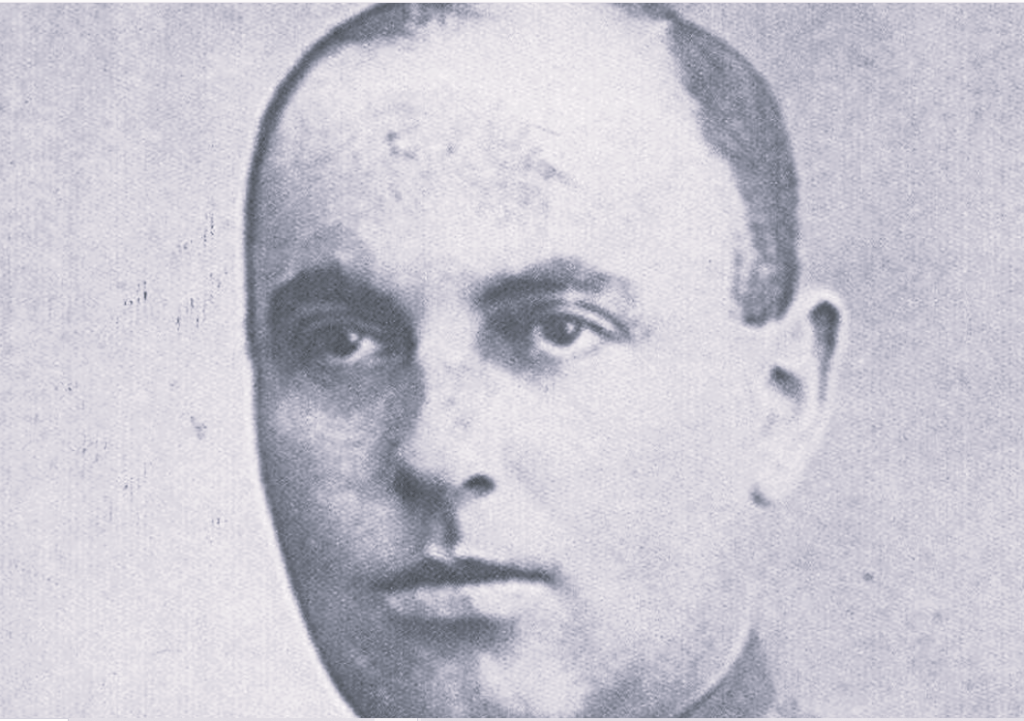
Miklós Nyiszli:
Miklós Nyiszli (1901-1956) was a Hungarian Jewish doctor who is most known for his harrowing experiences during the Holocaust, particularly at Auschwitz-Birkenau, where he was forced to work under the notorious SS officer Dr. Josef Mengele. Nyiszli’s testimony, detailed in his memoir Auschwitz: A Doctor’s Eyewitness Account, offers one of the most detailed insider perspectives on the atrocities committed at Auschwitz, providing invaluable historical documentation of the Holocaust.
Nyiszli was born in Szilágysomlyó, a town that was part of Austria-Hungary at the time (now in Romania). He studied medicine in Cluj and later specialized in forensic pathology in Germany. His career was interrupted by the rise of Nazism and the subsequent occupation of Hungary by Germany in 1944. As part of the large-scale deportations, Nyiszli, along with his wife and daughter, was sent to Auschwitz-Birkenau in May 1944.
Upon arrival at Auschwitz, Nyiszli was selected by Dr. Josef Mengele to work as a pathologist due to his medical expertise. Mengele, infamous for his cruel experiments on prisoners, needed a physician with Nyiszli’s background to perform autopsies and assist in his research. Nyiszli was placed in the Sonderkommando, a special unit of Jewish prisoners forced to work in the gas chambers and crematoria. His job involved performing autopsies on victims, including those Mengele had experimented on, and compiling reports on their findings.
Nyiszli’s position was precarious. He was granted a slightly better living condition compared to other prisoners, but he lived in constant fear for his life. His work provided him insights into the brutal workings of the concentration camp and the horrific medical experiments conducted by Mengele.
Nyiszli survived Auschwitz, liberated by American forces in May 1945. After the war, he returned to Romania and resumed his medical practice. However, he was haunted by his experiences and felt a moral obligation to share his story with the world. In 1946, he published Auschwitz: A Doctor’s Eyewitness Account, a memoir that remains a crucial piece of Holocaust literature. The book gives a stark and detailed account of the daily horrors in Auschwitz, including the medical experiments, the workings of the gas chambers, and the psychological torment experienced by those in the Sonderkommando.
Miklós Nyiszli’s and Berthold Epstein’s lives and testimonies present a profound narrative of the Holocaust, reflecting the complexities of survival, the horrors of systematic genocide, and the moral ambiguities faced by those in extraordinary circumstances.
Mengele also forced Jewish prisoners who were nurses or medical professionals to assist with his experiments, though their names were not well-documented.
Sources
http://www.auschwitz.dk/Nyiszli.htm
http://www.ihr.org/jhr/v20/v20n1p20_Provan.html
http://obscuritanjournal.blogspot.ie/2010/10/curious-case-of-dr-miklos-nyiszli.html
https://archive.org/details/iwasdoctormengel0000mikl
Donation
Your readership is what makes my site a success, and I am truly passionate about providing you with valuable content. I have been doing this at no cost and will continue to do so. Your voluntary donation of $2 or more, if you are able, would be a significant contribution to the continuation of my work. However, I fully understand if you’re not in a position to do so. Your support, in any form, is greatly appreciated. Thank you. To donate, click on the credit/debit card icon of the card you will use. If you want to donate more than $2, just add a higher number in the box left from the PayPal link. Your generosity is greatly appreciated. Many thanks.
$2.00

 History of Sorts
Leave a comment