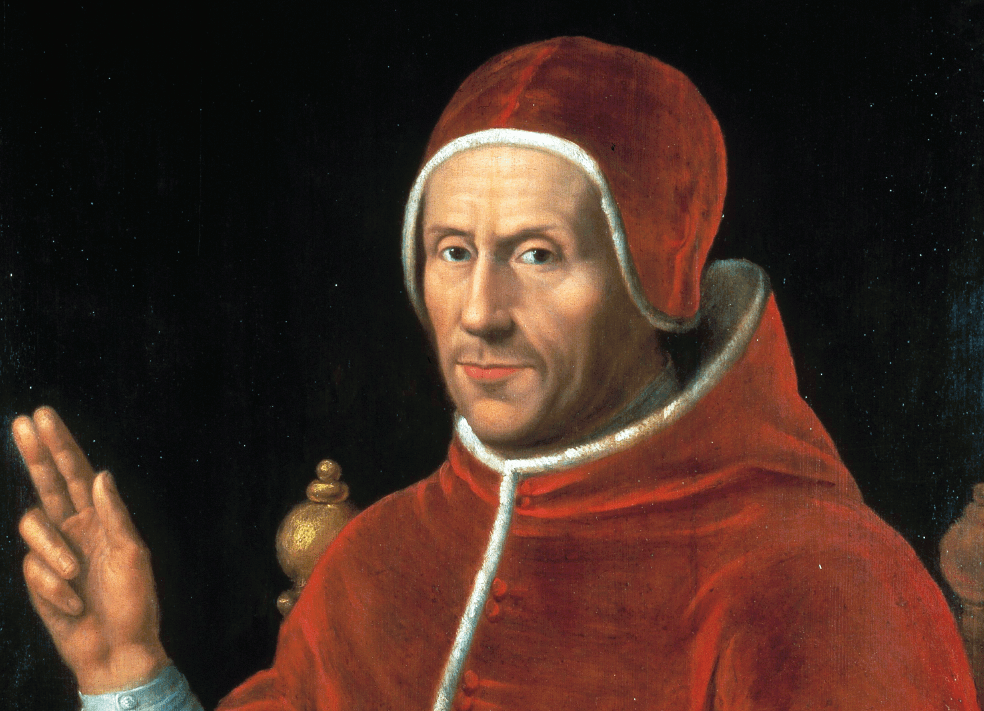
When you think of popes, you wouldn’t believe that a small country like the Netherlands would ever produce a pope, but it did.
Pope Adrian VI: The Dutch Reformer of the Papacy
Pope Adrian VI, born Adriaan Florensz Boeyens, holds the unique distinction of being the only Dutchman to ascend to the papacy. His brief tenure from 1522 to 1523 came at a turbulent time for the Catholic Church, as it grappled with the early waves of the Protestant Reformation and internal corruption. Adrian VI’s papacy, while short-lived, is a compelling story of reformist zeal, international politics, and the challenges of leadership within the Church.
Early Life and Education
Adriaan Florensz Boeyens was born on March 2, 1459, in Utrecht, a city within the Holy Roman Empire, which corresponds to modern-day Netherlands. His humble beginnings did not preclude him from a distinguished academic and ecclesiastical career. Adriaan attended the University of Louvain (Leuven), where his intellect and dedication led to his appointment as a professor of theology. His reputation as a scholar and a man of deep piety grew, eventually earning him the role of tutor to the young Charles V, the future Holy Roman Emperor. This relationship would later prove crucial in his election as pope.
Ecclesiastical Advancement
Adriaan’s career in the Church saw a steady rise. He was appointed Bishop of Tortosa in Spain and later became a cardinal. His close association with Charles V helped him gain significant influence, but it was his reputation for integrity and his dedication to reform that truly set him apart. These qualities became particularly important as the Church faced increasing criticism for its corruption and worldliness, criticisms that fueled the nascent Protestant Reformation led by Martin Luther.
Election to the Papacy
The death of Pope Leo X in 1521 precipitated a conclave that sought a leader capable of addressing the Church’s growing crises. Despite being an outsider and not present in Rome during the conclave, Adriaan was elected pope on January 9, 1522, due in large part to the support of Charles V, who hoped that Adrian would advance his interests and bring much-needed reform to the Church. Adrian was in Spain at the time of his election and reluctantly accepted the position, recognizing the immense challenges he would face.
Challenges and Reforms
Pope Adrian VI’s papacy was marked by his earnest attempts to reform the Church from within. He was deeply aware of the moral and administrative failings that plagued the institution. Upon his arrival in Rome, Adrian found a papal court deeply entrenched in corruption and resistance to change. He immediately set about trying to curb abuses such as simony (the buying and selling of church offices) and the extravagant lifestyles of the clergy.
Adrian’s approach to reform was direct and uncompromising, which made him many enemies within the Vatican hierarchy. His papal bull of 1523, in which he acknowledged the Church’s failings, was a stark admission of the need for internal reform. However, his efforts were often thwarted by the very institution he sought to purify. The Curia, accustomed to the opulence and power of the Renaissance popes, was resistant to Adrian’s austere measures.
Political Struggles
Adrian’s papacy also faced significant political challenges. His relationship with France was strained due to his support for Charles V, leading to tensions that complicated his efforts to unify Christendom against the threat of Ottoman expansion and the spread of Protestantism. Adrian’s diplomatic efforts were hampered by his lack of political acumen and the deeply entrenched rivalries of European powers.
Legacy and Death
Pope Adrian VI died on September 14, 1523, after only 20 months as pope. His death marked the end of a papacy that, while short, was significant in its earnest attempt to address the corruption and moral decay within the Church. His successor, Clement VII, would face many of the same issues, but the momentum for internal reform that Adrian tried to ignite would continue to influence the Church’s future, culminating in the Council of Trent decades later.
Adrian VI remains a figure of historical importance not just for his unique nationality among popes but for his determined, albeit largely unsuccessful, efforts to bring reform to the Catholic Church during one of its most challenging periods. His papacy is a poignant reminder of the difficulties inherent in changing long-established institutions and the resistance that reformers often face.
Sources
https://www.britannica.com/biography/Adrian-VI
Donation
Your readership is what makes my site a success, and I am truly passionate about providing you with valuable content. I have been doing this at no cost and will continue to do so. Your voluntary donation of $2 or more, if you are able, would be a significant contribution to the continuation of my work. However, I fully understand if you’re not in a position to do so. Your support, in any form, is greatly appreciated. Thank you. To donate, click on the credit/debit card icon of the card you will use. If you want to donate more than $2, just add a higher number in the box left from the PayPal link. Your generosity is greatly appreciated. Many thanks.
$2.00
 History of Sorts
Leave a comment