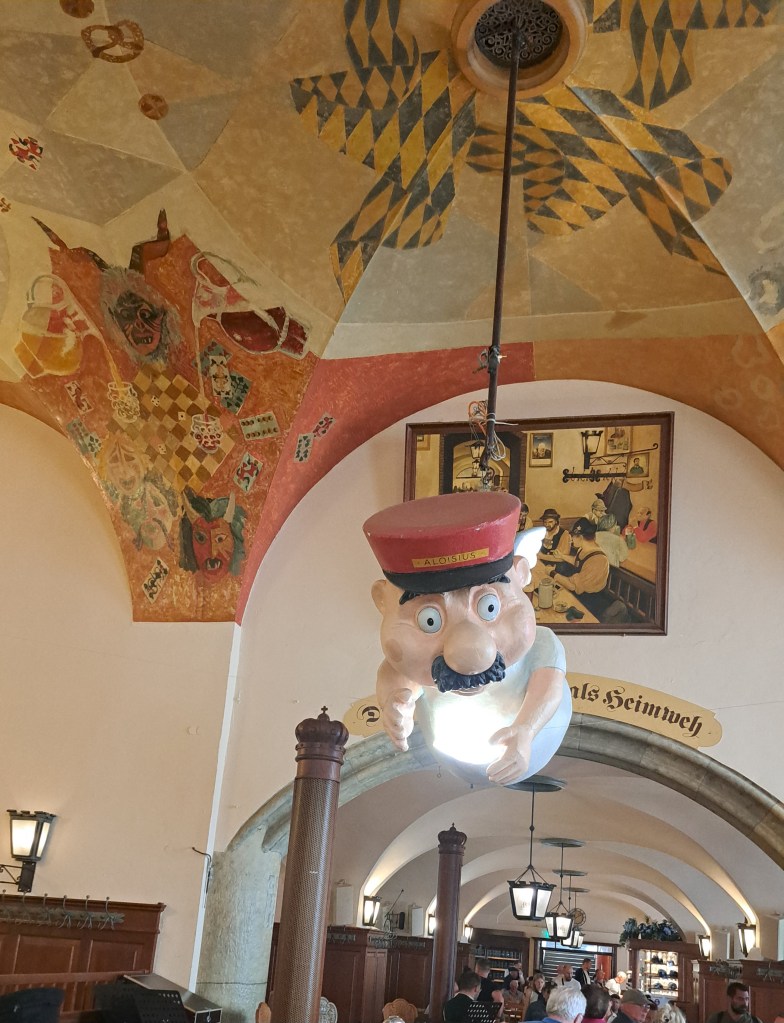
I took this photograph about two and a half years ago during a visit to Munich. The venue, Hofbräuhaus am Platzl, was packed with visitors that day. The atmosphere was lively, the food was satisfying, and the beer lived up to its reputation.
So why am I telling
I went there specifically because I knew the building carried significant historical weight. What surprised me, however, was the absence of any plaques or visible markers explaining that history. Nothing inside or outside acknowledged it. The only unusual detail was the presence of four bouncers standing watch.
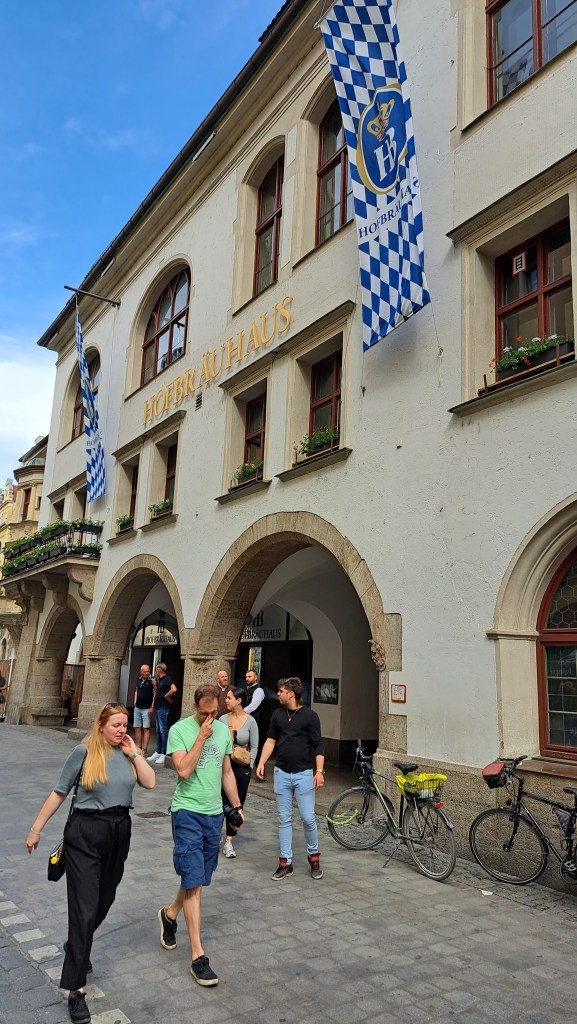
So what is the Hofbräuhaus ?
On 24 February 1920, a political meeting held in the crowded beer hall of the Hofbräuhaus in Munich marked a decisive turning point in modern European history. Although the Nazi Party (NSDAP) had evolved from earlier nationalist circles, this gathering represented the moment when it publicly defined its ideology, ambitions, and mass-political strategy. The event transformed a small extremist group into a movement seeking national influence amid the instability of postwar Germany.
Historical Background
In the aftermath of the First World War, Germany faced profound political, economic, and psychological upheaval. The collapse of imperial authority in 1918 gave rise to the fragile democratic system known as the Weimar Republic. Many Germans associated this new government with military defeat, territorial losses, and the punitive terms of the Treaty of Versailles. Hyperinflation, unemployment, and social unrest fostered resentment toward democratic institutions and created fertile ground for radical ideologies.
The organization that would later become the Nazi Party originated as the German Workers’ Party, a small nationalist and antisemitic association founded in 1919 by figures including Anton Drexler. Adolf Hitler joined the group later that year and quickly distinguished himself through his oratorical skill and ability to channel popular frustration into emotionally charged political narratives.
The Meeting of 24 February 1920
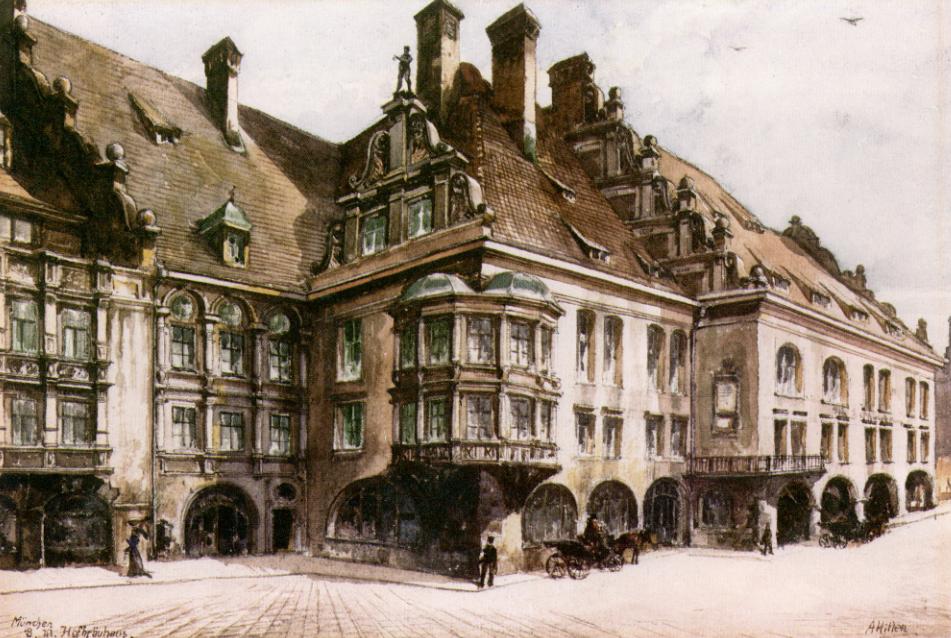
The gathering at the Hofbräuhaus was carefully staged as a mass rally rather than an internal meeting. Approximately 2,000 people attended, far exceeding expectations and signaling the leadership’s growing confidence. The setting itself was significant: Munich’s beer halls functioned as informal political arenas where speeches, debate, and agitation could reach working- and middle-class audiences directly.
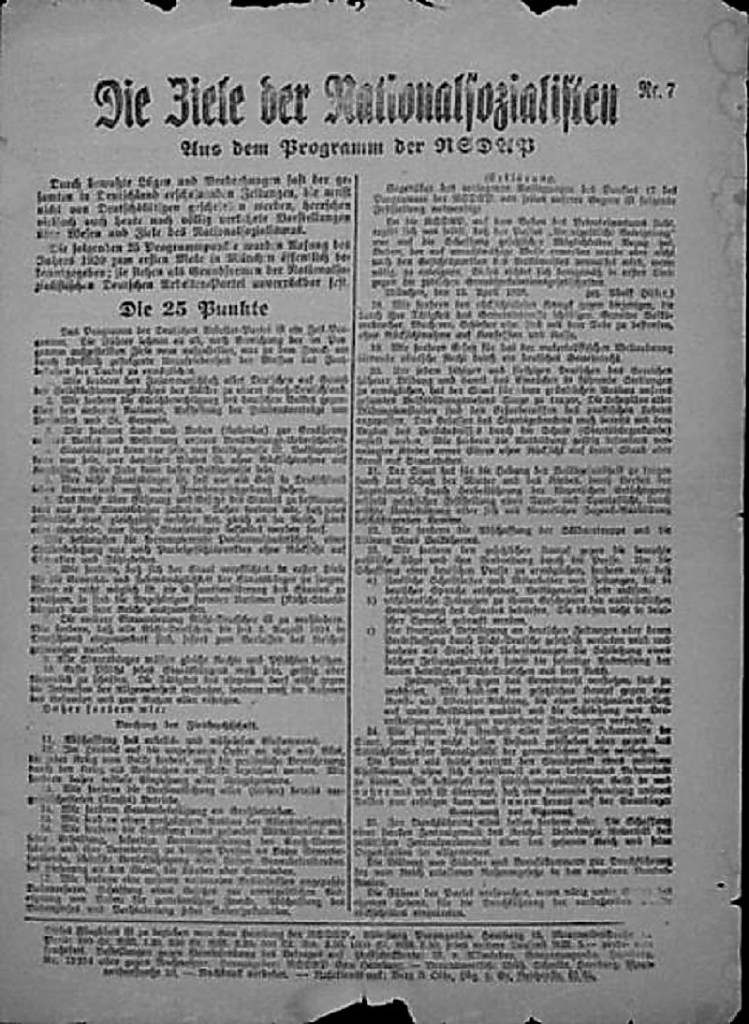
At this meeting, Hitler and his associates announced the party’s “Twenty-Five Point Program,” a manifesto combining extreme nationalism, racial ideology, antisemitism, and populist economic demands. The program called for the unification of all Germans, rejection of the Versailles settlement, exclusion of Jews from citizenship, expansion of state authority, and social measures framed as protections for the “national community.”
What distinguished the event was not merely the content of the program but its method of presentation. Hitler demonstrated a style of political communication that relied on emotional escalation, repetition, and theatrical delivery. Eyewitness accounts describe a crowd alternately hostile and enthusiastic, gradually drawn into applause as the speech progressed. The meeting illustrated how mass persuasion could function as a political weapon in an era of widespread dissatisfaction.
Political Significance
The February 1920 rally effectively rebranded the movement. Shortly afterward, the organization adopted the name National Socialist German Workers’ Party (NSDAP), signaling its attempt to merge nationalist rhetoric with selective social appeals aimed at workers disillusioned with both capitalism and Marxism. The program announced that evening remained officially unchanged throughout the party’s existence, serving as a symbolic ideological foundation even as tactics evolved.
Equally important was the emergence of Hitler as the movement’s central figure. While not yet its undisputed leader, he demonstrated that charismatic leadership could unify disparate nationalist factions. The meeting showed that the party’s future would depend less on conventional political organization and more on propaganda, spectacle, and personal authority.
Broader Context and Consequences
In hindsight, the event reveals how extremist movements can gain legitimacy during periods of institutional weakness. The Weimar Republic’s democratic freedoms allowed radical groups to organize publicly, while economic anxiety and political polarization reduced resistance to authoritarian rhetoric. The Hofbräuhaus meeting did not immediately propel the party to power; throughout the early 1920s it remained marginal. Yet the strategies unveiled there—mass rallies, simplified ideological slogans, and the cultivation of a devoted following—became central to its later expansion.
Historians therefore view 24 February 1920 not as the literal founding of the party, but as its ideological launch. It marked the moment when a fringe political association articulated a coherent, if dangerous, worldview and began consciously pursuing mass influence.
It was here that Adolf Hitler unveiled his ’25-Point Program,’ openly threatening to revoke all civic rights from Jews and impose a ruthless dictatorship. Thirteen years later, those threats materialized into one of history’s darkest realities.
Conclusion
The gathering in Munich’s Hofbräuhaus stands as a pivotal episode in twentieth-century history. By publicly presenting its program and demonstrating the mobilizing power of charismatic propaganda, the Nazi Party transformed itself from a minor nationalist club into an emerging political force. The event illustrates how political movements can exploit social crisis, public grievance, and persuasive rhetoric to reshape national politics—an enduring lesson about the vulnerabilities of democratic societies during times of instability.
sources
https://www.munich.travel/en/topics/eat-drink/seven-facts-hofbraeuhaus
https://www.annefrank.org/de/timeline/7/das-parteiprogramm-der-nsdap/
https://encyclopedia.ushmm.org/content/en/timeline-event/holocaust/before-1933/nazi-party-platform
https://en.wikipedia.org/wiki/Hofbr%C3%A4uhaus_am_Platzl
Donation
Your readership is what makes my site a success, and I am truly passionate about providing you with valuable content. I have been doing this at no cost and will continue to do so. Your voluntary donation of $2 or more, if you are able, would be a significant contribution to the continuation of my work. However, I fully understand if you’re not in a position to do so. Your support, in any form, is greatly appreciated. Thank you. To donate, click on the credit/debit card icon of the card you will use. If you want to donate more than $2, just add a higher number in the box left from the PayPal link. Your generosity is greatly appreciated. Many thanks.
$2.00

 History of Sorts
Leave a comment