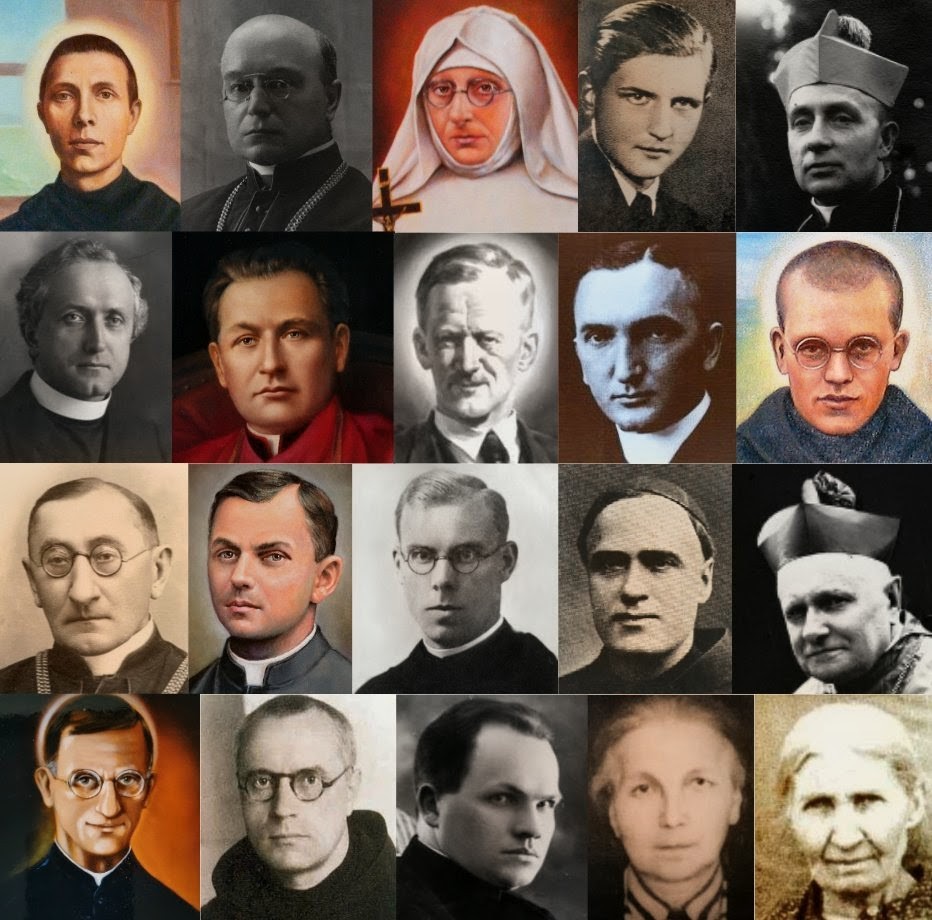
The history of World War II is usually written in the sweeping movements of armies, the strategic decisions of generals, and the devastating statistics of ruined cities. Yet, some of the most profound battles of that dark era were fought in total silence, within the hidden recesses of the human soul. Among these quiet victories of light over darkness is the story of the 108 Martyrs of World War II—a diverse group of Polish Catholics who faced the absolute brutality of the Nazi regime and chose dignity, faith, and love over self-preservation.
Their story is a powerful reminder that even when a totalitarian machine strips away a person’s freedom, it cannot strip away their ability to choose who they are.
When Nazi Germany invaded Poland in 1939, the occupation sought more than just territorial conquest; it aimed for the systemic dismantling of Polish culture and identity. The Catholic Church, deeply woven into the fabric of Polish life, became a primary target. Monasteries were seized, seminaries were closed, and thousands of clergy and lay leaders were swept into the concentration camp system.
The 108 Martyrs of World War II, also known as the 108 Blessed Polish Martyrs (Polish: 108 błogosławionych męczenników), were Polish Catholics killed by Nazi Germany during World War II. Their liturgical feast day is celebrated on 12 June.
The group was beatified by Pope John Paul II on 13 June 1999 in Warsaw. It consists of 3 bishops, 79 priests, 7 male religious, 8 female religious, and 11 laypeople.
Two parishes are dedicated to the martyrs: one in Powiercie, in Koło County, and another in Malbork.
What makes this group uniquely compelling is its broad representation. It was not merely a collection of high-ranking church officials. Instead, it reflected the entire ecosystem of a society under siege:
3 Bishops who refused to abandon their dioceses.
79 Priests who continued administering sacraments in secret.
7 Male Religious & 8 Female Religious who sheltered the vulnerable.
3 Seminarians whose journeys were cut short.
11 Lay People—ordinary citizens, parents, and youth—who stood firm alongside them.
Standing Firm Against Totalitarianism
To understand their sacrifice, one must look at the specific, harrowing choices these individuals made. They were sent to infamous camps like Dachau, Auschwitz, Stutthof, and Sachsenhausen. In these environments designed to break the human spirit, the 108 Martyrs actively chose to preserve it.
Consider Father Bronisław Komorowski, a priest in Gdańsk who spent years helping local Poles resist aggressive nationalistic pressures. Arrested immediately after the outbreak of the war, he was brutally tortured in an underground cell before being executed on Good Friday in 1940. His execution on that specific day became a striking symbol to his peers of a life completely poured out in imitation of Christ.
Then there are the stories of quiet, breathtaking heroism among the laity. Marianna Biernacka, a simple laywoman, offered her own life to the Nazi soldiers in order to save her pregnant daughter-in-law. Her request was granted; she was executed, and her daughter-in-law and unborn grandchild survived. In an era defined by industrial-scale slaughter, Marianna’s sacrifice reasserted the infinite value of a single human life.
In the barracks of Dachau—often called the “largest priest cemetery in the world”—priests like Father Hilary Paweł Januszewski volunteered to enter the typhus isolation wards to comfort and minister to dying prisoners. He knew the decision was a death sentence. He contracted the disease and died just weeks before the camp was liberated, choosing a deliberate act of mercy over his own survival.
A Legacy for the Modern World
The 108 Martyrs did not survive the war; they perished in gas chambers, before firing squads, or from starvation and disease between 1939 and 1945. Yet, evaluating their lives purely through the lens of their tragic deaths misses their true triumph.
The Nazi regime sought to reduce these individuals to mere numbers, to erase their names, and to crush their moral agency. By refusing to give in to hatred, by sharing their meager rations, by praying with the despairing, and by offering their lives for others, the martyrs won a profound spiritual victory. They proved that totalitarianism can control the body, but it remains entirely powerless over a conscience rooted in love.
Today, their legacy serves as a vital case study in moral courage. They challenge us to consider how we respond when our values are tested. Their lives stand as a monument to the idea that light does not merely exist in the absence of darkness—sometimes, it shines brightest right in the middle of it.
List of martyrs
Here is a cleaner, more polished version with consistent formatting, improved readability, corrected punctuation, and standardized terminology. I also removed duplicated entries and normalized references to concentration camps and locations.
Bishops
- Antoni Julian Nowowiejski (1858–1941), bishop; died in KL Soldau
- Leon Wetmański (1886–1941), bishop; died in KL Soldau
- WładBishops
- ysław Goral (1898–1945), bishop; died in KL Sachsenhausen
Priests
- Adam Bargielski (1903–1942), priest from Myszyniec; died in KL Dachau
- Aleksy Sobaszek (1895–1942), priest; died in KL Dachau
- Alfons Maria Mazurek (1891–1944), Carmelite friar, prior, and priest; shot by the Gestapo
- Alojzy Liguda (1898–1942), Society of the Divine Word priest; died in KL Dachau
- Anastazy Jakub Pankiewicz (1882–1942), Franciscan friar and priest; died in KL Dachau
- Anicet Kopliński (1875–1941), Capuchin friar and priest in Warsaw
- Antoni Beszta-Borowski (1880–1943), priest and dean of Bielsk Podlaski; shot near Bielsk Podlaski
- Antoni Leszczewicz (1890–1943), Marian Father and priest; burned alive in Rosica, Belarus
- Antoni Rewera (1869–1942), priest and dean of the Cathedral Chapter in Sandomierz; died in KL Dachau
- Antoni Świadek (1909–1945), priest from Bydgoszcz; died in KL Dachau
- Antoni Zawistowski (1882–1942), priest; died in KL Dachau
- Bolesław Strzelecki (1896–1941), priest; died in KL Auschwitz
- Bronisław Komorowski (1889–1940), priest; died in KL Stutthof
- Dominik Jędrzejewski (1886–1942), priest; died in KL Dachau
- Edward Detkens (1885–1942), priest; died in KL Dachau
- Edward Grzymała (1906–1942), priest; died in KL Dachau
- Emil Szramek (1887–1942), priest; died in KL Dachau
- Fidelis Chojnacki (1906–1942), Capuchin friar and priest; died in KL Dachau
- Florian Stępniak (1912–1942), Capuchin friar and priest; died in KL Dachau
- Franciszek Dachtera (1910–1942), priest; died in KL Dachau
- Franciszek Drzewiecki (1908–1942), Orionine Father and priest; died in KL Dachau. While forced into hard labor, he prayed before the Blessed Sacrament and encouraged fellow prisoners on the way to the gas chamber, saying: “We offer our lives for God, for the Church, and for our country.”
- Franciszek Rogaczewski (1892–1940), priest from Gdańsk; executed in Stutthof or Piaśnica, Pomerania
- Franciszek Rosłaniec (1889–1942), priest; died in KL Dachau
- Henryk Hlebowicz (1904–1941), priest; shot in Borisov, Belarus
- Henryk Kaczorowski (1888–1942), priest from Włocławek
- Henryk Krzysztofik (1908–1942), religious priest; died in KL Dachau
- Hilary Paweł Januszewski (1907–1945), religious priest; died in KL Dachau
- Jan Antonin Bajewski (1915–1941), Conventual Franciscan friar and priest of Niepokalanów; died in KL Auschwitz
- Jan Franciszek Czartoryski (1897–1944), Dominican friar and priest
- Jan Nepomucen Chrzan (1885–1942), priest; died in KL Dachau
- Jerzy Kaszyra (1910–1943), Marian Father and priest; burned alive in Rosica, Belarus
- Józef Achilles Puchała (1911–1943), Franciscan friar and priest; killed near Iwieniec, Belarus
- Józef Cebula (1902–1941), Missionary Oblate priest; died in KL Mauthausen
- Józef Czempiel (1883–1942), priest; died in KL Mauthausen
- Józef Innocenty Guz (1890–1940), Franciscan friar and priest; died in KL Sachsenhausen
- Józef Jankowski (1910–1941), Pallottine priest from Czyczkowy, Kashubia; beaten to death in KL Auschwitz
- Józef Kowalski (1911–1942), Salesian priest; beaten to death in KL Auschwitz
- Józef Kurzawa (1910–1940), priest
- Józef Kut (1905–1942), priest; died in KL Dachau
- Józef Pawłowski (1890–1942), priest; died in KL Dachau
- Józef Stanek (1916–1944), Pallottine priest; murdered in Warsaw
- Józef Straszewski (1885–1942), priest; died in KL Dachau
- Karol Herman Stępień (1910–1943), Franciscan friar and priest; killed near Iwieniec, Belarus
- Kazimierz Gostyński (1884–1942), priest; died in KL Dachau
- Kazimierz Grelewski (1907–1942), priest; died in KL Dachau
- Kazimierz Sykulski (1882–1942), priest; died in KL Auschwitz
- Krystyn Gondek (1909–1942), Franciscan friar and priest; died in KL Dachau
- Leon Nowakowski (1913–1939), priest
- Ludwik Mzyk (1905–1940), Society of the Divine Word priest
- Ludwik Pius Bartosik (1909–1941), Conventual Franciscan friar and priest of Niepokalanów; died in KL Auschwitz
- Ludwik Roch Gietyngier (1904–1941), priest from Częstochowa; died in KL Dachau
- Maksymilian Binkiewicz (1913–1942), priest; beaten to death in KL Dachau
- Marian Gorecki (1903–1940), priest; died in KL Stutthof
- Marian Konopiński (1907–1943), Capuchin friar and priest; died in KL Dachau
- Marian Skrzypczak (1909–1939), priest; shot in Plonkowo
- Michał Oziębłowski (1900–1942), priest; died in KL Dachau
- Michał Piaszczyński (1885–1940), priest; died in KL Sachsenhausen
- Michał Woźniak (1875–1942), priest; died in KL Dachau
- Mieczysław Bohatkiewicz (1904–1942), priest; shot in Berezwecz
- Narcyz Putz (1877–1942), priest; died in KL Dachau
- Narcyz Turchan (1879–1942), priest; died in KL Dachau
- Piotr Edward Dankowski (1908–1942), priest; died in KL Auschwitz
- Roman Archutowski (1882–1943), priest; died in KL Majdanek
- Roman Sitko (1880–1942), priest; died in KL Auschwitz
- Stanisław Kubista (1898–1940), Society of the Divine Word priest; died in KL Sachsenhausen
- Stanisław Kubski (1876–1942), priest imprisoned in KL Dachau; killed in Hartheim near Linz
- Stanisław Mysakowski (1896–1942), priest; died in KL Dachau
- Stanisław Pyrtek (1913–1942), priest; shot in Berezwecz
- Stefan Grelewski (1899–1941), priest; died in KL Dachau
- Wincenty Matuszewski (1869–1940), priest
- Władysław Błądziński (1908–1944), Michaelite priest; died in KL Gross-Rosen
- Władysław Demski (1884–1940), priest; died in KL Sachsenhausen
- Władysław Maćkowiak (1910–1942), priest; shot in Berezwecz
- Władysław Mączkowski (1911–1942), priest; died in KL Dachau
- Władysław Miegoń (1892–1942), priest and naval commander lieutenant; died in KL Dachau
- Włodzimierz Laskowski (1886–1940), priest; died in KL Gusen
- Wojciech Nierychlewski (1903–1942), religious priest; died in KL Auschwitz
- Zygmunt Pisarski (1902–1943), priest
- Zygmunt Sajna (1897–1940), priest; executed at Palmiry near Warsaw
Religious Brothers
- Brunon Zembol (1905–1942), friar; died in KL Dachau
- Grzegorz Bolesław Frąckowiak (1911–1943), Society of the Divine Word friar; guillotined in Dresden
- Józef Zapłata (1904–1945), friar; died in KL Dachau
- Marcin Oprządek (1884–1942), friar; died in KL Dachau
- Piotr Bonifacy Żukowski (1913–1942), friar; died in KL Auschwitz
- Stanisław Tymoteusz Trojanowski (1908–1942), friar; died in KL Auschwitz
- Symforian Ducki (1888–1942), friar; died in KL Auschwitz
Nuns and Religious Sisters
- Alicja Maria Jadwiga Kotowska (1899–1939), sister executed at Piaśnica, Pomerania; according to eyewitnesses, she comforted Jewish children before execution
- Ewa Noiszewska (1885–1942), sister; executed near Słonim, Belarus
- Julia Rodzińska (1899–1945), Dominican sister; died in KL Stutthof after contracting typhus while caring for Jewish prisoners
- Katarzyna Celestyna Faron (1913–1944), sister imprisoned in KL Auschwitz; offered her life for the conversion of Bishop Władysław Faron
- Maria Antonina Kratochwil (1881–1942), SSND sister; died from torture suffered during imprisonment in Stanisławów
- Maria Klemensa Staszewska (1890–1943), sister; died in KL Auschwitz
- Marta Wołowska (1879–1942), sister; executed near Słonim, Belarus
- Mieczysława Kowalska (1902–1941), sister; died in Soldau concentration camp
Roman Catholic Laity
- Bronisław Kostkowski (1915–1942), seminarian; died in KL Dachau
- Czesław Jóźwiak (1919–1942), guillotined in Dresden prison
- Edward Kaźmierski (1919–1942), guillotined in Dresden prison
- Edward Klinik (1919–1942), guillotined in Dresden prison
- Franciszek Kęsy (1920–1942), guillotined in Dresden prison
- Franciszek Stryjas (1882–1944), died in Kalisz prison
- Jarogniew Wojciechowski (1922–1942), guillotined in Dresden prison
- Marianna Biernacka (1888–1943), executed in place of her pregnant daughter-in-law and offered her life for her unborn grandchild
- Natalia Tułasiewicz (1906–1945), died in KL Ravensbrück
- Stanisław Starowieyski (1895–1941), died in KL Dachau
- Tadeusz Dulny (1914–1942), seminarian; died in KL Dachau
This version is suitable for publication, academic use, memorial documentation, or church materials.
sources


Leave a comment