Some pieces of jewelry are bought in the spur of the moment. Often an impulsive buy: a pair of earrings for your wife because you think they look nice, or a necklace for your girlfriend because, although it may not be expensive, it is still something nice for her to have.
But buying a ring is different; it always has a profound meaning. It indicates the love between two people; with a ring, they show their love to the world. Or it acknowledges a great goal that has been achieved. A ring also means respect for one another.
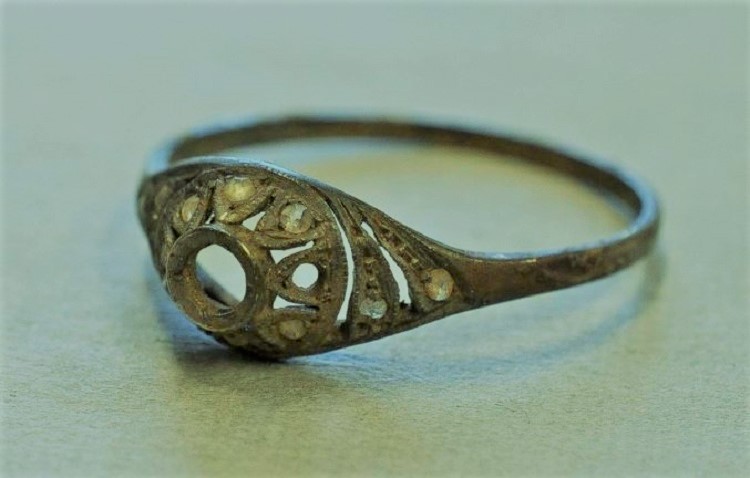
In May 2016, staff at the Auschwitz Museum found an enamel mug with a false bottom. Hidden in the double bottom was a ring and a necklace.
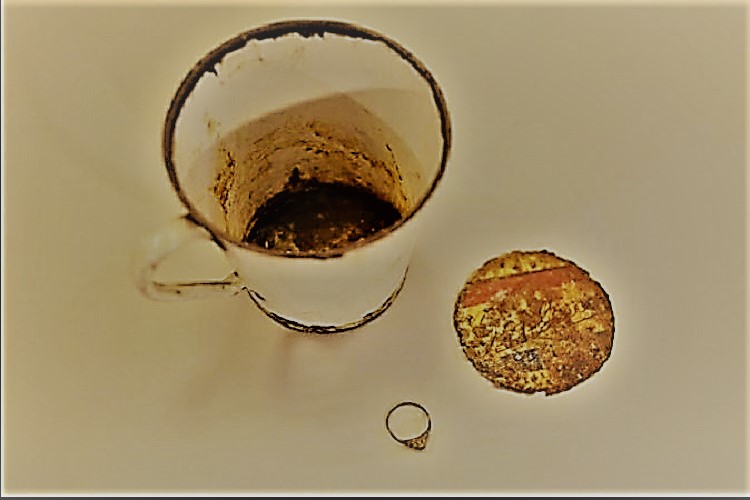
Over time, the materials gradually degraded, and the second bottom separated from the mug, exposing the hidden treasure.
I don’t care about the monetary value of the ring, because there is an emotional story behind it, a story of hope. The owner of the ring clearly hoped that one day he or she would be reunited with the piece of jewelry. It is also a story of fear, because the owner knew if the ring was taken off him or her, it would be lost forever. Unfortunately, the owner was never reunited with the piece of jewelry.
The ring and the cup also reveal a more sinister story.
The Nazis constantly lied to the Jews deported for extermination. They were told they would be resettled, with a new job and a place to live.
They allowed the victims to take some luggage with them. They knew the victims would take things precious to them, so they took the jewelry, clothing, and other valuables before sending them to be gassed.
I don’t know if the ring’s owner survived; I hope they did, but I fear they didn’t.
And sometimes a ring tells a story about a reluctant hero.

The story emerged in an unlikely place: a BBC show called “Antiques Roadshow.” It was told by two women. The women were Jane Haining’s nieces; the ring belonged to her.
Jane worked as a missionary for the Church of Scotland in Budapest. The mission established a school in 1846, funded by Jews converted to Christianity. Haining looked after 50 of the school’s 400 pupils; the majority were Jewish.

As the war broke out, she was on holiday in Cornwall and could have stayed there safe and sound, but she decided to return to the Mission in Budapest. She was arrested by the Nazis in 1944, accused of working among Jews and listening to the BBC. She was sent to Auschwitz, where she was tattooed as prisoner 79467. She died in Auschwitz on July 17. 194. Haining is the only Scot to be officially honoured for giving her life to help Jews in the Holocaust.

Donation
Your readership is what makes my site a success, and I am truly passionate about providing you with valuable content. I have been doing this at no cost and will continue to do so. If you’re able, a voluntary donation of $2 or more would significantly help me continue my work. However, I fully understand if you’re not in a position to do so. Your support, in any form, is greatly appreciated. Thank you. To donate, click on the credit/debit card icon of the card you will use. If you want to donate more than $2, just add a higher number in the box left from the PayPal link. Your generosity is greatly appreciated. Many thanks.
$2.00
Sources
Smithsonian
BBC


Leave a Reply