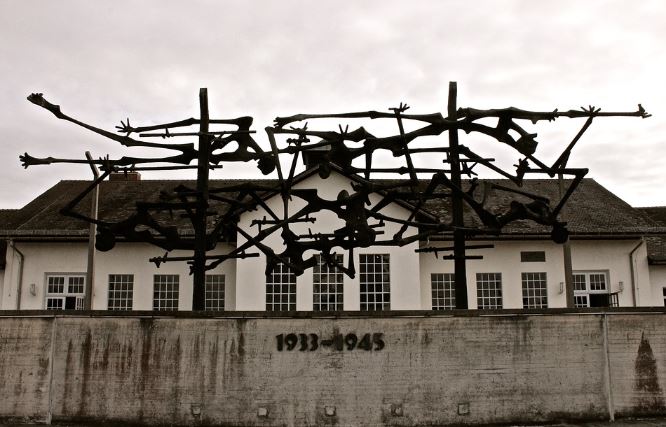
There is a common misconception that the Nazi regime’s campaign of murder and persecution began only after the outbreak of the Second World War in September 1939. In reality, the persecution of Germany’s Jews and other targeted groups began almost immediately after Adolf Hitler came to power. By April 1933, barely ten weeks after Hitler was appointed Chancellor of Germany, the Nazi regime had already begun implementing systematic measures of exclusion, persecution, and terror. These early actions laid the foundations for the far more radical persecution and mass murder that would follow during the Holocaust.

It is tragic enough that young men lost their lives on 12 April 1933, at a time when the Nazi regime had barely begun its assault on German society. But there is an added poignancy to the story of one of them—the very first to be killed—for he was not even supposed to have been in Germany.
Arthur Kahn was a 21-year-old Jewish German medical student who had enrolled at the University of Edinburgh in Scotland. He had left Germany to continue his studies abroad, but briefly returned to his homeland to retrieve his student records from the University of Würzburg. That seemingly routine journey would place him in the path of a rapidly radicalising regime—and ultimately cost him his life..
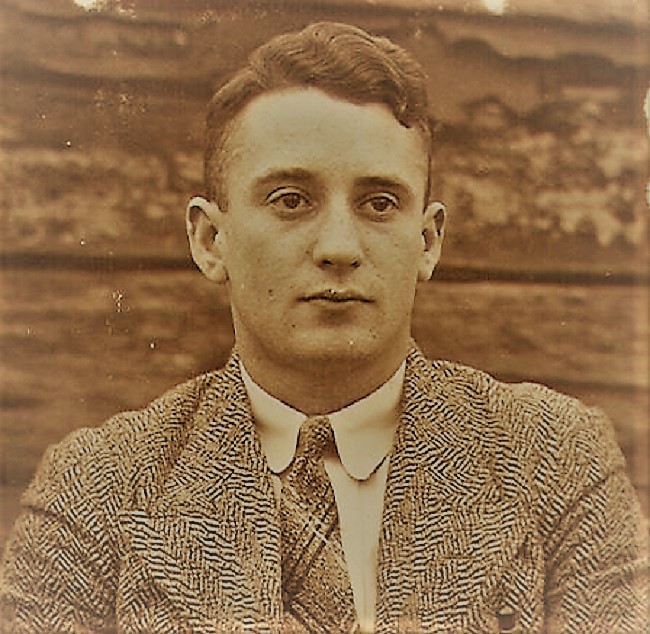
Arthur Kahn, together with Ernst Goldmann, Rudolf Benario, and Erwin Kahn(not related), had been arrested around March 22, 1933, for being members of the communist party and were sent to Dachau. Although Arthur Kahn had no Communist affiliation, he had been at one point involved in an anti-Nazi organization.
Upon arrival in Dachau, the men were identified as Jews and tortured. On April 12, a group of drunken SS officers handed the four young men shovels. They made them march to the outskirts of the camp, where the officers executed them. The first one shot was Arthur Kahn, making him the first Holocaust victim, according to historian Timothy Ryback. Goldman and Benario immediately followed and died. Erwin Kahn was also shot but died from his injuries four days later in a nearby hospital. He did get a chance to make a statement disputing that the four men had tried to escape, for that was the reason given for the executions.
Postwar investigation established that Robert Erspenmüller, the camp’s deputy commander, and two other SS guards, Hans Burner and Max Schmidt, committed the murders.
Donation
Your readership is what makes my site a success, and I am truly passionate about providing you with valuable content. I have been doing this at no cost and will continue to do so. Your voluntary donation of $2 or more, if you are able, would be a significant contribution to the continuation of my work. However, I fully understand if you’re not in a position to do so. Your support, in any form, is greatly appreciated. Thank you. To donate, click on the credit/debit card icon of the card you will use. If you want to donate more than $2, just add a higher number in the box left from the PayPal link. Your generosity is greatly appreciated. Many thanks.
$2.00
Sources
https://www.huffpost.com/entry/dday-veterans-brother-was_b_5440492
https://nationalinterest.org/feature/dachau-the-first-days-the-holocaust-12682
The National Interest
Schreibdasauf.info
The New Republic


Leave a Reply