Vél d’Hiv

It always amazes me how easy it was for some Europeans to give up their Jewish neighbours. I know it’s easy for me to say that in retrospect, because I don’t know how I would have reacted if put in that situation. But I have a feeling I would have spoken out about it the least.
The Nazis murdered 75% of all Dutch Jews, and Jews residing in the Netherlands during the Holocaust. It wasn’t that all Dutch people were complicit in this crime. One factor was the highly efficient Dutch civil administration, which enabled the occupiers to carry out their plans for the Final Solution. As I stated before, only relatively few Dutch were complicit, but many were complacent and hid the facts that were so plain to see.
In France, however, the French Vichy government was complicit. They were happy and eager to help the Nazi occupiers.
I remember a scene in the movie Mr Klein about a man profiting off the misfortune of French Jews during World War II. At one point in the film, the French police knocked at the door of the Jews, not the Gestapo. Although the film is fictional, it provides a good indication of the French attitude towards their Jewish neighbours. Mr Klein was released in 1976 and directed by Joseph Losey. Alain Delon plays the immoral art dealer, Robert Klein, who leads a life of luxury—until a copy of a Jewish newspaper brings him to the attention of the police, linking him with a mysterious doppelgänger.
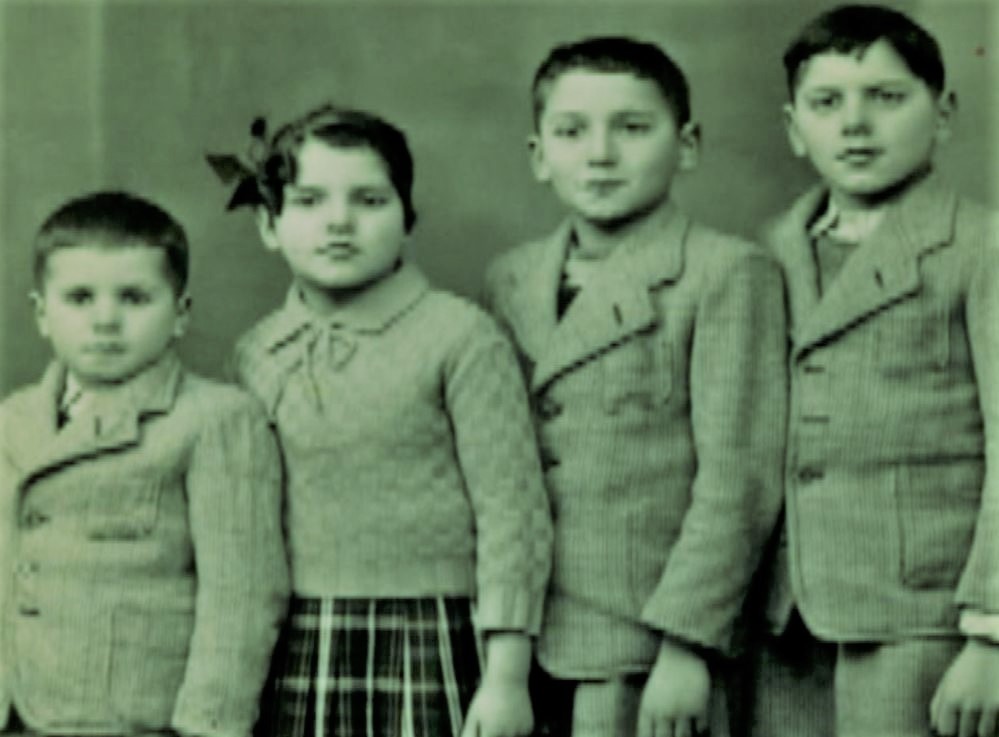
On 16 July 1942, French police acting on orders of the Nazi occupiers began rounding up thousands of Jewish residents in Paris. The Jews were assembled and held at the city’s indoor Vélodrome d’Hiver, a cycling stadium in Paris’ 15th arrondissement. Many died at the velodrome, left in searing heat with almost no food, water, or sanitation. The remaining Jews found themselves deported to Auschwitz. This shameful chapter in French history is known as la rafle du Vel d’Hiv. The French police gave the roundup the code-name Opération Vent printanier (Operation Spring Breeze).
The roundup was one of several aimed at eradicating the Jewish population in France, both in the occupied and the free zone. According to records of the Préfecture de Police, eventually, 13,152 Jews were arrested, including more than 4,000 children. They were all to be put in rail cattle cars and deported to Auschwitz for their mass murder.

More than 3,000 children remained interned and orphaned until their deportation to Auschwitz.
Many wartime French authorities and police played an active role in the deportations, but one Paris policeman, Théophile Larue, took a stand. He warned his Jewish neighbours, the Lictensztajns, of the upcoming Vél d’Hiv roundup. He arranged for the family to escape to southern France and obtain false papers. One man saved the Lictensztajns, who chose to uphold his position to protect all citizens, but unfortunately, not all French Policemen took that position.

Théophile Larue—saved the Lictensztajns and others
In March 1941, Larue and his wife, Madeleine, offered their hospitality to Léon Osman, who thus managed to avoid being sent to the Pithiviers camp. He remained under their care until July 1942, when he escaped to the South of France. Osman was on the Gestapo list of wanted people; giving shelter to such a person was a grave offence and carried a heavy punishment.
Larue gave advanced warning on 15 July 1942 of the plans for the large-scale roundup of Jews. It was to start the next day with eight Jewish families who lived in his building, thus allowing them a chance to flee and find refuge. The Larue couple sheltered Chuma Brand and her daughter Fanny in their apartment for a week in July 1942. Then Théophile accompanied them to the train station in his uniform to facilitate their flight to the unoccupied zone. In November 1942, Simon Glicensztajn, also on the Gestapo list, found refuge in the Larues’ home for a few days. Moreover, one night, Larue broke into the police-sealed apartment of Glicensztajn’s sister, Laja Tobjasz, to help remove a stock of merchandise that would provide the family with a livelihood.
Once, when Mrs Tobjasz returned to Paris from Southern France, she was arrested and taken to the prefecture. When Larue heard this, he put on his uniform, went to the prefecture, and asked to speak with the prefect.
He said that Mrs Tobjasz was Catholic and the godmother of his daughter. Although sceptical, the prefect must have had a change of heart because he released her into the custody of Larue. Théophile Larue believed it was his duty, as a man of honor with respect for human values, to help people in need, even at the risk of putting his family in harm’s way. As a member of the French Resistance, Officer Larue took part in the battle for the liberation of Paris. After the liberation, the Larues continued to be in touch with the families of those they rescued. On 23 September 2007, Yad Vashem recognized Théophile and Madeleine Larue as Righteous Among the Nations.
German authorities continued the deportations of Jews from French soil until August 1944. In all, some 77,000 Jews living on French territory faced deportation to concentration camps and killing centres—the overwhelming majority went to Auschwitz.
For his pivotal part in the deportation of Jews from France, Pierre Laval, formerly the French Prime Minister, was arrested and tried after the liberation of France. A firing squad shot him on 15 October 1945.
The fate of two German officials, most involved in the Vél d’Hiv, mirrored the shared fates of high-ranking SS administrators. Theodor Dannecker was arrested by American officials in Bad Tölz, Bavaria, in December 1945 and committed suicide while in custody. Helmut Knochen, sentenced by a British court to 21 years in prison for a separate offence, was sentenced to death by a French court in 1954. They commuted the sentence to life imprisonment. President Charles de Gaulle (France) ordered the release of Knochen in November 1962.
Sources
https://apnews.com/article/9603cd8d7461de30c1fe5c192b14c98c
https://encyclopedia.ushmm.org/content/en/article/the-velodrome-dhiver-vel-dhiv-roundup
https://encyclopedia.ushmm.org/content/en/photo/theophile-larue?parent=en%2F11768

Donation
Your readership is what makes my site a success, and I am truly passionate about providing you with valuable content. I have been doing this at no cost and will continue to do so. Your voluntary donation of $2 or more, if you are able, would be a significant contribution to the continuation of my work. However, I fully understand if you’re not in a position to do so. Your support, in any form, is greatly appreciated. Thank you. To donate, click on the credit/debit card icon of the card you will use. If you want to donate more than $2, just add a higher number in the box left from the PayPal link. Your generosity is greatly appreciated. Many thanks.
$2.00


 History of Sorts
Leave a comment