
Before I go into the main story about the holocaust in Limber, I have to explain the geographical situation of Limburg. There are two provinces called Limburg. One is in Belgium, the other in the Netherlands. The Dutch Limburg is the most Southern province of the Netherlands. To the West, it borders Belgium, and to the East, it borders Germany. In addition, there is also a town called Limburg in Germany, which is not connected to the two provinces of Limburg.

To avoid confusion, I will focus on the Dutch province of Limburg, a place I know well because I was born there.
2,200 Dutch and German Jews survived the Holocaust in Limburg, that narrow sliver of a province near the Belgian and German borders that recent research has revealed to have been the safest place for Jews in the Netherlands during the Holocaust. Approximately 10% of Jews who went into hiding in Limburg were caught, roughly one-third the rate of Amsterdam.
Not only did the Jews in Limburg survive the war in higher proportions than the rest of the Netherlands, but the region actually had more Jewish residents after the Holocaust than before. The research was done by the Dutch historian Herman van Rens.
In addition to offering refuge, Limburg also promised Jews a path out of Nazi-controlled areas altogether. This area is not as densely populated and flat as the rest of the Netherlands, and its limestone caves lead across the border to Belgium.

In addition to those who hid in Limburg, approximately 3,000 Jews passed through the province on their way to Spain and Switzerland.
Below are some accounts of some who didn’t make it and of some who sacrificed their lives.

Gerardus Lambertus Johannes van Beckhoven (Amsterdam, 21 July 1899, Bergen-Belsen, 20 March 1945) was a chaplain in Heerlen and headed an independent refugee organization. He did work with the National Organization for Aid to Refugees. In June 1944, Van Beckhoven was arrested, and after internment in Maastricht, Vught, and Sachsenhausen. He died in Bergen-Belsen.
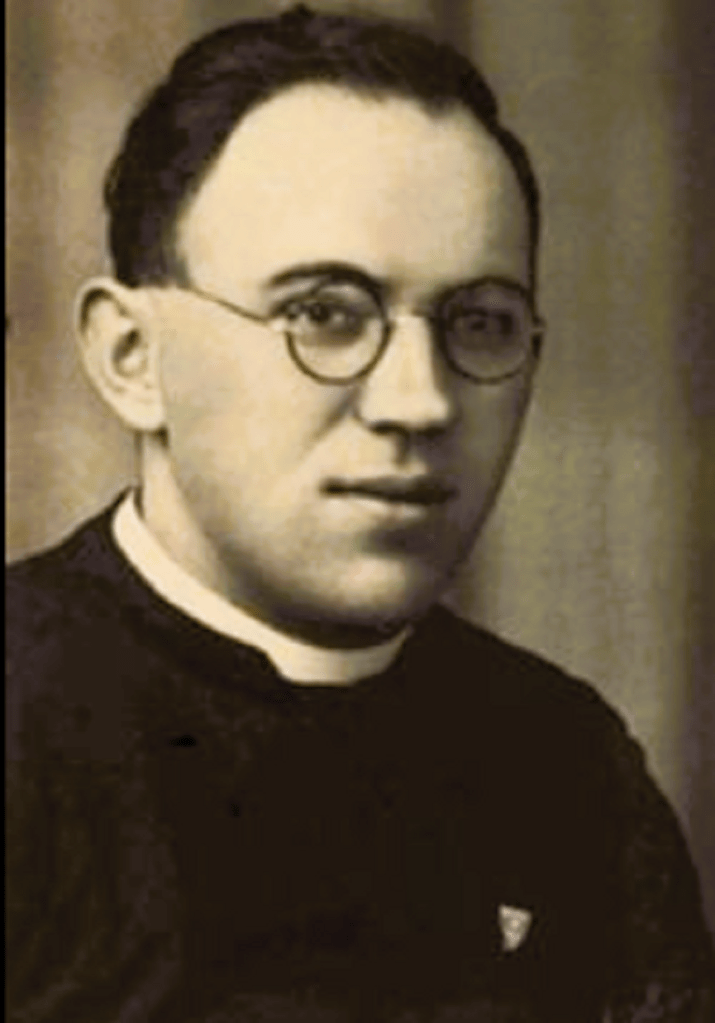
Another Catholic clergyman, Jan Willem Berix (Meers, 12 April 1907 – Bergen-Belsen, 13 March 1945) was also a chaplain in Heerlen and was district leader of the National Organization for Aid to Hiders (LO) during the German occupation. During a meeting of the Limburg LO leadership in Weert on June 21, 1944, he was arrested and imprisoned in Camp Vught and later Sachsenhausen, where he had to work in the Heinkel factory. After Berix fell ill, he was deported to Bergen-Belsen, where he died.

Richard Leonard Arnold Schoemaker (Roermond, 5 October 1886, Sachsenhausen, 3 May 1942) was a fencer, professor and resistance fighter. He was the leader of the Schoemaker Group. Schoemaker was arrested for treason, and after imprisonment at Oranjehotel and Camp Amersfoort, he was executed in Sachsenhausen. He had participated in the 1908 Olympic Games in fencing.
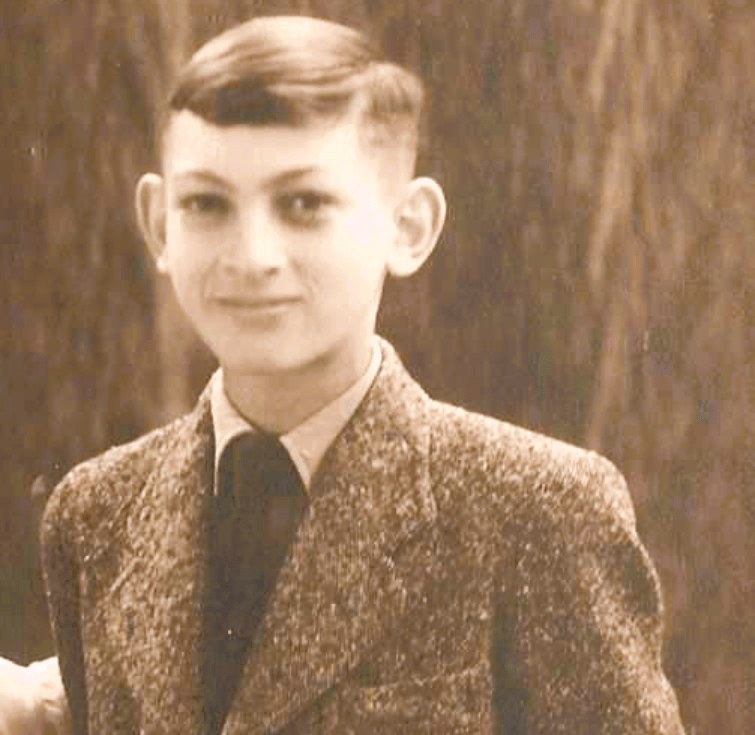
Isaac Wolff was born in Sittard on 27 October 1928. In June 1943, he was transported from Vught via Westerbork to Auschwitz on the so-called children’s transport. He was murdered on 3 September 1943. He reached the age of 14.
In 1942, father Herman Wolff made an impressive, approximately 10-minute video of the Bar-Mitzvah of his son Isaac (Iesje). The Jewish festival was celebrated in the parental home at Landweringstraat 15 in Sittard. Many family members attended the party, including several children and a baby. Iesje received a new bicycle. At the table, Rabbi Bledenstijn gave a speech to the Wolff family and the other families of Dam, Sassen, etc., that were present. Children played in the street, and adults participated in the festivities. Then they imitated the famous duo, Johnny and Jones, and at the end of the party—the broom—appeared. It is used more for leaning on than for sweeping.

Isaac’s younger brother was also on the children’s transport. Benjamin Wolff. born in Sittard, on 11 August 1936. Murdered in Auschwitz, 3 September 1943. He reached the age of 7.
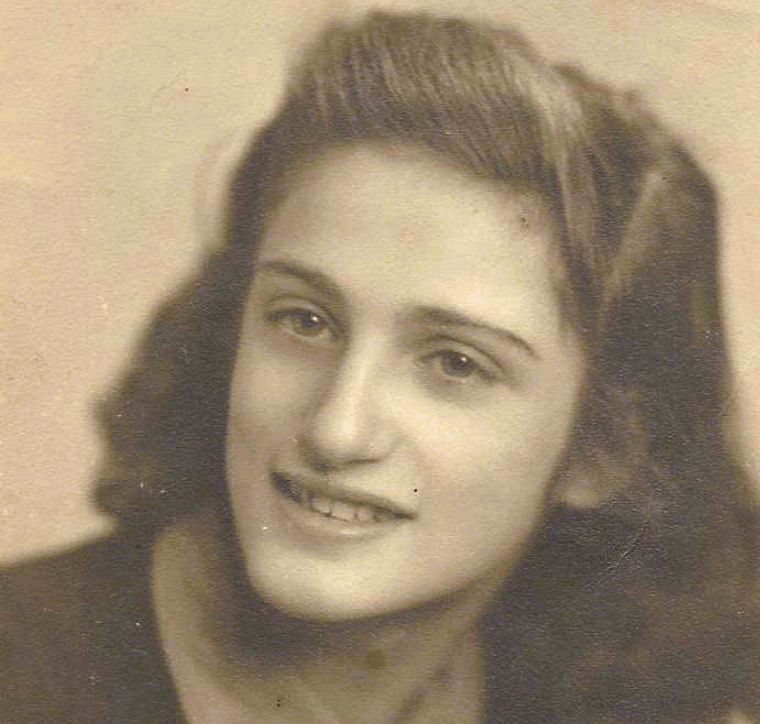
Charlotte Rechtschaffen was born in Duisburg, Germany, on 15 April 1927. Her parents were Max Rechtschaffen, and Paula Zahler and she had a brother named Hermann.
After Kristallnacht, the parents sent their daughter to safer places. The 11-year-old girl arrived in the Netherlands on a children’s transport in December 1938.
Charlotte’s flight to the Netherlands eventually brought her to Roermond. She found shelter with the family of Rabbi Leo Israëls in Nassaustraat. It was her fourth address in the Netherlands. Mientje van Heur and Corry Schmeitz lived nearby, with whom she became friends. When the three friends walked into town—they covered the yellow star on Charlotte’s clothes.
She was a lively girl. “Charlotte Rechtschaffen could dance any way she wanted,” said a lady who had taken care of her in The Hague after the war. The Nazis gradually took more and more measures to restrict the lives of Jews. Jews became frightened. Flee, go into hiding or wait? Charlotte could have gone into hiding but didn’t want to.
The Israëls family decided to go into hiding without Charlotte’s knowledge. In late 1942/early 1943, when she came home with groceries, she found herself standing in front of a closed door. Leo Israëls, his wife, and son appeared to have left, leaving Charlotte to her fate. She was 15 years old at the time. The pastor of the parish to which Nassaustraat belonged took her in for a few days. He then placed her with Mrs Hélène Winter-Cahn in the Heilige Geeststraat for a longer period of time. When the Jews in Roermond were ordered to report for transport to one of the camps no later than early April 1943, Charlotte did so. “I don’t want to go into hiding and I want to meet my brother.” Mientje’s pocketbook tells us that she took Charlotte to the bus at Spoorlaan-Zuid on 9 April 1943, at 11.30 am. The bus with destination Camp Vught. On September 12, she had to continue to Camp Westerbork. She stayed in Barrack 60. It is unclear what work Charlotte did in the camp. We are aware she wrote to Mientje that she no longer had to send parcels because she lacked nothing.
There is no certainty where Charlotte was murdered, but she did spend time in Westerbork, Theresienstadt and Auschwitz. Records show that she was murdered on 21 October 1944, in middle Europe, so we assume it was probably Auschwitz.
Jews and Sinti were also rounded up in Limburg during World War II and deported to German concentration camps. Yet half of the approximately 1,500 Limburg Jews were able to go into hiding just in time.

Anna Maria Steinbach was born in Buchten on 23 December 1934. Settela became known through the film recordings in Camp Westerbork by Rudolf Breslauer. She was arrested together with 42 other Sinti on 16 May 1944 in Eindhoven at the caravan camp on the Zwaaikom. From 16–19 May 1944, Anna Maria Steinbach was imprisoned in Camp Westerbork. From 22 May–2 August 1944, Settela Steinbach was in the Gypsy camp of Auschwitz-Birkenau. During the Gypsy Razzia in Eindhoven, 41 Sinti were arrested, 38 of them were murdered by the Nazis.
Sources
https://www.joodsmonument.nl/en/page/28252/charlotte-rechtschaffen
https://www.limburger.nl/cnt/dmf20200909_00174989

Donation
Your readership is what makes my site a success, and I am truly passionate about providing you with valuable content. I have been doing this at no cost and will continue to do so. Your voluntary donation of $2 or more, if you are able, would be a significant contribution to the continuation of my work. However, I fully understand if you’re not in a position to do so. Your support, in any form, is greatly appreciated. Thank you. To donate, click on the credit/debit card icon of the card you will use. If you want to donate more than $2, just add a higher number in the box left from the PayPal link. Your generosity is greatly appreciated. Many thanks.
$2.00
 History of Sorts
Leave a comment