Before I start the main story, I must tell you about the wider context. About 75% of all Jews in the Netherlands were murdered during the Holocaust. The Netherlands as a country, received understandably a lot of criticism for this and to a great extent, it was justified. However, it is not as a black-and-white issue as some people may think it is. It is not that the Dutch were more anti-Semitic than other Europeans—in fact, in many cases, they were less. Per capita, the Dutch have more Righteous among the nations than any other European country.
The Dutch did have one thing that contributed greaty to the Dutch Holocaust—the most efficient and detailed population register in the world. Which made it very easy for the Nazis to find out where the Dutch Jews lived. Of course, there were also plenty of Dutch who collaborated with the Nazis.
On February 22, 1941, the Germans arrested and deported several hundred Jews from Amsterdam—first to the Buchenwald Concentration Camp and then to the Mauthausen Concentration Camp. Almost all of them were murdered in Mauthausen. The arrests and the brutal treatment shocked the population of Amsterdam. In response, Communist activists organized a general strike for February 25 and were joined by many other worker organizations. Major factories, the transportation system, and most public services came to a standstill. The Nazis brutally suppressed the strike after three days, crippling Dutch resistance organizations in the process. This was the first time that citizens of an occupied country protested publicly against the Nazis. It was also the largest mass protest against the Nazi regime in Europe. The February 1941 General Strike was—an extremely rare instance—where non-Jews collectively risked life and limb for their Jewish neighbors and fellow citizens.

Nine strikers were killed during the suppression by the Nazis, and dozens were injured. Shortly afterward, another 18 were executed. Needless to say, this instilled fear in the Dutch population.
The reprisals did not cease with the strike’s end. The Germans sacked the entire city council. Sybren Tulp, who had served in the colonial army in the Dutch East Indies, assumed control of Amsterdam’s police force
Although the Dutch resistance was crippled by this, it didn’t stop the resistance. Several resistance groups were formed afterward. Jan Thijssen was a member of one of the resistance groups.
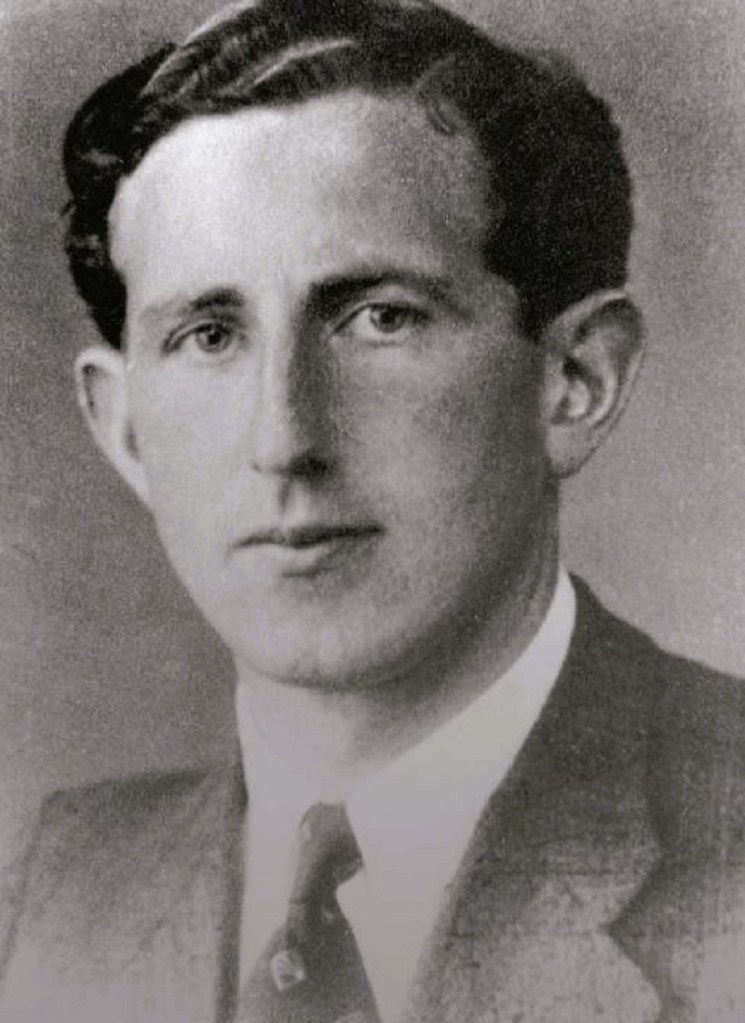
Jan was born on December 29, 1908, in Bussum. He was an electrical officer at the PTT (Dutch Post and Telecommunications). He was in charge of tracking down clandestine transmitters. He was himself an enthusiastic radio amateur.
After the Germans invaded the Netherlands, Jan Thijssen soon had the idea of establishing a nationwide radio network to support the underground. In 1942, he contacted the Ordedienst (O.D.), one of the premier nationwide underground organizations led by career officers and military in nature. He presented his plan to the O.D. Chief of Staff, Jr. P.J. Six, who accepted his idea. Thanks to Thijssen’s commitment, a nationwide communication network was all but completed in 1942. In this, he was heavily supported by a chemist, J. Hoekstra, employed by N.V. Philips in Eindhoven and who succeeded in -illegally- acquiring from the factory various parts vital to the radio network with the help of a family member.
Thijssen grew disillusioned when it became clear that the O.D. wished to use his radio network solely for their own purposes. He also felt irritated by the much too passive attitude of the O.D. He advocated a new, nationwide organization to fully occupy itself with active resistance like sabotage and keep in close contact with the Allies. At the end of April 1943, along with six other underground workers, including the Communist D. van der Meer from Amersfoort. he established the R.V.V. (Raad van Verzet, the Council for Resistance in the Kingdom of the Netherlands). Van der Meer resigned a month later and was succeeded by G. Wagenaar, one of the national leaders of the Military Commission, the resistance movement of the Dutch Communist Party.
Another general strike in April and May of 1943, started spontaneously following a notification by German General Christiansen to the effect that all former Dutch military personnel be returned to imprisonment as POWs caused Thijssen to call for a boycott of this measure and to commit sabotage. He was the first to inform London of this strike and his proposed actions through his transmitter.
During 1943 and 1944, the R.V.V. performed liquidations, raided distribution offices and public records, and committed acts of sabotage. However, the objective of the R.V.V. to gain overall leadership within the active resistance was not reached. This was (partly) because the illegally printed C.P.N. ‘De Waarheid’ (Truth) identified itself more and more with the R.V.V., lending the organization an “albeit undeserved” communist aura. The O.D. and the R.V.V. couldn’t agree on matters that caused the Chief Staff of the O.D., Jhr. P. Six to oust Jan Thijssen as Chief of Radio Service of the O.D. There was also much rivalry between the R.V.V. and the Landelijke Knokploegen (L.K.P., National Raiding Parties).
From April 1944 onwards, the R.V.V. maintained radio contact with the London-based Bureau of Intelligence, established through the assistance of Thijssen’s friend and colleague, A.W.M. Ausems, who had been trained in England as a secret agent. July 1944, at Deurne Castle, a meeting took place between the national leaders of the R.V.V. At this meeting, Thijssen proposed an establishment of the Operations Center to be headed by himself. The existing R.V.V. groups had to be transformed into small sabotage groups to be deployed mainly against the German army.
In part aided by local resistance activities, the Allied drive through Western Europe progressed faster than was anticipated. At the end of August, the L.K.P. and the R.V.V. also received weapons by airdrops, and the Allied Supreme Command gave orders for large-scale sabotage acts directed against the Dutch railway system. There was a split between Jan Thijssen’s R.V.V. and Frank van Bijnen’s L.K.P.; the latter was named National Commander of Sabotage within the L.K.P. on August 25th, 1944. Problems were inevitable, and so, on September 12th, the newly appointed commander of the Binnenlandse Strijdkrachten (B.S., Internal Armed Forces), H.R.H. Prince Bernhard ordered the L.K.P., the R.V.V., and the O.D. to start the so-called Delta council to end the rivalry between the various organizations. Colonel Henri Koot was asked to take command of the B.S., and he accepted. He requested to be permitted to set up his HQ in Amsterdam. At that time, however, Jan Thijssen and Frank van Bijnen were heavily involved in underground activities to support the battle for Arnhem, which was in progress at that very moment. Therefore, they were absent from the Delta meeting in Amsterdam. As a result, the O.D. claimed ever more power for itself, something Thijssen could only disagree with. Among other things, he claimed the weapons that had been dropped for himself. He also clashed with Van Bijnen, and a crisis within the B.S. was looming. The disagreement continued for weeks and erupted when Commander Delta Koot relieved Thijssen of his function. A few days later, on November 8th, on the highway between Rotterdam and The Hague, driving a Red Cross van, Thijssen was arrested by the Nazis. He was taken to a prison in Zwolle. On March 8, 1945 Jan Thijssen was executed. He was one of 116 inmates from various prisons, mainly members of the resistance, who were taken to De Woeste Hoeve and shot in reprisal of the raid on SS-Obergruppenfuhrer und General der Waffen-SS und der Polizei, (General of the SS, Waffen-SS and Police) Hans Rauter.
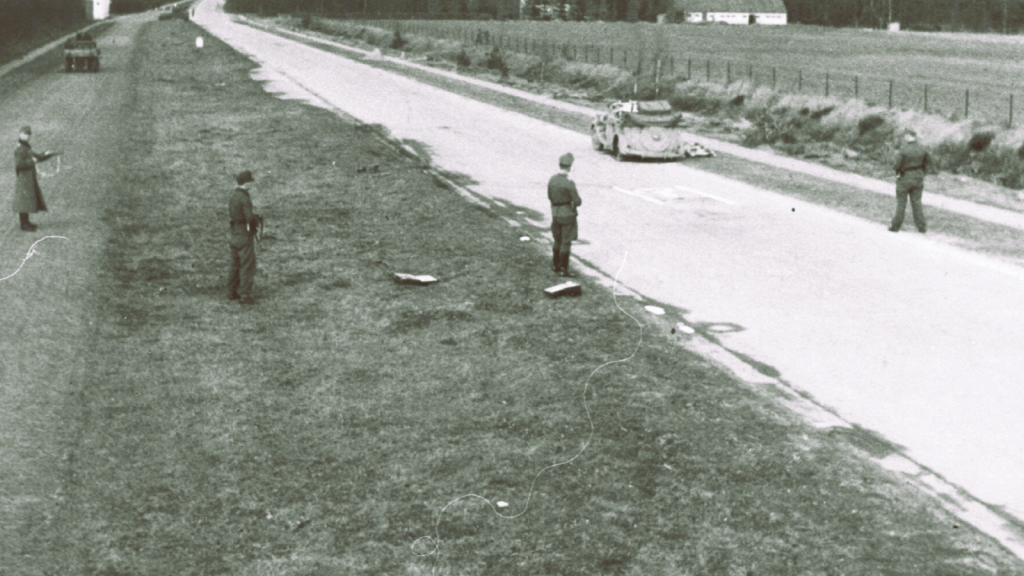
The prisoners, in five groups of twenty and one of sixteen, were taken to the exact location of the raid near De Woeste Hoeve and shot. The German Oberwachtmeister der Ordnungspolizei (Chief of Police), Helmut Seijffards, who refused to be a member of the firing squad, was executed on the spot as well. Of all the people being led to their execution, Jan Thijssen was the only one attempting to escape, a remarkable example of rebelliousness and resistance to the bitter end. In his prison cell in Zwolle, he wrote a few phrases on the wall: “Ons slaat geen stormwind neder”, “Het hart kent zijn eigen droefheid alleen” en “Spijt, smart en schrik door dun en dik. De dood steeds in ’t zicht na vreselijk gericht. Gestreden onversaagd tot de vrijheidzonne daagt!” (“No storm will bring us down,” “Only the heart knows its own sadness,” and “Regret, grief, and fright against all odds. Always facing death after terrible Judgment. In struggle undaunted ’till the sun of freedom rises.”) While in prison, he painted several murals, including the illustration pictured below.
On September 14, 1945, he was buried with military honors.
It is men like Jan Thijssen—that makes me proud to be a Dutch man.

Sources
https://www.annefrank.org/en/timeline/34/the-february-strike/
https://www.nationalww2museum.org/war/articles/amsterdam-general-strike-february-1941
https://picryl.com/media/jan-thijssen-1908-1945-a5a780
https://www.tracesofwar.com/persons/34932/Thijssen-Jan.htm
https://oorlogsgravenstichting.nl/personen/153765/jan-thijssen

Donation
Your readership is what makes my site a success, and I am truly passionate about providing you with valuable content. I have been doing this at no cost and will continue to do so. Your voluntary donation of $2 or more, if you are able, would be a significant contribution to the continuation of my work. However, I fully understand if you’re not in a position to do so. Your support, in any form, is greatly appreciated. Thank you. To donate, click on the credit/debit card icon of the card you will use. If you want to donate more than $2, just add a higher number in the box left from the PayPal link. Your generosity is greatly appreciated. Many thanks.
$2.00
 History of Sorts
Leave a comment