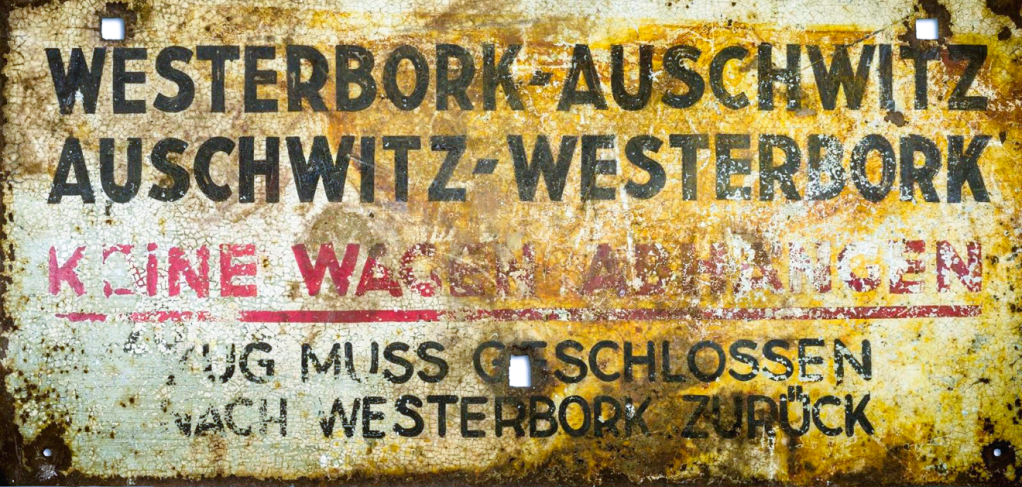
The photograph above is a sign that was posted in Westerbork station. The disturbing aspect of this sign is that it created the illusion that the transports to Auschwitz were return trips.
The deportation of Jews from the Netherlands to Nazi extermination camps, starting on July 15, 1942, stands as one of the darkest chapters in Dutch history and a central moment in the narrative of the Holocaust. This initial deportation, involving more than 1,000 Jews, marked the beginning of a systematic process that would lead to the deaths of the vast majority of the Dutch Jewish population during World War II.
Background: Nazi Occupation and Anti-Jewish Measures
The occupation of the Netherlands by Nazi Germany began in May 1940 after a swift five-day invasion. Initially, the country experienced what appeared to be a relatively lenient occupation compared to other parts of Europe. However, this appearance of moderation quickly gave way to the harsh realities of Nazi ideology, particularly with regard to the Jewish population. At the time of the German invasion, approximately 140,000 Jews lived in the Netherlands, many of whom had fled there from other parts of Europe, believing it to be a safe haven.
By 1941, the Nazi administration in the Netherlands, led by Reichskommissar Arthur Seyss-Inquart, began implementing a series of anti-Jewish laws. Jews were banned from many professions, forced to register their property, and required to wear yellow stars to mark their identity. Jewish businesses were “Aryanized,” meaning they were forcibly transferred to non-Jewish ownership. Jewish children were segregated in schools, and the community was increasingly isolated from the rest of Dutch society.
In February 1941, the first act of violent persecution occurred when the Nazis carried out a raid in Amsterdam, arresting hundreds of Jewish men. This led to the famous February Strike by non-Jewish Dutch workers in protest of the treatment of their Jewish neighbors, but the strike was swiftly crushed by the Nazis. From this point onward, the Nazi regime escalated its efforts to segregate and eventually deport the Jewish population, following its genocidal policies.
Westerbork: The Transit Camp
Central to the deportation process was Kamp Westerbork, located in the northeastern Netherlands. Initially established in 1939 by the Dutch government to house Jewish refugees fleeing persecution in Germany, Westerbork was repurposed by the Nazis in 1942 as a transit camp for Jews destined for extermination camps in the East. Westerbork became a key part of the machinery of the Holocaust in the Netherlands, functioning as a holding area from which Jews were sent to camps like Auschwitz and Sobibor.
The camp was run by the SS but was also administratively overseen by a Jewish council, the Joodsche Raad (Jewish Council), which was forced by the Nazis to compile lists of Jews to be deported. This created an agonizing moral dilemma for those involved, as they tried to protect as many people as possible while working under the constant threat of violence.
By the summer of 1942, the Nazis were ready to begin the large-scale deportation of Dutch Jews to extermination camps. The decision to deport Jews en masse came in the context of the Final Solution, the Nazi plan to annihilate the Jewish population of Europe, which was formalized at the Wannsee Conference in January 1942. Dutch Jews were considered part of this broader plan, and Westerbork became the starting point for their journey to death camps like Auschwitz.

July 15, 1942: The First Deportation
The first deportation train from Westerbork to Auschwitz departed on July 15, 1942, carrying 1,135 Jews. This was a devastating moment for the Dutch Jewish community, as it marked the beginning of a mass deportation process that would ultimately lead to the near destruction of Jewish life in the Netherlands. The train was operated by Deutsche Reichsbahn, the German state railway, which played a central role in facilitating the Holocaust by transporting millions of Jews to extermination camps across Europe.
The individuals on the train represented a cross-section of Dutch Jewish society. They included men, women, and children of all ages, many of whom had been living in fear and uncertainty as the Nazi persecution intensified. Some had been rounded up in raids, while others had been summoned to report to Westerbork under the pretense of being relocated for “labor” purposes. Many still believed they were being taken to work camps rather than extermination camps, as the true extent of Nazi genocide was not yet fully understood by most victims.
The journey to Auschwitz took several days, during which the deportees endured appalling conditions. They were packed into cattle cars with little food or water, no sanitation, and barely any space to move. Many died en route due to the inhumane conditions. Upon arrival at Auschwitz, those who survived the journey faced an even more horrifying fate.
Arrival at Auschwitz: The Selection Process
Upon their arrival at Auschwitz, the deportees from the Netherlands were subjected to the infamous selection process. SS doctors and officers divided the new arrivals into two groups: those deemed fit for forced labor and those who were to be sent directly to the gas chambers. Elderly people, children, and the infirm were almost always sent to their deaths immediately. Those considered strong enough to work were sent to labor camps within Auschwitz or to nearby industrial sites, where they were forced to work under brutal conditions that most would not survive.
Auschwitz was not only a labor camp but also one of the primary extermination centers of the Holocaust. By the time deportations from the Netherlands began Auschwitz had been transformed into a site of mass murder, with gas chambers and crematoria operating on an industrial scale. The majority of the Jews deported from the Netherlands to Auschwitz during the Holocaust were murdered soon after their arrival, either through forced labor, starvation, disease, or in the gas chambers.
The Fate of Dutch Jewry
The deportation on July 15, 1942, was the first of many. Over the course of the next two years, more than 100,000 Jews from the Netherlands were deported to Nazi extermination camps, primarily to Auschwitz and Sobibor. The vast majority did not survive. Of the approximately 140,000 Jews living in the Netherlands at the start of the occupation, more than 75% were murdered during the Holocaust, one of the highest percentages of any country in Western Europe.
The process of deportation from Westerbork continued regularly, with trains leaving for Auschwitz and Sobibor almost every week until the autumn of 1944. Some Jews managed to evade deportation by going into hiding, most famously Anne Frank and her family, though they were eventually betrayed and arrested. Many others were hidden by non-Jewish Dutch families at great personal risk. Despite these efforts, the sheer scale of the deportation machinery made it nearly impossible for most Dutch Jews to escape.
Dutch Reactions to the Deportations
The deportation of Dutch Jews took place in the context of a country under Nazi occupation, where resistance was difficult and dangerous. Although the February Strike of 1941 had shown early solidarity with the Jewish population, widespread resistance to the deportations was limited. Some individuals and groups, including members of the Dutch Resistance, did what they could to hide Jews or sabotage the Nazi efforts. However, many non-Jewish Dutch citizens either looked the other way or actively collaborated with the occupiers, contributing to the high number of deportations.
Legacy and Remembrance
The first deportation to Auschwitz on July 15, 1942, is remembered today as a symbol of the broader tragedy of the Holocaust in the Netherlands. The systematic destruction of the Dutch Jewish community was part of the Nazis’ broader genocidal plan, but it had a uniquely devastating impact on the country. The deportations are commemorated in the Netherlands through various memorials, including the Hollandsche Schouwburg in Amsterdam, which served as a deportation center, and the National Holocaust Memorial of Names, which honors the memory of the Dutch Jews who perished.
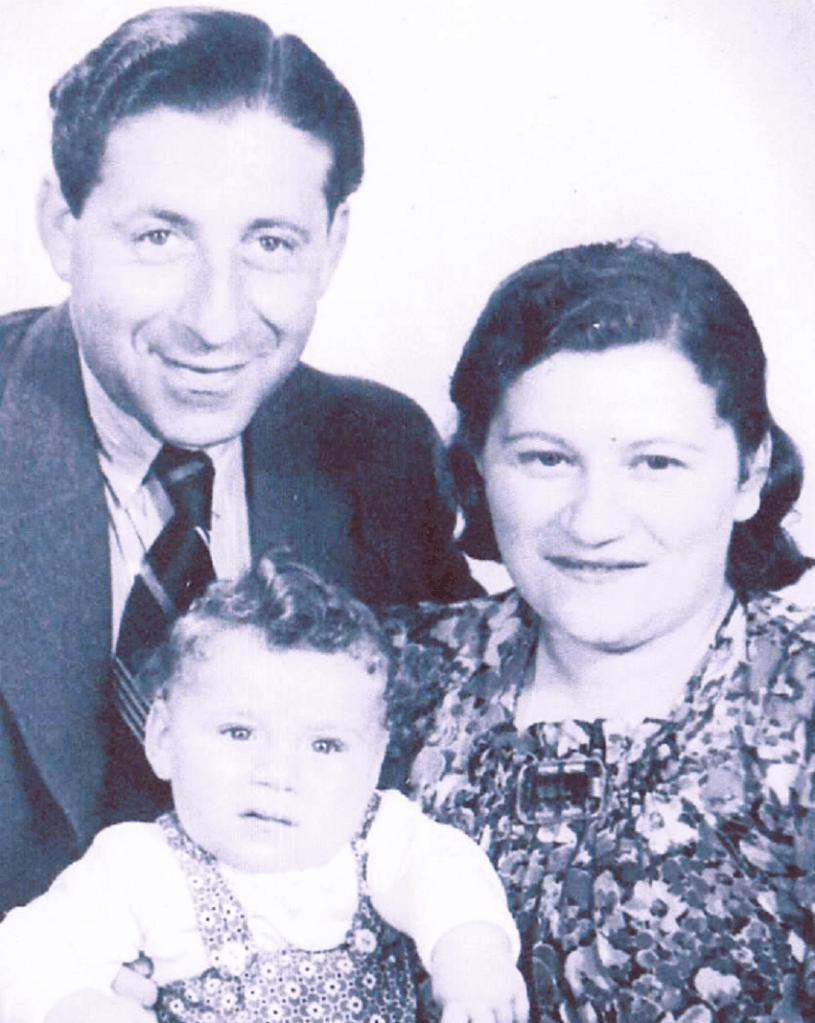
One family on that transport was the Lange family.
Hans Lange lived in Berlin prior to emigrating to Amsterdam in August 1933. He married Berta Kupperman on February 19, 1936. On October 11, 1941, their son Heinrich was born. Heinrich was murdered on July 18,1942, at age 9 months, together with his Mother in Auschwitz. Like most others from the transport of July 15, Hans was murdered on September 30, 1942.
Sources
https://www.joodsmonument.nl/en/page/195833/hans-lange
https://collections.arolsen-archives.org/de/document/130327114
https://www.yadvashem.org/holocaust/this-month/july/1942-3.html
Donation
Your readership is what makes my site a success, and I am truly passionate about providing you with valuable content. I have been doing this at no cost and will continue to do so. Your voluntary donation of $2 or more, if you are able, would be a significant contribution to the continuation of my work. However, I fully understand if you’re not in a position to do so. Your support, in any form, is greatly appreciated. Thank you. To donate, click on the credit/debit card icon of the card you will use. If you want to donate more than $2, just add a higher number in the box left from the PayPal link. Your generosity is greatly appreciated. Many thanks.
$2.00
 History of Sorts
Leave a comment