
In the heart of the Nazi-occupied Netherlands, a young woman named Geertruida van Lier, known as Truus, stood out as a symbol of courage and determination. With her fierce conviction and dedication to justice, she risked her life in the fight against the Nazi regime during World War II. Truus’s story is one of youthful defiance, bravery, and sacrifice, which, even today, inspires new generations.
Early Life: Shaping a Passion for Justice
Geertruida “Truus” van Lier was born on November 22, 1921, in Utrecht, Netherlands. Her family held liberal and progressive values, which greatly influenced Truus’s early life and sense of morality. She was raised with a strong sense of justice and a belief in equality—values that would later propel her to action as the Nazi regime spread its oppressive control across Europe.
A driven student, Truus enrolled at the Utrecht University, where she studied law. But even as she pursued her studies, she could not ignore the horrors that were unfolding around her. The occupation of the Netherlands by German forces in 1940 marked the beginning of her transformation from a student into a committed member of the Dutch resistance. The Nazi regime’s persecution of Jewish people and political dissidents, and its suppression of fundamental freedoms, stirred her to take action.
Right after the start of the war, her parents divorced because her father was Jewish. Therefore, her mother could reapply for an Aryan declaration while her father went into hiding. Truus’s father was a lawyer and came from an affluent Jewish family.
Entering the Resistance: A Dangerous Path
In the early years of the occupation, Truus engaged in relatively low-risk resistance activities, such as distributing anti-Nazi leaflets and sharing underground publications with others in her university network. However, her passion for justice and her growing frustration with the Nazi regime led her to pursue more daring and dangerous roles. By 1943, at just 21 years old, she had joined an armed resistance cell. She began participating in sabotage missions and operations to protect Jews and other targeted groups.
One of her key roles involved forging identification papers and organizing safe houses for Jewish people and other refugees fleeing Nazi persecution. Through her efforts, she helped countless individuals evade arrest, deportation, and certain death. In this work, she demonstrated remarkable bravery, often putting herself in direct danger by moving people through Nazi-controlled areas and taking them to hidden locations.
Truus’ commitment to the resistance was also inspired by an intense sense of urgency. By 1943, the Nazis’ grip on the Netherlands had tightened, with increased crackdowns on dissent and severe punishments for anyone involved in resistance activities. Despite these risks, she pressed on, choosing to confront the occupation head-on rather than submit to it.
Assassination of a Nazi Official: An Act of Bold Defiance
Truus’s most famous—and perhaps most daring—act of resistance came on September 3, 1943, when she assassinated the Dutch Nazi police officer Gerardus Johannes Kerlen in Utrecht. This assassination was not just a bold act but also a carefully planned operation targeting a high-ranking collaborator who played a significant role in enforcing Nazi policies.
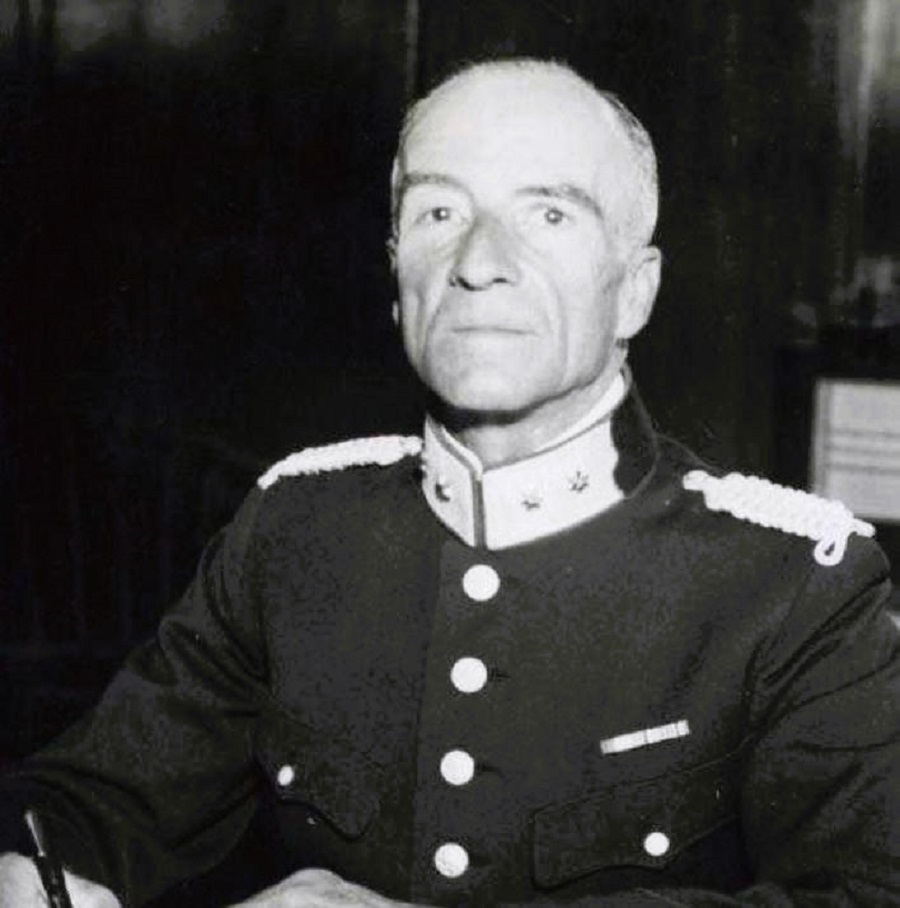
Using her knowledge of Kerlen’s schedule, Truus followed him on his daily commute, choosing a moment when he was particularly vulnerable. As he exited his vehicle near Utrecht’s city center, she shot him, killing him instantly. Her actions sent shockwaves through the Nazi ranks and the Dutch collaborators, demonstrating that even high-ranking officials were not safe from the resistance.
This act was incredibly daring because it was rare for women in the Dutch resistance to carry out direct attacks on high-ranking officials. Her role in the assassination was a testament to her bravery. It underscored the growing resolve within the resistance to strike back against their oppressors. However, this act also increased the scrutiny on her, and her identity as a member of the resistance was soon discovered.

Arrest and Execution: The Price of Resistance
Shortly after the assassination of Kerlen, Truus van Lier was apprehended by the Nazis. Her arrest marked the beginning of a grueling period of interrogation and imprisonment. Despite the harsh treatment and attempts to extract information from her, she reportedly refused to betray her fellow resistance fighters or divulge any valuable intelligence to the Nazis. Her silence was a final act of defiance, protecting those who continued the fight even as she faced execution.
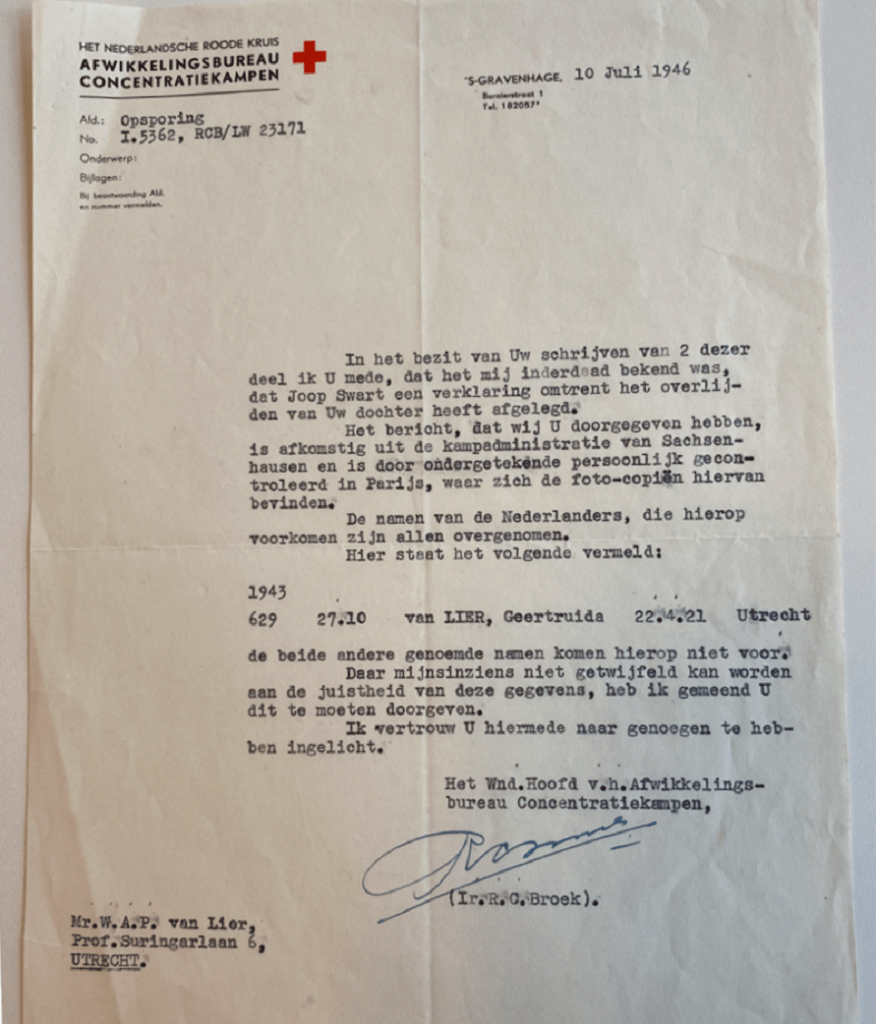
On October 27, 1943, Geertruida van Lier was executed by firing squad at the Sachsenhausen concentration camp in Germany. She was just 21 years old. Her execution was part of the Nazis’ broader campaign to suppress resistance movements across occupied Europe. By eliminating resistance members like Truus, the Nazis aimed to crush opposition and instill fear in others who might consider resisting. Yet, her story of bravery and sacrifice lived on, inspiring the Dutch people and future generations.
Legacy and Memory: Remembering Truus van Lier
Geertruida van Lier’s life and actions remain an enduring symbol of courage and resistance in the Netherlands. Despite her youth, she embodied the spirit of defiance that characterized the Dutch resistance, making the ultimate sacrifice to protect others and challenge oppression. Her legacy is commemorated in the Netherlands through memorials, educational programs, and public remembrances dedicated to Dutch resistance fighters. These public remembrances serve as a respectful and appreciative tribute to her bravery and the sacrifices she made.
In Utrecht, Truus’ hometown, a memorial plaque was installed to honor her contributions to the resistance. Additionally, a street in Utrecht was named after her—Geertruida van Lierstraat—serving as a permanent reminder of her bravery and the sacrifices she made. Her story is also shared in schools and museums, where students and visitors learn about her and other young Dutch resistance fighters who gave their lives for the cause of freedom. The plaque includes a line from Dutch poet Willem de Mérode. It says: “Our weak heart may fear death,
But what is pure and great is never forgotten.”

In 2018, a train in the Netherlands was named after Truus van Lier, part of a nationwide effort to honor Dutch resistance heroes. The Dutch National Railway Company, NS, selected her name to represent the resilience and strength that individuals like Truus showed in the face of overwhelming danger. This recognition by NS was especially significant, as trains were heavily involved in the Nazi regime’s deportation of Jewish people from the Netherlands to concentration camps. Naming a train after Truus van Lier symbolized a reversal of that dark chapter, reclaiming the railways as a place to remember heroes rather than victims.
Truus van Lier in Context: The Role of Women in the Dutch Resistance
Truus van Lier was part of a broader movement of women who actively resisted the Nazi occupation. However, their contributions should have been more noticed or minimized in historical accounts. Women in the Dutch resistance played critical roles in sabotage operations, communications, organizing safe houses, and providing medical aid. These women were instrumental in forming networks that enabled the safe passage of countless individuals, as well as in spreading anti-Nazi propaganda. Many also directly engaged in combat operations, like Truus, defying both societal expectations and the occupying forces.
The story of Truus van Lier illustrates the complexities and challenges of being a young woman in wartime resistance. Like others, she faced not only the risk of imprisonment and death but also the weight of societal norms that traditionally discouraged women from engaging in armed conflict. Nevertheless, women like Truus defied these conventions, stepping into roles that demanded bravery and sacrifice, and proving themselves just as capable as their male counterparts.
Why Truus’ Story Matters Today
The legacy of Truus van Lier, far from being a mere historical account, serves as a powerful inspiration and educational tool. It goes beyond her brave acts during World War II, reminding us of the impact young people can have in times of crisis and the profound difference one individual can make when they stand up against injustice. Her story is an enduring testament to the importance of resilience, moral courage, and the pursuit of justice, even in the darkest of times.
In today’s world, where questions of morality, justice, and resistance against oppression remain relevant, Truus van Lier’s life offers valuable lessons. Her willingness to take risks, to act in the face of fear, and to stand up for the vulnerable exemplify the highest ideals of human courage. By remembering her, we honor not only her legacy but also the countless others who fought for freedom, justice, and human dignity.
Although Truus van Lier’s name may not be as widely recognized as some, her contributions to the Dutch resistance are indelible. Her life inspires us to stand up against oppression, value freedom, and act with courage and conviction in the face of seemingly insurmountable odds.
Truus’ father survived the Holocaust. He went looking for his daughter after the war. He did not know what had happened to her and placed this notice in several newspapers.
It was only in July 1946 that Truus’s father received formal confirmation that his daughter had been murdered by firing squad in Sachsenhausen.

Sources
https://www.findagrave.com/memorial/206255896/geertruida-van_lier
https://www.rietveldschroderhuis.nl/en/explore/truus-van-lier
https://www.4en5mei.nl/oorlogsmonumenten/zoeken/4093/utrecht-monument-in-het-academiegebouw
https://www.oorlogsbronnen.nl/thema/Liquidatie%20van%20Gerardus%20Johannes%20Kerlen
https://oorlogsgravenstichting.nl/personen/94279/geertruida-van-lier
Donation
Your readership is what makes my site a success, and I am truly passionate about providing you with valuable content. I have been doing this at no cost and will continue to do so. Your voluntary donation of $2 or more, if you are able, would be a significant contribution to the continuation of my work. However, I fully understand if you’re not in a position to do so. Your support, in any form, is greatly appreciated. Thank you. To donate, click on the credit/debit card icon of the card you will use. If you want to donate more than $2, just add a higher number in the box left from the PayPal link. Your generosity is greatly appreciated. Many thanks.
$2.00


 History of Sorts
Leave a comment