
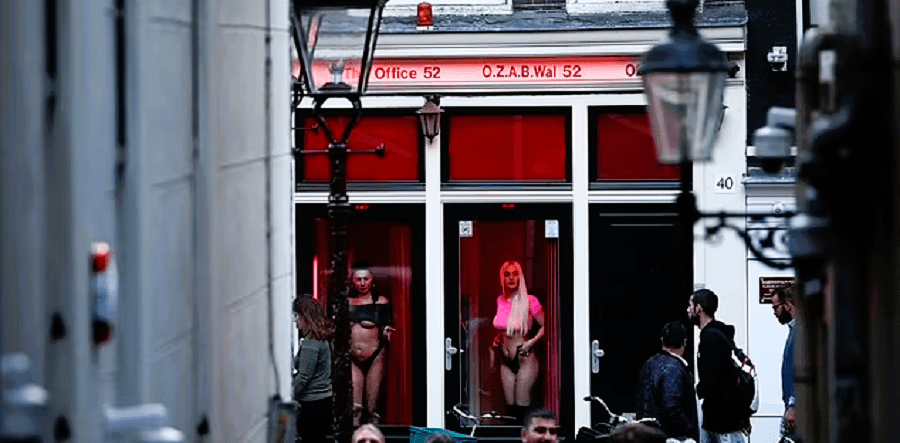
Before delving into the story of Adriana Valkenburg, it’s important to understand the context of prostitution in the Netherlands. While prostitution has historically been tolerated in the country, it was not officially recognized as a legal profession until 1988. In the Netherlands, prostitution is legal and regulated, with sex work recognized as a legitimate profession. The country adopted this approach to promote safety, health, and human rights for sex workers, while combatting exploitation and trafficking. Prostitution is subject to specific rules, including zoning laws that designate certain areas for legal sex work, and mandatory registration for sex workers.
Sex workers in the Netherlands have several rights: they can work in licensed brothels or independently, have access to healthcare, and are protected by labor laws. They are also entitled to legal protections against discrimination, violence, and abuse. Importantly, workers can access social security benefits, and the legal framework supports measures to reduce trafficking and exploitation.
While prostitution is legal, it’s highly regulated, with a focus on ensuring safety, autonomy, and respect for the rights of sex workers.
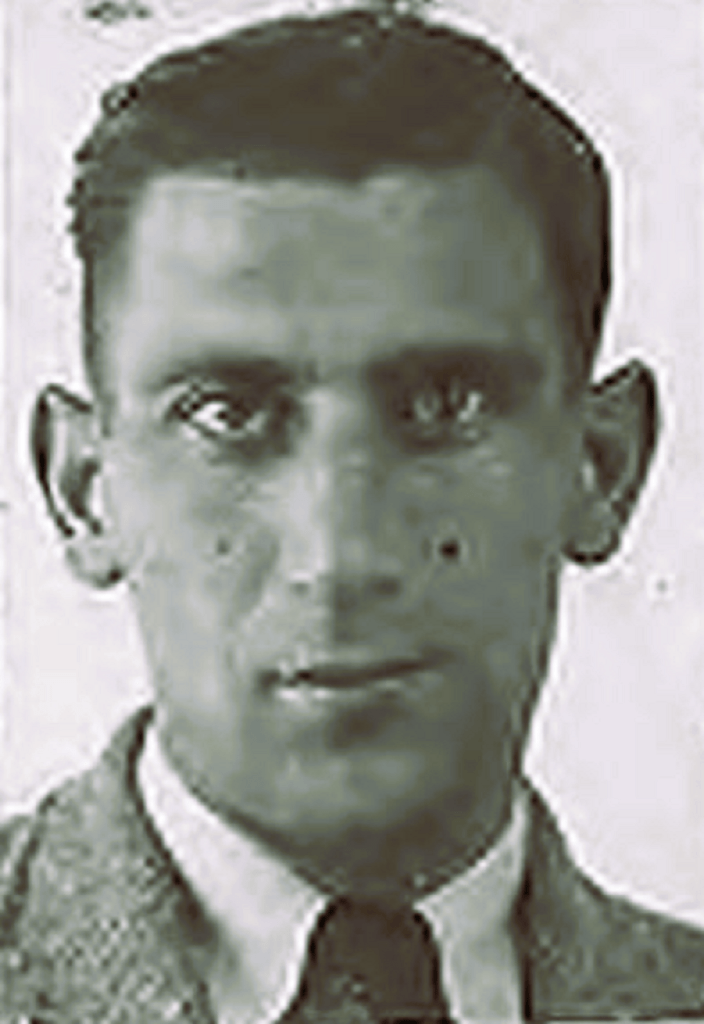
Adriana (Jeanne) Valkenburg
Adriana (Jeanne) Valkenburg was born on June 10, 1894, in Schiedam, the fourth of fourteen children to Jacob Valkenburg and Adriana Cornelia de Ligt. She had a troubled childhood marked by a violent, deeply religious father and a neglectful mother. Valkenburg’s first encounter with the law occurred in 1911 when she stole a gold ring.
At the age of 18, Valkenburg began working as a costume seamstress for the fashion warehouse Gerzon in Rotterdam. It was there that she met the wealthy shipbuilder Jan Pot in 1916. As his mistress, Valkenburg received financial support and a stable home. However, seeking to escape the pressures of Pot’s sexual demands, Valkenburg married the Jewish businessman Jacob Stibbe in 1916. Their marriage was short-lived, as Stibbe vanished without a trace, and Valkenburg never saw him again. A divorce was granted in 1928, and she spent six months staying with a sister in eastern Netherlands before reconnecting with Jan Pot when she moved to a boarding house in Amsterdam in 1918. Pot continued to support her financially.
In addition to her relationship with Pot, Valkenburg established a lucrative career as a prostitute and later as a brothel madam in Amsterdam and The Hague throughout the 1920s. Her business grew with the assistance of her partner Arnoldus (Nol) van Leersum, whom she had been with since 1919. However, Valkenburg eventually sought to rid herself of Van Leersum. Attempts to have him convicted of pimping failed, and after years of legal battles, Valkenburg was finally free from him in 1933—though it cost her much of her wealth.
In 1931, Valkenburg began a relationship with the Jewish businessman Jacob Acohen, initially a client who later became her lover. However, tragedy struck in March 1942 when Acohen was arrested by the SD (German security police) and ultimately murdered in Mauthausen concentration camp on June 29, 1942.
During World War II, Valkenburg displayed opportunistic tendencies. In 1942, she helped hide Jews in her home on Van Ostadestraat in exchange for payment. However, she was arrested in 1943 and subsequently became a collaborator, working as a “V-Frau” for the German occupiers. To avoid persecution, she sent the Jews she hid to the notorious Jewish Affairs Bureau, betraying dozens of people in the process.
In 1943, after a fellow collaborator was assassinated by the resistance, Valkenburg moved to Zuider Amstellaan 120, where she met handyman Joop Bom. They started a relationship and later married, working together in betraying Jews.
After the German retreat from the Netherlands during Operation Market Garden in September 1944, Valkenburg and her husband fled to Bergen op Zoom, where they were eventually arrested on March 31, 1945, at the request of Valkenburg’s sister. They were sent to Meilust Internment Camp.
It is estimated that Valkenburg betrayed as many as fifty Jews, including the relatives of her former lover Louis Ritmeester. At least 33 of her victims perished. In July 1947, Valkenburg was sentenced to death by the Special Court of Justice in Amsterdam, and her sentence was upheld by the Special Court of Cassation in 1949. However, she was pardoned, and her sentence was commuted to life imprisonment. Ten years later, in 1959, her sentence was reduced to 22 years, and she was released in January 1960 after serving almost 15 years.
Even during her imprisonment, Valkenburg maintained a reputation for causing trouble. A social work report from 1958 noted that she incited others in the prison, particularly in the sewing room of the Noordsingel penitentiary in Rotterdam. In her later years, Valkenburg lived a reclusive life at various addresses in Amsterdam and the border village of Putte (North Brabant). She had little contact with her family, except for her half-brother, Jules de Ligt, who cared for her. By the 1960s, Valkenburg had become severely obese and was confined to a wheelchair. She was admitted to the Algemeen Burger Gasthuis in Bergen op Zoom, where she passed away on February 19, 1968.
https://resources.huygens.knaw.nl/vrouwenlexicon/lemmata/data/Valkenburg
https://www.oorlogsbronnen.nl/tijdlijn/Adriana-Valkenburg/03/0004
Please support us so we can continue our important work.
Donation
Your readership is what makes my site a success, and I am truly passionate about providing you with valuable content. I have been doing this at no cost and will continue to do so. Your voluntary donation of $2 or more, if you are able, would be a significant contribution to the continuation of my work. However, I fully understand if you’re not in a position to do so. Your support, in any form, is greatly appreciated. Thank you. To donate, click on the credit/debit card icon of the card you will use. If you want to donate more than $2, just add a higher number in the box left from the PayPal link. Your generosity is greatly appreciated. Many thanks.
$2.00
 History of Sorts
Leave a comment