While Jewish identity was traditionally defined by religious beliefs and cultural heritage, the Nazi regime considered Jewishness a racial characteristic, making conversion to Christianity irrelevant in terms of escaping persecution. Many Jews sought refuge in Catholicism, hoping that baptism would provide protection from Nazi oppression. However, in most cases, conversion did not shield them from persecution, and in some instances, it even exposed them to greater danger.
Conversion as a Means of Survival
During the Holocaust, some Jewish individuals and families converted to Catholicism in a desperate attempt to evade Nazi persecution. Motivations for conversion varied; while some genuinely embraced Catholic faith, many saw it as a practical measure to obtain protection from Catholic institutions or to assimilate into non-Jewish society. The Catholic Church, under Pope Pius XII, provided shelter to thousands of Jews in convents, monasteries, and Vatican properties. However, Nazi racial laws did not recognize religious conversion, and anyone with Jewish ancestry remained a target regardless of religious affiliation.
Brazilian Visas
In March 1939, German Catholic leaders urged Pope Pius XII to request 3,000 immigration visas from Brazil for German Catholic Jews. This initiated two years of diplomatic exchanges, beginning with Cardinal Secretary of State Luigi Maglione instructing Nuncio Benedetto Aloisi Masella to appeal to President Getúlio Vargas. On June 20, 1939, Brazil’s Conselho de Imigração e Colonização (CIC) formally granted the visas.
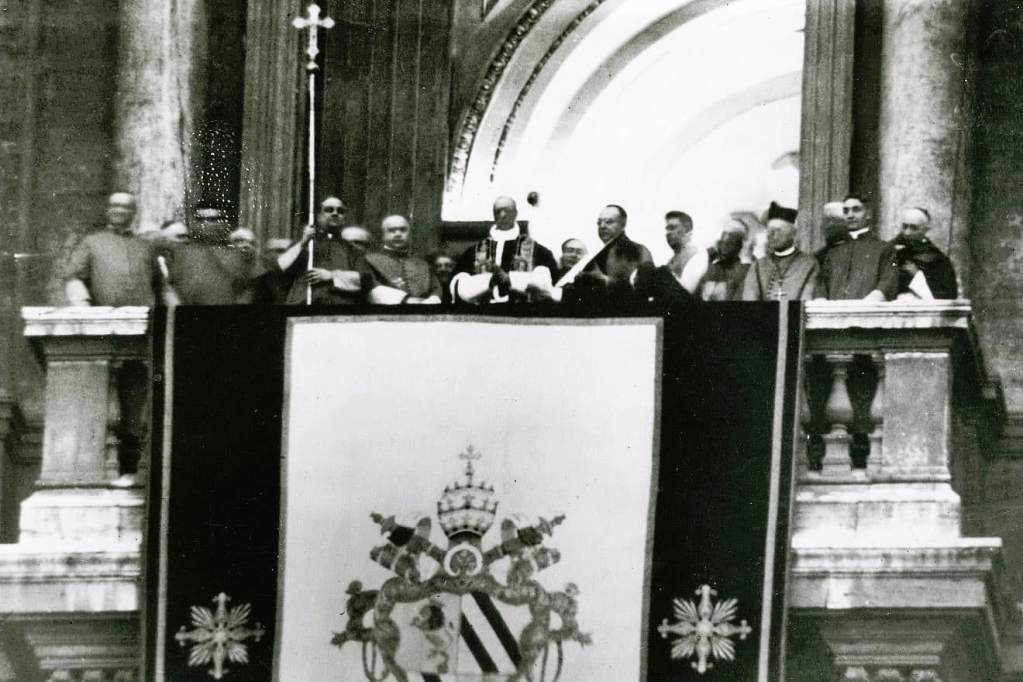
From the outset, the visas had strict and increasingly prohibitive conditions. Only baptized Jews could apply, requiring a recommendation from their country’s nunciature and proof of baptism before 1933. Protestant Jews were excluded. Additional hurdles included a monetary deposit in Banco do Brasil and approval from Brazil’s Propaganda Office in Berlin.
Amid mounting deportations of Vienna’s 60,000 Jews—at least 11,000 of whom were baptized—Cardinal Theodor Innitzer pleaded with Pius XII for urgent intervention in February 1941. Maglione’s response cited numerous obstacles, leading to further protests from Innitzer.
The program was suspended on September 3, 1940, and officially terminated on November 20, 1941. Spanish and Portuguese authorities had already denied transit visas, preventing travel to Brazil. Innitzer alerted the Vatican to escalating deportations in May 1942, prompting a final, unsuccessful appeal. In December 1941, Maglione lamented that some emigrants had shown “improper conduct,” likely referring to continued Jewish religious practices.
The total number of visas issued remains unclear. Only 1,000 were allocated to the Brazilian embassy in the Vatican, most of which were used. The remaining 2,000, controlled by Brazilian officials in Germany, were never utilized. Maglione’s response to the program’s cancellation was notably passive, offering only a detached diplomatic reply to the Brazilian ambassador.
Historian John Morley identifies four key takeaways: Pius XII’s primary concern for baptized Jews, his reliance on diplomacy as an end in itself, his reluctance to challenge Brazil’s reversal of its promise, and his use of prior failures to justify inaction on future Jewish aid proposals.
This revision
Cases of Persecuted Jewish Converts
Several prominent Jewish converts to Catholicism became victims of Nazi persecution.
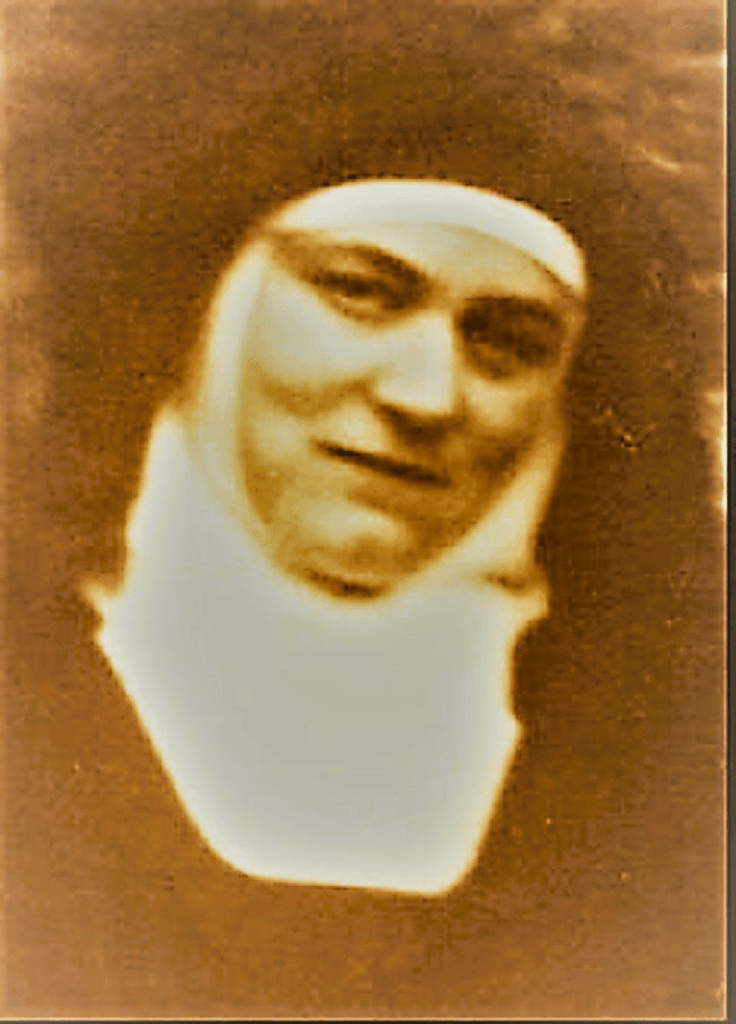
- Edith Stein (Saint Teresa Benedicta of the Cross)
One of the most well-known Jewish converts to Catholicism was Edith Stein, a German Jewish philosopher who became a Catholic nun. She entered the Discalced Carmelite order and took the name Teresa Benedicta of the Cross. Despite her religious devotion, she was arrested by the Gestapo in 1942, deported to Auschwitz, and executed in the gas chambers. Her conversion did not save her from the Nazi racial laws that deemed her Jewish by blood. The story of Edith Stein holds personal significance for me. It highlights the Nazis’ deep hatred of the Jewish people—an uncomfortable truth, but one that must be acknowledged. To them, “once a Jew, always a Jew.” It also reveals my own youthful ignorance. Echt, a small town in Limburg, is just 15 km from my birthplace. In my late teens and early twenties, I often visited a nightclub, The Majestic, mere steps from the monastery where Edith and Rosa Stein were arrested. I traveled there by train, unaware that decades earlier, the same station had been used to deport them to Camp Amersfoort. I was completely oblivious to all of that. - Johannes Oesterreicher
A Catholic priest of Jewish descent, Johannes Oesterreicher converted from Judaism before the Holocaust. Though he managed to survive the war, he faced intense persecution under Nazi rule. His case highlights how conversion did not erase Nazi racial classifications, which continued to target anyone of Jewish descent regardless of religious practice. - Father Jacques de Jésus (Lucien Bunel)
Although not Jewish himself, Father Jacques de Jésus provided shelter to Jewish children in his Catholic school in France. Among them were Jewish converts to Catholicism. He was arrested by the Gestapo, sent to Mauthausen concentration camp, and suffered greatly before his liberation. His case demonstrates how aiding converted Jews could still lead to Nazi persecution,
The Löb siblings
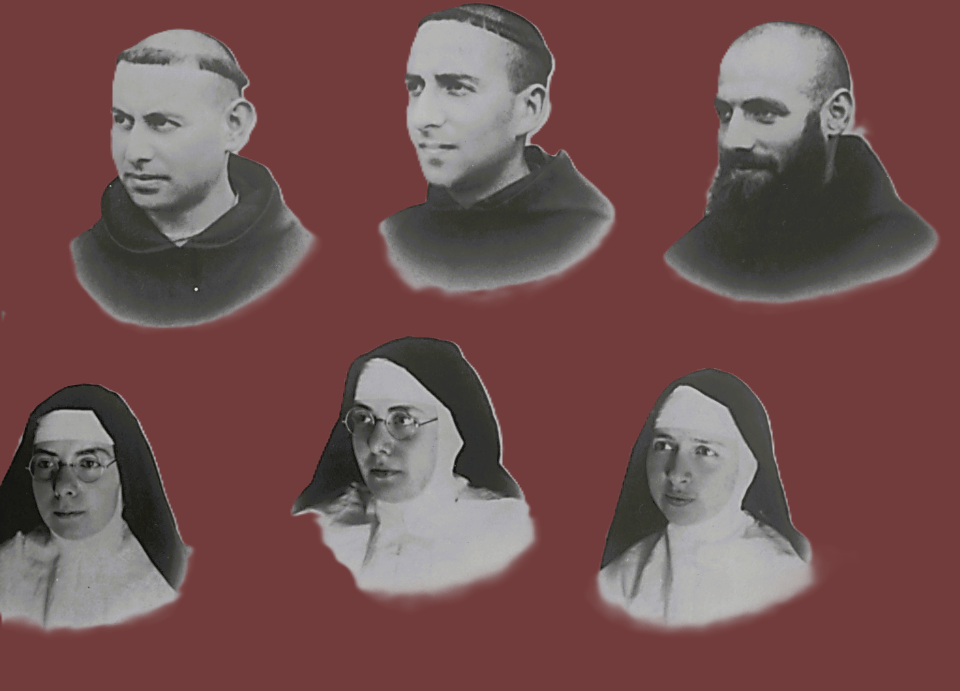
I am using this space specifically for the Löb siblings because their story is particularly poignant. At the top of the blog, there is a picture of the Löb siblings
In the 1920s, the Löb family from the Catholic south of the Netherlands presented a unique narrative of faith and resilience. Originally of Jewish heritage, the parents converted to Catholicism, and remarkably, six of their eight children chose religious vocations—a rare occurrence even in that devout region. Three brothers—George, Robert, and Ernst—joined the Koningshoeven Abbey in Berkel-Enschot, adopting the names Father Ignatius, Brother Linus, and Father Nivardus, respectively. Their sisters, Lina and the twins Dora and Louise, entered the nearby Koningsoord Trappist convent, becoming Mother Hedwig and Mother Maria Theresia.
The family’s dedication to their faith was profoundly tested during World War II. On August 2, 1942, following a public protest by Dutch bishops against the deportation of Jews, five of the Löb siblings were arrested by the Nazis. Despite warnings and opportunities to flee, they chose to stay, driven by a commitment to protect others; the brothers, in particular, were told that ten priests would be executed if they did not surrender. Tragically, George and Ernst were murdered in Auschwitz on August 19, 1942, while Robert, Lina, and Dora perished on September 30, 1942. Louise managed to evade capture, receiving assistance from the Jewish Council and a supportive doctor.
Their brother Hans, was a machine draftsman and electrical engineer by profession.. Hans refused to wear the Star of David and went into hiding. He was arrested during an attempt to escape at the Belgian border.He was murdered in Buchenwald, on 20 February 1945
The Church’s Role and Controversy
The Catholic Church had a complex role in the fate of converted Jews during the Holocaust. While many priests, nuns, and Catholic institutions protected Jewish converts, the Church itself maintained a cautious stance. Pope Pius XII’s response to the Holocaust remains a subject of historical debate. Though he facilitated efforts to save Jews in some instances, critics argue that the Vatican did not do enough to openly condemn Nazi actions and protect converted Jews.
The Holocaust exposed the grim reality that Nazi racial ideology did not recognize religious conversion. Many Jews who embraced Catholicism in hope of refuge still faced persecution, deportation, and death. Figures like Edith Stein illustrate how conversion did not grant immunity from Nazi genocide. While the Catholic Church played a role in sheltering many Jewish individuals, the overarching racial policies of the Nazis rendered religious conversion ineffective as a means of survival. The tragic fate of many converted Jews underscores the racial extremism of the Nazi regime and the limits of religious asylum during one of history’s darkest periods.
sources
https://www.joodsmonument.nl/en/page/130465/hans-l%C3%B6b
https://en.wikipedia.org/wiki/Conversion_of_Jews_to_Catholicism_during_the_Holocaust
chrome-extension://efaidnbmnnnibpcajpcglclefindmkaj/https://www.yadvashem.org/odot_pdf/Microsoft%20Word%20-%205711.pdf
https://archives.cjh.org/agents/families/13662
https://www.jns.org/holocaust-holocaust-survivors/pope-pius-xii/23/9/19/319911/
Please support us so we can continue our important work.
Donation
Your readership is what makes my site a success, and I am truly passionate about providing you with valuable content. I have been doing this at no cost and will continue to do so. Your voluntary donation of $2 or more, if you are able, would be a significant contribution to the continuation of my work. However, I fully understand if you’re not in a position to do so. Your support, in any form, is greatly appreciated. Thank you. To donate, click on the credit/debit card icon of the card you will use. If you want to donate more than $2, just add a higher number in the box left from the PayPal link. Your generosity is greatly appreciated. Many thanks.
$2.00
 History of Sorts
Leave a comment