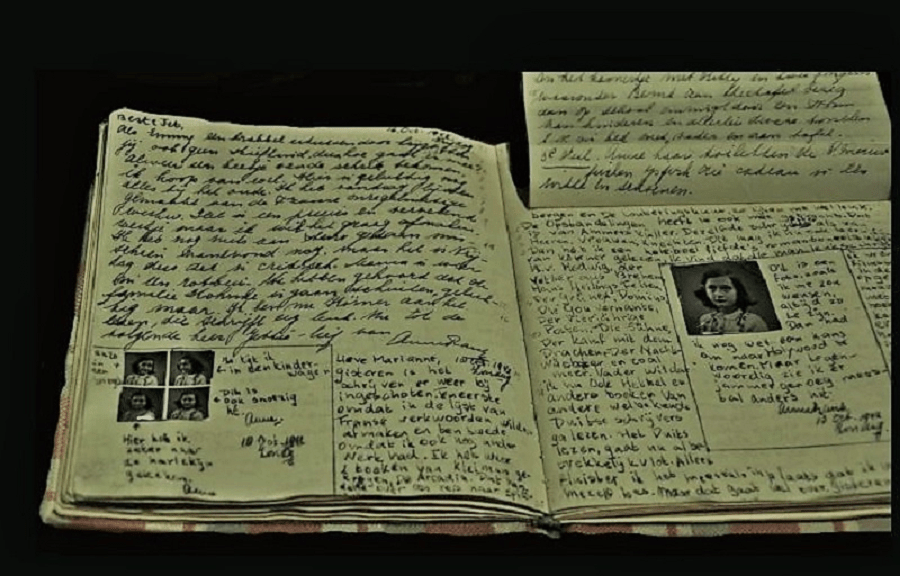
Anne Frank’s The Diary of a Young Girl is one of World War II’s most famous personal accounts, providing a powerful and intimate look into the life of a Jewish teenager in hiding. However, many readers are unaware that the original version of Anne’s diary contained passages about her developing sexuality, curiosity about the human body, and reflections on love and attraction—sections that were edited out in earlier editions by her father, Otto Frank, and publishers who sought to present a more sanitized version of her experiences.
Posthumously published on June 25, 1947, The Diary of Anne Frank when her father, Otto Frank, printed the first 1,500 copies in Dutch. A year earlier, in 1946, Otto Frank had transcribed the diary into German. That same year, the manuscript caught the attention of Dutch historian Dr. Jan Romein and his wife, Annie Romein-Verschoor. Deeply moved by Anne’s words, Annie Romein attempted to find a publisher but was unsuccessful. It led Jan Romein to write an article for the newspaper Het Parool, in which he reflected on the diary’s significance:
“This apparently inconsequential diary by a child, this ‘de profundis’ (a reference to Psalm 130) stammered out in a child’s voice, embodies all the hideousness of fascism—more so than all the evidence presented at Nuremberg combined.”
— Jan Romein, Children’s Voice, Het Parool, April 3, 1946
Contact Publishing in Amsterdam was interested in the manuscript and approached Otto Frank, requesting a Dutch draft for review. While they offered to publish it, they advised Otto that Anne Frank’s discussions about her emerging sexuality might be considered controversial by more conservative audiences and recommended making some edits.
When Otto Frank first published The Diary of a Young Girl in 1947, he removed certain passages that he deemed too personal, particularly those concerning Anne’s thoughts on puberty and sexuality and her sometimes critical remarks about her mother. These omitted sections were later restored in The Definitive Edition, published in 1995, allowing readers to see a more complete and unfiltered version of Anne’s inner world.
One of the most striking parts of Anne’sAnne’s diary is her candid discussion of her own body. She describes her fascination with anatomy, including the changes she experiences during puberty. She openly writes about menstruation, calling it a “sweet secret” that makes her feel more connected to womanhood. She describes her curiosity about female anatomy in one passage, even mentioning an instance when she explores her own body. Many teenage girls have these reflections—rarely acknowledged in historical or literary discussions.
Anne’s Thoughts on Love and Desire
Anne also writes about her attraction to both boys and girls, showing a fluidity in her feelings that was progressive for her time. While much of the diary focuses on her deepening romantic interest in Peter van Pels, the teenage boy in hiding with her family, she also recalls an earlier fascination with a female friend named Jacque. In a passage from March 1944, Anne wrote that she once felt a strong desire to kiss Jacque, describing the moment as exciting yet confusing. This admission of same-sex attraction is significant, as it challenges the often rigid narratives of historical figures’ sexuality and underscores the complexity of human desire.
Her relationship with Peter is also explored with depth and sincerity. She details their growing closeness, the excitement of their first kiss, and her yearning for affection. However, Anne is also deeply introspective, questioning whether her feelings for Peter are genuine love or merely a byproduct of their isolated circumstances. Given her young age, this level of emotional maturity and self-awareness is remarkable.
Why These Passages Matter
The previously censored sections of Anne’s diary reveal a side of her that makes her even more relatable to modern readers. They show that, beyond being a historical icon, she was a teenager experiencing the same thoughts, desires, and confusions that many young people go through. Her reflections on love, attraction, and body make her feel more real than just a symbol of tragedy.
Additionally, these parts of the diary challenge outdated notions about what is appropriate in literature, particularly when it comes to young women expressing their thoughts on sexuality. For decades, discussions about Anne Frank focused primarily on her historical significance and tragic fate. By embracing the full depth of her diary, including its naughtier aspects, we allow Anne to be seen as a victim of history and as a complex and evolving young person.
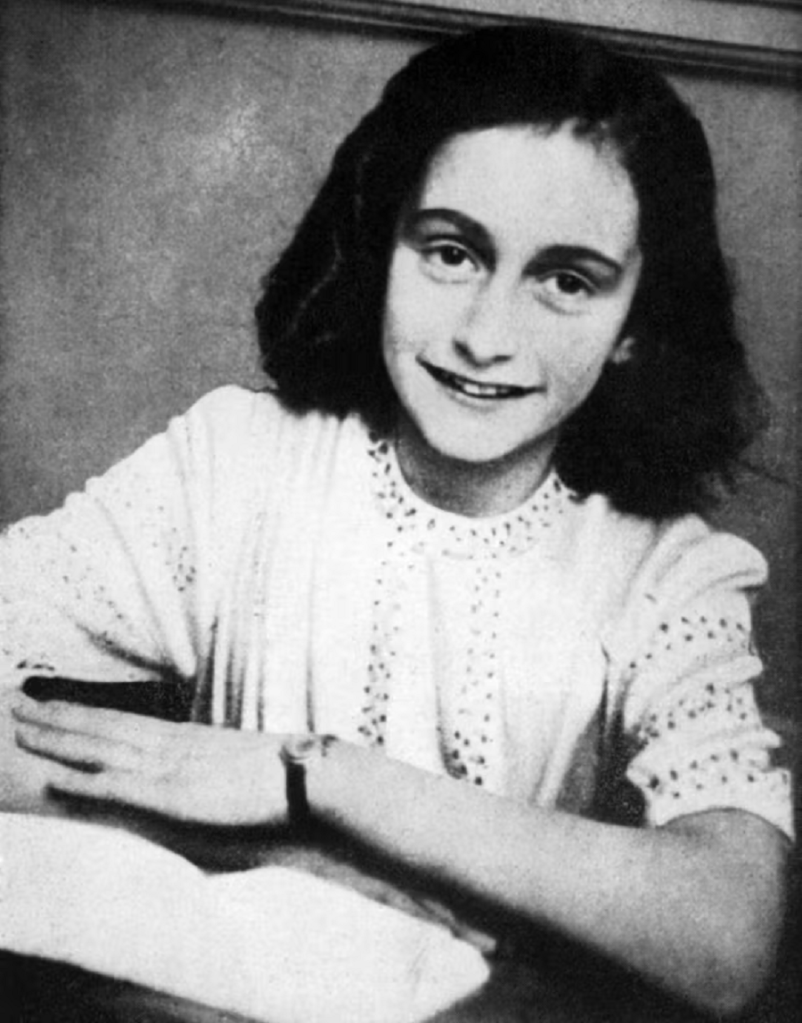
Below are just some of those recovered lines from Anne Frank’s diary.
The Jokes
“Do you know why the German girls of the armed forces are in the Netherlands?” she wrote. “As a mattress for the soldiers.”
“A man comes home at night and notices that another man shared the bed with his wife that evening. He searches the whole house, and finally also looks in the bedroom closet. There is a totally naked man, and when that one man asked what the other was doing there, the man in the closet answered: ‘You can believe it or not but I am waiting for the tram.’”
“A man had a very ugly wife and he did not want a relationship with her. One evening, he came home and he saw his friend lying in bed with his wife and the man said: ‘He does and I have to!!!!’”
“A man and a woman had a relationship, and after a few months the woman’s belly was getting disturbingly big. Then, the man called a doctor who said: ‘It’s just air, Mrs., just air!!!’ The man replied: ‘I am not pumping air, am I?’”
Her Thoughts About Sex
About having the first period. “a sign that she is ripe to have relations with a man but one doesn’t do that of course before one is married.”
“Until I was 11 or 12, I didn’t realize there was a second set of labia on the inside, though you couldn’t see them,” she wrote at one point. “What’s even funnier is that I thought urine came out of the clitoris.”
“I sometimes imagine that someone might come to me and ask me to inform him about sexual matters. How would I go about it?” She continued to depict what she imagined were the “rhythmical movements” involved, as well as the “internal medicament” or contraception.
It was clears she was well aware of adult topics like prostitution: “All men, if they are normal, go with women, women like that accost them on the street and then they go together. In Paris they have big houses for that. Papa has been there.”
I can understand why these pages weren’t included in the published version of her diary, because the publisher was probably right in the assumption that it may have offended some people. On the other hand though it shows that this teenage girl had a sense of humor and an interest in sexuality, just like any other teenage girl or boy has.
I know I referred to Anne Frank’s more naughty side, but really all this shows that she was an ordinary teenager, who had a very sad but extraordinary story to tell.
Sources
https://edition.cnn.com/2018/05/15/world/anne-frank-diary-pages-revealed-trnd/index.html
https://www.biography.com/history-culture/anne-frank-diary-secret-pages
Please support us so we can continue our important work.
Donation
Your readership is what makes my site a success, and I am truly passionate about providing you with valuable content. I have been doing this at no cost and will continue to do so. Your voluntary donation of $2 or more, if you are able, would be a significant contribution to the continuation of my work. However, I fully understand if you’re not in a position to do so. Your support, in any form, is greatly appreciated. Thank you. To donate, click on the credit/debit card icon of the card you will use. If you want to donate more than $2, just add a higher number in the box left from the PayPal link. Your generosity is greatly appreciated. Many thanks.
$2.00
 History of Sorts
Leave a comment