
On May 30, 1943, the SS assigned Josef Mengele to Auschwitz, reportedly at his own request. He served as one of the camp physicians at Auschwitz-Birkenau—the largest of the Auschwitz complex—which also functioned as a primary killing center for Jews deported from across Europe. Among his various duties, Mengele was responsible for overseeing the Zigeunerlager (“Gypsy camp”) at Birkenau.
Beginning in 1943, nearly 21,000 Romani men, women, and children—derogatorily labeled Zigeuner—were deported to Auschwitz and confined in this section of the camp. On August 2, 1944, when the Zigeunerlager was liquidated, Mengele participated in selecting 2,893 Romani prisoners for execution in the Birkenau gas chambers. Shortly afterward, he was appointed chief physician at Auschwitz-Birkenau (also known as Auschwitz II). In November 1944, he was reassigned to the SS hospital at Birkenau.
The Zigeunerfamilienlager: Context and Purpose
The Zigeunerfamilienlager was a specific section of Auschwitz-Birkenau designated for the internment of Romani families. Unlike other areas of the camp where families were often separated, in this section, the Nazis kept Romani men, women, and children together, under the pretense of humane treatment. In reality, this was a logistical measure intended to facilitate medical experimentation and mass extermination. The camp housed over 20,000 Romani prisoners, many of whom perished due to starvation, disease, medical experiments, or execution.
Mengele’s Arrival at Auschwitz
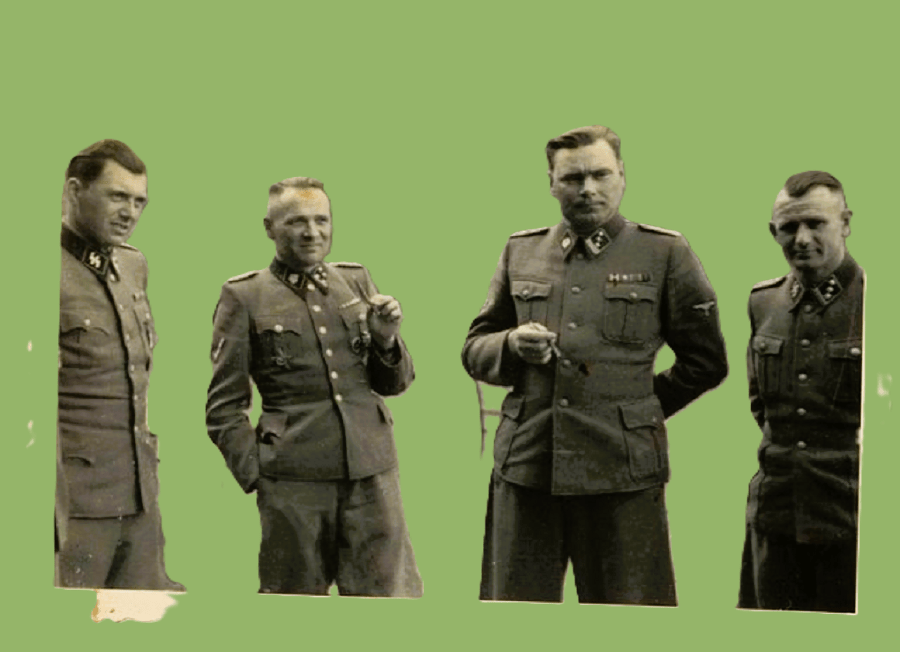
Josef Mengele, a trained physician and anthropologist with a doctorate in genetics, was posted to Auschwitz in May 1943. He was a member of the SS and had developed strong ideological convictions aligning with Nazi racial theory. His scientific background and willingness to participate in inhumane experiments made him an ideal candidate in the eyes of his superiors. Shortly after his arrival, he was appointed chief medical officer of the Zigeunerfamilienlager.
Medical Atrocities and Human Experimentation
As chief medical officer, Mengele oversaw the health and selection processes in the Zigeunerfamilienlager. But his medical duties quickly transformed into a regime of systematic cruelty. Mengele conducted or supervised experiments on inmates, including children, often without anesthesia and with no regard for human suffering. His notorious fascination with twins and congenital anomalies led him to perform grotesque procedures in the name of research. The Romani inmates, already marginalized by the Nazi regime, became frequent targets for these pseudoscientific studies.
Mengele’s actions were underpinned by a racist ideology that dehumanized Romani people and categorized them as racially inferior. He did not consider them as individuals but as specimens for the advancement of Nazi “racial hygiene.” These experiments led to permanent injury, psychological trauma, and death for countless victims.
The Final Liquidation of the Camp
By mid-1944, the Nazi leadership decided to eliminate the Zigeunerfamilienlager entirely. On August 2, 1944, in what is now remembered as Zigeunernacht (Gypsy Night), approximately 2,900 remaining inmates were gassed in a single night. Mengele played a key role in the selections leading up to this event. His medical expertise was manipulated to determine who would be temporarily spared for labor or experimentation, and who would be immediately exterminated.
Legacy and Historical Impact
Mengele’s tenure as chief medical officer at the Zigeunerfamilienlager embodies the lethal convergence of racist ideology, medical authority, and totalitarian power. His actions stand as stark examples of how science and medicine can be perverted when stripped of ethics and humanity. After the war, Mengele evaded justice for decades, fleeing to South America and living under various aliases until his death in 1979.
The horrors of the Zigeunerfamilienlager remain a crucial part of Holocaust history. The Romani genocide, often overshadowed by other aspects of Nazi persecution, demands recognition not only as a tragedy of enormous scale but as a warning of what happens when hate, bureaucracy, and pseudoscience are allowed to rule.
Josef Mengele’s appointment as chief medical officer of the Zigeunerfamilienlager was not merely a bureaucratic assignment—it was a direct route to some of the most notorious war crimes of the 20th century. His tenure highlights the catastrophic consequences of ideology-driven science and the moral collapse that enabled genocide. Remembering this history is essential to honoring the victims and ensuring that such atrocities never occur again.
The Liquidation of the Zigeunerlager at Auschwitz-Birkenau

On the evening of August 2, 1944, following the deportation of Roma and Sinti prisoners deemed fit for forced labor, the remaining inmates of the so-called Zigeunerlager (“Gypsy camp”)—primarily women, children, and the elderly—were loaded onto trucks and taken to the gas chambers of Crematorium V. As the crematorium was inoperative at the time, the bodies were burned in nearby open pits.
For many years, it was widely accepted that 2,897 people were murdered during the liquidation of the Zigeunerlager that night. However, recent research by historians at the Auschwitz-Birkenau State Museum indicates that the actual number of victims was significantly higher: between 4,200 and 4,300 Roma and Sinti were killed.
A Lagersperre (camp lockdown) was imposed during the operation. According to witness testimony, 50 Jewish prisoners from the Sonderkommando—the forced labor unit responsible for handling the bodies of those murdered in the gas chambers—were brought into the Zigeunerlager to assist in the operation. They entered the barracks and began forcing the Roma out. Many prisoners realized they were being led to their deaths, but with most being women, children, and the elderly, active resistance was impossible.
Tadeusz Joachimowski, a Polish prisoner and scribe in the Zigeunerlager, recounted:
“When darkness fell, about eight trucks arrived and pulled up in front of the blocks. They took the Gypsies away in turn amidst unbelievable screaming, crying, and cursing, and drove them to the crematorium. The trucks returned a dozen or more times. Apparently, as I heard, the Gypsies realized what was going on and attacked the SS men, who used their weapons, because shouts and the sound of gunshots reached our ears.”
(APMA-B, Statements, vol. 13, 56–80)
Marian Perski, a Polish prisoner working in the canteen near the family camp, recalled:
“We could hear the cracking of the whips, multilingual cursing, sobbing, and snarling. From time to time, a pistol shot rang out. The defenseless Gypsies were resisting, running between blocks, hiding in the barracks. The stubborn ones were beaten and kicked mercilessly. There were no young people left; they had already been transferred to other camps. Most of those who remained were defenseless women, children, and the sick.”
(APMA-B, Statements, vol. 61, 197–200)
Józef Piwko, another Polish prisoner, described:
“At 20:30, the Gypsy camp was sealed off. German guards and block supervisors with clubs were brought in from other parts of the camp. Trucks arrived, into which the Gypsies were forced with blows. Around eleven at night, vehicles drove to the Gypsy hospital, where 50–60 people were loaded onto each. The doctors were compelled to assist under threat of violence. The cries, the howling of the Gypsies, echoed throughout the camp. Dr. Mengele was present during the entire operation. Shortly after midnight, the camp stood empty.”
(APMA-B, Statements, vol. 46, 21–29)
Alfred Galewski, a Belgian Jewish prisoner and physician in the Zigeunerlager, testified:
“Throughout the operation, Dr. Mengele remained at the Gypsy hospital. By the early hours of August 3, the entire Gypsy camp had been emptied.”
(APMA-B, Höss Trial, vol. 2, 20–23)
The liquidation of the Zigeunerlager did not mark the end of the mass murder of Roma and Sinti at Auschwitz. On September 26, 1944, 200 Sinti children were deported from Buchenwald to Auschwitz and murdered in the gas chambers upon arrival. In October 1944, nearly 2,000 additional individuals—many of them Roma and Sinti previously held at Auschwitz and transferred elsewhere—were returned and subsequently killed.
In total, more than 20,000 Roma and Sinti perished at Auschwitz-Birkenau, victims of gas chambers, starvation, disease, and the inhumane medical experiments conducted by Dr. Josef Mengele.
sources
https://encyclopedia.ushmm.org/content/en/article/josef-mengele
https://hmd.org.uk/learn-about-the-holocaust-and-genocides/nazi-persecution/the-roma-genocide
https://hmd.org.uk/learn-about-the-holocaust-and-genocides/nazi-persecution/the-roma-genocide
Please support us so we can continue our important work.
Donation
Your readership is what makes my site a success, and I am truly passionate about providing you with valuable content. I have been doing this at no cost and will continue to do so. Your voluntary donation of $2 or more, if you are able, would be a significant contribution to the continuation of my work. However, I fully understand if you’re not in a position to do so. Your support, in any form, is greatly appreciated. Thank you. To donate, click on the credit/debit card icon of the card you will use. If you want to donate more than $2, just add a higher number in the box left from the PayPal link. Your generosity is greatly appreciated. Many thanks.
$2.00
 History of Sorts
Leave a comment