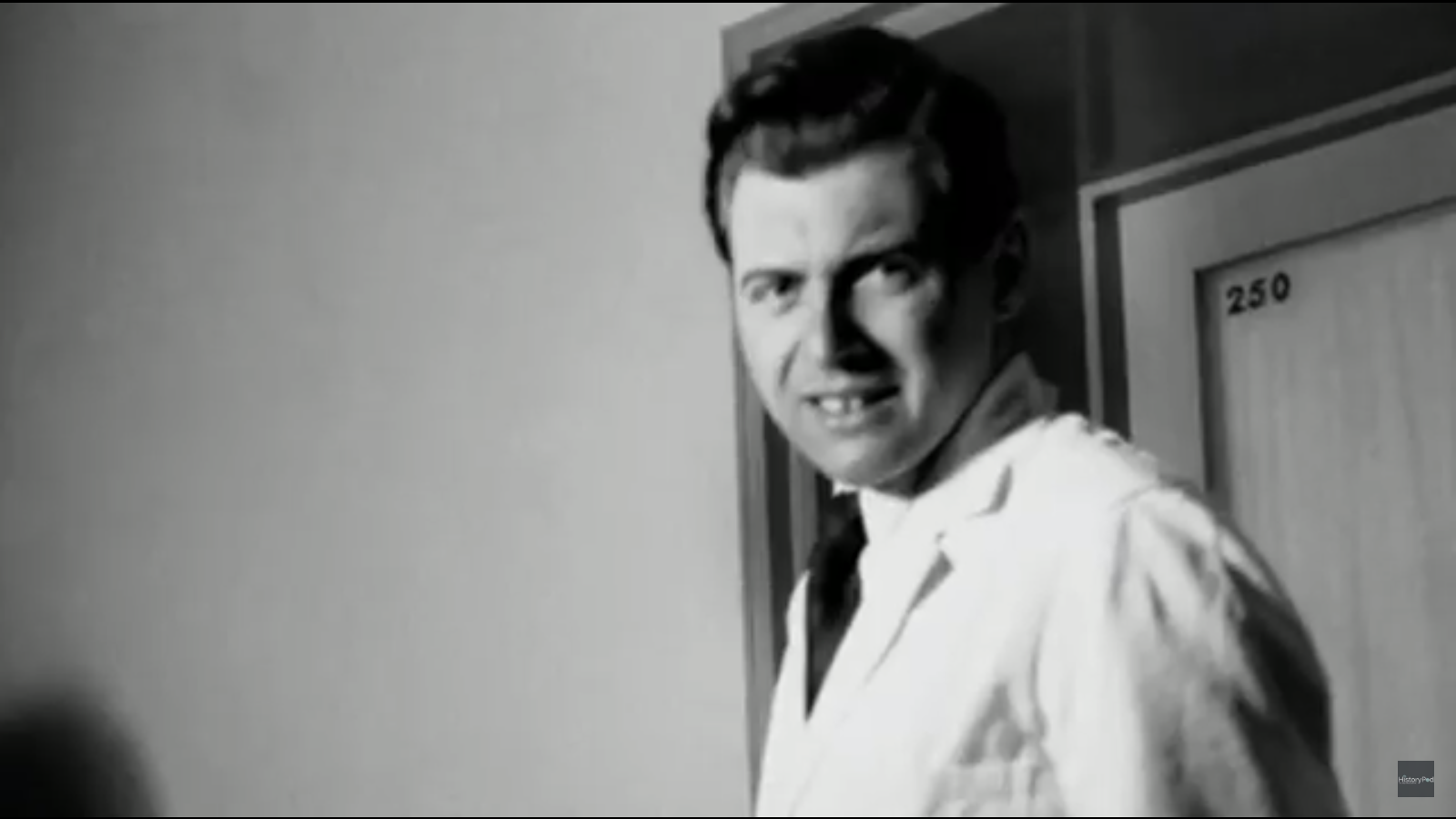
On May 30, 1943, Dr. Joseph Mengele began his “work” at Auschwitz. Unlike other camp physicians, who were assigned to prisoner selections according to a rotating schedule, Mengele actively sought this duty. He was the only doctor to volunteer for selections when new transports arrived by train and would sometimes ask to take over another physician’s assigned shift, deriving evident satisfaction from the process.
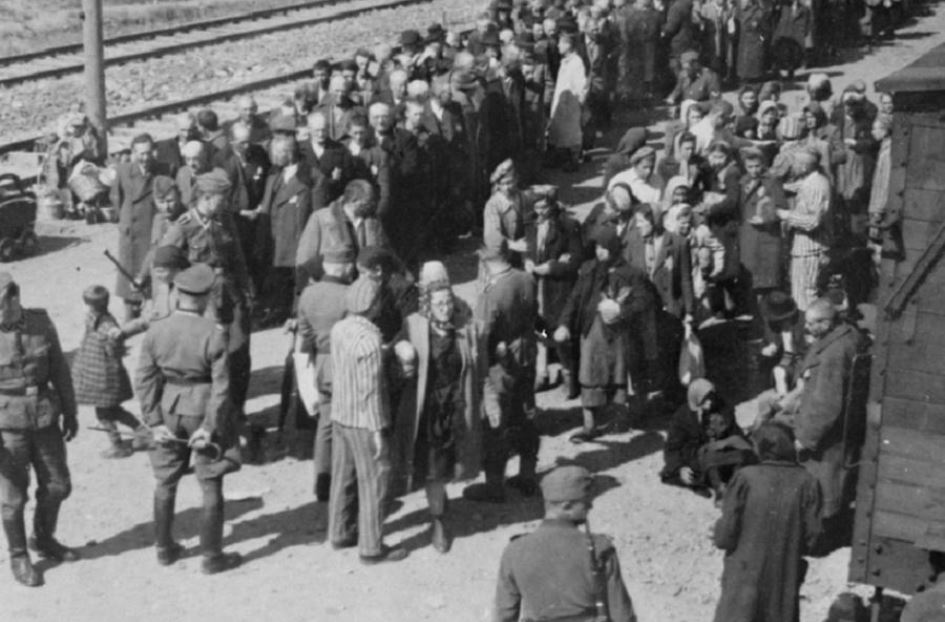
Mengele came from a highly privileged background and held both a PhD in Anthropology and a Doctorate in Medicine. At Auschwitz, he made weekly visits to the hospital barracks, where he selected prisoners for death by sending those who had not recovered after two weeks of confinement to the gas chambers.
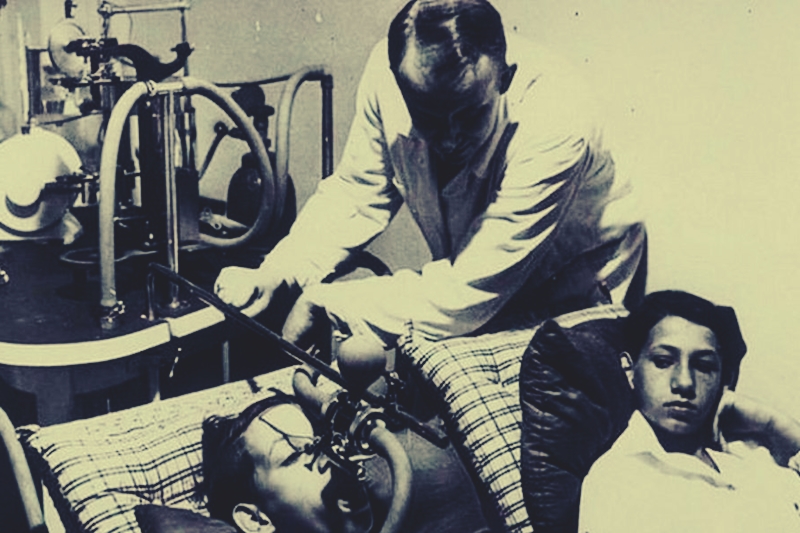
Auschwitz provided Mengele with the opportunity to pursue his anthropological research through human experimentation. Under the protection of the Nazi regime, he was able to conduct experiments of extreme cruelty without fear of punishment.
He was particularly interested in twins, whom he subjected to weekly examinations and detailed measurements of their physical characteristics, either personally or through his assistants. Experiments on twins included unnecessary amputations, the deliberate infection of one twin with typhus or other diseases, and the transfusion of blood from one twin to the other.
On May 30, 1943, the SS assigned Joseph Mengele to Auschwitz, although there is evidence suggesting that he personally requested this posting. He served as one of the camp physicians at Auschwitz-Birkenau, the largest of the Auschwitz camps and a primary killing center for Jews deported from across Europe. In addition to his other duties, Mengele was responsible for Birkenau’s Zigeunerlager (“Gypsy camp”), where nearly 21,000 Romani men, women, and children were imprisoned beginning in 1943.
When the Zigeunerlager was liquidated on August 2, 1944, Mengele participated in the selection of 2,893 Romani prisoners who were sent to the gas chambers at Birkenau. Shortly thereafter, he was appointed chief physician of Auschwitz-Birkenau (Auschwitz II). In November 1944, he was reassigned to the SS hospital at Birkenau.
On January 17, 1945, Mengele was transferred to the Gross-Rosen concentration camp in Lower Silesia, taking with him two boxes containing records and specimens from his experiments. He escaped from Gross-Rosen on February 18, 1945—approximately one week before the arrival of Soviet forces—by disguising himself as a Wehrmacht soldier.
In June 1945, Mengele was briefly detained by an American patrol while traveling under his own name. However, due to the poor distribution of wanted criminal lists and his lack of the SS blood group tattoo, he was released. He subsequently worked as a farm laborer before fleeing Germany in 1949.
On April 17, 1949, Mengele traveled to Genoa with the assistance of a network of former SS members. Using the alias “Helmut Gregor,” he obtained a passport from the International Committee of the Red Cross and sailed to Argentina in July 1949.
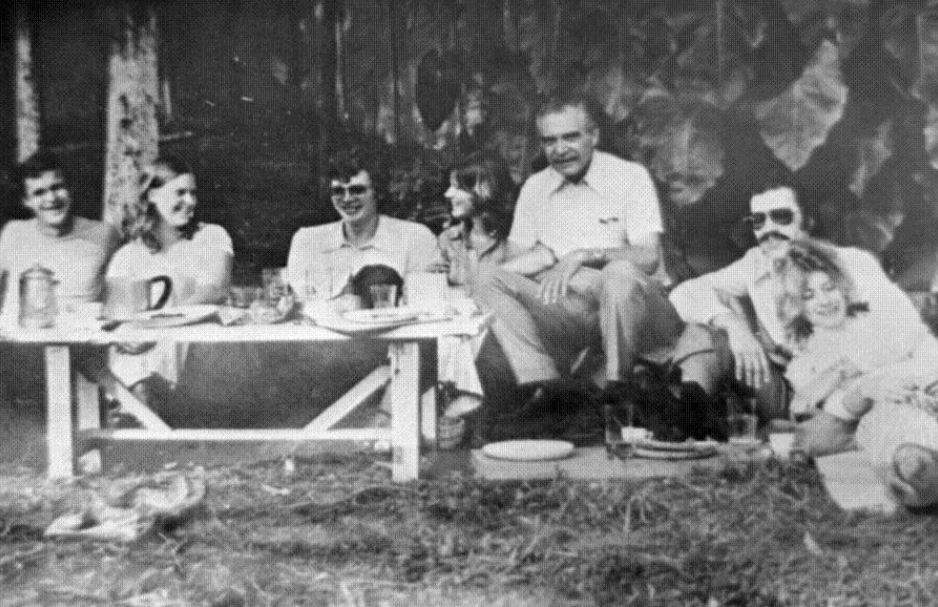
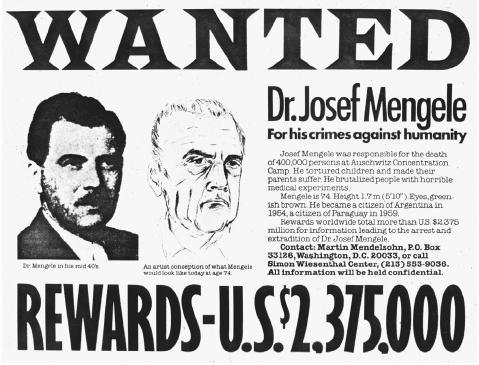
Despite many attempts to catch him, he was able to elude justice. I have always been skeptical about this. I think that the Allies never really wanted to catch him because if they had, it would have been easy enough to do so. He was more or less hiding in plain sight in Argentina.
Eventually, in 1979, he drowned while swimming in the Atlantic Ocean after suffering a stroke.
Donation
Your readership is what makes my site a success, and I am truly passionate about providing you with valuable content. I have been doing this at no cost and will continue to do so. Your voluntary donation of $2 or more, if you are able, would be a significant contribution to the continuation of my work. However, I fully understand if you’re not in a position to do so. Your support, in any form, is greatly appreciated. Thank you. To donate, click on the credit/debit card icon of the card you will use. If you want to donate more than $2, just add a higher number in the box left from the PayPal link. Your generosity is greatly appreciated. Many thanks.
$2.00
Sources
https://encyclopedia.ushmm.org/content/en/article/josef-mengele
https://www.bbc.com/news/magazine-30933718
 History of Sorts
Leave a comment