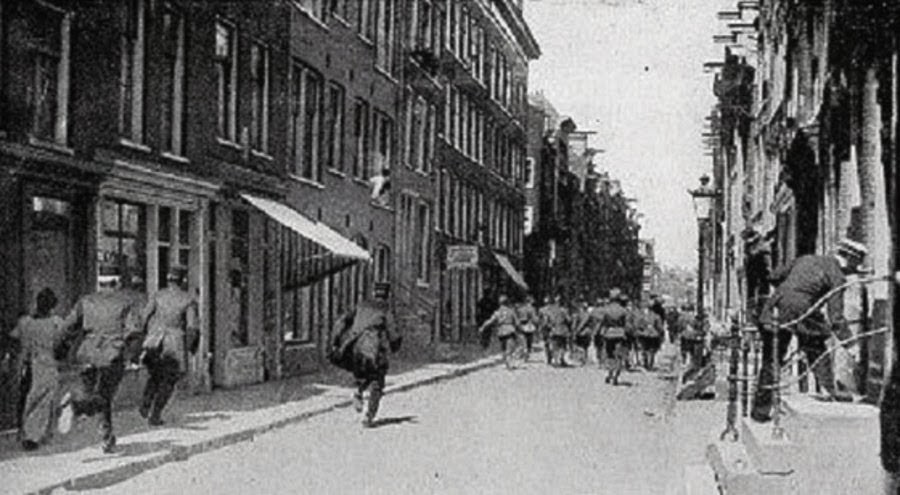
The Netherlands remained neutral during the First World War. However, that did not mean the country was unaffected by the conflict. In the course of 1916, for instance, food shortages began to emerge. In Amsterdam, this led to the so-called Potato Riot in the summer of 1917.
Potatoes were the staple food of the common people at the time. During the First World War, their consumption increased even further because grain supplies from the United States became increasingly irregular. When, at a certain point in the summer of 1917, there were almost no potatoes left to buy in the Jordaan neighborhood, the workers and their wives grew furious. This anger intensified even further when they saw ships loaded with potatoes docked in the Prinsengracht. However, those potatoes were not meant for the people of Amsterdam. They were destined for the army or, as a result of international agreements, were being exported to England and Germany. In exchange for the potatoes, the Dutch government received coal from Germany, and from the English, they received increasingly scarce grain.
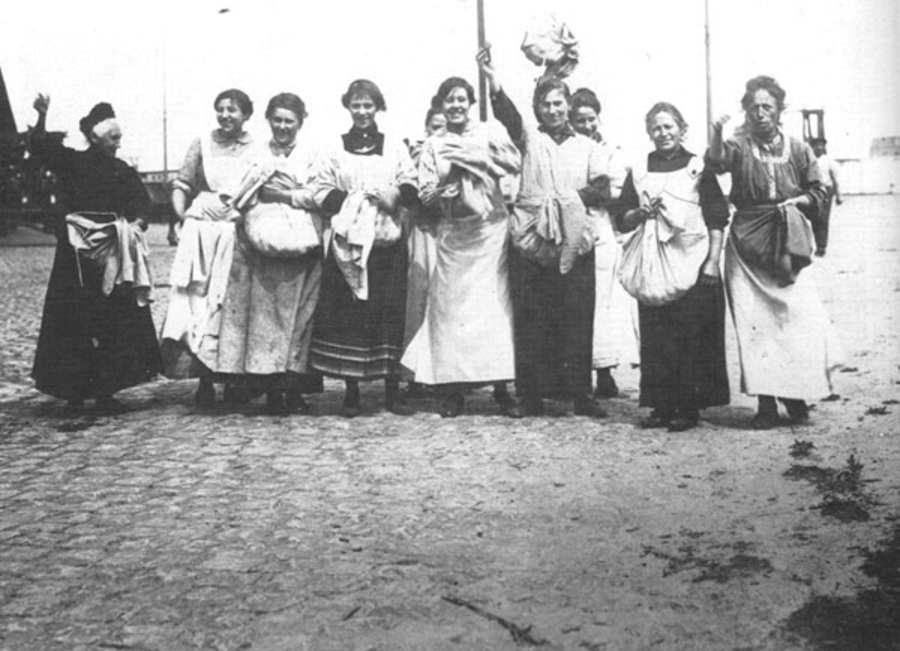
At the end of June 1917, several working-class women tried to seize the potatoes intended for export. However, the police intervened. The women then marched to the city hall, where the social-democratic alderman Floor Wibaut received five of them. The alderman did not make the Amsterdam women very happy when he told them there was plenty of rice to eat. “Good food, and cheap,” according to the alderman.
Too Expensive
Wibaut managed to calm the working-class women down a little by assuring them that new potatoes from the fresh harvest would arrive in Amsterdam within a few days. Those potatoes did indeed arrive, but when it turned out they were far too expensive for ordinary workers to buy, all hell broke loose. An alderman tried to soothe the situation again by pointing out an extra supply of available rice to the women. One of the women reportedly replied:
“If I serve that to my husband, I’ll get a beating!”
Potatoes Only for Export
International tensions eased somewhat in the spring of 1917, but the food situation in our country grew steadily worse. Coffee and other colonial goods were now also becoming scarce due to restrictions on shipping to the Dutch East Indies. As for potatoes, history repeated itself from the previous year: prices skyrocketed, and here and there, not a single potato could be found for sale. And this was happening while exports continued as normal.
This time, the outrage over the situation was expressed much more fiercely. The tone seemed to have been set by the actions in February against the fuel shortage. Working-class women refused to take it any longer and took possession of the supplies. At the end of June, the bomb burst; a week of violence broke out that would go down in history as the “Potato Riot.” Outside Amsterdam, including in Weesp, Kampen, Hilversum, and Hengelo, unrest had already arisen earlier when potato merchants had to turn customers away empty-handed. In all these towns, groups of women marched to the town hall to demand action. Sometimes they succeeded. In Hilversum, for instance, the supplies were distributed. But usually, they were told that the local government could do nothing. Women vented their anger by storming potato carts (Zaandam), and in Rotterdam, they emptied barges bound for England.
On June 28, a barge carrying potatoes destined for the military was being unloaded on the Prinsengracht. When a group of women tried to seize the cargo, the police intervened. The women then marched to the city hall and managed to speak with Alderman F.M. Wibaut. Wibaut assured them that within a few days, there really would be plenty of potatoes available from the new harvest. Fine words butter no parsnips, however, and on Saturday, June 30, the women returned to the city hall once more. New potatoes had arrived, but they were far too expensive, and “they’re being bought up by the upper-class ladies right under our noses,” was the working-class women’s complaint. Alderman N.M. Josephus Jitta replied that the local government had asked for permission to introduce rationing, but that the national government had not granted the request. However, an extra supply of rice had been provided. Why couldn’t the women just eat that for a few days? “If I serve that to my husband, I’ll get a beating!” one of them is said to have replied..
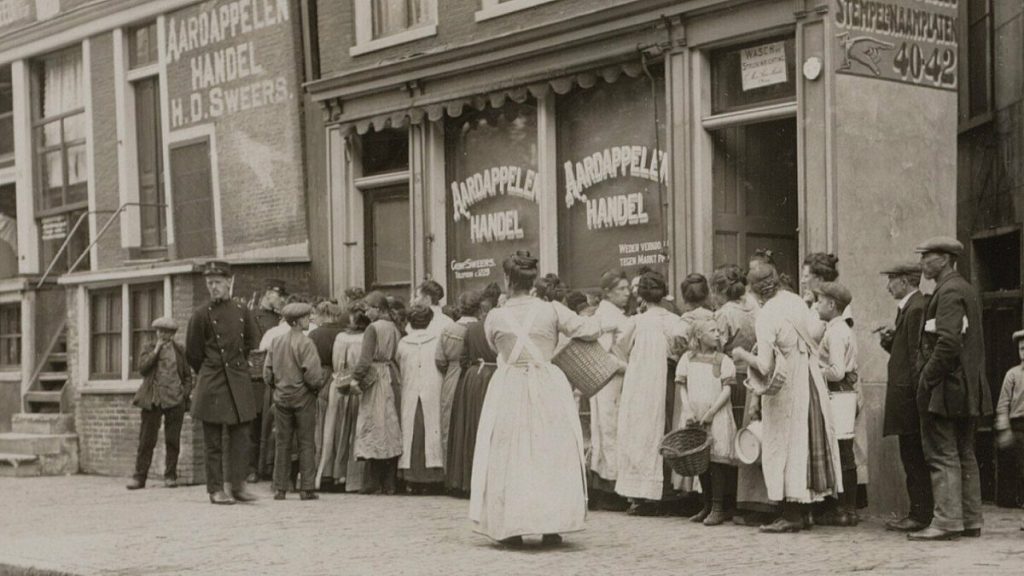
On Monday, July 1, the protest expanded further, and shops and warehouses were looted. The Social Democratic Party (SDP), a predecessor of the Communist Party of the Netherlands, sided with the demonstrators and organized a large protest, which ended in a violent confrontation with law enforcement.
Initially, the police were relatively powerless against the large-scale riot, but on July 5, a harsh crackdown finally took place. The police received assistance from the army and the military police (marechaussee). To put an end to the riots, live ammunition was even used. This resulted in ten deaths and over a hundred injuries (some sources speak of nine deaths). On the side of the police and military, thirteen people sustained injuries. Shortly thereafter, peace returned to the capital, partly because the municipality decided to issue distribution rations for potatoes, but above all because the new supply of potatoes to Amsterdam got back underway.
sources
https://historiek.net/het-aardappeloproer-ontspoort-1917/149908
https://onsamsterdam.nl/artikelen/het-aardappeloproer-van-1917


Leave a comment