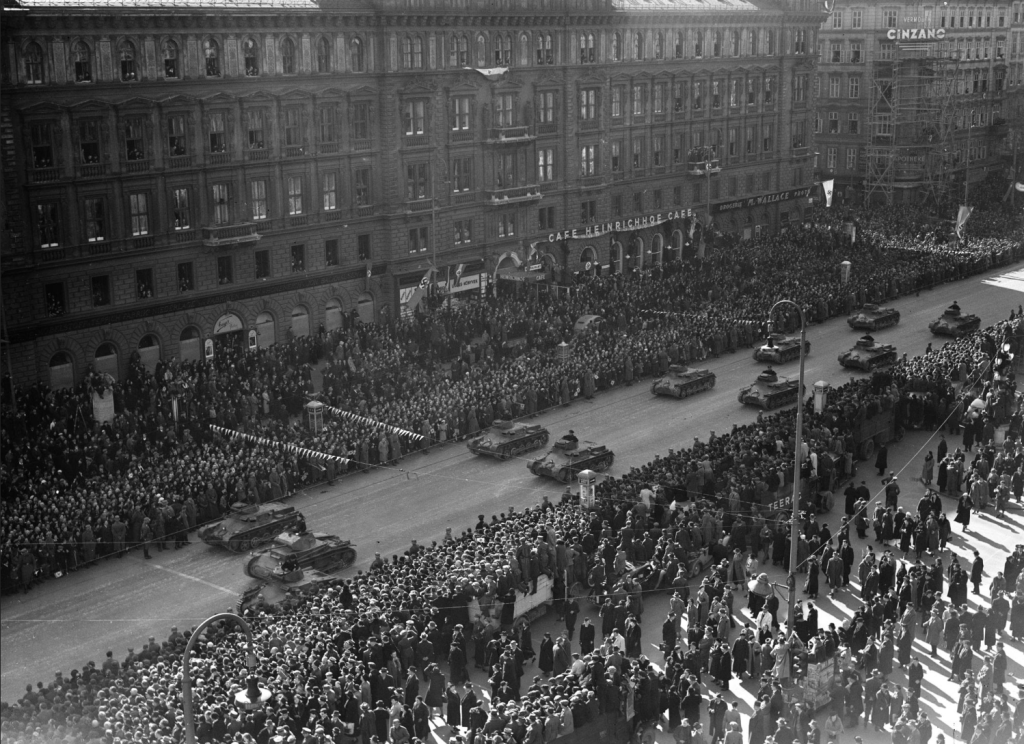
Historians usually focus on 1930s Germany when analyzing National Socialism, but I believe pre-WWII Austria has just as much to teach us. In fact, studying Austria’s political environment during that era offers a fascinating lens for understanding modern politics.
Between 1933 and 1939, Austria experienced a rapid shift from a fragile parliamentary democracy to an authoritarian regime, followed by its complete dissolution as an independent nation and integration into Nazi Germany. This tumultuous six-year period was marked by domestic polarization, violent civil conflict, political assassination, and systemic religious and racial persecution.
- The “Self-Elimination” of the Austrian Parliament (March 1933)
Following the collapse of the Austro-Hungarian Empire after World War I, the First Austrian Republic suffered from severe economic instability and ideological polarization between the Christian Social Party and the Social Democratic Workers’ Party (SDAP).
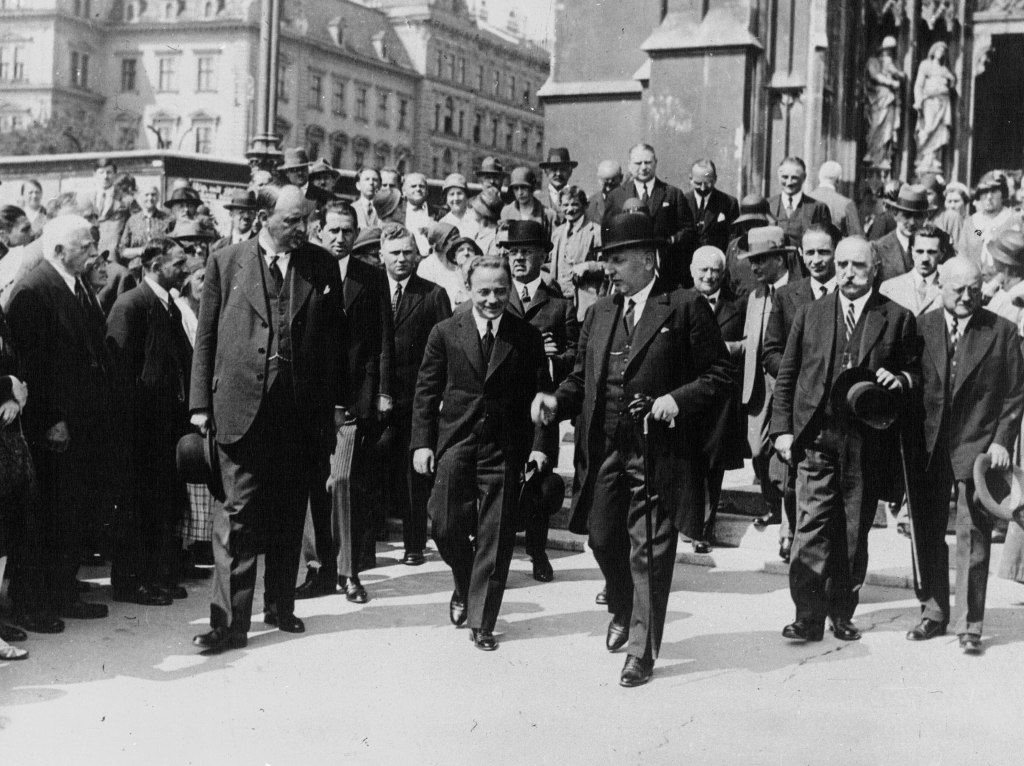
On March 4, 1933, a procedural crisis erupted during a parliamentary debate regarding a railway workers’ strike. Due to a disagreement over voting procedures, all three presidents (speakers) of the Nationalrat (National Council)—Karl Renner (Social Democrat), Rudolf Ramek (Christian Social), and Sepp Straffner (Greater German People’s Party)—resigned sequentially to cast their individual votes. This left the chamber without a presiding officer, creating a legal loophole.
Federal Chancellor Engelbert Dollfuss, leader of the Christian Social Party, seized upon this procedural deadlock, describing it as the “self-elimination” (Selbstausschaltung) of Parliament. When MPs attempted to reconvene on March 15, Dollfuss deployed police to physically bar members from entering the parliament building. Instead of resolving the crisis through new elections, Dollfuss governed using an obscure First World War law—the Emergency War Economy Act of 1917 (Kriegswirtschaftliches Ermächtigungsgesetz). This action effectively dismantled Austrian parliamentary democracy and initiated an authoritarian state structure.
- Polarization and the Civil War (February 1934)
Throughout 1933, political hostility intensified as Dollfuss banned opposition organizations, suspended freedom of the press, and restricted assembly. Both major political camps maintained paramilitary wings: the conservative, paramilitary Heimwehr aligned with the government, while the Republikanischer Schutzbund served as the armed organization of the Social Democrats.
The escalating tension culminated in the Austrian Civil War (Februarkämpfe) in February 1934. On February 12, police attempted to search a Social Democratic party office in Linz for illegal weapons, sparking an armed revolt by local Schutzbund members. The violence quickly spread to Vienna, Styria, and other industrial centers.
Chancellor Dollfuss deployed the Austrian military (Bundesheer), the police, and Heimwehr militias to crush the uprising. In Vienna, government forces used artillery to shell municipal housing blocks (Gemeindebauten), such as the Karl-Marx-Hof, where Schutzbund fighters were entrenched. After four days of fighting, the revolt was suppressed, resulting in hundreds of deaths, the execution of key Schutzbund leaders, the formal ban of the Social Democratic Party, and the total dismantling of free trade unions.
- The Ständestaat and the Assassination of Engelbert Dollfuss (July 1934)
On May 1, 1934, Dollfuss promulgated a new constitution that formally established an authoritarian, Catholic, corporatist dictatorship known as the Ständestaat (Corporate State), governed by a single political movement, the Fatherland Front (Vaterländische Front). Often termed “Austrofascism,” this regime sought to maintain Austrian independence while resisting both Marxist socialism and the growing threat of Austrian National Socialism.
Austrian Nazis, backed by Germany, launched a violent campaign of bombings and sabotage to destabilize the regime. On July 25, 1934, a group of 154 Austrian SS men disguised as Austrian soldiers and police officers raided the Federal Chancellery in Vienna in a failed coup d’état known as the July Putsch (Juli-Putsch).
During the raid, Chancellor Dollfuss was shot in the throat and bled to death after the insurgents denied him medical attention. However, the coup failed to gain broader military or popular support, and government forces suppressed the uprising. Crucially, Italian dictator Benito Mussolini deployed troops to the Brenner Pass on the Austrian border to deter potential German intervention, forcing Adolf Hitler to temporarily disavow the Austrian Nazis.
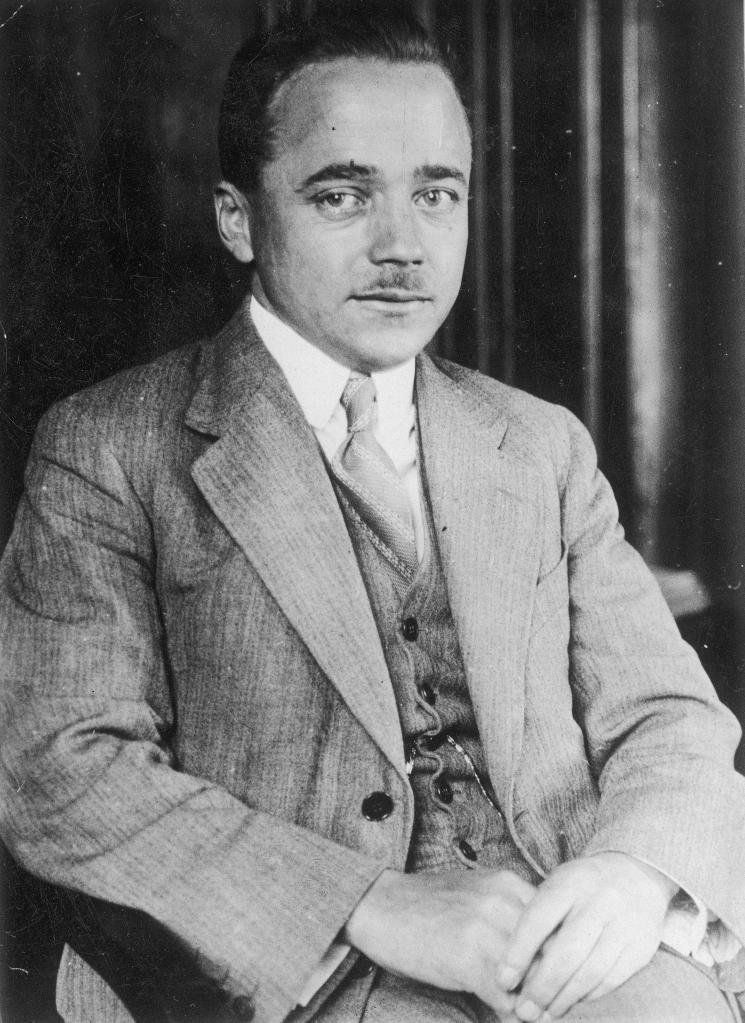
- The Reign of Kurt Schuschnigg (1934–1938)
Following Dollfuss’s death, Kurt Schuschnigg assumed the office of Federal Chancellor. Schuschnigg maintained the autocratic structures of the Ständestaat, attempting to preserve Austrian sovereignty through diplomatic maneuvering. However, his international position deteriorated as Mussolini forged an alliance with Hitler (Rome-Berlin Axis in 1936), stripping Austria of its primary foreign protector.
In July 1936, Schuschnigg signed the “July Agreement” with Nazi Germany, in which Germany recognized Austrian sovereignty in exchange for Austria declaring itself a “German state” and releasing imprisoned Austrian Nazis.
By early 1938, Hitler escalated pressure on Schuschnigg. On February 12, 1938, Schuschnigg was summoned to Hitler’s retreat at Berchtesgaden, where he was subjected to an ultimatum: lift the ban on the Nazi Party, appoint Nazis to key cabinet posts (notably Arthur Seyss-Inquart as Minister of the Interior), and integrate the Austrian economy with Germany’s. Schuschnigg acquiesced to these demands.
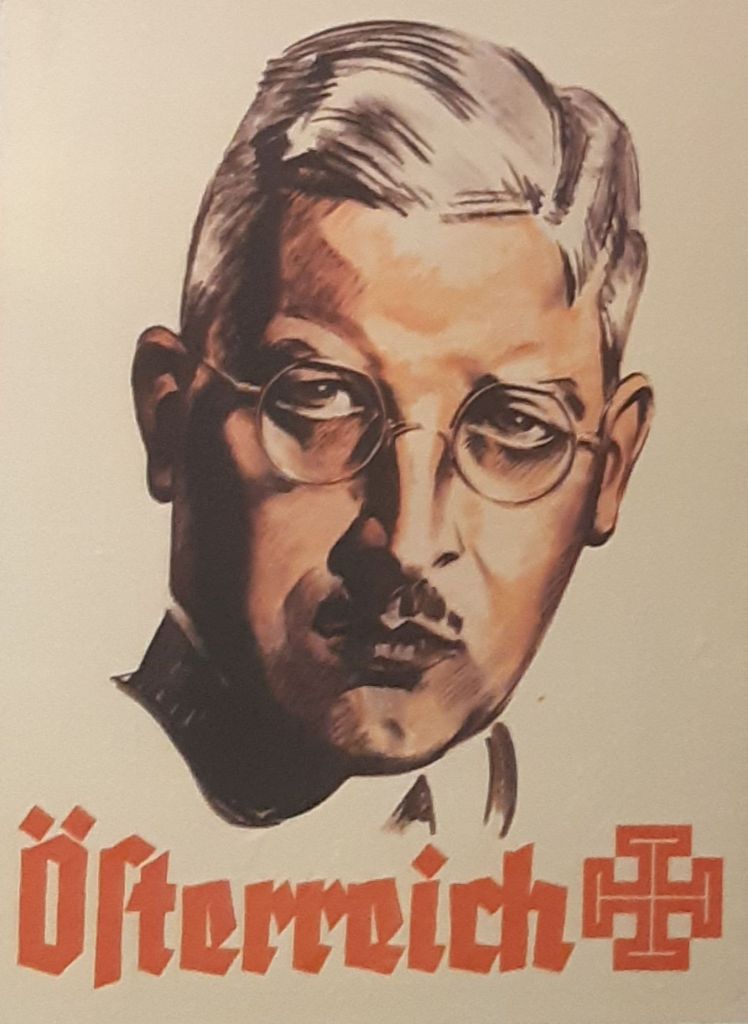
In a desperate final attempt to preserve independence, Schuschnigg unexpectedly announced on March 9, 1938, that a national plebiscite would be held on March 13 on whether Austria should remain independent. Furious, Hitler demanded the cancellation of the referendum and Schuschnigg’s immediate resignation.
- The Anschluss (March 1938)
Realizing that no foreign power would intervene, Schuschnigg resigned on the evening of March 11, 1938. Arthur Seyss-Inquart was named chancellor and immediately invited German forces to enter the country to “restore order.”
On March 12, 1938, the German Wehrmacht crossed the border into Austria without military resistance. The annexation (Anschluss) was met with widespread public jubilation in many cities. On March 15, Hitler addressed a cheering crowd of over 200,000 people at Vienna’s Heldenplatz, proclaiming the entry of his homeland into the German Reich.
Austria was subsequently dissolved as a political entity, divided into administrative regions (Reichsgaue), and renamed Ostmark.
- Anti-Semitic Persecution and Kristallnacht (November 1938)
Following the Anschluss, anti-Semitic legislation and state-sanctioned violence were implemented far more rapidly in Austria than they had been in Germany proper. Austrian Jews were immediately subjected to public humiliation (such as forced “rubbing-down” of street pavement, or Reibpartien), exclusion from public life, property expropriation (Arisierung), and arbitrary arrest.
This violence reached a peak during the Kristallnacht (November Pogrom) on the night of November 9–10, 1938. Across Austria—most severely in Vienna and Innsbruck—Nazi SA, SS, and local civilians attacked Jewish homes, businesses, and places of worship.
Over 40 synagogues and prayer houses in Vienna were destroyed or burned.
Approximately 6,000 Jewish citizens were arrested in Vienna alone, with nearly 8,000 eventually deported to concentration camps such as Dachau and Mauthausen.
Scores of individuals were murdered or driven to suicide during the wave of violence.
By 1939, systemic violence and state policy forced over 100,000 Austrian Jews to flee the country, confiscating their assets in the process.
Conclusion
The period from 1933 to 1939 represents a tragic arc in modern Austrian history. The collapse of parliamentary democracy in 1933 and the bloody civil conflict of 1934 fractured Austrian society, replacing republican governance with an authoritarian regime. Weakened internally and isolated internationally, Austria was unable to withstand National Socialist expansionism. The Anschluss of March 1938 dissolved Austrian independence and rapidly integrated the country into the totalitarian state of the Third Reich, paving the way for the destruction of its Jewish community during Kristallnacht and the Holocaust.
References
Bischof, Günter, Anton Pelinka, and Alexander Lassner, eds. The Dollfuss/Schuschnigg Era in Austria: A Reassessment. Contemporary Austrian Studies, Vol. 11. New Brunswick: Transaction Publishers, 2003.
Bukey, Evan Burr. Hitler’s Austria: Popular Sentiment in the Nazi Era, 1938–1945. Chapel Hill: University of North Carolina Press, 2000.
Gallagher, Charles R. The Vatican, the Ständestaat, and the Fall of Austria, 1933–1938. The Catholic Historical Review 84, no. 4 (1998): 641–662.
Kitchen, Martin. The Coming of Austrian Fascism. London: Croom Helm, 1980.
Pauley, Bruce F. From Enemy to Ally: Austria, How the Nation Recovered Its Identity after World War II. New York: Oxford University Press, 2002.
Thorpe, Julie. Electing Fascism: The Fatherland Front and the Ständestaat in Austria, 1933–1938. Central European History 43, no. 2 (2010): 291–316.
sources
https://en.wikipedia.org/wiki/Engelbert_Dollfuss
https://en.wikipedia.org/wiki/Kurt_Schuschnigg
https://en.wikipedia.org/wiki/Self-elimination_of_the_Austrian_Parliament
https://www.britannica.com/topic/history-of-Austria/First-Republic-and-the-Anschluss
https://encyclopedia.ushmm.org/content/en/article/nazi-territorial-aggression-the-anschluss
https://www.theguardian.com/century/1930-1939/Story/0,,127158,00.html


Leave a Reply