
Karl Silberbauer is remembered in history primarily for his role in one of the darkest episodes of World War II: the arrest of Anne Frank, the young Jewish girl whose diary has since become a symbol of the Holocaust. His life is a window into the complexities of individual responsibility during the Nazi era and the ways in which ordinary men could be complicit in extraordinary atrocities. Silberbauer’s career in law enforcement, his involvement with the Nazi regime, and his post-war life highlight how deeply the Nazi state infiltrated everyday life, forcing difficult questions about guilt, duty, and moral choice.
Early Life and Career
Karl Josef Silberbauer was born on June 21, 1911, in Vienna, Austria, into a working-class family. Little is known about his early life, but by the 1930s, he had become involved in policing, joining the Austrian police force. His career took a significant turn in 1931 when he joined the Austrian Nazi Party, long before the party had become the dominant force in Europe that it would later be under Adolf Hitler. His early involvement with the Nazis suggests that Silberbauer was a committed ideological supporter of the movement well before the annexation of Austria by Nazi Germany in 1938.
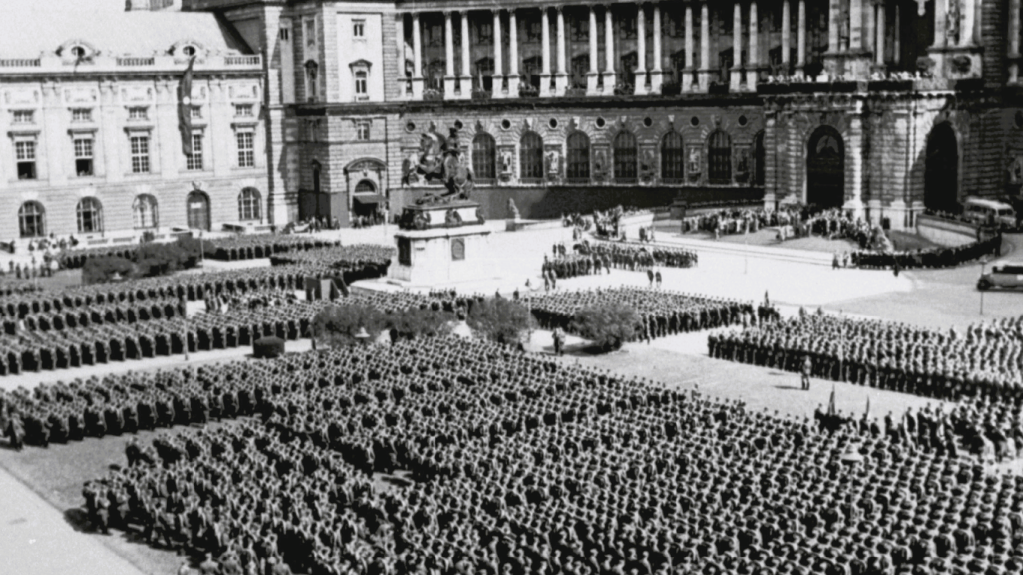
After the Anschluss—Nazi Germany’s annexation of Austria—Silberbauer was absorbed into the more significant German policing and security apparatus. Like many Austrians at the time, he seamlessly transitioned into the new power structure, showing the pervasive influence the Nazis had over Austria. As a member of the Sicherheitsdienst (SD), the intelligence branch of the SS, he became part of the Gestapo, Nazi Germany’s secret police.
The Occupation of the Netherlands and Anne Frank’s Arrest
Silberbauer’s most infamous role came during his time as an officer in the Gestapo in Amsterdam during the German occupation of the Netherlands. By 1944, the Nazis were cracking down hard on any resistance and on Jewish citizens who had gone into hiding to escape deportation to concentration camps. In Amsterdam, the Frank family, along with four other Jews, were hiding in a secret annex above Otto Frank’s business. The building was located at 263 Prinsengracht, a canal-side street, and the family had been in hiding there for more than two years.
On August 4, 1944, an anonymous informant tipped off the Nazis, and Karl Silberbauer was assigned to lead the raid on the Secret Annex. Accompanied by Dutch collaborators, Silberbauer was the one who physically arrested the eight Jewish inhabitants of the annex, including Anne Frank, her sister Margot, and their parents, Otto and Edith Frank. Anne, who was just 15 years old at the time of her arrest, would later die in the Bergen-Belsen concentration camp just weeks before it was liberated by Allied forces. However, her diary, chronicling her experiences in hiding, would survive the war and become one of the most famous and important personal accounts of the Holocaust.
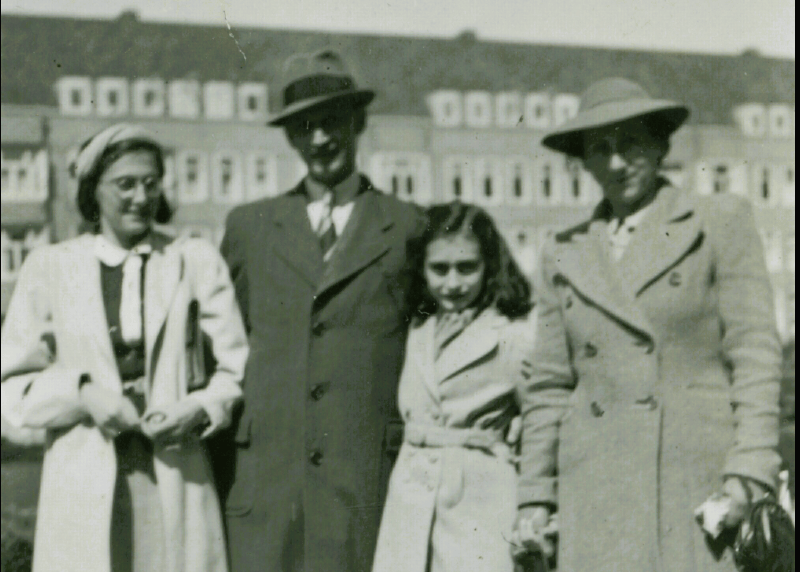
Silberbauer’s actions that day—though not especially unique in the broader context of Nazi operations—had a profound historical impact because of the global fame Anne Frank’s story would later attain. During the arrest, he was reported to have acted in a manner that was described as bureaucratic and emotionless. He allegedly ordered Anne’s father, Otto Frank, to hand over any valuables. It is also said that Silberbauer took Anne’s diary and dumped it into a bag. Still, he later claimed he had no idea of the diary’s importance at the time.
The Post-War Period and Discovery
After the war, Silberbauer, like many lower-ranking members of the Nazi regime, managed to avoid the immediate post-war tribunals and trials that captured many of the higher-ranking war criminals. He returned to Austria and resumed a career in law enforcement, working as a police inspector in Vienna. For several years, he lived in obscurity, undisturbed by the authorities or the public.
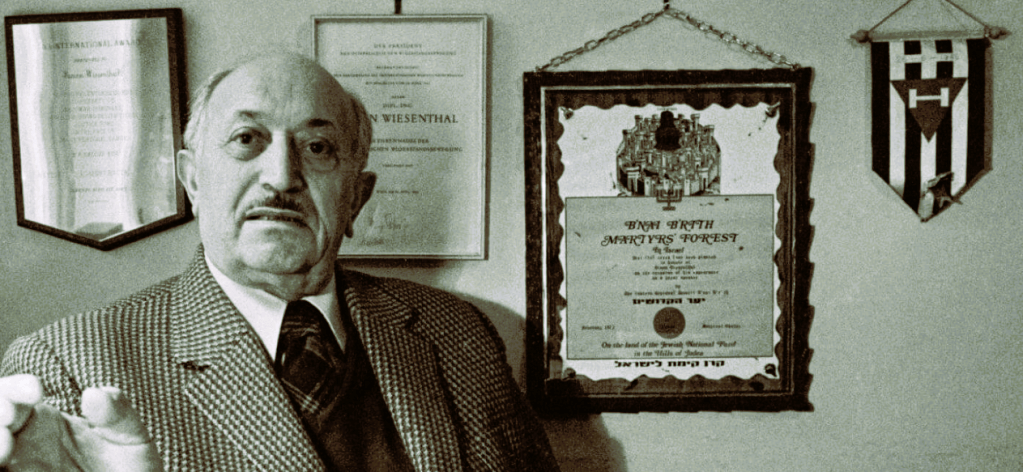
However, in 1957, Simon Wiesenthal began an effort to track down the man who had arrested Anne Frank. Wiesenthal was motivated in part by the rise of Holocaust denialism. A small but vocal minority had begun to claim that Anne Frank’s diary was a hoax, and Wiesenthal believed that finding the officer who had arrested her would not only provide historical clarity but also help fight these false claims.
Wiesenthal’s investigation led him to Vienna, where Silberbauer was identified as the arresting officer. The news broke in 1963, and Silberbauer was suspended from his position in the Vienna police. When confronted, Silberbauer admitted to his role in the arrest of the Frank family but maintained that he had been merely following orders and did not view his actions as a war crime. He also confirmed that the arrest happened as described in Anne Frank’s diary, thus unintentionally validating its authenticity.
Legal and Moral Consequences
An investigation was launched into Silberbauer’s wartime activities, and it concluded that there was insufficient evidence to prosecute him for war crimes. He was reinstated into the police force after his suspension, though the stain of his Nazi past remained with him. His defense rested on the argument that he had been a low-ranking officer following the chain of command in a totalitarian regime where dissent was dangerous.
The question of Silberbauer’s moral and legal culpability is a thorny one. He was not accused of physically mistreating the Frank family during their arrest, and it was clear that he did not operate at the higher echelons of the Nazi leadership responsible for formulating and executing the Holocaust. However, his actions were part of the larger machinery of Nazi oppression, and the fact that he played a direct role in sending Anne Frank to her eventual death in Bergen-Belsen weighs heavily on his legacy.
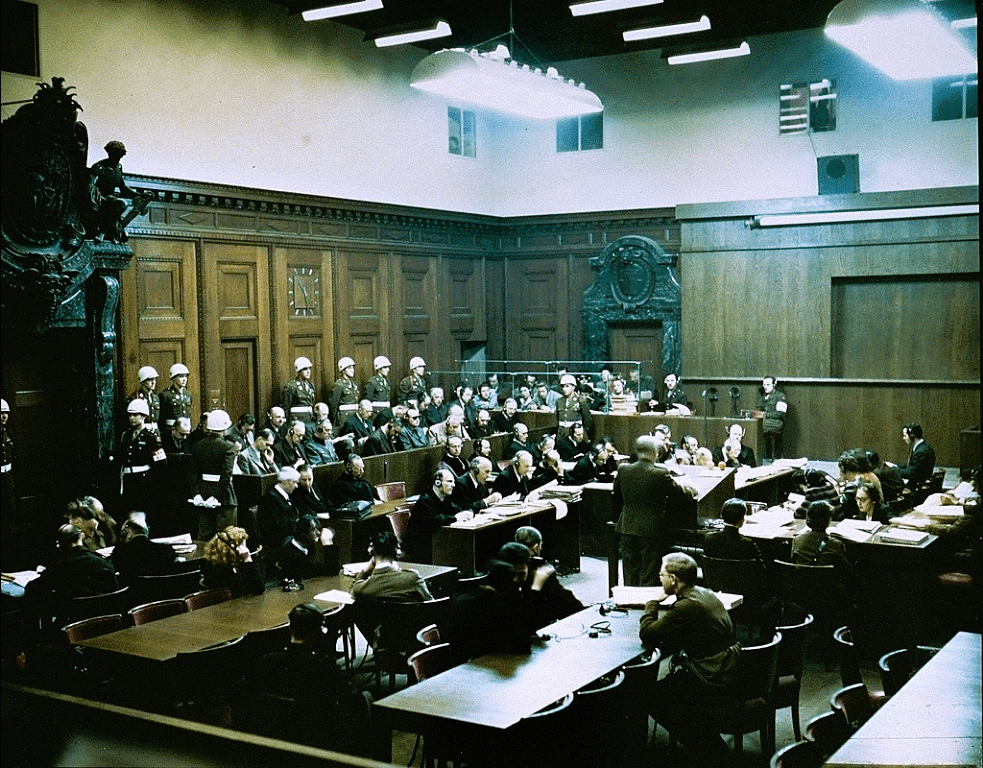
Silberbauer’s case raises questions about the moral responsibility of individuals in oppressive regimes. He represented the countless bureaucrats and low-ranking officials whose participation was crucial in carrying out the Holocaust. Without people like Silberbauer, the machinery of the Nazi state could not have functioned as efficiently as it did. His claim that he was merely following orders is a common defense among those who participated in Nazi atrocities, History has generally regarded such defenses with skepticism. The Nuremberg Trials and other post-war tribunals established the principle that individuals are responsible for their actions, even in the context of authoritarian regimes.
Impact on Anne Frank’s Legacy
The discovery of Silberbauer played a significant role in reinforcing the historical authenticity of Anne Frank’s diary, especially in light of Holocaust denial. By corroborating key details of the raid and arrest, Silberbauer inadvertently strengthened the diary’s standing as an essential document of the Holocaust. His admission that the arrest happened as described, along with his acknowledgment of the diary’s existence, countered claims that the diary was a forgery.
In the broader narrative of Anne Frank’s life and legacy, Silberbauer is a haunting figure. He represents the faceless cruelty of the Nazi regime, one that sought to exterminate Jews through a vast system of informants, police, and collaborators. While he may not have been directly responsible for the deaths of millions, his participation in the capture of the Frank family symbolizes the many ways ordinary men contributed to the Holocaust.
Later Life and Death
Karl Silberbauer lived out his remaining years in relative obscurity after his brief moment in the public eye following Wiesenthal’s investigation. He continued working in the police until his retirement and died in 1972. While he escaped significant legal consequences for his wartime actions, his name remains indelibly linked with one of the most poignant
and tragic stories of the Holocaust. Anne Frank’s legacy has grown immensely since her death, and her diary is a powerful reminder of the human cost of hatred, persecution, and indifference. As a result, Karl Silberbauer’s name is forever intertwined with a story that exposes the depths of cruelty and the potential for resistance, even in the face of overwhelming darkness.
Reflections on Silberbauer’s Legacy
Karl Silberbauer’s life offers a complex lens through which we can examine the nature of complicity, morality, and justice during periods of mass atrocity. His case illustrates how deeply ordinary people, those with little ideological fervor or direct involvement in high-level planning, became involved in the functioning of genocidal regimes like that of Nazi Germany. In some ways, his story is emblematic of the banality of evil, a concept famously articulated by philosopher Hannah Arendt during the trial of Adolf Eichmann. Like Eichmann, Silberbauer was a cog in the larger Nazi machine, performing his duties without question and upholding the state’s policies without moral consideration.
While Silberbauer did not exhibit the fanaticism or overt cruelty of other Nazi figures, his role is no less chilling because of its mundanity. He was not driven by personal malice toward Anne Frank or the other Jewish people he helped arrest, but his indifference to their fate and his compliance with Nazi orders allowed the Holocaust to proceed. His life thus raises the troubling question of how much blame should be placed on individuals who, like Silberbauer, were “just following orders” in a regime dedicated to murder and repression.
Silberbauer’s Case in the Context of Post-War Justice
The post-war world struggled to deal with the enormity of Nazi crimes. While high-ranking leaders like Hermann Göring and Heinrich Himmler faced trial or committed suicide to avoid capture, lower-level participants like Karl Silberbauer often escaped prosecution. Silberbauer’s case highlights the difficulties of holding such individuals accountable in the absence of direct evidence of personal brutality or war crimes.
The decision to reinstate Silberbauer after a brief suspension reflects a broader issue of post-war justice: what should be done with the thousands of former Nazis who continued living and working after the war? Many lower-ranking officials, like Silberbauer, were reintegrated into society because the sheer scale of Nazi participation made it impractical to prosecute everyone. This pragmatism, however, created a sense of lingering injustice for the victims and survivors of the Holocaust, who saw many of their oppressors go unpunished.
Karl Silberbauer’s life story is a chilling reminder of how ordinary individuals can become part of systems of mass oppression. His role in the arrest of Anne Frank and her family—an event that reverberates through history because of the diary left behind—highlights the human cost of complicity and the moral questions surrounding obedience in the face of immoral orders.
While Silberbauer avoided significant legal consequences for his actions, his legacy remains tainted by his participation in one of the most tragic and infamous arrests of World War II. His case illustrates the ways in which small actions taken in bureaucratic service to a regime can have far-reaching and devastating consequences. In the end, Karl Silberbauer is remembered not for his career as a police officer but for his role in a moment that forever changed the way we understand the Holocaust, innocence, and the enduring power of memory.
Sources
https://www.gov.si/en/news/2019-06-01-employee-card-of-ss-oberscharfuehrer-karl-josef-silberbauer/
https://www.annefrank.org/en/timeline/92/arrest-and-release-of-karl-silberbauer/
https://research.annefrank.org/en/personen/3bad773b-ee19-4be9-bf7e-bf17c99b9c57/
Donation
Your readership is what makes my site a success, and I am truly passionate about providing you with valuable content. I have been doing this at no cost and will continue to do so. Your voluntary donation of $2 or more, if you are able, would be a significant contribution to the continuation of my work. However, I fully understand if you’re not in a position to do so. Your support, in any form, is greatly appreciated. Thank you. To donate, click on the credit/debit card icon of the card you will use. If you want to donate more than $2, just add a higher number in the box left from the PayPal link. Your generosity is greatly appreciated. Many thanks.
$2.00


 History of Sorts
Leave a reply to williamrablan Cancel reply