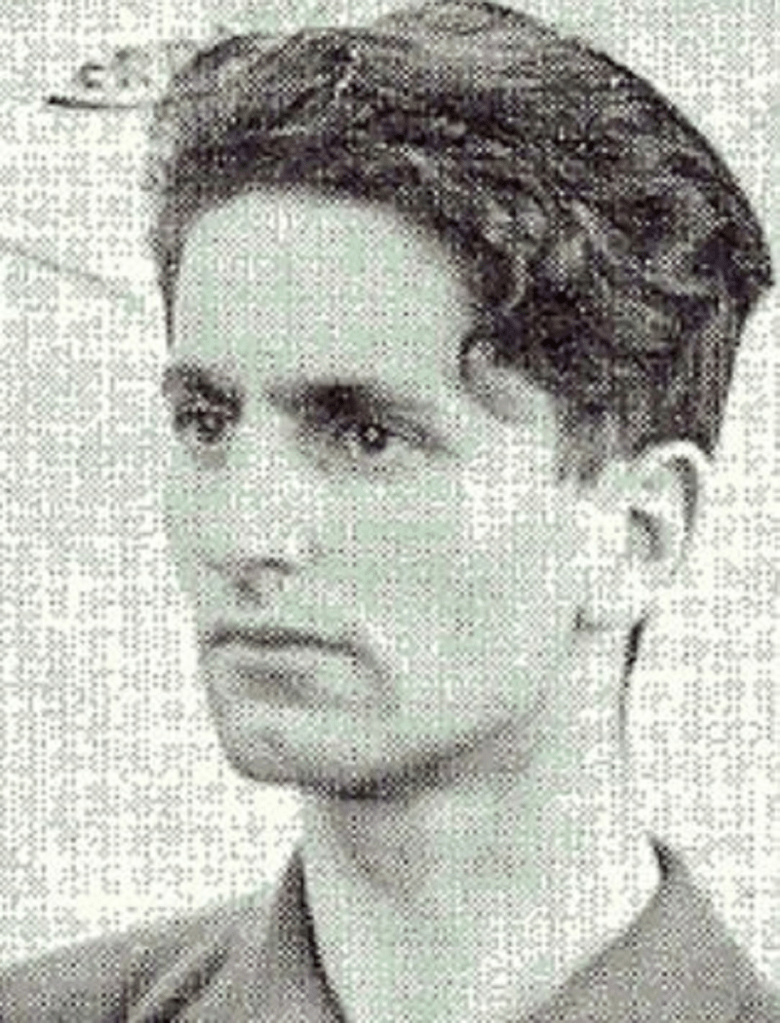
Many people may have heard of David Koker or at least know about the remarkable diary he kept during his imprisonment in Camp Vught, a concentration camp in the Netherlands. His writings offer a rare and invaluable insight into daily life in the camp, the resilience of the human spirit, and the looming horror of the Holocaust.
David’s diary was first published in 1977 under the title Dagboek geschreven in Vught. In 2012, it was translated into English and published as At the Edge of the Abyss: A Concentration Camp Diary, 1943-1944. This diary, written between February 11, 1943, and February 8, 1944, is a harrowing yet profoundly human account of his experiences.
Arrest and Deception
On the night of February 11, 1943, David and his family were arrested in Amsterdam and transported to Camp Vught. Unlike the violent roundups commonly associated with Nazi deportations, the Kokers received what appeared to be an official train ticket for their journey. At first glance, this document seemed almost benign—perhaps even an act of bureaucratic courtesy.
Issued by the Centre of Jewish Emigration Amsterdam and authorized by SS-Hauptsturmführer Woerlein, the ticket read:
“The keeper of this permit and ticket, referring to the call-up of the same number, has the right to travel free of charge by allocated train to the station of Hooghalen. The permit and ticket must be shown without being asked to the train staff at the station of Hooghalen. The inspector will then tear the ticket from the permit.”
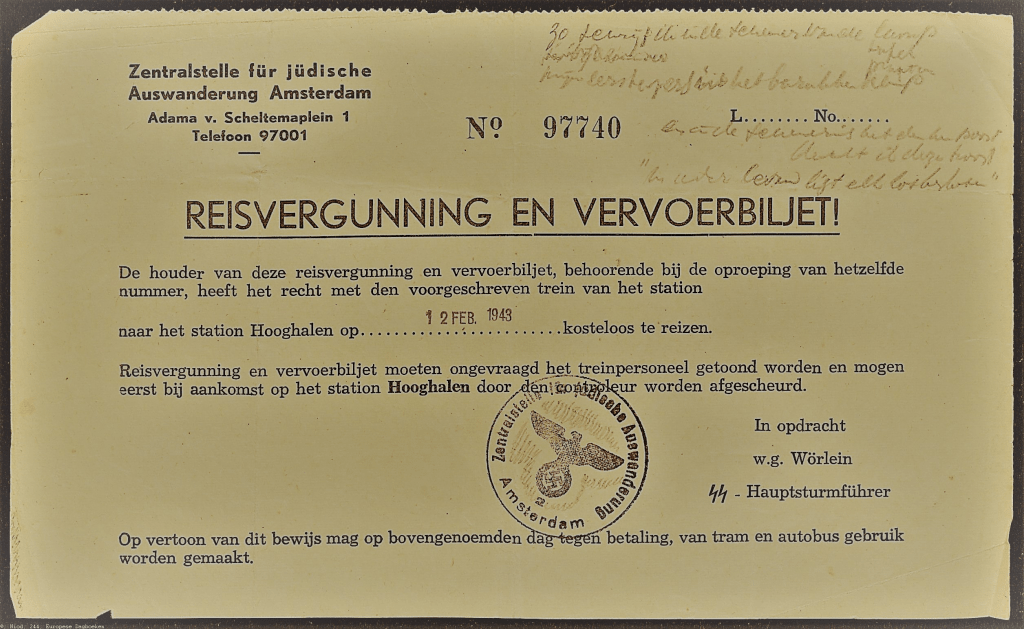
At the bottom, it added:
“Upon presenting this ticket, the holder may use tram or bus transport free of charge on the aforementioned date.”
For anyone unaware of the historical context, this could almost be mistaken for a benevolent gesture—an orderly and cost-free relocation. In reality, it was the first step in a calculated system of deception and systematic murder.
A Mind Ahead of His Time
Even before his imprisonment, David Koker demonstrated an acute awareness of the growing dangers in Nazi-occupied Europe. In a poem, likely written in 1939 or early 1940, he reflected on the alienation he felt in a world that was turning against people like him:
“The finest experts of the human heart
Can’t make me out. I’m quite a thing apart.
They say that from them, I perhaps should quit—
‘You, sir, don’t fit our system one small bit.’”
These words echo with painful foresight. His intellect and sensitivity shine through, revealing a young man who understood far too well the forces aligning against him.
A Final Letter
On June 2, 1944, as David and his family were deported from Camp Vught to Auschwitz-Birkenau, he managed to throw a letter from the train. In it, he wrote a heartbreaking yet hopeful message to his friends:
“Dear friends, we are close to the border now. It is very disappointing, but we were prepared for it and remain hopeful. I think a lot about you. I’ve got all your letters and photos with me—my dearest possessions. When will we see each other again? That will take a long time. But we shall survive. Lots of love, guys. Thanks for everything. Goodbye.”
His words, filled with optimism despite the circumstances, stand as a testament to his incredible strength of character.
The Tragic End
Auschwitz-Birkenau was not David’s final destination. On February 23, 1945, just months before the war ended, he perished in Gross-Rosen Concentration Camp at the age of 23. His mother and brother, Max, survived the war.
David Koker’s diary remains one of the most critical firsthand accounts of the Holocaust. It is not just a record of suffering but also a testament to the resilience of the human spirit, the power of intellect, and the enduring need to remember.
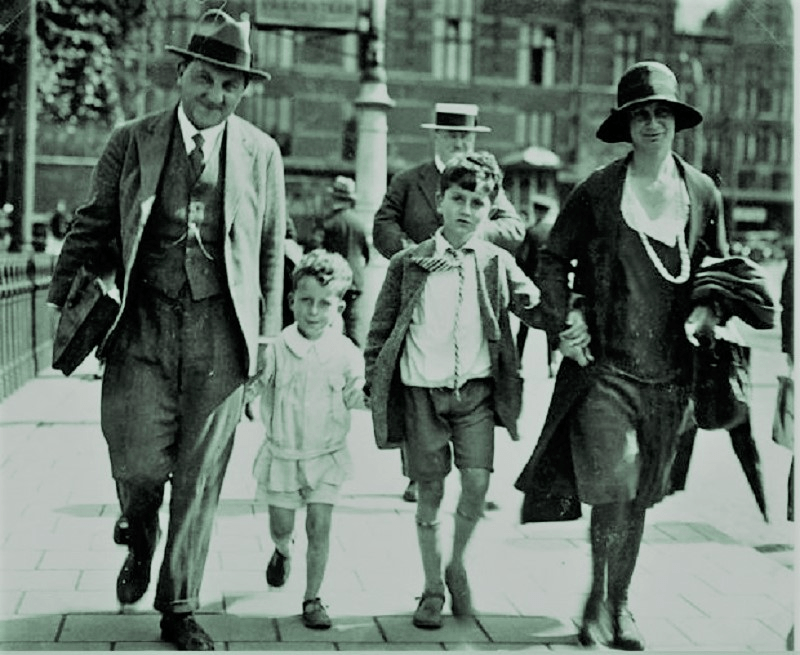
Below is a photograph taken in 1930 in Amsterdam of the Koker family—one of the few remaining glimpses into the life of a young man whose words continue to speak across time.
Sources
https://www.joodsmonument.nl/en/page/507940/about-david-koker
https://www.coenraadrood.org/nl/westerbork/aankomst-in-kamp-westerbork
https://www.stationsweb.nl/station.asp?station=Hooghalen
https://en.wikipedia.org/wiki/David_Koker
https://www.tabletmag.com/sections/arts-letters/articles/life-inside-the-camps
Please support us so we can continue our important work.
Donation
Your readership is what makes my site a success, and I am truly passionate about providing you with valuable content. I have been doing this at no cost and will continue to do so. Your voluntary donation of $2 or more, if you are able, would be a significant contribution to the continuation of my work. However, I fully understand if you’re not in a position to do so. Your support, in any form, is greatly appreciated. Thank you. To donate, click on the credit/debit card icon of the card you will use. If you want to donate more than $2, just add a higher number in the box left from the PayPal link. Your generosity is greatly appreciated. Many thanks.
$2.00

 History of Sorts
Leave a reply to tzipporahbatami Cancel reply