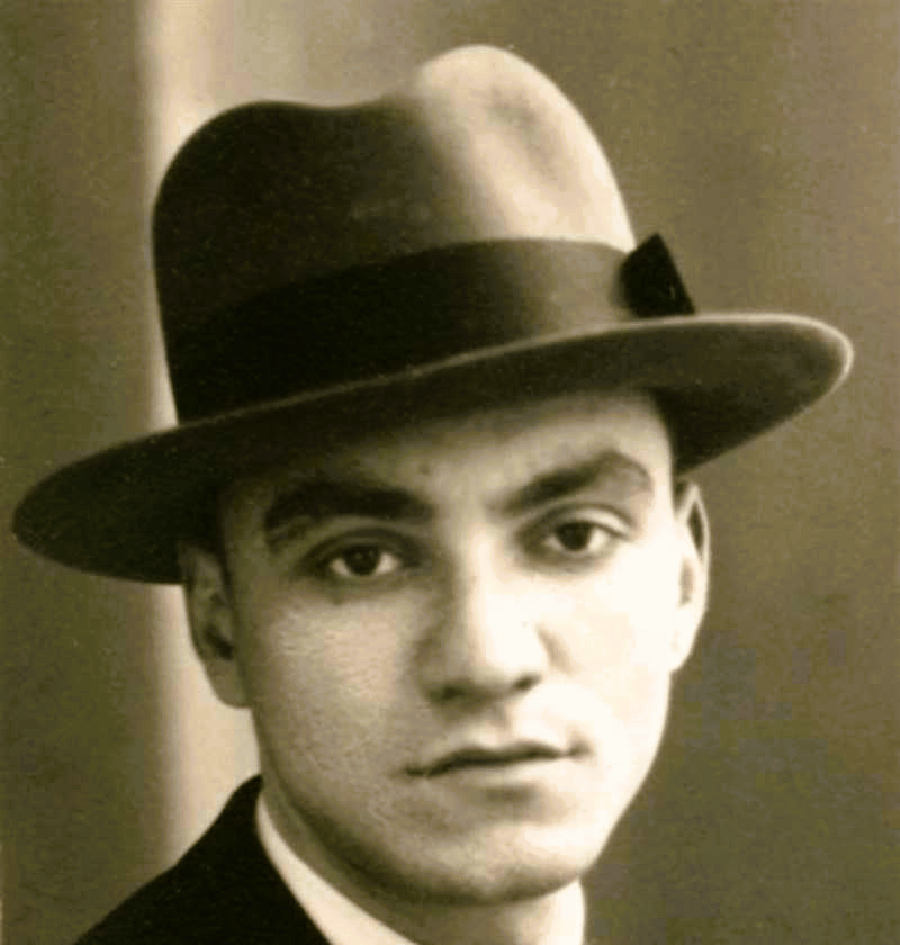
The most impactful way to convey the story of the Holocaust is to personalize it—to bring it down to an individual, human level. Rather than reducing the victims to mere numbers or statistics, we must illuminate their lives, their struggles, and their humanity. By sharing their personal stories, we can break through the abstraction and ensure their voices resonate deeply with future generations.
Salomon Swaalep was born on July 10, 1905, in Amsterdam. He was the son of Simon Swaalep and Rachel Bak. By profession, he was a warehouse clerk, living at 6 III Roeterstraat in Amsterdam. On April 7, 1924, Salomon was examined for military service but was rejected due to flat feet and declared permanently unfit for service. On May 10, 1940, when the Nazis invaded the Netherlands, he was 34 years old.
On March 1, 1932, he married Marie Cohen in Berchem, the daughter of Levie Cohen and Branca Bed. They lived together at 13 Joris Helleputtestraat in Borgerhout.
The following events influenced the life of Salomon Swaalep.
On January 7, 1941, the Dutch Cinema Association decided that Jews would no longer be allowed access to cinemas. This measure was announced in newspapers on January 12, 1941.
The Registration of Jewish Residents was Regulation No. 6/1941, issued by Reich Commissioner Seyss-Inquart on January 10, 1941. It required all Jewish residents of the Netherlands to register with the Population Registry, which cost one guilder. Those who refused could face up to five years in prison. Moreover, this information was already known to Jewish communities and the population registry.
Starting September 1, 1941, Jewish children were required to attend separate schools and could no longer attend public schools. In Amsterdam, this rule took effect on October 1, 1941.
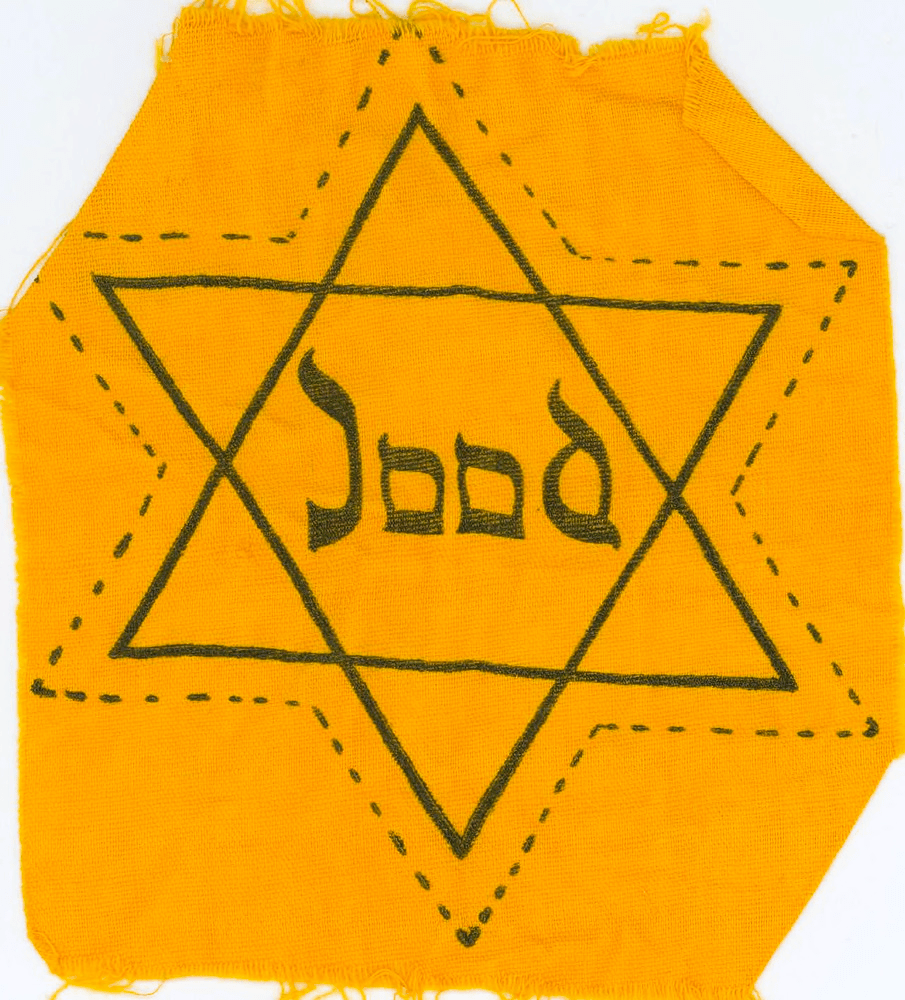
The Mandatory Wearing of the Jewish Star was introduced on May 3, 1942, requiring all Jews aged six and older to wear the Star of David. The star had to be worn visibly at chest height. It was distributed by the Jewish Council and cost four cents each.
In the summer of 1942, Salomon Swaalep was seized by the occupying forces and transported to northern France. There, he was forced to work on the Atlantic Wall alongside 2,521 fellow Jewish laborers from Belgium. He was then imprisoned in the Dossin Barracks in Mechelen starting on October 28, 1942. On October 31, 1942, he was deported to Auschwitz with the 16th convoy from Mechelen, arriving there on November 3, 1942. As there are no further details about his death, it is believed that he perished in Auschwitz on December 1, 1944. His wife, Marie Cohen, survived the Holocaust and later remarried Elias Theeboom from Rotterdam. Theeboom passed away in Sydney on December 4, 1965, and Marie Cohen died in Sydney on December 9, 1996, at the age of 90.
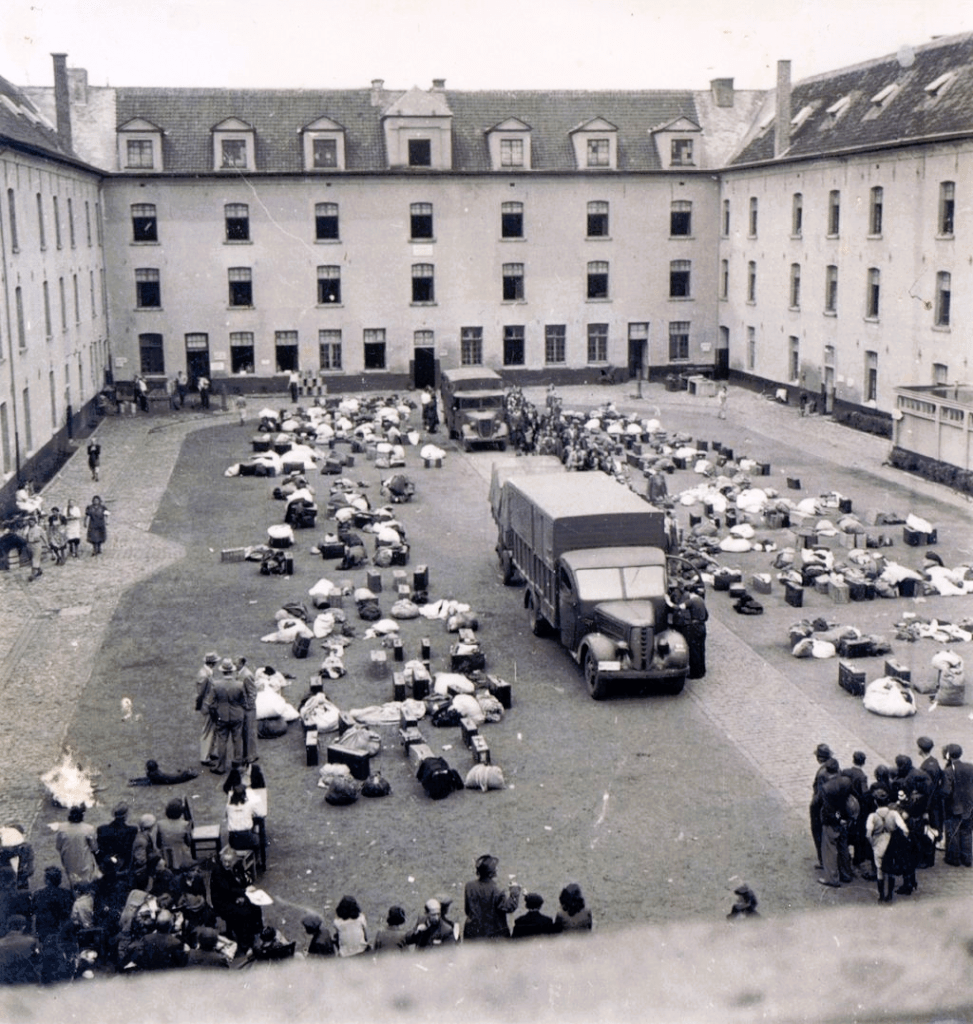
By late October 1942, staff from the Dossin Barracks visited the camps in northern France and added the names of these Jewish forced laborers to the deportation lists. On October 31, 1942, Transport XVI carried Salomon Swaalep, prisoner number 765, by train from France, through Belgium, to Auschwitz-Birkenau.
The 16th and 17th convoys, which were merged after their departure from Mechelen, deported a total of 1,676 individuals, including 137 children. For the first time, mass escapes occurred on the Belgian leg of the journey: 24 deportees jumped from the moving train.
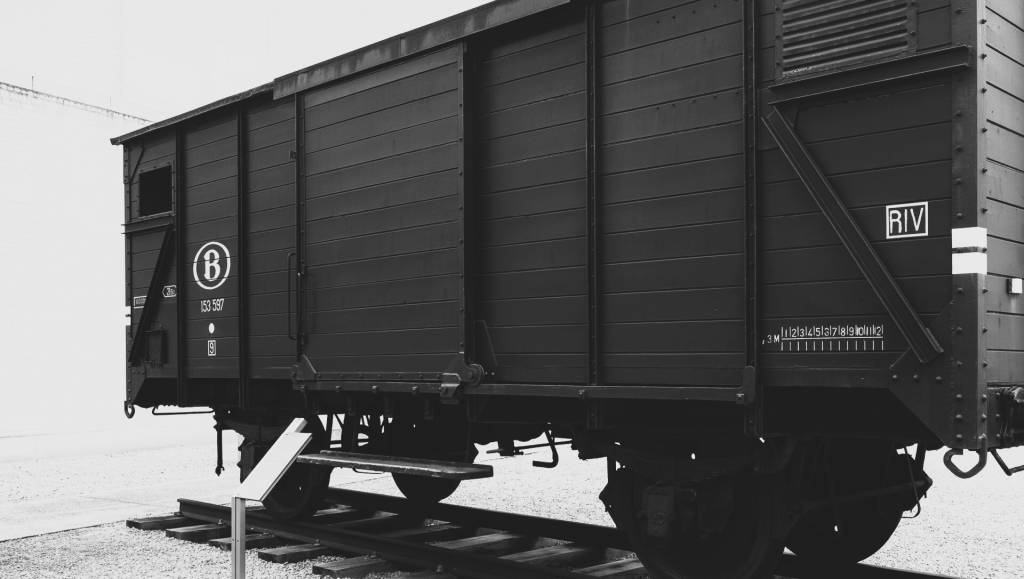
This transport differed from the previous ones—the deportation of October 31, 1942, primarily involved men. The convoy was not assembled based on the people interned in the Dossin Barracks. Most of them had never been inside the barracks; instead, they came from the Organization Todt labor camps in northern France. A total of 752 “forced laborers” were registered on the 16th convoy list and 562 on the 17th convoy list. They were deported via Mechelen and remained on the train, which was then “topped up” with others. Having experienced the harsh conditions of the labor camps, many took advantage of the Belgian leg of the journey to escape.
The 822 deportees from the 16th convoy and the 874 from the 17th convoy arrived in Auschwitz on November 3, 1942. The presence of “forced laborers” in this transport led to different treatment. As with other Jewish convoys, there was immediate extermination, but this time, only 54.2% of the contingent was killed, which was even fewer than in the previous deportation. However, the 919 deportees who were immediately murdered were all men, some of whom were also forced laborers who arrived exhausted after months of confinement in the northern French camps. The selection process was particularly ruthless for the women on the transport. There were 319 women, including girls, but the SS only registered 51 of them. Of the 753 deportees who were admitted to the camp, 50 from the 16th convoy and 35 from the 17th convoy were still alive on May 8, 1945.
Sources
https://www.joodsmonument.nl/nl/page/219654/salomon-swaalep
https://kazernedossin.memorial/transport/transport-xvi-en/?lang=en
Donation
Your readership is what makes my site a success, and I am truly passionate about providing you with valuable content. I have been doing this at no cost and will continue to do so. Your voluntary donation of $2 or more, if you are able, would be a significant contribution to the continuation of my work. However, I fully understand if you’re not in a position to do so. Your support, in any form, is greatly appreciated. Thank you. To donate, click on the credit/debit card icon of the card you will use. If you want to donate more than $2, just add a higher number in the box left from the PayPal link. Your generosity is greatly appreciated. Many thanks.
$2.00


Leave a Reply