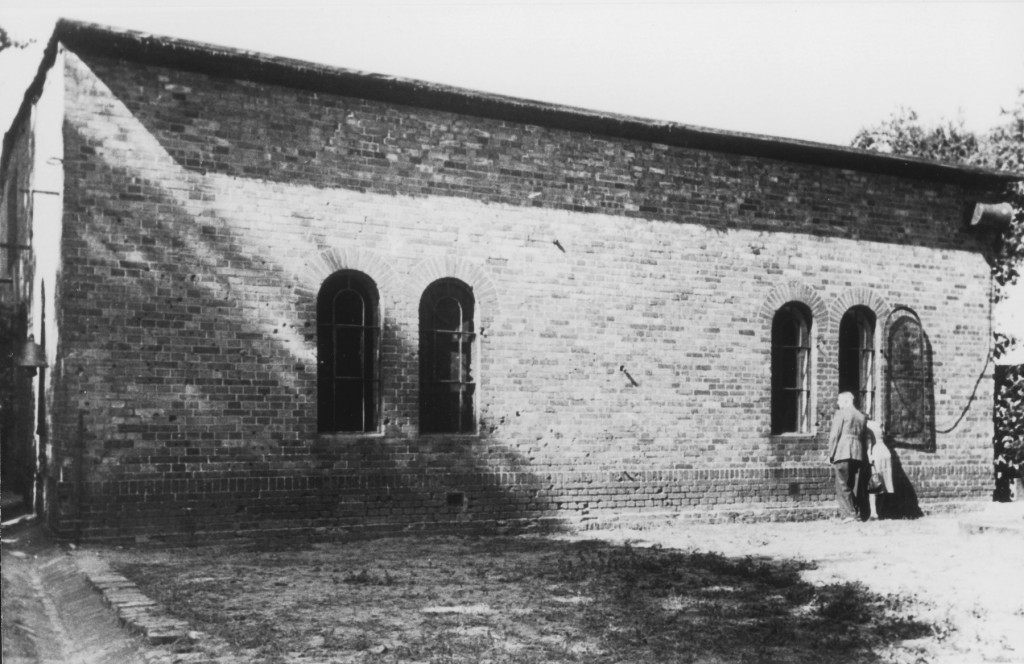
The closing months of the Second World War witnessed a dramatic culmination of the Nazi regime’s repression against internal dissent. Among the many Germans who opposed Adolf Hitler’s tyranny from within were Alfred Delp, Carl Friedrich Goerdeler, and Johannes Popitz — three men of distinct backgrounds whose resistance activities ultimately led to their execution on 2 February 1945 at Plötzensee Prison in Berlin. Though connected by a shared fate, their lives testify to the varied forms of German opposition to National Socialism, from Christian moral resistance to conservative political conspiracies against Hitler. This essay examines their biographies, resistance activities, and the circumstances of their deaths in the context of the broader German resistance movement.
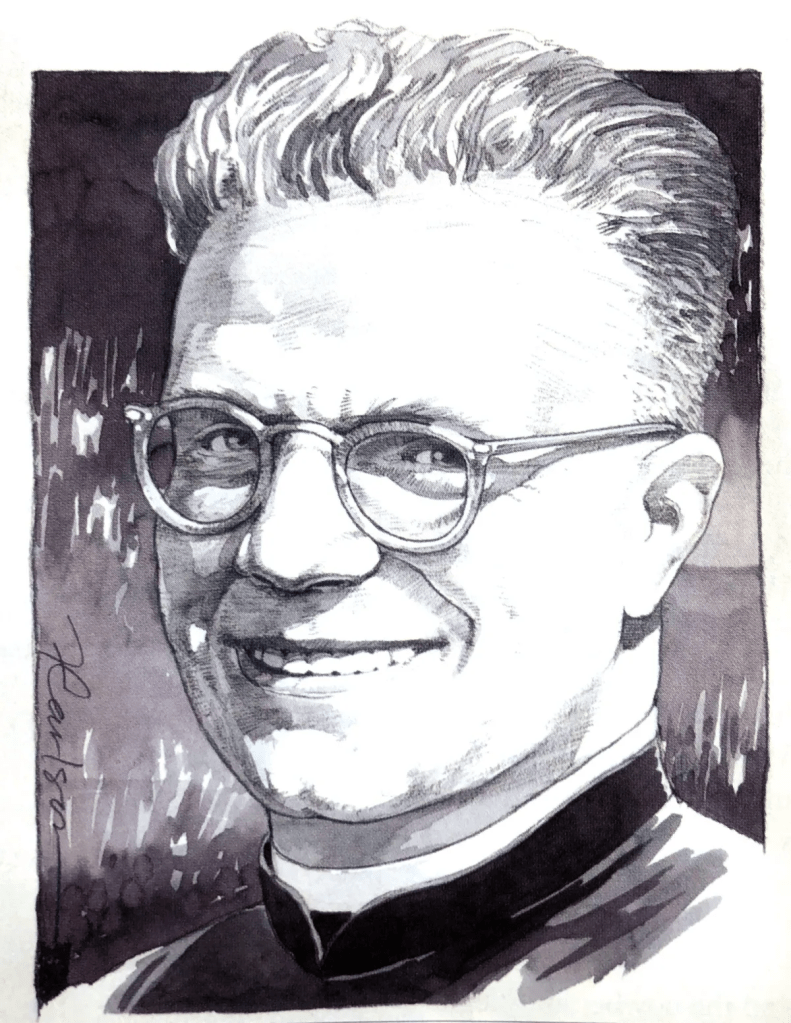
Alfred Delp: Jesuit Thinker and Moral Witness
Alfred Delp (1907–1945) was a Jesuit priest, philosopher, and member of the Kreisau Circle, an intellectual resistance group that met to discuss plans for Germany after the fall of Nazism. Raised in a family that bridged Protestant and Catholic traditions, Delp ultimately committed himself to Catholicism and entered the Society of Jesus. Ordained in 1937, he became known as a gifted preacher and writer, serving as an editor for the Catholic journal Stimmen der Zeit until the regime shut it down.
Delp’s opposition to Nazism was grounded in Christian social teaching and a deep belief in human dignity. Through the Kreisau Circle, he contributed to discussions on rebuilding Germany on ethical and spiritual foundations rather than racial ideology and authoritarianism. He also assisted persecuted individuals, including Jews, through pastoral and personal networks.
After the failed assassination attempt on Hitler on 20 July 1944, the Gestapo cracked down on suspected opponents. Delp was arrested in Munich in late July 1944. Although he was not directly involved in the assassination plot, his association with resistance circles was enough to condemn him. The People’s Court sentenced him to death in January 1945. Even when offered the possibility of clemency in exchange for leaving the Jesuit order, he refused. He was hanged on 2 February 1945. His prison writings, smuggled out before his execution, remain powerful reflections on faith, freedom, and moral responsibility under tyranny.
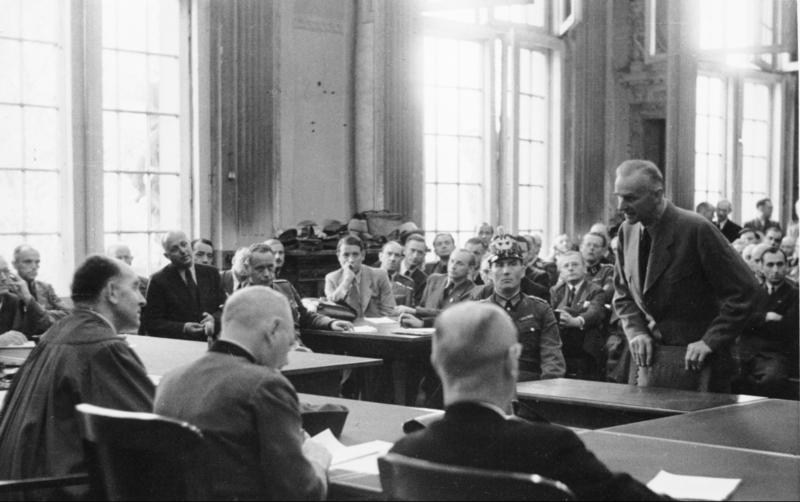
Carl Friedrich Goerdeler: Conservative Politician and Civilian Conspirator
Carl Friedrich Goerdeler (1884–1945) represented the conservative, nationalist strand of German resistance. A trained jurist and experienced administrator, he served as mayor of Leipzig from 1930 to 1937. Initially sympathetic to some authoritarian ideas, he became increasingly disillusioned with the Nazi regime, particularly its lawlessness, economic mismanagement, and violent antisemitism. His protest against the removal of a Mendelssohn statue in Leipzig symbolized his growing break with the regime and led to his resignation.
Goerdeler emerged as one of the most important civilian leaders of the resistance. He traveled widely, attempting to build contacts at home and abroad in preparation for a post-Hitler government. Within the conspiracy that culminated in the July 20 plot, he was designated to become Chancellor if Hitler were overthrown. His vision for Germany was conservative and nationalist, favoring a strong state and traditional structures, but he believed the Nazi system had led Germany to moral and political ruin.
After the plot failed, Goerdeler went into hiding but was captured in August 1944. During imprisonment he wrote extensive memoranda reflecting on Germany’s guilt and the need for political renewal. He was sentenced to death by the People’s Court and executed by hanging at Plötzensee on 2 February 1945. His legacy remains complex: while not a democrat in the modern sense, he was a determined opponent of Hitler who risked and ultimately lost his life in the attempt to end the dictatorship.
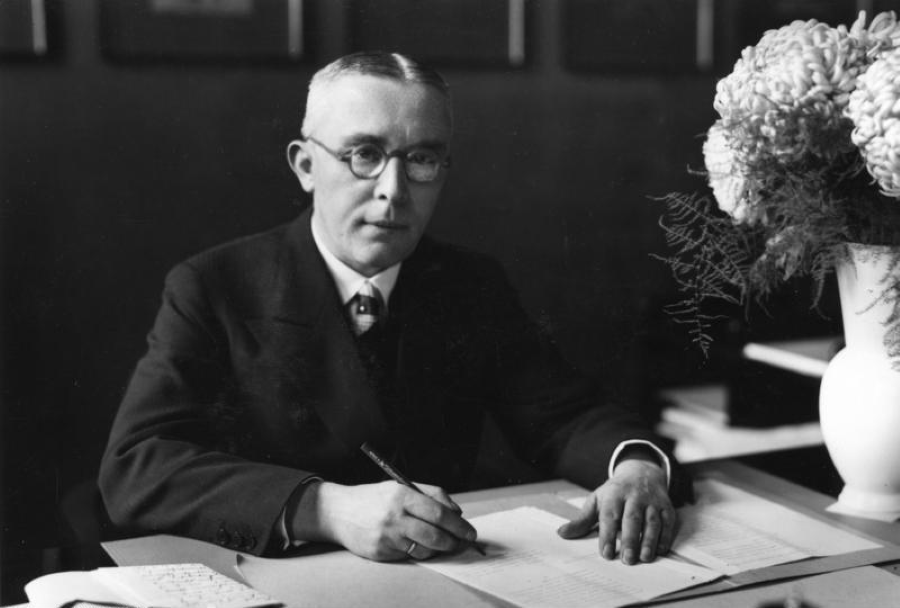
Johannes Popitz: Senior Statesman Turned Opponent
Johannes Popitz (1884–1945), a distinguished jurist and financial expert, served as Prussian Finance Minister during the Nazi era. Like many members of the traditional elite, he initially attempted to work within the system, hoping to moderate its excesses. However, events such as the violent antisemitic pogroms of November 1938 deepened his revulsion toward the regime’s brutality and lawlessness.
After Kristallnacht on 9 November 1938, Johannes Popitz protested the mass persecution of Jews by offering his resignation, though it was refused. A conservative and committed monarchist who favored the succession of Crown Prince Wilhelm, the eldest son of Kaiser Wilhelm II, in place of Adolf Hitler, Popitz became involved in resistance circles from 1938 onward, including the group around Carl Friedrich Goerdeler. He was also a member of the Mittwochsgesellschaft (“Wednesday Society”), a small circle of senior officials and industrialists that had evolved from a debating club into a center of conservative opposition to the regime. Over time, Popitz was drawn deeply into the conspiracy against Hitler and drafted a provisional post-Nazi constitution, the Vorläufiges Staatsgrundgesetz, whose general orientation was markedly authoritarian.
In the summer of 1943, Popitz held secret discussions with Heinrich Himmler, seeking his support for a coup d’état and attempting to persuade him to participate in efforts to negotiate an acceptable peace settlement with the Western Allies.
By the autumn of that year, Popitz was under Gestapo surveillance. He was arrested in Berlin on 21 July 1944, the day after Claus von Stauffenberg’s failed assassination attempt on Hitler at the Wolfsschanze in East Prussia. During interrogation, Popitz made statements that revealed the deeply problematic character of his views. Reflecting on his experience during the Weimar Republic, he told the Gestapo that he believed Jews should be removed from “the life of the state and the economy,” though he claimed to have favored a more gradual approach, partly for diplomatic reasons.
He further stated that while the “Jewish question” had, in his view, to be addressed and exclusion from public and economic life was “unavoidable,” he opposed the regime’s violent methods. He described the destruction of property, arbitrary arrests, and killings as incompatible with law and morality and warned that such actions would erode respect for property and human life while increasing international hostility toward Germany.
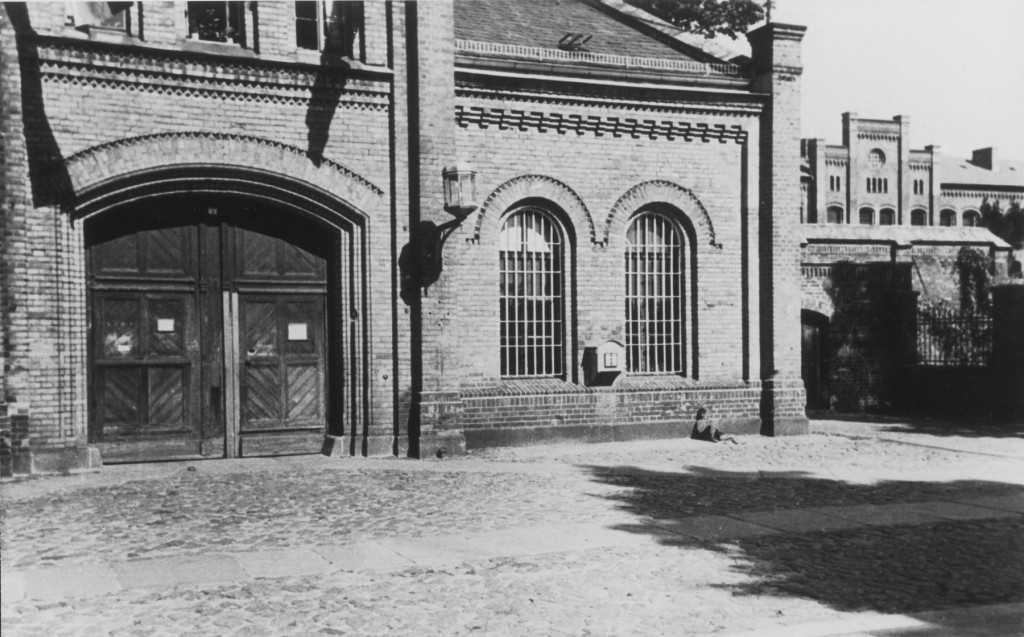
On 3 October 1944, Popitz was sentenced to death by the Volksgerichtshof (People’s Court) under Roland Freisler. Initially, Himmler delayed the execution, apparently hoping that the foreign contacts he and Popitz had discussed might still prove useful. When no negotiations materialized, that protection ended. Popitz was executed by hanging on 2 February 1945 at Plötzensee Prison in Berlin, on the same day as Carl Friedrich Goerdeler and Alfred Delp.
The German Resistance and the Cost of Conscience
The German resistance to Nazism was far from monolithic. It included scattered networks of military officers, conservative politicians, religious figures, intellectuals, and ordinary citizens who opposed aspects of the regime for moral, political, or strategic reasons. While plots such as the 20 July assassination attempt are the most famous, resistance took many forms, from secret discussion circles and social aid networks to open denunciations of persecution. However, the resistance was ultimately unable to mobilize mass support within Germany, and its impact was constrained by the Nazi state’s overwhelming control and repression.
The executions of Delp, Goerdeler, and Popitz on 2 February 1945 — just a few months before the collapse of the Third Reich — exemplify both the courage and the tragedy of internal opposition. Each of these men placed conscience, principle, or political conviction above personal survival in a system that brooked no dissent. Their deaths at Plötzensee Prison attest to the ruthless efficiency with which the Nazi state eliminated its opponents and to the diverse array of Germans increasingly willing to resist, even as the war turned decisively against Hitler.
Alfred Delp, Carl Friedrich Goerdeler, and Johannes Popitz represent distinct strands of resistance within Nazi Germany — religious humanism, conservative political opposition, and technocratic statecraft — yet all ultimately converged in their opposition to a tyrannical regime.
Their trajectories also reveal an uncomfortable but important historical reality: resistance did not always stem from complete rejection of National Socialism. In Popitz’s case, it is clear that an individual could share aspects of the regime’s ideology and yet summon the courage to oppose policies deemed unlawful, destabilizing, or morally indefensible. This does not erase the moral ambiguities of such figures, but it highlights a timeless lesson: dissent within authoritarian systems can emerge from partial disillusionment as much as from principled opposition. In 2026, this remains relevant, reminding us that even today, vigilance, moral courage, and the willingness to challenge injustices—no matter how widely accepted—are essential to preserving democratic values and human rights
Their execution on 2 February 1945 stands as a somber reminder of the cost of conscience and the profound complexity of resisting totalitarianism from within. Although their efforts could not avert the destruction wrought by the war or the crimes of the regime, their legacy endures as testimony to the capacity for individual agency, even when exercised late, imperfectly, and under extreme constraint.
sources
https://en.wikipedia.org/wiki/Alfred_Delp
https://en.wikipedia.org/wiki/Carl_Friedrich_Goerdeler
https://en.wikipedia.org/wiki/Johannes_Popitz
https://encyclopedia.ushmm.org/content/en/gallery/german-resistance-to-hitler-photographs
https://www.museumsportal-berlin.de/en/museums/gedenkstaette-ploetzensee/
https://www.deutsche-biographie.de/gnd118741497.html#ndbcontent
Donation
Your readership is what makes my site a success, and I am truly passionate about providing you with valuable content. I have been doing this at no cost and will continue to do so. Your voluntary donation of $2 or more, if you are able, would be a significant contribution to the continuation of my work. However, I fully understand if you’re not in a position to do so. Your support, in any form, is greatly appreciated. Thank you. To donate, click on the credit/debit card icon of the card you will use. If you want to donate more than $2, just add a higher number in the box left from the PayPal link. Your generosity is greatly appreciated. Many thanks.
$2.00


Leave a comment