Limburg is the southernmost province of the Netherlands, sharing its name with the neighbouring Belgian province of Limburg. During the Second World War, it became one of the first parts of the Netherlands to be liberated by Allied forces. By the end of September 1944, the entire province had been liberated, although the fighting continued elsewhere in the country for several more months.
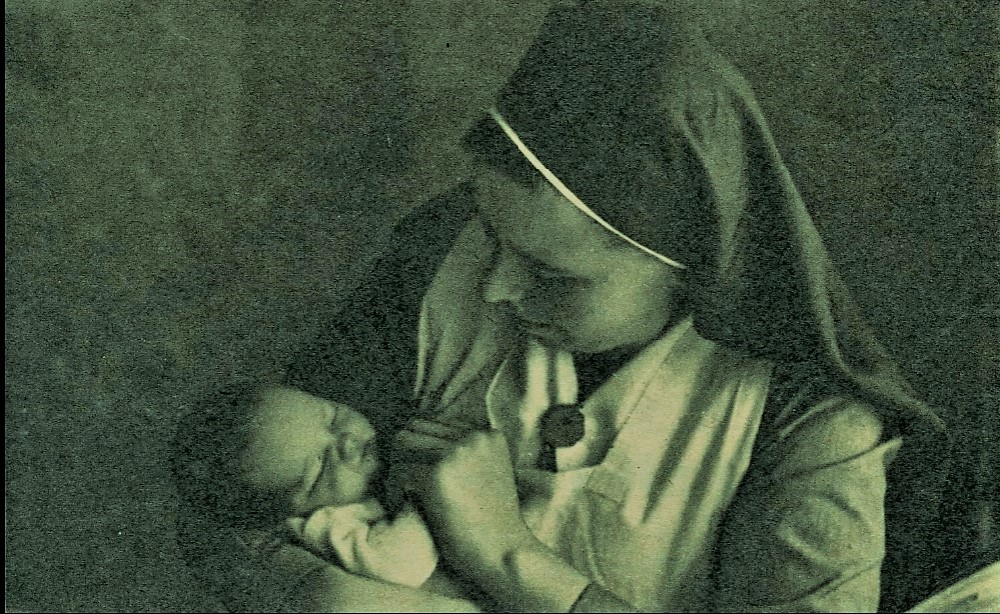
One of the remarkable figures of the resistance in Limburg was Hanna van de Voort, who was born in Meerlo in the northern part of the province. During the war, she worked as a maternity nurse in the village of Tienray. Encouraged by her mother, Marie, Hanna became involved in an extraordinary rescue operation. Together with the 22-year-old students Nico Dohmen and Kurt Loewenstein, she helped provide hiding places for 123 Jewish children between 1943 and 1944.
Many of these children had been smuggled out of the Hollandsche Schouwburg in Amsterdam, a former theatre that the German occupation authorities had turned into a detention and assembly point for Jews awaiting deportation. Most of the children were rescued from the Schouwburg through the efforts of Piet Meerburg’s student resistance group, which specialized in rescuing Jewish children.
The children would generally stay at Van de Voort’s home in Tienray for several days before being taken to their longer-term hiding places. During this time, preparations were made for their new identities and backgrounds. Because the children were being placed with Catholic families in rural Limburg, they were taught basic Catholic doctrine and were instructed about the streets and geography of Rotterdam.
Their cover story was that they were orphans whose parents had been killed during the German bombing of Rotterdam in May 1940. To make the story more convincing, each child was given a pseudonym and false identity documents issued by the Central Bureau for Children’s Evacuation, supposedly based in Rotterdam—a city that had been devastated by the bombing.

After spending a few days with Hanna van de Voort, the children were placed with farming families in the surrounding area. If there was a risk that a hiding place had been discovered, they were moved to another location. Hanna—affectionately known as “Aunt Hanna”—and especially Nico Dohmen, known to the children as “Uncle Nico,” remained in contact with the families sheltering them. They provided practical support and, perhaps most importantly, encouragement to help the children and their foster families persevere despite the constant danger.
The foster families received financial compensation, as well as clothing and footwear for the children. The necessary ration coupons for food and clothing were supplied from Amsterdam, helping the families care for the children without attracting unnecessary attention.
One of the families who took part in the rescue operation was the van Geffen family of Tienray. Hiding a Jewish child could be difficult to explain even to the family’s own children. One of the van Geffen children later recalled the experience:
“Maria was the eldest of the family. Her father was a strict Catholic with a strong sense of social justice. He owned a shoe store in Tienray and was active in the resistance as a courier for an underground newspaper.
“Maria initially did not like the fact that a Jewish girl named Floortje de Paauw had joined the family. She therefore told the story that the Jews had nailed Jesus to the cross. Floortje retaliated by walking across the freshly bleached white laundry with her shoes on. Eventually, however, everything worked out between the two of them.
“There was also a Jewish boy in the family, Daniël Jozeph Cohen, who used the pseudonym Wim Dorn. He survived the war. Floortje took part in everything the family did. She went to school and attended church.
“Maria remembers exactly how the Nazis took Floortje from her bed during the children’s raid in Tienray on the night of 31 July–1 August 1944. Maria was ordered to dress her. After they embraced, Floortje said to her, ‘I’m not coming back.’ She was murdered in Auschwitz on 6 September 1944.
“After the war, it was hardly ever discussed at home.”
The fate of Floortje and the other children illustrates the terrible danger faced by those in hiding, even in the final months of the German occupation. Their hiding places were eventually compromised following the betrayal of Lucien Nahon, a Dutch collaborator and member of the Nazi movement, who provided information about several hiding places.
On the night of 31 July–1 August 1944, a series of raids was carried out in Tienray and the surrounding villages. Members of the Eindhoven State Police, assisted by local collaborators and other helpers, searched houses and farms where Jewish children were believed to be hiding.
These raids became known as the children’s raids. At least five Jewish children were arrested and subsequently deported to Auschwitz. Four of them were murdered there, including:
Floortje de Paauw, born 15 December 1933
Wim de Paauw, born 17 December 1934
Louis van Wezel, born 16 May 1936
Dick van Wezel, born 6 March 1934
The raids also resulted in the arrest of Hanna van de Voort. The Germans tortured her in an attempt to force her to reveal information about the resistance network and the locations of other people in hiding. Despite the brutal treatment she endured, Van de Voort refused to betray those she had helped. After nine days in detention, she was released.
The physical and psychological consequences of her imprisonment remained with her for the rest of her life. Hanna van de Voort never fully recovered from the torture and suffered permanent damage to her health. She died on 26 July 1956, aged only 52.
The story of Hanna van de Voort and the 123 Jewish children she helped hide is therefore both a story of extraordinary courage and a reminder of the terrible risks faced by rescuers and those they protected. For many of the children, the farmhouses and homes of Limburg offered a brief sanctuary from Nazi persecution. But the fate of Floortje de Paauw and the other children captured during the Tienray raids demonstrates how fragile that safety could be.
sources
https://www.oorlogsbronnen.nl/thema/Kinderrazzia%20Noord-Limburg

Donation
Your readership is what makes my site a success, and I am truly passionate about providing you with valuable content. I have been doing this at no cost and will continue to do so. Your voluntary donation of $2 or more, if you are able, would be a significant contribution to the continuation of my work. However, I fully understand if you’re not in a position to do so. Your support, in any form, is greatly appreciated. Thank you. To donate, click on the credit/debit card icon of the card you will use. If you want to donate more than $2, just add a higher number in the box left from the PayPal link. Your generosity is greatly appreciated. Many thanks.
$2.00

“


Leave a Reply