
On October 30, 1944, Margot Frank and her younger sister Anne were put on a transport from Auschwitz to Bergen Belsen. By November 1944, Bergen Belsen received approximately 9,000 women and young girls. Margot and Anne were murdered there in February 1945. I deliberately say murdered because they were ill and received no treatment—to me, that is murder.
In Bergen-Belsen, the sisters were housed in overcrowded, filthy barracks with no heat to ward off the freezing winter. Food was scarce, and both girls quickly grew weaker as malnutrition, and the effects of typhus began to take their toll. Margot, who was quieter and often more introspective, was Anne’s main source of comfort in the camp. The sisters held onto each other through these incredibly dark and bleak months, sharing not only the few scraps of food they could get but also words of hope and encouragement to make it through each day.
The story of Anne is well-known through her diary. It is believed that Margot kept a diary, but it was never found. I think her diary would probably tell an even more compelling story. She was three years older than Anne, and she would, therefore, have had a better comprehension of what was going on in the world around them.
About Margo, Miep Gies said, “I didn’t have any relationship with Margot. She was there, and that was all.” Anne says more or less the same about her sister in her diary. Describing Margot at the table, she wrote, “Eats like a little mouse, doesn’t say a word.”
I often wondered if they had remained in Auschwitz instead of being deported to Belsen-Bergen, would they have survived? I realize the irony of that statement, but it could have been a possibility.

“I have often been downcast but never in despair; I regard our hiding as a dangerous adventure, romantic and interesting at the same time. In my diary, I treat all the privations as amusing.” —Anne Frank
“Times change, people change, thoughts about good and evil change, about true and false. But what always remains fast and steady is the affection that your friends feel for you, those who always have your best interest at heart.” —Margot Frank
I used Margot Frank’s quote in a speech I gave at my oldest son high school graduation.
Margot and Anne weren’t the only ones on the transport to Bergen Belsen.
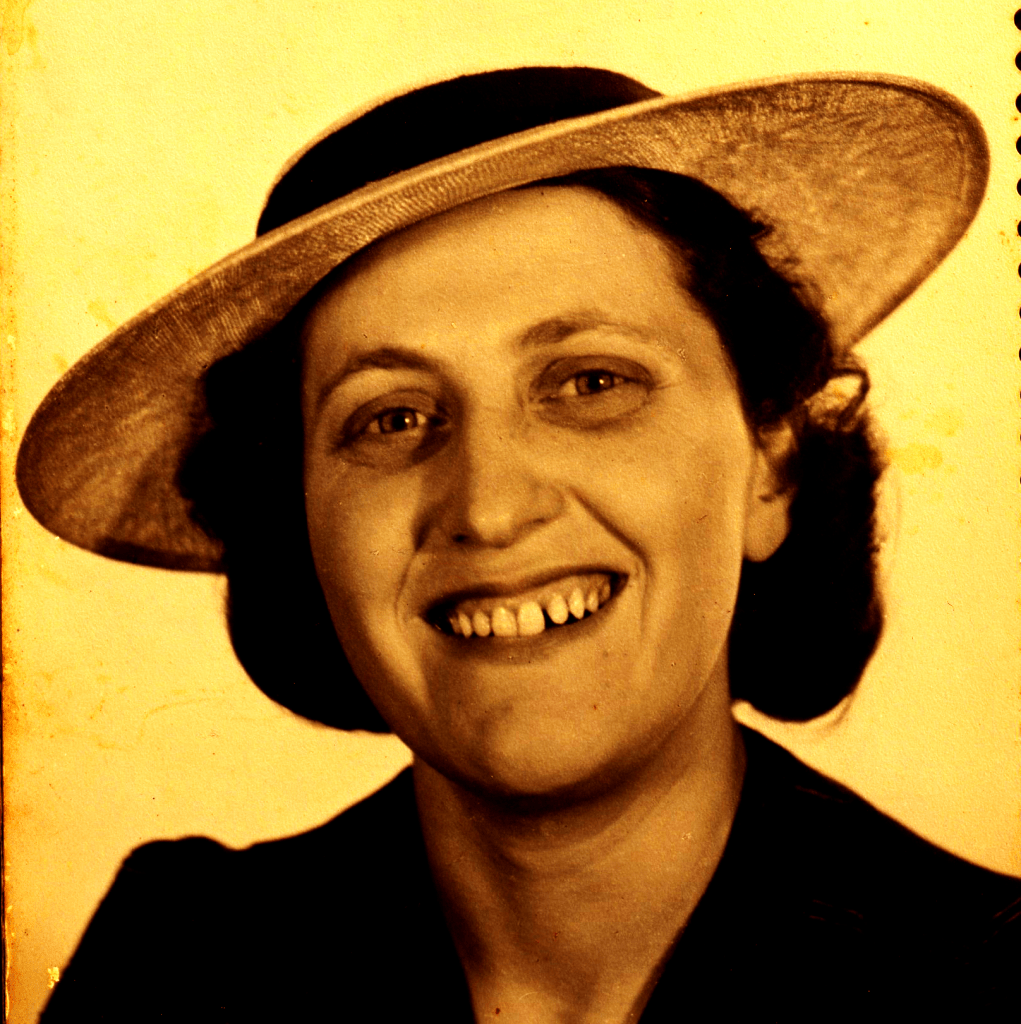
Rachel van Amerongen-Frankfoorder
Rachel Frankfoorder first encountered the eight people from the Secret Annex at Camp Westerbork. Throughout her time in various concentration camps, she remained near Anne and Margot Frank, as well as Auguste van Pels. After the war, she shared memories of these encounters.
Personal Background
- Name: Rachel van Amerongen – Frankfoorder
- Date of Birth: January 23, 1914
- Place of Birth: Amsterdam, Netherlands
- Date of Death: April 20, 2012
Photographer unknown; from a private collection.
Born in the Dutch-Israeli Hospital on Amsterdam’s Nieuwe-Keizersgracht, Rachel grew up with her family in Amsterdam North. Her father worked as a typographer, while her mother was a shop assistant. In her youth, Rachel worked at Bijenkorf from 1928 until 1941, when, following the February Strike and German takeover, she chose to leave.
On October 28, 1936, she married Charles Désiré Lu-A-Si (1911-1942). The couple had a son, Désiré Charles, born on February 6, 1937.
Joining the Resistance
Rachel and Charles were active in the resistance movement after the war began. Her husband was arrested as a communist on June 25, 1941, and, after passing through multiple camps, was murdered in Auschwitz on November 15, 1942. Rachel herself was arrested in the summer of 1944 while carrying false papers. She was sent to Westerbork, where she met the Frank family in the punishment barracks.
Life in Westerbork
In Westerbork, Rachel worked in “support services”—cleaning, scrubbing toilets, and distributing clogs and overalls to new arrivals. This role was highly valued, and she recalled Otto Frank approaching her to help his daughter, Anne, secure a position in the cleaning team:
“Otto Frank brought Anne to me and asked if I could help her. Anne was very pleasant and asked me directly, ‘I can do anything; I’m very handy.’ She was older than in her photo, cheerful and eager. Unfortunately, I couldn’t help directly and instead sent her to the barracks supervisor. It was the best I could do.”
Anne ultimately worked in the batteries department.
Bergen-Belsen
Like the Frank family, Rachel was eventually transported to Auschwitz and later selected for transfer to Bergen-Belsen, where she received the number 7356. She was placed in the same barracks as Anne and Margot Frank and recalled seeing them there without their parents:
“Their parents weren’t there. You don’t ask, because you already know… from your own experience. The Frank girls were almost unrecognizable—their hair was cut very short, and they looked colder and weaker than the rest of us. It was winter, and without adequate clothing, illness was inevitable. They were in particularly poor condition.”
Rachel watched as Anne and Margot grew increasingly ill, showing signs of typhus. She described their decline as a heartbreaking progression into apathy and despair. Eventually, she noticed their absence and assumed they had died.
Raguhn and Liberation
On February 7, 1945, Rachel and Auguste van Pels were transferred to the Raguhn Women’s Camp, where they endured forced labor. As Allied Forces advanced, the prisoners were moved again, this time to Theresienstadt. Rachel later recounted to the Dutch Red Cross that during this transport, German soldiers threw Mrs. Auguste van Pels from the train. Still, her account was met with skepticism by other witnesses.
The prisoners reached Theresienstadt on April 16, 1945, where they were liberated by Soviet forces on May 8, 1945.
After the War
Following the war, Rachel married Eddy van Amerongen on September 5, 1945. In 1950, the couple emigrated to Israel, where she lived until her death. She died on April 20, 2012.
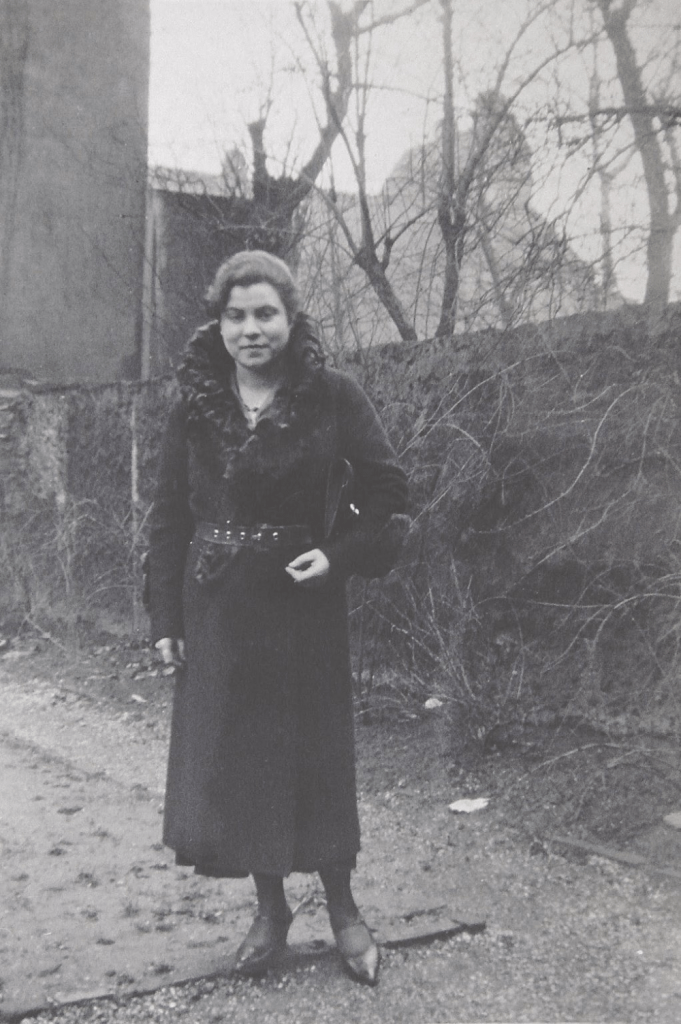
Auguste van Pels-Röttgen
Auguste van Pels was transported to the Raguhn Women’s Camp on February 7, 1945. There, the women had to perform forced labor. transported again on April 9, 1945, this time to Theresienstadt.
The exact circumstances of Auguste van Pels’ death remain unclear. Two witnesses reported her passing during the transport from Raguhn to Theresienstadt. One witness, Annelore Beem-Daniel, who knew Auguste from their time together in the Bergen-Belsen barracks, recalled that Auguste—like Anne and Margot Frank—had contracted typhus and died beside her during the journey. Along with another person, she lifted Auguste’s body from the train and placed her alongside the tracks.
The account of the second witness, Rachel van Amerongen, offers a more harrowing perspective. In a statement given to the Red Cross on September 28, 1945, she reported: “During the journey from Raguhn to Theresienstadt, the Germans threw Mrs. Gusti van Pels-Röttgen, approximately 42 years old, under the train, killing her.” However, no additional witnesses could be found to confirm this account.
The Raguhn women’s camp was a satellite forced labor camp during World War II, connected to the larger Ravensbrück concentration camp, notorious for housing primarily women. Located in Raguhn, Germany, this camp primarily imprisoned Jewish women, along with some political prisoners, who were forced into grueling labor under horrific conditions.
The women in the Raguhn camp were assigned to labor that contributed to the Nazi war effort, working in nearby factories and facilities. One significant aspect of the labor at Raguhn involved manufacturing components for the German Luftwaffe (Air Force), which required intensive, often dangerous work with heavy machinery and hazardous materials. Prisoners worked long hours with little to no rest, suffering from malnutrition, extreme cold, physical abuse, and inhumane living conditions.
Many of the women imprisoned there came from varied backgrounds and countries occupied by Nazi Germany, especially Poland, France, and the Soviet Union. Their treatment reflected the Nazis’ brutal approach to forced labor, aiming to exploit and dehumanize prisoners while extracting the maximum productivity possible.
Finishing with one of Anne Frank’s quotes
“I simply can’t build my hopes on a foundation of confusion, misery, and death. I think… peace and tranquility will return again.”
Sources
https://encyclopedia.ushmm.org/tags/en/tag/anne-frank?type_filter%5B%5D=34
https://research.annefrank.org/en/personen/d00185dd-b5ac-47da-be2f-f00b624e33d9/
https://research.annefrank.org/en/gebeurtenissen/f66507c3-b916-4f60-9f1a-24822089dbf4/
https://www.annefrank.org/en/anne-frank/main-characters/auguste-van-pels/
https://collectie.verzetsmuseum.org/ais6/Details/collect/7057
https://www.oorlogsbronnen.nl/tijdlijn/10b54466-be66-49a2-94c7-7b6b4f9759a2
https://izi.travel/en/5b45-you-could-see-them-die/en
Donation
Your readership is what makes my site a success, and I am truly passionate about providing you with valuable content. I have been doing this at no cost and will continue to do so. Your voluntary donation of $2 or more, if you are able, would be a significant contribution to the continuation of my work. However, I fully understand if you’re not in a position to do so. Your support, in any form, is greatly appreciated. Thank you. To donate, click on the credit/debit card icon of the card you will use. If you want to donate more than $2, just add a higher number in the box left from the PayPal link. Your generosity is greatly appreciated. Many thanks.
$2.00

 History of Sorts
Leave a comment